


FUE vs. FUT: Why Modern Clinics Have Abandoned the Strip Method
In the world of hair restoration, few topics cause as much confusion as the choice of technique. Patients researching hair transplants are often gold standard, medical technology has evolved.
Today, modern, patient-centric clinics like ours have largely moved away from the strip method.
This guide explains exactly why that shift happened, the medical differences between the two, and why FUE is now the global preference for a seamless, natural recovery.
The Evolution of Hair Restoration (From “Plugs” to Precision)
To understand why we favor FUE, it helps to understand where we came from. Hair transplantation began decades ago with “punch grafts”—large plugs of skin that looked like doll hair.
This evolved into the Strip Method (FUT) in the 1990s, which was a massive leap forward because it allowed for the use of microscopes to dissect natural follicular unyears have seen the rise of FUE (Follicular Unit Extraction).
The core philosophy shifted from “moving skin” to “moving hair.” Today, we no longer need to surgically remove a piece of your scalp to restore your hairline. We can simply take the hair itself.
What is FUT (The “Strip” Method)?
FUT stands for Follicular Unit Transplantation. While effective in terms of hair growth, it is the most invasive form of hair restoration.
The Procedure
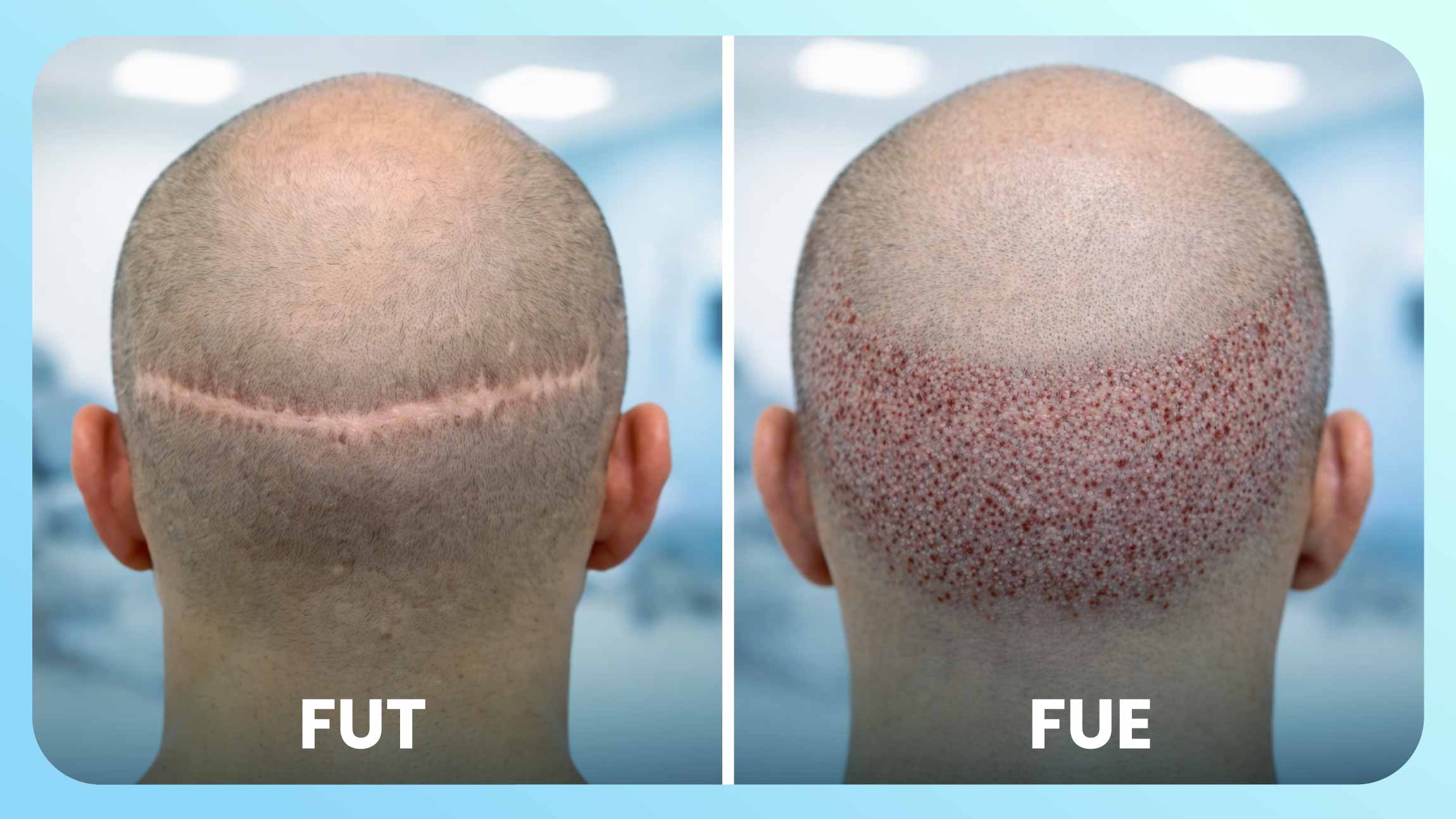
In an FUT surgery, the surgeon uses a scalpel to cut a long, horizontal strip of skin from the donor area (the back of your head).
This strip typically measures 15 to 25 centimeters in length and 1 to 2 centimeters in width. The gap is then pulled together and closed with sutures (stitches) or staples.
The Linear Scar: The Permanent Trademark
The unavoidable consequence of removing a strip of skin is a scar. Even with the best plastic surgery closure techniques (like trichophytic closure), a fine white line will always remain across the back of your head.
- The Limitation: If you wish to wear your hair short (a fade or a buzz cut) in the future, this scar will be visible. It restricts your hairstyle freedom for life.
The Recovery Reality
Because FUT involves a deep incision that cuts through nerves and tissue layers, the recovery is more demanding:
- Pain: Patients often report tightness and throbbing in the donor area for weeks.
- Numbness: It is common to experience temporary or even permanent numbness (paresthesia) above the incision line due to nerve trauma.
- Downtime: Stitches must be removed after 10–14 days, and heavy exercise is restricted for up to a month to prevent the scar from stretching (widening).
What is FUE (Follicular Unit Extraction)?
FUE is the technique that democratized hair transplants, making them less of a “surgery” and more of a “procedure.”
The Procedure
Instead of a scalpel, the surgeon uses a high-precision micro-motor or manual punch with a diameter of just 0.6mm to 0.8mm. We extract grafts individually, one by one, directly from the scalp.
There is no cutting of skin strips and no stitches.
“Scar-less” Healing
FUE does not leave a linear scar. Instead, it leaves tiny, pinpoint micro-scars where the follicles were removed.
These dots are so small that they contract and become virtually invisible to the naked eye within days.
- The Freedom: You can wear a #1 or #2 buzz cut without anyone knowing you had surgery.
Versatility
Because we are not limited to a single strip of skin, FUE allows us to harvest “cherry-picked” grafts. We can select the thickest multiples for density or the finest singles for the hairline.
It also allows us to harvest body hair (beard or chest) if the scalp donor area is weak—something impossible with FUT.
Direct Comparison: FUE vs. FUT
To help you visualize the trade-offs, here is a medical comparison of the two methods.
| Feature | FUT (Strip Method) | FUE (Modern Standard) |
| Scarring | Long horizontal linear scar (permanent). | Tiny, invisible micro-dots. |
| Pain Level | Moderate to High (tightness, throbbing). | Minimal (mild discomfort). |
| Recovery Time | 2–4 weeks (risk of scar stretching). | 3–7 days (rapid skin closure). |
| Stitches | Yes (requires removal). | No (heals naturally). |
| Hairstyle | Must keep hair long to hide scar. | Can wear very short/buzz cuts. |
| Nerve Risk | Higher risk of long-term numbness. | Minimal risk. |
| Body Hair | Cannot use beard/body hair. | Can use beard/body hair. |
Why Modern Clinics Have “Abandoned” FUT
At Clinicana, like most top-tier international clinics, we exclusively perform FUE and its advanced variants (Sapphire FUE and DHI).
The industry shift away from FUT is driven by three key factors:
1. Patient Demand for Aesthetics
In 2026, patients do not just want hair; they want discretion.
The modern man wants the option to fade his hair or shave it down without revealing a surgical history.
The “smiley face” scar of FUT is simply unacceptable to the modern aesthetic standard.
2. Technological Advancements in Speed
Historically, FUT was faster. In the early 2000s, extracting 3,000 grafts via FUE might take two days.
Today, thanks to advanced micro-motors and expert teams, we can harvest 3,000–4,000 grafts via FUE in a single morning—matching the speed of FUT without the trauma.
3. Reduced Risk
From a medical safety perspective, FUE is safer. There is significantly less bleeding, zero risk of the wound opening up (dehiscence), and a drastically lower infection rate because the wounds are less than 1mm in size.
Is There ANY Case Where FUT is Still Better?
In the spirit of medical transparency, FUT is not “useless,” but its indications have become extremely narrow. It is generally reserved for:
- Extreme Norwood Cases (Stage 6-7): Patients who need massive amounts of hair (6,000+ grafts) and have very loose scalp skin might benefit from a combination of FUT + FUE to maximize the total donor pool.
- Long Hair Maintenance: Some female patients prefer FUT because they do not have to shave the donor area at all (the strip is removed from within long hair). However, Unshaven FUE has largely solved this problem as well.
At our clinic, we find that virtually all cases—even advanced hair loss—can be treated more effectively and comfortably with large-session FUE or planned secondary sessions.
Frequently Asked Questions (FAQ)
Is FUE more expensive than FUT?
Historically, yes, because it was more labor-intensive. However, as FUE has become the standard, prices have standardized. In Turkey, FUE packages are extremely competitive and often more affordable than FUT in the US or UK due to the volume of expertise available.
Does FUE damage the donor area?
Only if performed by inexperienced technicians who “over-harvest.” In skilled hands, FUE thins the donor area uniformly so that no patches are visible. We carefully calculate a “safe extraction ratio” to ensure your donor area looks natural even after harvesting 4,000 grafts.
Can FUE cover a scar from an old FUT surgery?
Yes. This is a very common repair procedure. We can use FUE to extract grafts from the surrounding scalp (or beard) and implant them directly into an old FUT scar to camouflage it.
Which method gives better density?
Density depends on the number of grafts implanted per square centimeter, not the extraction method. Sapphire FUE allows us to open channels closer together than older methods, often achieving higher density than was traditionally possible with FUT.
Is FUT more painful than FUE?
Yes. FUT involves cutting through the dermal layer and muscle fascia, which requires significant healing. FUE is superficial. Most FUE patients stop taking painkillers within 24 hours, whereas FUT patients may need them for a week.
Conclusion: Choose the Future, Not the Past
Hair restoration is a journey to reclaim your confidence, and that journey should not leave you with a permanent scar. The medical community has spoken: FUE is the superior technique for the vast majority of patients.
Why settle for stitches, numbness, and limited hairstyles when you can have the seamless, scar-free results of modern FUE?
Contact us now – get a free medical consultation
If you are considering a transplant, or if you have an old FUT scar you wish to hide, contact our medical team at Clinicana.
Let us assess your case and plan a modern, minimally invasive restoration that puts your comfort first.
Medical Disclaimer: This content is for informational purposes only and does not replace professional medical consultation.
Related reading: what FUE and FUT scars look like and how they can be repaired: hair transplant scars.


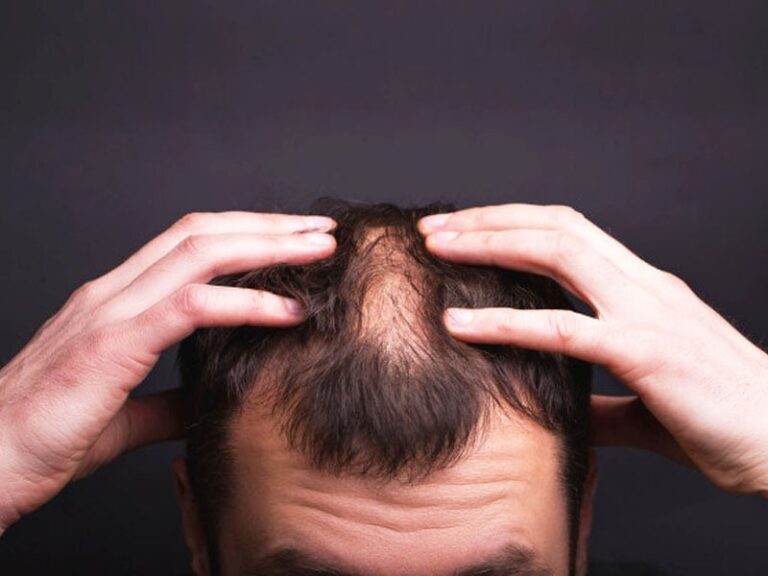
Scalp psoriasis and seborrheic dermatitis are chronic inflammatory conditions that frequently cause discomfort, itching, redness, and scaling. For individuals experiencing hair thinning alongside these conditions, severe anxiety often arises regarding permanent follicle loss and the feasibility of hair restoration. A central concern among patients is whether undergoing a hair transplant while managing scalp psoriasis is […]
Medical Review by: Prof. Dr. Soner Tatlıdede – October 2026 Hair loss—specifically androgenetic alopecia (pattern baldness)—is driven by a progressive cellular process known as follicular miniaturization. Under the influence of dihydrotestosterone (DHT) and localized micro-inflammation, the growth phase (anagen) of the hair cycle shortens, while the resting phase (telogen) lengthens. Over successive hair cycles, blood flow to the […]
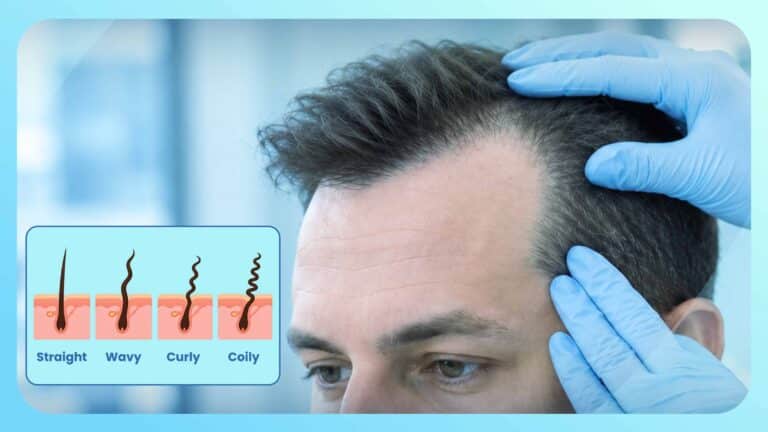
Medical Review by: Prof. Dr. Soner Tatlıdede – September 2026 Quick Summary (TL;DR) Hair types are globally categorized into four main classes—Type 1 (Straight), Type 2 (Wavy), Type 3 (Curly), and Type 4 (Coily/Afro-textured)—determined by the biological shape and exit angle of the hair follicle beneath the scalp surface. While straight hair grows from round, perpendicular follicles, […]


Thank you!
Your details have been successfully submitted. Thanks!