


No-Shave vs. Standard Hair Transplant: Is Convenience Worth It?
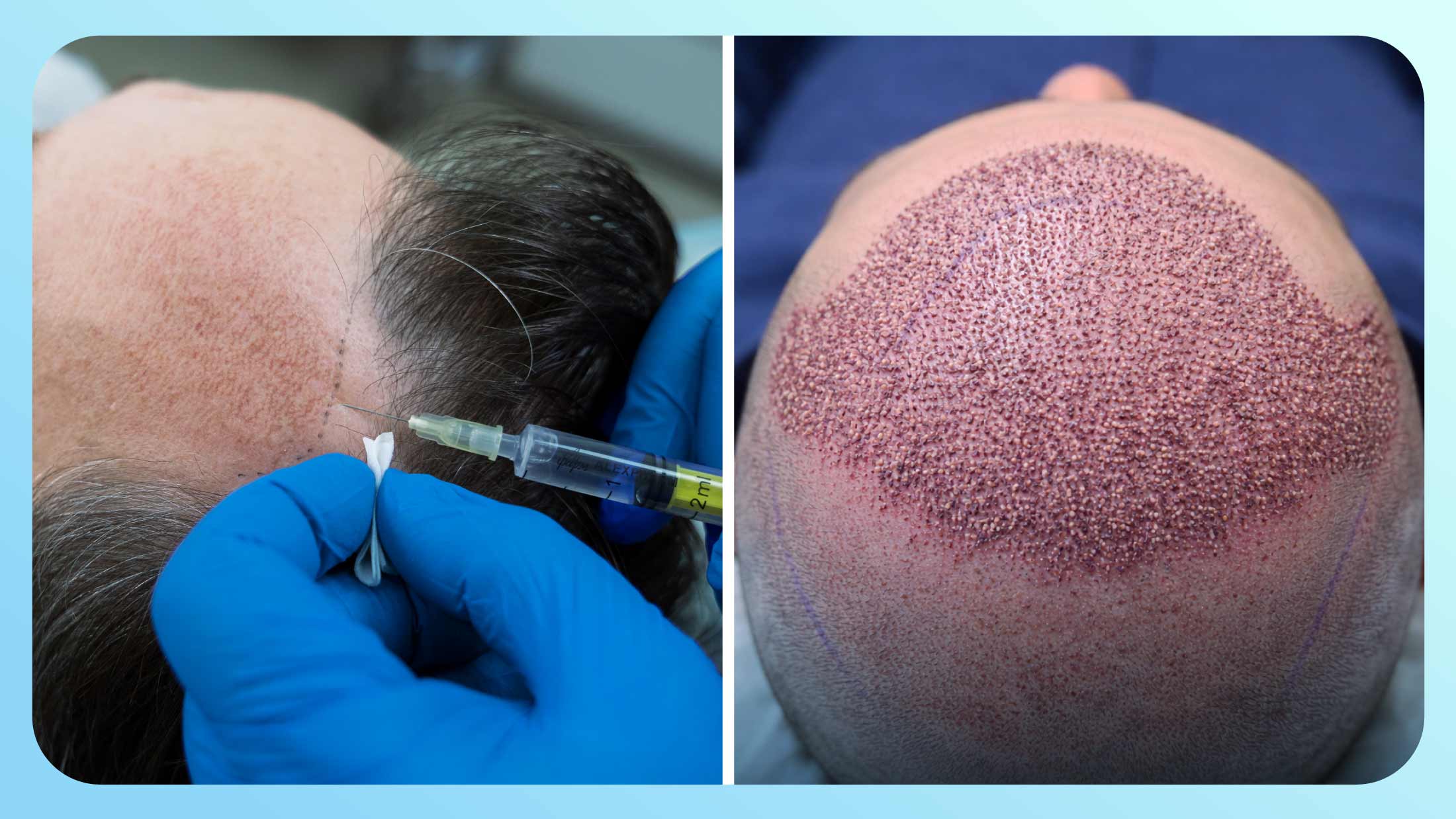
For many individuals facing hair loss, the decision to undergo a hair transplant is not hindered by the surgery itself, but by the recovery phase.
Both are variants within the wider set of hair transplant techniques.
Specifically, the prospect of shaving one’s head is a significant psychological barrier.
In our clinical practice, we frequently meet patients—ranging from high-profile executives to women with diffuse thinning—who delay necessary restoration because they cannot afford the social downtime or the “stigma” associated with a shaved head.
The myth that “you must be completely bald to get your hair back” is a relic of the past. Modern restorative medicine has evolved to accommodate the lifestyle needs of patients who require discretion.
Today, advanced techniques allow us to perform successful transplants without altering your existing hairstyle.
However, choosing between a No-Shave vs. Standard Hair Transplant is not merely a cosmetic decision; it is a medical one involving trade-offs regarding procedure time, graft capacity, and cost.
This guide explores the clinical realities of both approaches, helping you decide if the convenience of an unshaven procedure justifies the investment.
The Fear of “The Shaved Head”
Hair restoration is a journey toward confidence, but for many, the initial step of shaving the head feels like a step backward.
- Social Stigma: Patients often worry that a shaved head will signal to colleagues or friends that they have had “work done,” inviting unwanted questions.
- Professional Commitments: Public figures, actors, and corporate leaders often cannot take weeks off work to wait for hair to grow back to a presentable length.
- Psychological Impact: particularly for women, long hair is deeply tied to identity. The thought of losing it, even temporarily, can be emotionally distressing.
The solution lies in Unshaven FUE (Follicular Unit Extraction) and DHI (Direct Hair Implantation).
These techniques have been refined to allow surgeons to work around existing hair, making the procedure virtually undetectable to the outside world shortly after surgery.
Standard Hair Transplant (Full Shave)
To understand the benefits of the no-shave technique, one must first understand the standard protocol.
In a standard hair transplant, the entire scalp—both the donor area (back of the head) and the recipient area (top/front)—is shaved to a length of approximately 1mm to 2mm.
The Procedure: Why Surgeons Prefer It
From a purely surgical perspective, a fully shaved head offers the optimal environment for the medical team.
- Maximum Visibility: Shaving exposes the natural angle, direction, and exit point of every single hair follicle. This allows the surgeon to mimic your natural growth pattern with extreme precision.
- Accurate Graft Assessment: It allows the team to clearly see the quality and density of the donor area, ensuring that we do not over-harvest from any single spot.
- Speed and Efficiency: Without long hair obstructing the view or getting tangible in the instruments, extraction and implantation are significantly faster. This reduces the time grafts spend outside the body, potentially boosting survival rates for massive graft counts (e.g., 4,000+ grafts).
- Hygiene and Aftercare: A shaved scalp is easier to clean. Keeping the recipient area free of blood, crusts, and bacteria is simpler when there is no long hair to trap moisture or debris.
No-Shave Hair Transplant (Unshaven FUE/DHI)
For patients who prioritize privacy over graft volume, the No-Shave Hair Transplant is a revolutionary option.
This technique requires a highly skilled surgical team, as it involves performing the same delicate procedure with a much higher degree of difficulty.
There are generally two types of “unshaven” procedures:
Option A: Partially Shaven (The “Window” Technique)
This is the most common form of discreet transplantation and is particularly effective for patients with longer hair (longer than 4-5 cm).
- How it works: We shave a small rectangular “window” or two in the donor area at the back of your head.
- The Disguise: The hair above the shaved window is left long. After the procedure, you simply comb your upper hair down, completely covering the shaved extraction site.
- The Recipient Site: The area where hairs are implanted is usually not shaved, or only the specific thinning areas are trimmed.
- Best For: Patients who need a moderate number of grafts (up to 2,000-2,500) and have enough hair length to hide the donor site.
Option B: Fully Unshaven (Complex and Rare)
This is the true “no-shave” experience, where no hair is trimmed short, neither in the donor nor the recipient area.
- How it works: The surgeon must carefully extract individual long hairs from the donor area and implant them amongst the existing long hairs in the recipient area.
- The Challenge: This is extremely labor-intensive and slow. It requires the use of DHI (Direct Hair Implantation) pens (Choi Implanters) to navigate between strands without cutting them.
- Best For: Executives, celebrities, or patients requiring small touch-ups (under 1,000–1,500 grafts) who literally cannot have any sign of surgery visible.
The Benefits
- Immediate “Back to Work”: You can attend a video conference or meeting within 2–3 days without anyone noticing a drastic change in your appearance.
- Psychological Comfort: You retain your hairstyle and your identity throughout the process.
- Concealment: The redness and scabbing that naturally occur post-surgery are hidden beneath your existing hair.
The Challenges
- Limited Graft Count: Because the process is slower, we are limited in how many grafts we can safely move in one session. It is generally capped at 2,500 to 3,000 grafts to ensure the follicles survive the time out of the body.
- Post-Op Hygiene: Washing your hair requires more patience. Long hair can trap blood clots or scabs, increasing the risk of infection if not cleaned meticulously.
- Cost: Due to the time and expertise required, unshaven sessions are priced higher than standard procedures.
Read More: PRP Therapy vs. Mesotherapy: Which Boosts Hair Growth Faster?
Comparison: Discretion vs. Efficiency
To help you visualize the trade-offs, here is a direct comparison of the two approaches based on clinical parameters.
| Feature | Standard (Full Shave) | No-Shave (Unshaven/Partial) |
| Visibility of Surgery | High (Shaved head, visible scabs) | Low (Hidden by existing hair) |
| Max Grafts per Session | High (4,000 – 5,000+) | Moderate (2,500 – 3,000 max) |
| Procedure Duration | 6–8 Hours | 7–9 Hours (for fewer grafts) |
| Cost | Standard pricing | Premium pricing (30-50% higher) |
| Aftercare Difficulty | Easy (Wash and go) | High (Careful washing required) |
| Risk of Shock Loss | Low | Moderate (Trauma to nearby long hairs) |
Who is the Ideal Candidate for No-Shave?
Not everyone qualifies for an unshaven procedure. In our medical assessment, we look for specific criteria to ensure safety and success.
Women with Thinning Hair (Diffuse Thinning)
Female Pattern Hair Loss often presents as diffuse thinning rather than complete baldness. Shaving a woman’s head is rarely socially acceptable or necessary.
The unshaven DHI technique is the gold standard here, allowing us to thicken the parting line without disturbing the surrounding style.
Executives and Public Figures
If your face is your brand, downtime is not an option. We treat many CEOs, news anchors, and actors who need to be camera-ready within days.
For these patients, the reduced graft count is an acceptable trade-off for maintaining their public image.
Patients Needing Small Touch-Ups
If you are only correcting a receding hairline or filling in the temples (Norwood Scale 1 or 2), shaving the entire head is often unnecessary.
We can work within the specific localized area while leaving the rest of the hair untouched.
Is the Extra Cost Worth It?
When patients see the price difference between no-shave and standard hair transplants, they often ask if the value justifies the expense.
Why it costs more (Time = Money + Skill)
An unshaven transplant is not just a product; it is a highly specialized service.
- Technical Difficulty: The surgeon must work with a limited field of view, requiring intense focus and dexterity to avoid damaging existing hair roots (transection).
- Extended Time: The procedure takes significantly longer. A medical team might spend the same amount of time transplanting 2,000 unshaven grafts as they would 4,000 standard grafts.
Calculating the value of your privacy and downtime
Ask yourself: “What is the cost of taking two weeks off work?”
For many professionals, the loss of income or opportunities during a recovery period far outweighs the surcharge for an unshaven procedure.
If the No-Shave option allows you to return to work on Monday after a Friday surgery, the return on investment is high.
When you should choose the standard shave
If you have advanced hair loss (Norwood Scale 5, 6, or 7) and require maximum coverage (4,000+ grafts), we strongly advise a standard shave.
Attempting to move this volume of hair without shaving is medically risky for the grafts (due to extended time out of the body) and will likely yield a suboptimal density.
In these cases, the temporary inconvenience of a shaved head is worth the lifetime result of a full head of hair.
Frequently Asked Questions (FAQ)
Does not shaving affect the success rate?
In the hands of an expert specialist, the graft survival rate remains high (90-95%).
However, the risk of “transection” (accidentally cutting a root) is slightly higher due to reduced visibility.
This is why choosing a clinic with specific experience in unshaven DHI is critical.
Can I get 5000 grafts without shaving?
Generally, no. A “Mega-Session” of 5,000 grafts requires speed and precision that is best achieved with a shaved scalp.
Attempting this volume without shaving puts the grafts at risk of dying before they can be implanted.
We may recommend two smaller unshaven sessions spaced a year apart instead.
Is the recovery faster with unshaven FUE?
Physically, the healing of the skin is the same.
However, socially, the recovery is immediate. You do not have to wait for hair to grow back to look “normal.”
Will people notice I had surgery?
With a “Partial Shave” (Window technique), the surgery is undetectable as long as you wear your hair down.
With a fully unshaven procedure, some redness may be visible upon close inspection, but it is easily camouflaged.
Which technique (DHI vs Sapphire) is best for unshaven?
DHI (Direct Hair Implantation) using the Choi Pen is superior for unshaven cases.
The pen allows the surgeon to part the existing hair and implant the new follicle in one motion, minimizing trauma to the surrounding long hairs.
Sapphire FUE requires opening channels first, which is messy and difficult with long hair.
Clinicana’s Expertise in Discreet Restoration
At Clinicana, we recognize that your hair restoration journey is unique. We do not believe in a “one size fits all” approach.
Specialized teams for long-hair FUE
We have dedicated medical teams who specialize exclusively in DHI and unshaven procedures. They have the patience and manual dexterity required to navigate complex, long-hair cases without rushing.
Protecting your existing hair from shock loss
Our protocols include the use of specific anti-inflammatory measures and careful placement strategies to minimize “shock loss“—the temporary shedding of native hair due to the trauma of surgery.
This is particularly important in unshaven cases where the goal is to maintain current density.
Honest advice: We’ll tell you if shaving is medically necessary
Our priority is your long-term result. During your consultation, if we believe that an unshaven procedure will compromise your final density or graft survival, we will be honest.
We will discuss whether a standard shave is the safer medical choice for your specific level of hair loss.
For a full walkthrough of the no-shave option, see our unshaven FUE hair transplant guide.
When Should You See a Doctor?
After any hair transplant, whether shaved or unshaven, it is vital to monitor your recovery. You should seek immediate professional medical attention if you experience:
- Signs of Infection: Pus, excessive heat, or spreading redness around the donor or recipient areas.
- Necrosis: Dark or black skin patches, indicating a lack of blood supply.
- Uncontrolled Bleeding: Bleeding that does not stop after applying gentle pressure for 10-15 minutes.
- Severe Swelling: Swelling that impacts your vision or causes severe headaches.
Contact us now – get a free medical consultation
Your privacy and your hair are both valuable assets. If you are considering a hair transplant but are held back by the thought of shaving, contact Clinicana today.
Let our specialists evaluate your case and determine if you are a candidate for our advanced No-Shave techniques.
Medical Disclaimer: This content is for informational purposes only and does not replace professional medical consultation.


Scalp psoriasis and seborrheic dermatitis are chronic inflammatory conditions that frequently cause discomfort, itching, redness, and scaling. For individuals experiencing hair thinning alongside these conditions, severe anxiety often arises regarding permanent follicle loss and the feasibility of hair restoration. A central concern among patients is whether undergoing a hair transplant while managing scalp psoriasis is […]
Medical Review by: Prof. Dr. Soner Tatlıdede – October 2026 Hair loss—specifically androgenetic alopecia (pattern baldness)—is driven by a progressive cellular process known as follicular miniaturization. Under the influence of dihydrotestosterone (DHT) and localized micro-inflammation, the growth phase (anagen) of the hair cycle shortens, while the resting phase (telogen) lengthens. Over successive hair cycles, blood flow to the […]
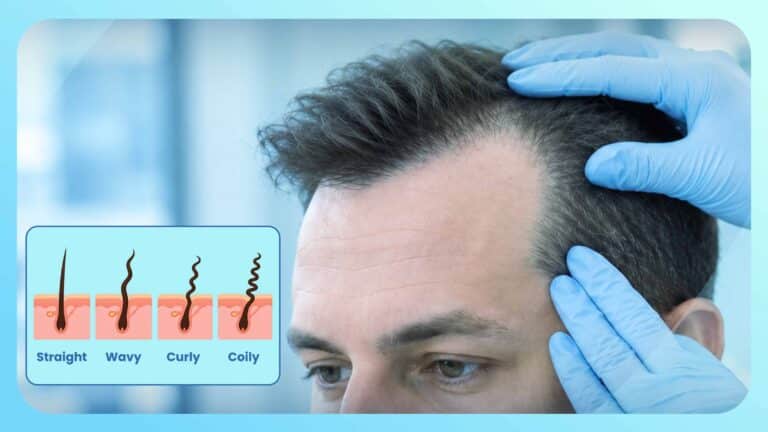
Medical Review by: Prof. Dr. Soner Tatlıdede – September 2026 Quick Summary (TL;DR) Hair types are globally categorized into four main classes—Type 1 (Straight), Type 2 (Wavy), Type 3 (Curly), and Type 4 (Coily/Afro-textured)—determined by the biological shape and exit angle of the hair follicle beneath the scalp surface. While straight hair grows from round, perpendicular follicles, […]


Thank you!
Your details have been successfully submitted. Thanks!