


Non‑Surgical Hair Loss Treatments: PRP, Stem Cells, and Medical Alternatives
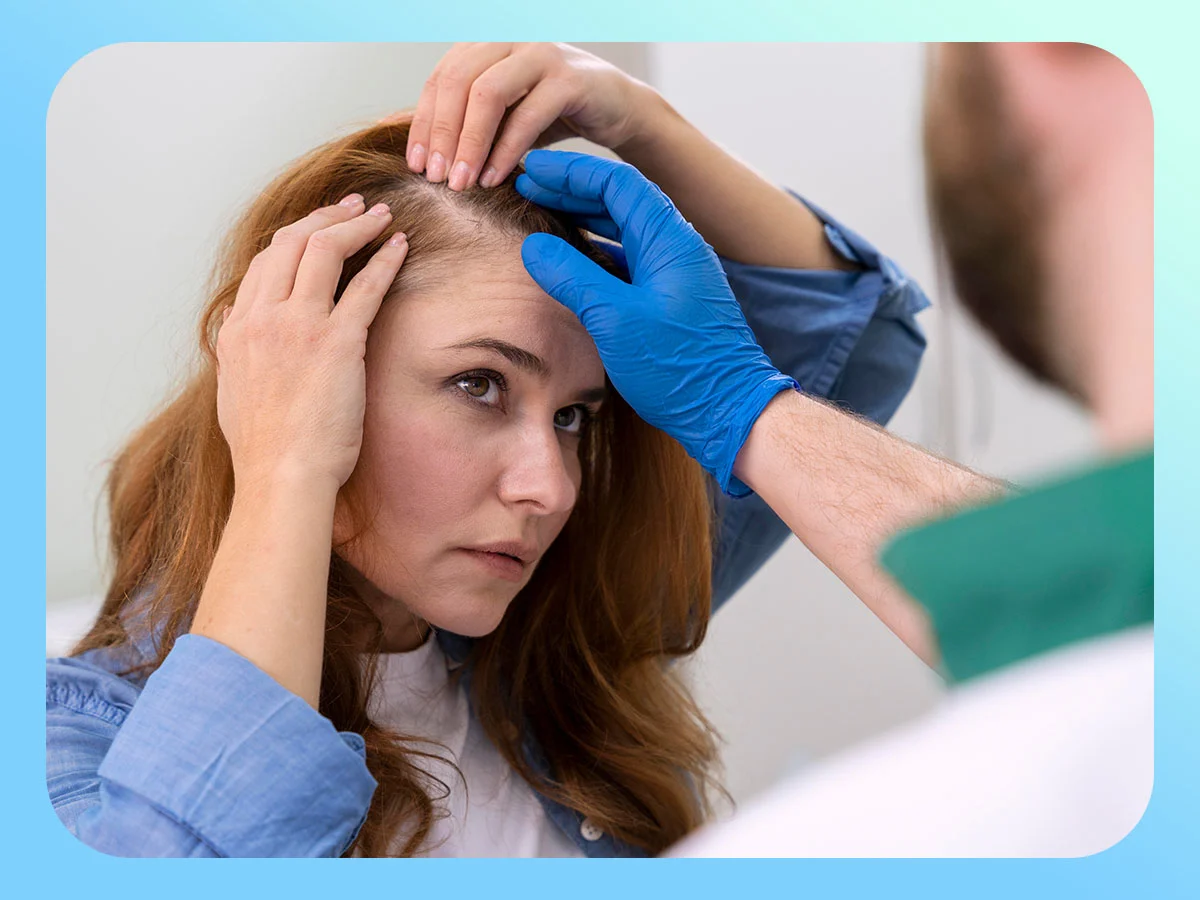
Losing your hair can feel like losing a part of your identity. It is a deeply personal experience, and for many patients, the thought of surgery can be overwhelming or simply unwanted. The good news is that the field of restorative medicine has advanced significantly. You no longer have to choose between doing nothing and undergoing a surgical procedure.
Today, effective non-surgical hair loss treatment options are available to help you pause, reverse, or manage hair thinning. From biological therapies that harness your body’s own healing power to proven medical protocols, these solutions offer hope and results. In our clinical practice, we guide patients daily through these choices, helping them find the right path to restore their confidence without scalps or stitches.
Table of Contents
Who Needs Non‑Surgical Hair Loss Treatment?
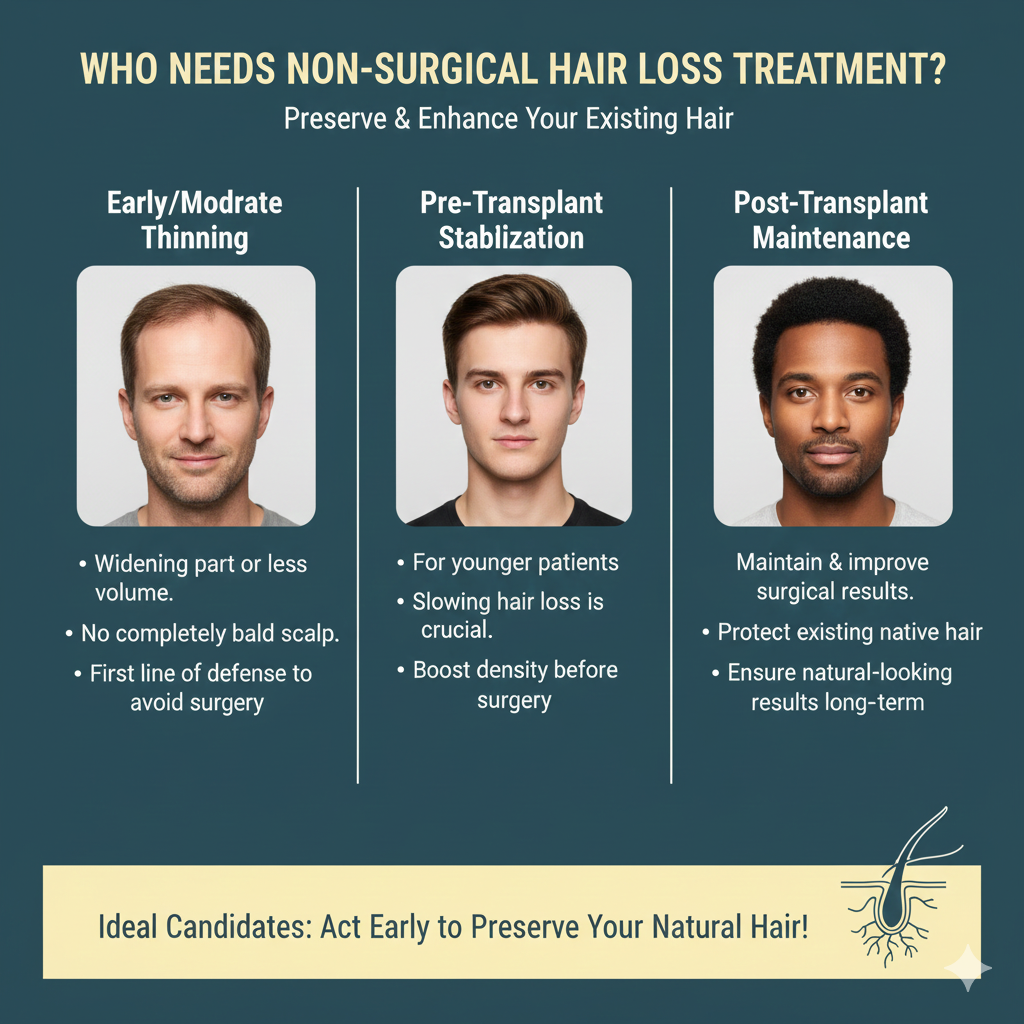
Not everyone is a candidate for surgery, and in many cases, surgery is not the best first step. We often recommend non-surgical hair loss treatment protocols for patients who are looking to preserve their existing hair rather than replace it.
In our medical experience, the ideal candidates for these therapies include:
- Patients with early or moderate thinning who want to avoid surgery: If you have noticed a widening part or less volume but do not have a completely bald scalp, non-invasive methods are often the first line of defense.
- Men and women who want to slow hair loss or boost density before considering a transplant: For younger patients, stabilizing hair loss is crucial before any surgical intervention can be considered.
- People who had a hair transplant and want to maintain or improve their results: Even after surgery, your native hair needs protection. Non-surgical treatments help ensure your results look natural for years to come.
Main Non‑Surgical Treatments for Hair Loss in 2026
The landscape of hair restoration has shifted toward regenerative medicine. We now focus on non-surgical treatments for hair loss that work biologically to improve the health of the hair follicle.
PRP Hair Treatment
PRP hair treatment (Platelet-Rich Plasma) has become a cornerstone of modern hair restoration. It uses your body’s own platelets to stimulate hair growth.
- How PRP is performed: The process is simple and minimally invasive. We draw a small amount of your blood, similar to a standard lab test. This blood is spun in a centrifuge to separate the plasma, which is rich in growth factors. We then perform PRP injections for hair loss directly into the thinning areas of the scalp.
- Typical protocol: Consistency is key for results. A standard protocol usually involves an initial series of 3 to 4 sessions spaced one month apart, followed by maintenance sessions every 4 to 6 months.
- Who benefits most: We find this treatment is most effective for patients with early thinning, active shedding, or those needing post-transplant support to speed up healing.
Stem Cell Therapy for Hair Loss
Stem cell therapy for hair loss represents a more advanced biological approach. While often compared to PRP, it functions differently.
- Basic concept and how it differs from PRP: While PRP uses growth factors to stimulate follicles, stem cell hair treatment utilizes regenerative cells (often harvested from your own tissue) to repair damaged tissue and improve the scalp environment.
- Current realistic benefits vs marketing claims: It is important to have realistic expectations. While not a “magic cure” for total baldness, stem cell therapy can significantly improve hair density and quality in existing follicles.
- When a clinic may recommend stem cell–based options: We may suggest this for patients with more advanced thinning or those seeking a less frequent treatment schedule than PRP requires.
Medical At‑Home Treatments
For many patients, the best treatment for hair loss without surgery starts at home. Consistency with prescribed medication is often the foundation of success.
- Topical minoxidil and oral medications as part of a non‑surgical plan: FDA-approved treatments like Minoxidil (to stimulate growth) and Finasteride (to block the hormone DHT) remain the gold standard for hair loss treatment for men and many women.
- When medication is used alone vs combined with PRP or other treatments: While medication alone can slow hair loss, combining it with regenerative treatments like PRP often yields superior results by attacking the problem from multiple angles.
Non‑Surgical Alternatives to Hair Transplant
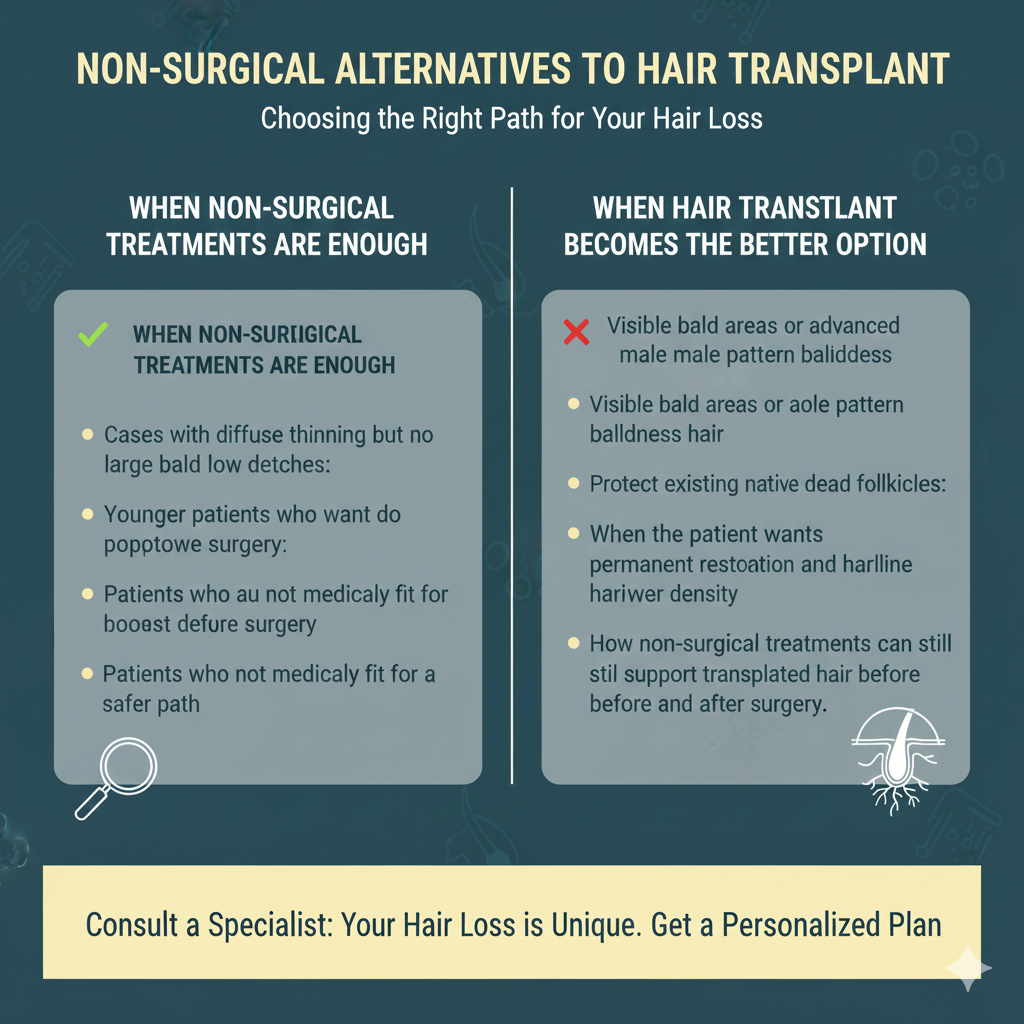
Many patients come to us asking for non surgical alternatives to hair transplant. The viability of these alternatives depends largely on the stage of your hair loss.
When Non‑Surgical Treatments Are Enough
In specific scenarios, invasive surgery is not necessary to achieve a satisfying aesthetic result.
- Cases with diffuse thinning but no large bald patches: If you have hair coverage but it is thin (low density), non-surgical stimulation is often more effective than a transplant.
- Younger patients who want to postpone surgery: For patients in their early 20s, we prioritize stabilization. Alternatives to hair transplant help delay the need for surgery until the hair loss pattern is mature.
- Patients who are not medically fit for a hair transplant: For those with certain health conditions, non-invasive options offer a safer path to restoration.
When Hair Transplant Becomes the Better Option
However, there are limitations to what non-surgical methods can achieve. We are transparent about when surgery is the better route.
- Visible bald areas or advanced male pattern baldness: If a follicle is dead and the skin is smooth, it cannot be revived. Surgery is needed to physically move healthy hair to these areas.
- When the patient wants permanent restoration of hairline and density: If your goal is to lower a hairline or fill in deep recession permanently, a transplant is the only method to change the hairline shape.
- How non‑surgical treatments can still support transplanted hair before and after surgery: Even if you choose surgery, non-surgical therapy plays a vital role in preparing the scalp and maintaining the density of non-transplanted hair.
PRP vs Stem Cell Therapy: How to Choose?
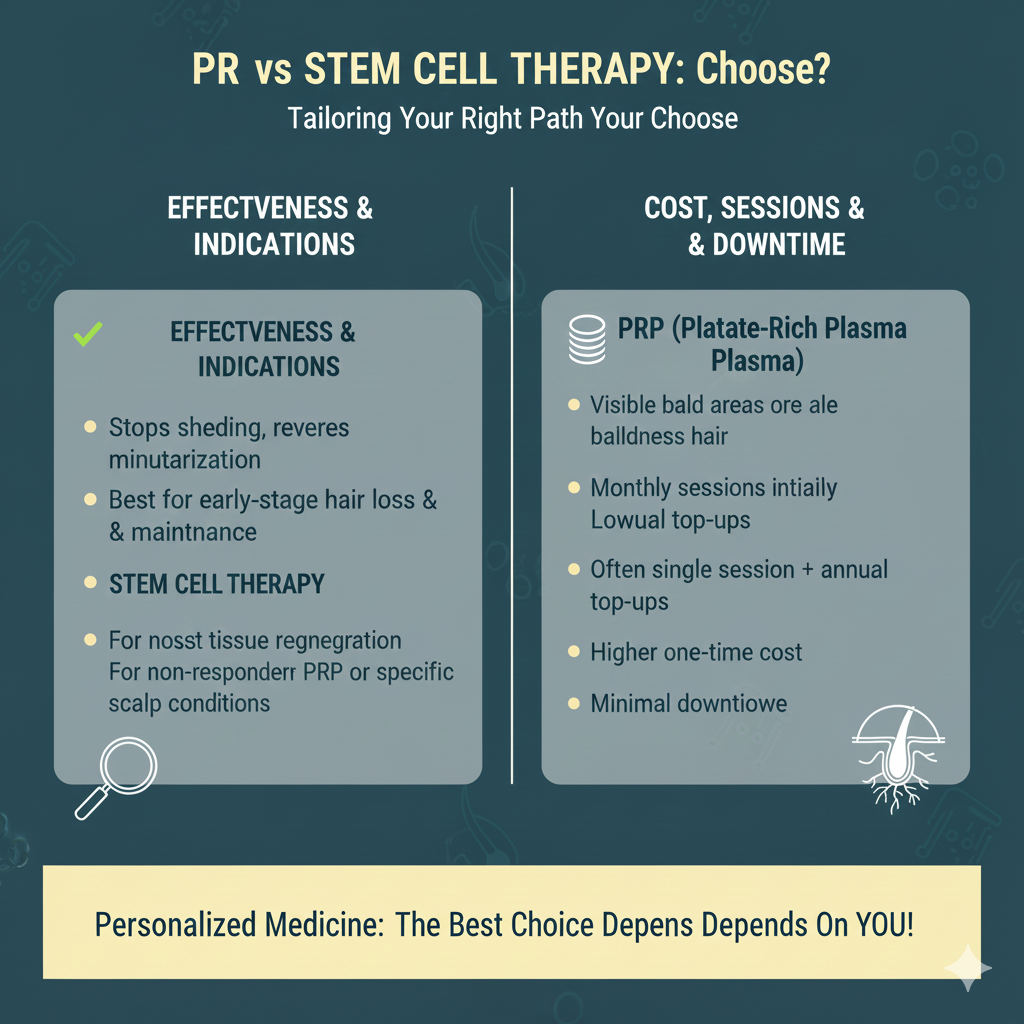
Deciding between PRP vs stem cell therapy for hair loss can be confusing. We help you choose based on your specific needs and hair status.
Effectiveness and Indications
- Typical results seen with PRP in early‑stage hair loss: PRP is excellent for stopping active shedding and reversing miniaturization in the early stages. It is our go-to for the best non surgical hair loss treatment for maintenance.
- Situations where stem cell–based therapy may be considered: If you have not responded to PRP or have specific scalp conditions requiring tissue regeneration, stem cell protocols may offer a more robust solution.
Cost, Sessions, and Downtime
- Average number of sessions needed for PRP vs stem cell: PRP typically requires monthly visits initially, whereas stem cell therapy is often a single session with annual follow-ups.
- General cost ranges and value for money compared with transplant: While individual sessions are cheaper than surgery, long-term maintenance costs should be considered.
- Recovery time and when patients can return to normal routine: Both treatments are “lunchtime procedures” with minimal downtime, allowing you to return to work almost immediately.
Building Your Personal Non‑Surgical Treatment Plan
A generic approach rarely works in medicine. We create a customized non-surgical hair loss treatment plan tailored to your unique biology.
What a Hair Specialist Evaluates
During a consultation, our clinical team assesses several factors to ensure safety and efficacy:
- Age, pattern and stage of hair loss, medical history: We review your overall health to rule out underlying causes like thyroid issues or nutritional deficiencies.
- Donor area quality: Even for non-surgical patients, the health of your donor area helps us predict your response to treatment.
- Budget and expectations: We align your treatment plan with your lifestyle, budget, and desire for density or coverage.
When to Combine Non‑Surgical Treatments with Hair Transplant
The best results often come from a hybrid approach.
- Using PRP and medications before transplant to stabilize loss: Strengthening existing hair before surgery prevents “shock loss” and improves the survival rate of new grafts.
- Using PRP after transplant to support graft survival and native hair: Post-op care is critical. Biological therapies help heal the scalp and ensure your new hair grows in thick and healthy.
FAQs About Non‑Surgical Hair Loss Treatments
Is non‑surgical hair loss treatment as effective as a hair transplant?
They serve different purposes. A transplant is effective for replacing hair in bald areas, while non-surgical treatments are effective for thickening existing hair. For early hair loss, non-surgical options can be just as satisfying.
How long do results from PRP hair treatment last?
PRP results are not permanent because they fight a chronic condition. Results typically last as long as you continue maintenance sessions, usually every 4 to 6 months.
Who is not a good candidate for non‑surgical treatments?
Patients with complete baldness (no active follicles), active scalp infections, or certain blood disorders may not benefit from these treatments.
Can I start with non‑surgical treatments and decide on a hair transplant later?
Yes, this is often the best strategy. Starting with non-surgical options preserves your hair and keeps your options open for the future.
Contact us now – get a free medical consultation
Medical Disclaimer: This content is for informational purposes only and does not replace professional medical consultation.


By Prof. Dr. Soner Tatlıdede · August 2026 Post-Op Field Checklist Time Phase Primary Clinical Objective Washing & Care Protocol Recommended Sleep Position Activities & Essentials Days 1 – 3 Protection & graft stabilization No washing allowed (spray moisturizing saline spray only) Sleep on back at a 45° incline with neck pillow Complete rest, avoid bending forward, […]

By Prof. Dr. Soner Tatlıdede · June 2026 TL;DR: Why does my head sweat so much? Excessive head sweating (craniofacial hyperhidrosis) affects 3% of the population and occurs when sweat glands are overactive, triggered by stress, heat, certain foods, or medical conditions. Treatment options include proper scalp care, dietary changes, Botox injections, and prescription medications. […]

By Prof. Dr. Soner Tatlıdede • July 2026 Determining the best age for a hair transplant is one of the most frequent questions raised by individuals experiencing progressive hair thinning or androgenetic alopecia. In the medical world, answering this question goes far beyond a patient’s emotional desire to restore density and youthfulness; it relies on a deep […]


Thank you!
Your details have been successfully submitted. Thanks!