


Beard and Moustache Hair Transplant in Turkey: Procedure, Cost, and Recovery

For many men, a full, dense beard is more than just a style choice; it is a symbol of masculinity, maturity, and self-confidence. However, not everyone is genetically blessed with thick facial hair.
We frequently see patients who struggle with patchiness, asymmetry, or an inability to grow a beard at all due to genetics or scarring. This can be a significant source of frustration and self-consciousness.
If you are looking for a permanent solution, a beard transplant in Turkey offers a medically advanced and aesthetically natural path to the look you desire.
Turkey has established itself as the global leader in facial hair restoration, combining surgical expertise with cutting-edge technology.
In this comprehensive guide, we will walk you through the medical realities of the procedure, the recovery process, and why Istanbul remains the premier destination for beard and moustache transplant Turkey services in 2026.
Who Needs a Beard or Moustache Transplant?
Facial hair transplantation is a specialized procedure designed to restore hair to areas where growth is absent or thin.
In our clinical practice, we evaluate each patient individually to determine if they are a suitable candidate. While the desire for a “hipster beard” is a common motivation, the medical indications for surgery are often more nuanced.
We typically recommend this procedure for:
- Genetic Patchiness: Many men suffer from “Alopecia Barbae” or simple genetic irregularities where hair follicles are sparsely distributed. You may have strong growth on the chin but “disconnects” between the moustache and the beard.
- Scarring and Trauma: Physical trauma, burns, or surgical scars (such as from cleft lip repair) can destroy hair follicles permanently. A moustache transplant in Turkey is often the only way to conceal these scars effectively.
- Alopecia Areata: In cases where autoimmune conditions have caused stable, localized hair loss, a transplant can sometimes restore coverage once the condition is medically stabilized.
- Gender Affirmation: Transgender men undergoing transition often seek facial hair transplants to align their physical appearance with their gender identity, enhancing masculinity.
- Aesthetic Refinement: Some patients simply desire a sharper, more defined cheek line or a fuller goatee to balance their facial features.
From a psychological perspective, restoring facial hair can have a profound impact on a patient’s self-esteem.
We approach every case with sensitivity, understanding that this is not just about hair; it is about how you present yourself to the world.
Beard and Moustache Transplant Procedure in Turkey (Step by Step)
A FUE beard transplant Turkey procedure is distinct from a scalp transplant. Facial skin is more vascular and sensitive, and the geometry of beard hair is unique.
Beard hairs grow as single units and exit the skin at very acute angles, often changing direction across the jawline and cheeks.
To achieve a result that looks natural even upon close inspection, our medical teams follow a rigorous, step-by-step clinical protocol.
1. Consultation and Facial Design
Everything begins with a plan. We do not just fill in gaps; we design a beard. Using calipers and aesthetic ratios, we map out a beard line that complements your bone structure.
- The Cheek Line: This defines the upper border. We discuss whether you prefer a sharp, laser-cut look or a soft, natural gradient.
- The Neck Line: Proper placement here is crucial to avoid an artificial appearance.
- Density Planning: We calculate the exact number of grafts needed. A full goatee might need 1,200–1,500 grafts, while a full beard restoration can require 2,500–3,500 grafts.
2. Donor Area Preparation
Where does the hair come from? We almost always harvest from the occipital region (the back of your scalp).
- Why the scalp? These hairs are genetically resistant to hair loss (DHT-resistant).
- Texture Matching: We carefully select follicles that are similar in thickness to your native facial hair.
- Shaving: A small window in the donor area is shaved to allow for extraction.
3. FUE Extraction (Follicular Unit Extraction)
Using a micro-motor with a punch diameter of just 0.6mm to 0.8mm, we extract individual hair follicles.
- Precision is key: Unlike scalp hair which grows in groups of 2-4 hairs, beard hair often consists of single or double hairs. We aim to extract “singles” to mimic natural facial hair growth.
- Preservation: Extracted grafts are immediately placed in a hypothermic storage solution (like Hypothermosol) to maximize their survival rate while out of the body.
4. Channel Opening (The Artistic Phase)
This is the most critical medical step. The surgeon uses a sapphire blade or a fine needle to open micro-channels in the recipient area.
- Angle and Direction: The surgeon must mimic the natural “swirl” of your beard. Hairs on the cheek point downward, while hairs on the neck might point forward or sideways. If the angle is too perpendicular, the beard will stick straight out, looking artificial.
- Sapphire Technology: We often use Sapphire FUE blades, which minimize tissue trauma and allow for faster healing compared to steel blades.
5. Implantation
Technicians carefully place the harvested grafts into the opened channels.
- Depth Control: Placing the graft at the correct depth ensures the skin surface remains smooth (avoiding “cobblestoning” or pitting).
- DHI Option: In some cases, we use Direct Hair Implantation (DHI) with a Choi pen, which allows for implantation without pre-opening channels. This is excellent for increasing density between existing hairs without shaving the beard.
Cost of Beard and Moustache Transplant in Turkey in 2026
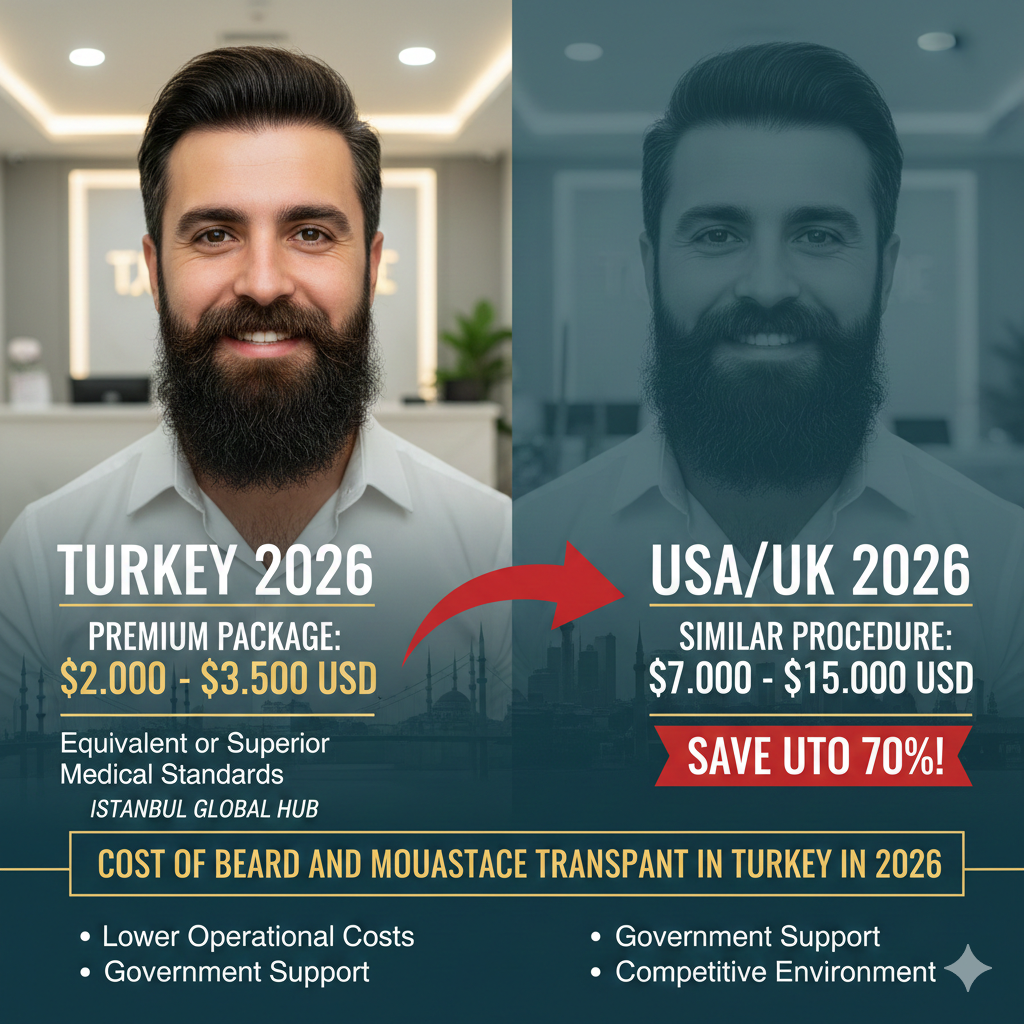
One of the primary drivers for patients traveling to Istanbul is the cost-to-quality ratio. The beard transplant Turkey cost 2026 remains significantly more accessible than in Western Europe or North America, despite offering equivalent or superior medical standards.
Understanding the Price Difference
In the UK or USA, a high-quality beard transplant can range from $7,000 to $15,000, often charged per graft. In Turkey, the average cost for a premium package typically ranges between $2,000 and $3,500.
Why is it cheaper?
- Operational Costs: Lower labor, facility, and insurance costs in Turkey allow clinics to offer lower prices without compromising on medical equipment or surgeon expertise.
- Government Support: The Turkish government actively supports medical tourism, incentivizing high standards and competitive pricing.
- Competition: Istanbul is a global hub, fostering a competitive environment that drives quality up and prices down.
What is Included in a Package?
At comprehensive medical centers, you are not just paying for the surgery. Most 2026 packages are “all-inclusive” to ensure a stress-free experience for international patients. Typical inclusions are:
- The Procedure: Unlimited grafts (up to the safety limit) using Sapphire FUE or DHI.
- Accommodation: 2 or 3 nights in a 4-star or 5-star hotel near the hospital.
- VIP Transfers: Private transport between the airport, hotel, and hospital.
- Medical Screening: Pre-op blood tests (HIV, Hepatitis, etc.) to ensure safety.
- Post-Op Care: Medications (antibiotics, painkillers, anti-swelling), special shampoos, and lotions.
- Translation: Multilingual patient hosts to ensure clear communication with the medical team.
Recovery and Result Timeline for Beard/Moustache Transplant
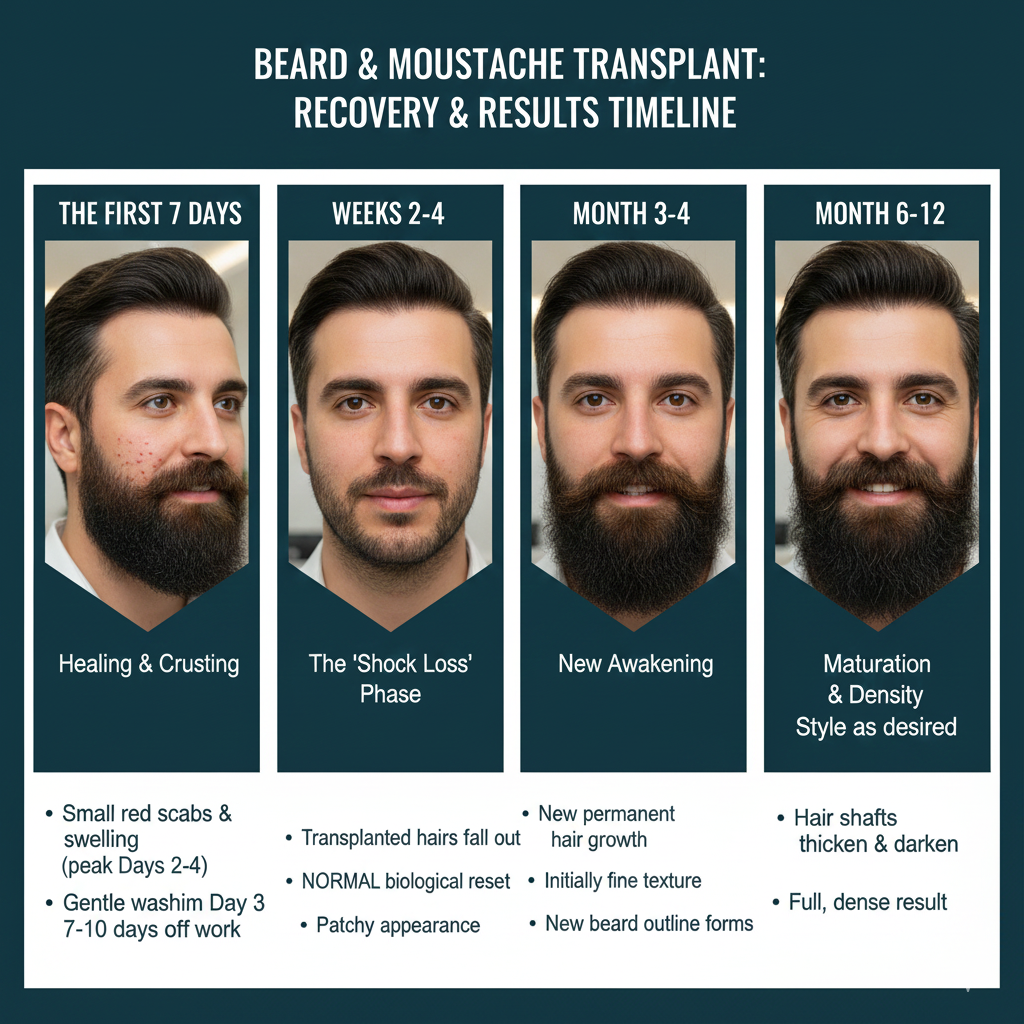
Recovery from facial surgery is visually distinct from scalp surgery because the face is always exposed. It is important to plan your social calendar accordingly.
The First 7 Days: Healing and Crusting
- Immediate Post-Op: You will leave the clinic with small red scabs at the implant site. Your face may feel tight or hot.
- Swelling: The face is highly vascular. Significant swelling (edema) is common around days 2-4. It may descend from the cheeks to the jaw. This is temporary and harmless.
- Washing: You will begin gentle washing around Day 3 to remove dried blood and crusts.
- Return to Work: Most patients feel physically fine after 2 days, but visually, you may want to take 7-10 days off work until the scabs fall off.
Weeks 2–4: The “Shock Loss” Phase
Around the second or third week, you will experience shock loss. The transplanted hairs will fall out.
- Do not panic: This is a completely normal biological reset. The follicle (the root) remains safely anchored under the skin. It is simply entering a resting phase before regenerating a new hair shaft.
- Appearance: Your face may look patchy or revert to its pre-op appearance.
Month 3–4: The Awakening
New, permanent hair begins to emerge.
- Texture: Initially, these hairs may be fine or soft.
- Growth: You will see the outline of your new beard taking shape.
Month 6–12: Maturation and Density
- Thickening: The hair shafts will thicken and darken, matching your native beard hair.
- Full Result: By month 9 to 12, you will see the final beard transplant results Turkey promises. You can now grow it long, trim it short, or style it however you wish.
Expected Results and Permanence
When patients ask about beard transplant before and after Turkey transformations, they often wonder if the results are truly permanent.
Is it Permanent?
Yes. Because the donor hair is taken from the permanent zone of the scalp, it retains its resistance to balding. Once these follicles establish a blood supply in the face, they will grow for a lifetime. They will not fall out due to male pattern baldness.
Natural Aesthetics
The success of the procedure is measured by naturalness. A well-executed transplant should be indistinguishable from a natural beard.
- Angle: The most common mistake in inexperienced clinics is placing hairs at a 90-degree angle. Natural beard hair lies flat. Our surgeons place grafts at acute angles (10-45 degrees) to hug the contours of the face.
- Distribution: We place single-hair grafts along the upper cheek line to create a soft, feathered transition, avoiding a harsh “doll hair” look.
- Graft Survival: In experienced hands, graft survival rates are typically 90-95%. The rich blood supply of the face actually helps grafts survive better than on the scalp.
Beard and Moustache Transplant at Clinicana
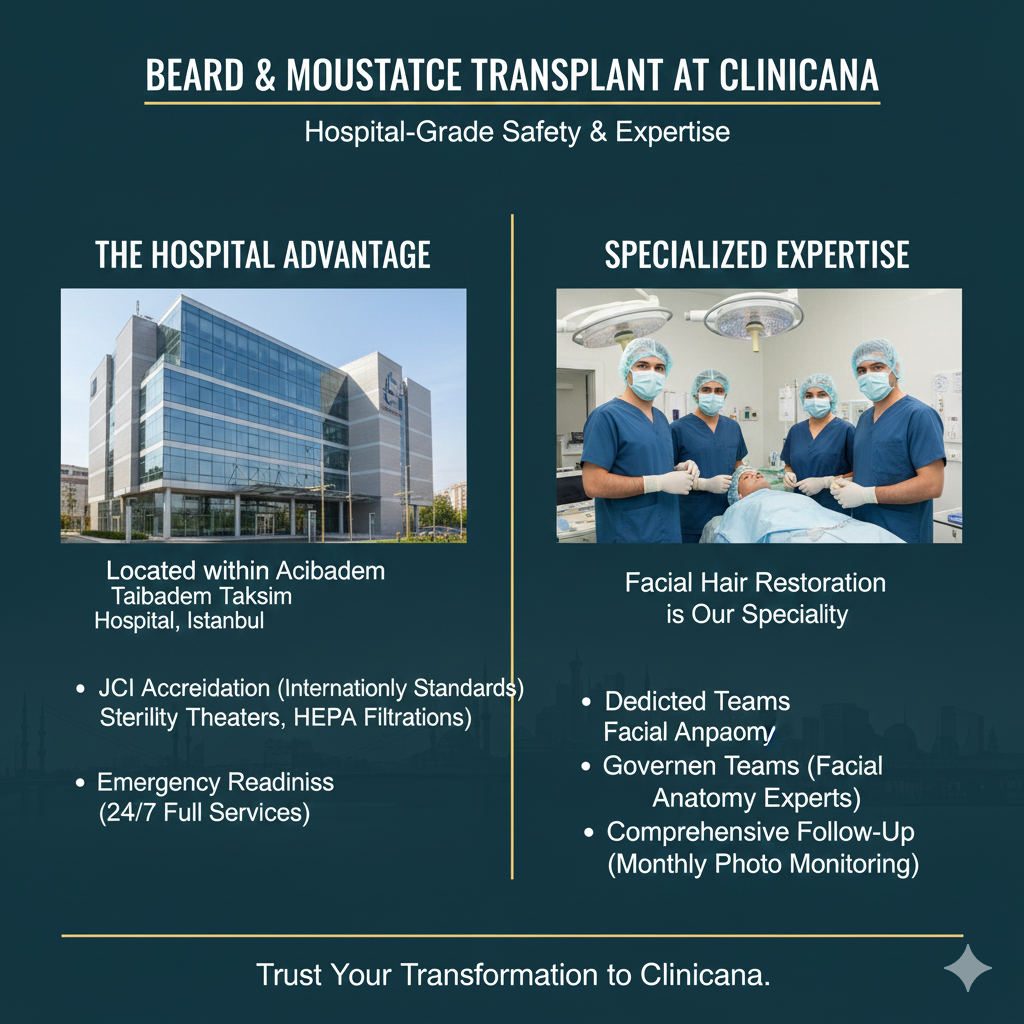
Choosing a provider in a foreign country requires trust. At Clinicana, we distinguish ourselves through our unwavering commitment to medical safety and hospital-grade standards.
The Hospital Advantage
We are located within the Acibadem Taksim Hospital, one of the most modern and prestigious medical facilities in Istanbul.
- JCI Accreditation: Our facility meets the rigorous Joint Commission International standards for safety and quality care.
- Sterility: Unlike small clinics located in apartments or office buildings, we operate in full surgical theaters with hospital-grade sterilization and HEPA filtration.
- Emergency Readiness: Being in a full-service hospital means immediate access to cardiologists, dermatologists, and emergency care if ever needed.
Specialized Expertise
Facial hair restoration is not a side gig for us; it is a specialty.
- Dedicated Teams: We have medical teams that focus specifically on the nuances of beard and moustache transplant Turkey procedures. They understand the anatomy of facial nerves and muscles.
- Comprehensive Follow-Up: Our relationship does not end when you fly home. We have a dedicated online follow-up department that monitors your photos monthly to ensure your growth is on track.
FAQs About Beard and Moustache Transplant in Turkey
Is beard transplant permanent?
Yes, the results are permanent. The transplanted hair follicles are harvested from the back of your scalp, which is genetically resistant to hair loss. Once they root in your face, they will grow for the rest of your life.
Will transplanted beard hair grow like normal facial hair and need shaving?
Yes. The transplanted hair is real hair. It will grow continuously. You will need to trim, shave, and groom it just like any other beard. Initially, it may grow slightly faster than your native facial hair (because it is scalp hair), but over time, it often adapts its growth cycle.
How many days do I need to stay in Istanbul for beard/moustache transplant?
We generally recommend a stay of 3 to 4 days.
Day 1: Arrival and Consultation.
Day 2: The Procedure.
Day 3: Follow-up check-up and first washing of the donor area.
Day 4: Departure. This timeline ensures we can monitor the immediate post-operative healing before you travel.
Is the procedure painful?
The procedure is performed under local anesthesia, so you will feel no pain during the surgery itself. You may feel a slight prick during the initial numbing injections. Post-operatively, patients report mild discomfort or itching, which is easily managed with standard painkillers.
Can I shave after the transplant?
You must avoid shaving for the first 10 to 14 days to allow the grafts to anchor securely. After the crusts have fallen off (around day 10-12), you can use scissors to trim. You should wait at least 1 month before using a razor or electric shaver on the recipient area.
Will there be scars?
FUE is a minimally invasive technique. It leaves tiny, dot-like micro-scars in the donor area at the back of the head, which are easily hidden even by short haircuts. In the recipient (beard) area, proper technique ensures there is no visible pitting or scarring once healing is complete.
When Should You See a Doctor?
While beard transplant in Turkey is a safe, minimally invasive procedure, it is still surgery. You should contact our medical team immediately if you observe:
- Signs of Infection: Excessive redness, heat, or pus oozing from the donor or recipient sites.
- Necrosis: Dark, black skin patches on the face (a rare but serious complication indicating poor blood supply).
- Uncontrolled Bleeding: Bleeding that does not stop after 10 minutes of firm, constant pressure.
- Severe Pain: Pain that is not relieved by the prescribed medication.
Contact us now – get a free medical consultation
Medical Disclaimer: This content is for informational purposes only and does not replace professional medical consultation.


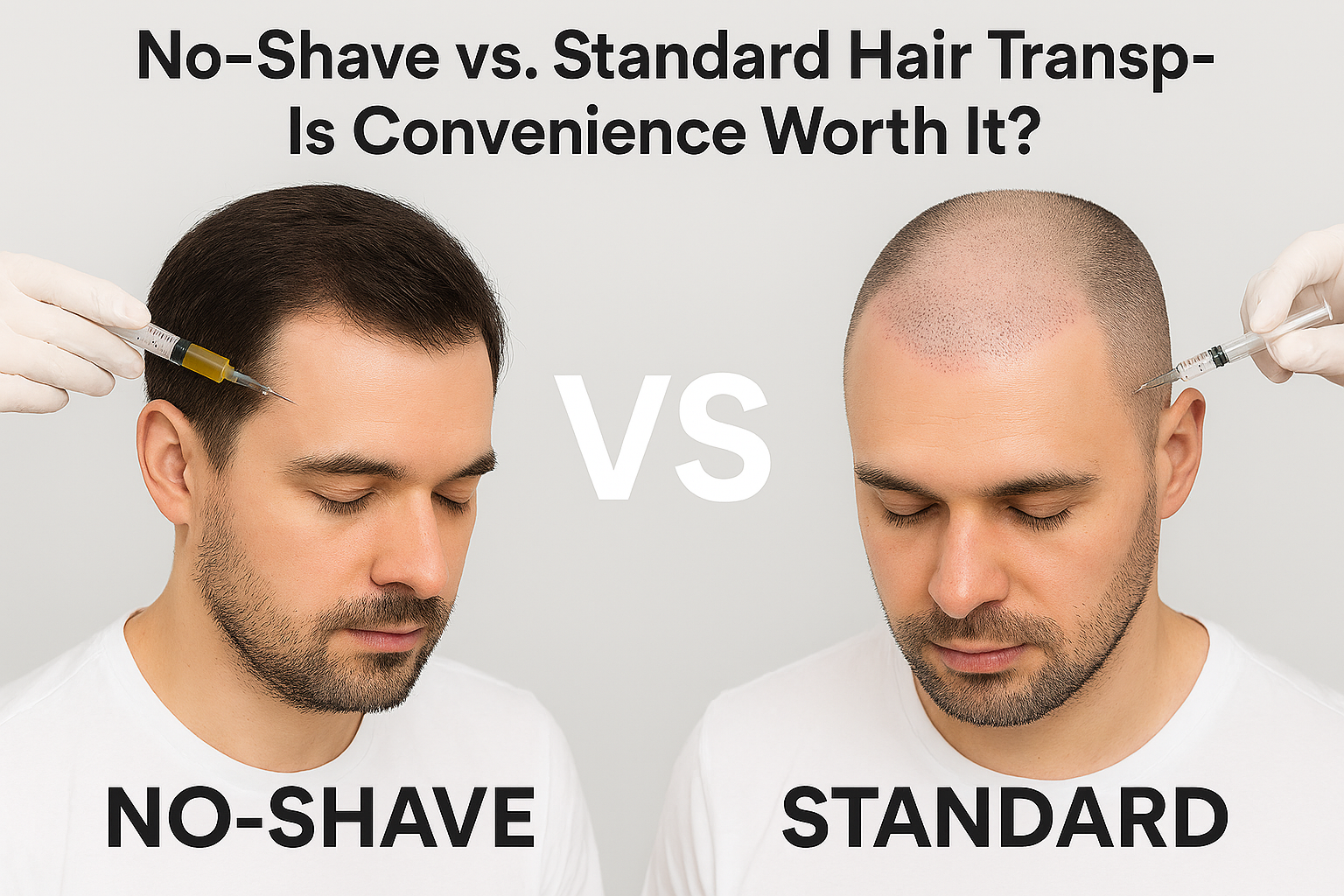
For many individuals facing hair loss, the decision to undergo a hair transplant is not hindered by the surgery itself, but by the recovery phase. Specifically, the prospect of shaving one’s head is a significant psychological barrier. In our clinical practice, we frequently meet patients—ranging from high-profile executives to women with diffuse thinning—who delay necessary […]
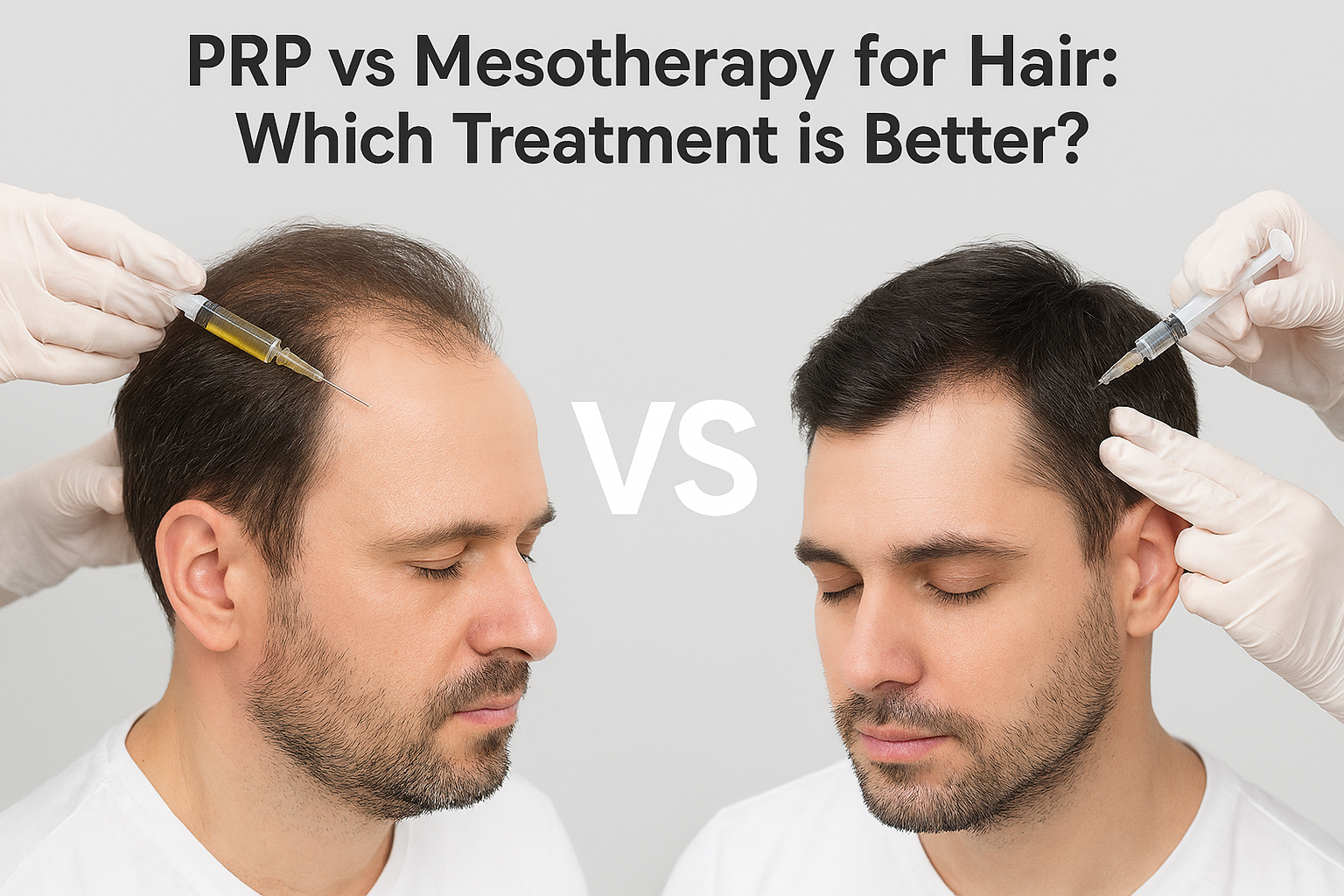
Investing in a hair transplant is a significant decision that represents a commitment to restoring not just your hair, but your self-confidence. However, the procedure itself is only the beginning of the journey. Once you leave the operating room, your scalp enters a critical recovery phase where the newly implanted follicles must anchor themselves and […]
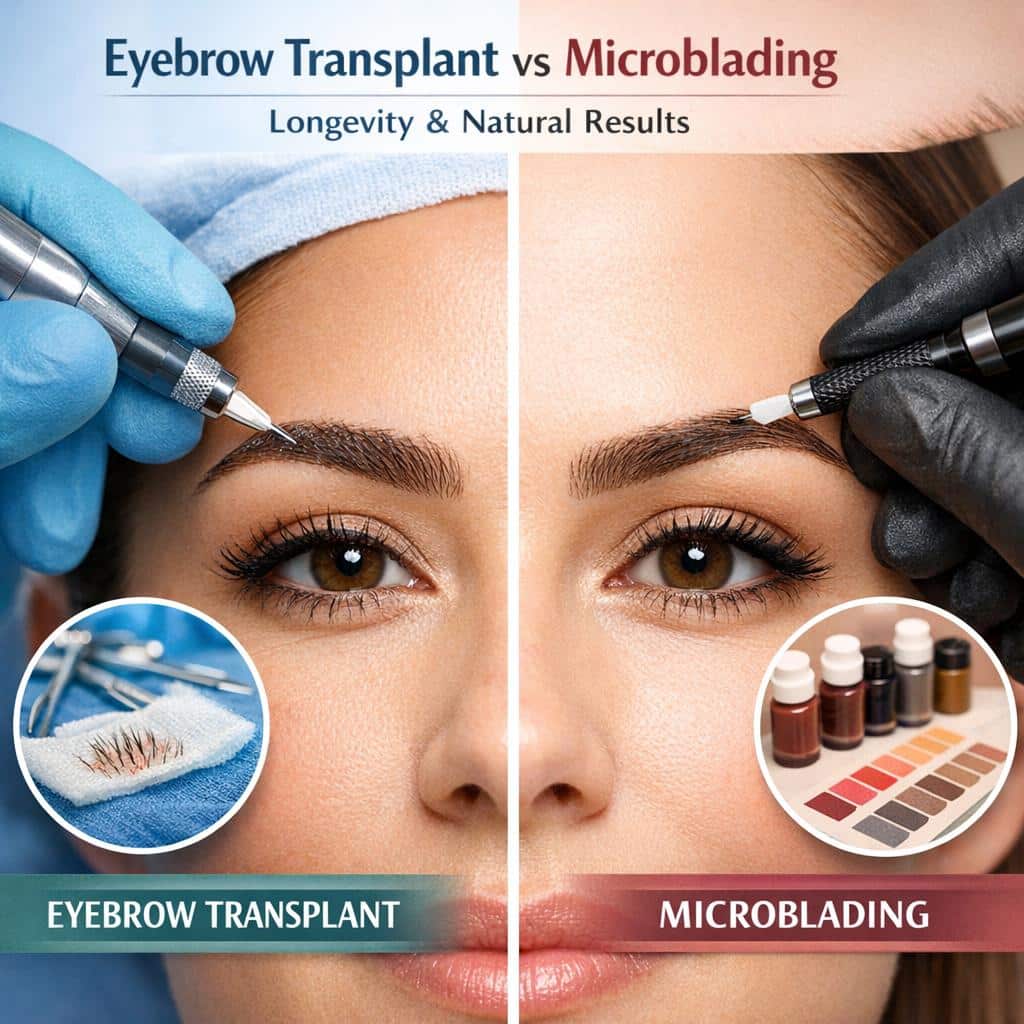
The eyebrows are one of the most defining features of the face, framing the eyes and conveying emotion. However, for many people, achieving the perfect brow is a daily struggle involving pencils, powders, and gels. Over-plucking in the past, genetic thinning, or medical conditions can leave brows sparse or misshapen. In the quest for a […]


Thank you!
Your details have been successfully submitted. Thanks!