


Eyebrow Transplant Design: The Secret to Natural, Feminine Brows in 2026
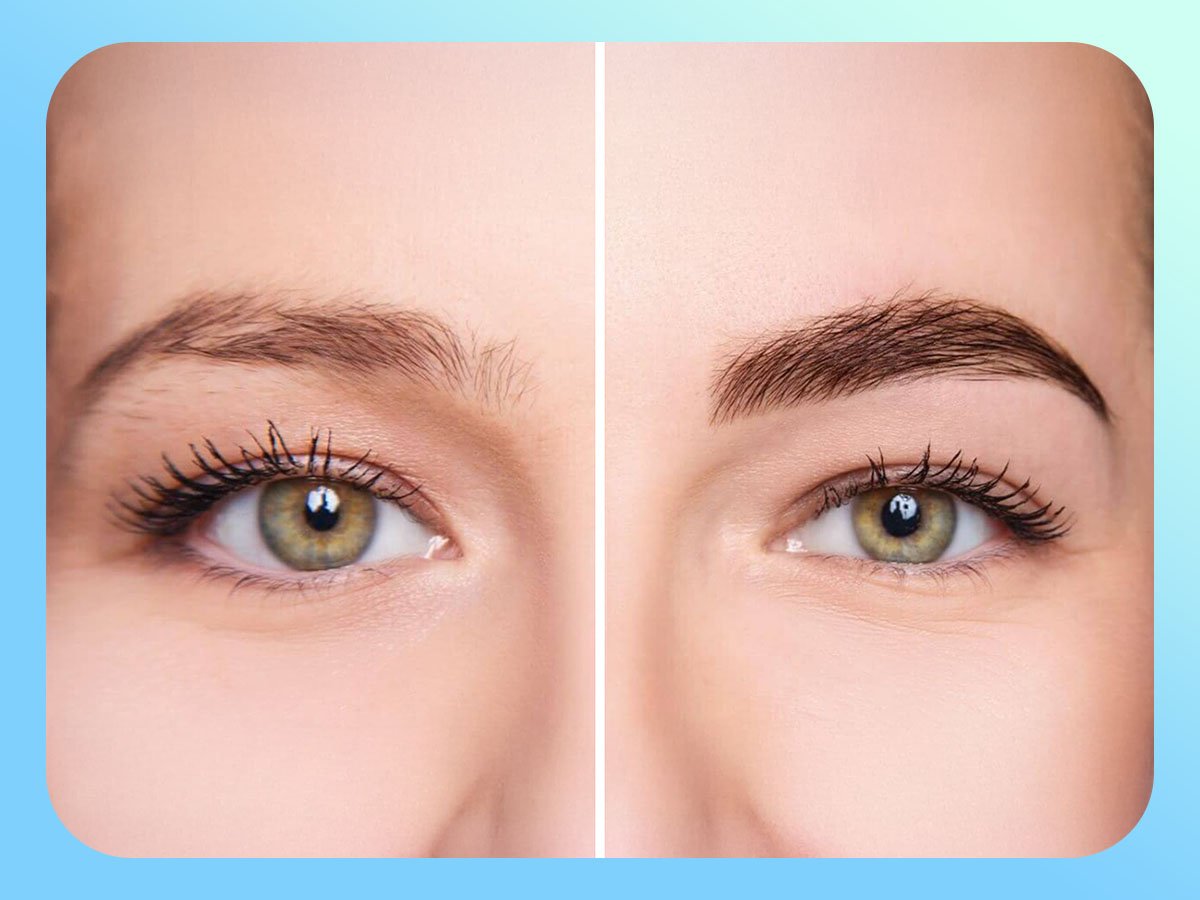
Eyebrows are the architecture of the face. A subtle arch can lift the eyes, while a full, soft brow can take years off your appearance.
But for many women, achieving this look is a daily struggle involving pencils, powders, and microblading sessions that fade too quickly.
In 2026, the conversation has shifted. It is no longer just about “filling in the gaps”; it is about artistic restoration. Women are flocking to Istanbul not merely for a medical procedure, but for a bespoke design that respects their unique facial harmony.
However, an Eyebrow Transplant in Turkey is unforgiving. Unlike scalp hair, which can be hidden, your brows are front and center.
The difference between a “wow” result and a “regret” lies entirely in the design details: the angle of implantation, the softness of the hairline, and the precision of the arch.
This guide explores the art behind the science, explaining how top experts create results that look undeniably real and beautifully feminine.
Beyond the Trend: Why “Soft Restoration” is the Goal
In the past, eyebrow transplants often had a bad reputation for looking too thick, harsh, or “pluggy.” This happened because surgeons treated eyebrows exactly like scalp hair—packing in density without considering softness. Today, the philosophy has evolved into what experts call “Soft Restoration.”
The goal isn’t just to add hair; it’s to create a texture that whispers rather than shouts.
- Feathered Edges: A natural brow never starts with a solid block of hair. “Soft Restoration” mimics nature by placing ultra-fine, single hairs at the start of the brow (near the nose) and gradually increasing density towards the middle. This creates a “feathered” effect that looks gentle on the face.
- Avoiding the “Sharpie” Look: Many patients fear ending up with brows that look drawn on with a marker. By prioritizing gradual density over maximum fullness, modern techniques ensure the brow frames the eyes without overpowering the rest of your features.
- Feminine vs. Masculine: Men’s brows are typically flatter and denser. For a feminine result, the restoration must be lighter, with a slight taper at the tail to maintain elegance.
The Art of Feminine Design: It’s Not Just About Hair
A successful eyebrow transplant is 20% surgery and 80% art. Before a single hair is extracted, your surgeon must become a portrait artist.
The design phase is critical because once the follicles are implanted, that shape is permanent. Here is how experts craft a bespoke feminine arch:
The Golden Ratio & Face Mapping
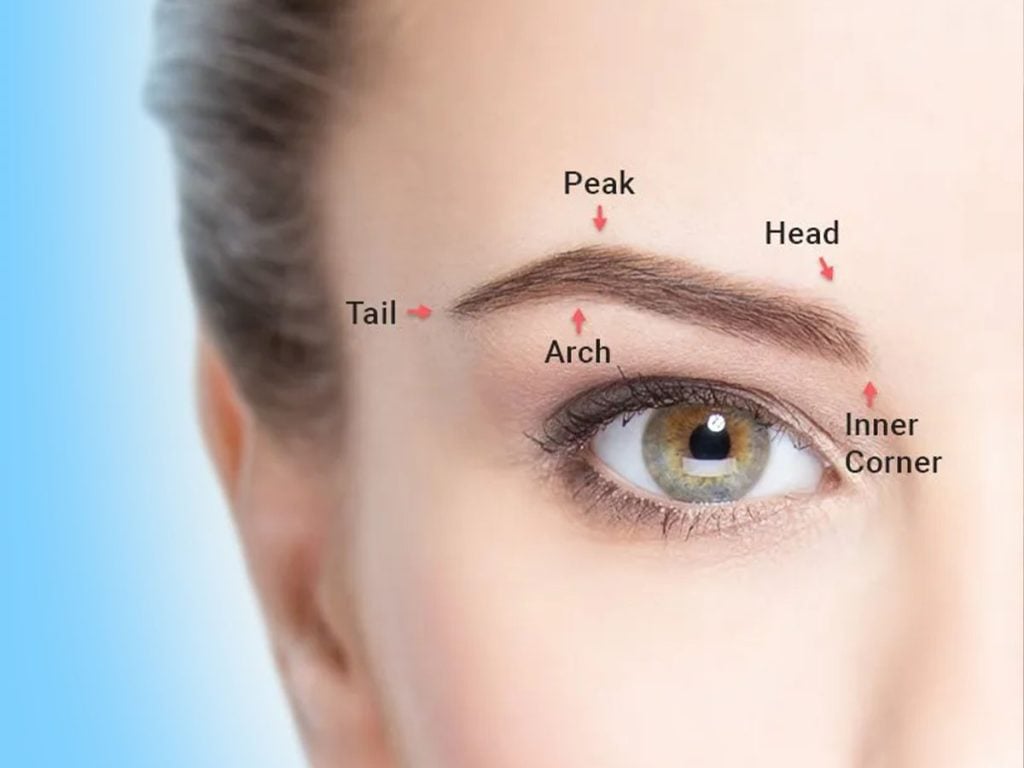
There is no “one-size-fits-all” stencil. Top aesthetic surgeons use the Golden Ratio (Phi) to map your brows according to your specific bone structure.
- The Start: The brow should begin exactly above the inner corner of the eye (or the edge of the nostril for a wider set).
- The Peak (Arch): This is the magic point. It typically aligns with the outer edge of your iris when looking straight ahead. A peak placed too close to the center can make you look surprised; too far out, and the eye looks droopy.
- The Tail: The brow should end on a diagonal line drawn from the nostril past the outer corner of the eye. If the tail drops below the start point, it can drag the face down, making you look tired.
Arch Placement: The Difference Between “Sad” and “Lifted” Eyes
The position of the arch determines the emotional expression of the face.
- For a “Lifted” Effect: A slightly higher arch opens up the eyelid space, acting like a non-surgical blepharoplasty (eyelid lift). This is ideal for women noticing early signs of aging or heavy lids.
- For a “Soft” Look: A flatter, straighter brow (popularized by K-Beauty trends) gives a more youthful, innocent appearance but requires a delicate touch to avoid looking masculine.
Can I Approve the Shape Before Surgery? (Yes, Always!)
You should never go into surgery “blind.” In reputable clinics, the design process is collaborative.
The surgeon will draw the proposed outline on your face with a surgical marker.
You will be handed a mirror to check symmetry, thickness, and arch height.
Do not hesitate to speak up. If you want the tail slightly longer or the arch softer, this is the moment to adjust it. The surgery only begins once you sign off on the design.
Medical Realism: Angles, Direction & The “Flat Lay” Technique
Design is important, but execution is everything. The biggest giveaway of a bad eyebrow transplant is hair that sticks straight out from the face like a toothbrush.
This happens when the surgeon fails to respect the unique anatomy of eyebrow hair.
Why Eyebrow Hair Must Lie Flat (Unlike Scalp Hair)
Scalp hair naturally grows at a 45-degree angle from the head. Eyebrow hair, however, grows almost parallel to the skin—essentially flat against the face.
To achieve this “Flat Lay” effect, the surgeon must insert the needle or Choi Pen at an extremely acute angle (almost 10-15 degrees).
This is technically difficult and requires a steady, experienced hand. If the angle is even slightly too steep, the hairs will grow outwards, creating an unruly, “wild” appearance that is hard to tame.
Single-Hair Grafts Only: Avoiding the “Clumpy” Look
Natural eyebrows are composed of very fine, single hairs. The hair on your scalp, however, often grows in groups of 2, 3, or even 4 hairs (follicular units).
- The Mistake: If a surgeon transplants a multi-hair graft (a “clump” of 3 hairs) directly into the brow, it will look like a dark, thick plug.
- The Solution: Expert teams use microscopes to separate these units. They ensure that only single, ultra-fine hairs are implanted into the eyebrow area. This painstaking process guarantees that the texture remains silky and indistinguishable from your native brows.
Fixing the Past: Over-Plucking & Microblading Correction
Many of our patients aren’t looking for a new shape, but simply trying to undo the damage of the past.
Whether it’s the lingering effects of the “thin brow” trend of the 90s or a microblading session gone wrong, a transplant offers a permanent reset button.
Transplanting Over Tattoo/Microblading: Is it Possible?
This is one of the most common questions we receive. The answer is a resounding Yes.
In fact, planting hair over an old tattoo or faded microblading is often the perfect solution.
- The 3D Effect: The flat ink provides a base color (shadow), while the transplanted hair adds texture and volume. The result is a rich, 3D brow that looks far more realistic than ink alone.
- Camouflage: The new hair effectively hides the sharp, artificial edges of old tattoo ink, softening your look immediately.
Restoring “90s Thin Brows” Permanently
If you were a victim of the 1990s over-plucking craze, you likely have “traction alopecia”—where the hair follicles have been permanently damaged and stopped growing.
No amount of castor oil or serum will bring them back.
- The Fix: A transplant bypasses the damaged follicle entirely. We introduce brand-new, healthy follicles from the back of your head into these scarred or empty areas. Since these new follicles are genetically resistant to thinning, they will grow for a lifetime, finally giving you the fullness you lost decades ago.
Life With Transplanted Brows: The Truth About Maintenance
While an eyebrow transplant is permanent, it is not “maintenance-free.” Because the donor hair comes from your scalp, it retains its original DNA—meaning it thinks it is still on your head and will keep growing. Understanding this is key to living happily with your new brows.
The Growth Cycle: Why You Must Trim Weekly
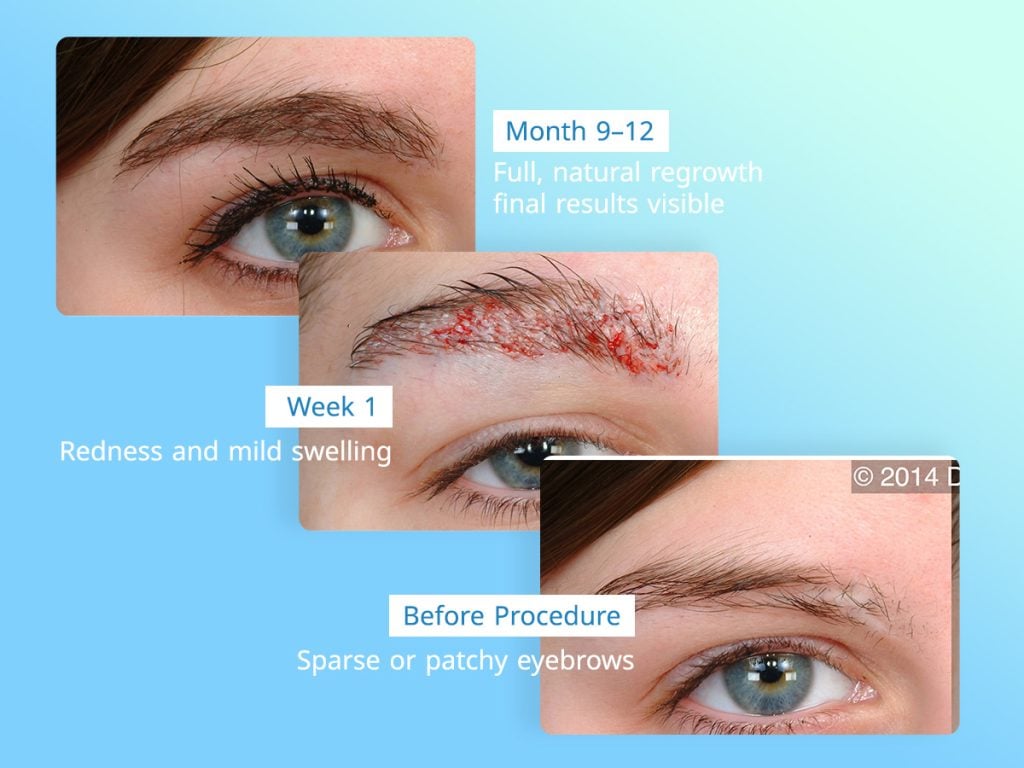
- The Routine: Once your new brows fully mature (around month 6-8), you will need to trim them regularly—typically once every 5 to 7 days.
- The Tool: A simple pair of manicure scissors and a spoolie brush are all you need. Brush the hairs upward and snip the tips that extend beyond your desired shape. It takes less than 30 seconds but is essential to keep them looking neat.
Training Your New Hairs (Gel & Grooming Tips)
In the early months, the new hairs might be slightly unruly as they adjust to their new location. You can “train” them to lie perfectly flat.
- Brow Gel: Using a clear brow gel daily helps set the direction. Over time, the follicle actually adapts to the tension and begins to grow in that direction naturally.
- Lamination: Once fully healed (after 12 months), many patients opt for a “Brow Lamination” treatment to chemically straighten and set the hairs for a sleek, fluffy runway look.
Cost vs. Artistry: Why “Design” Costs More in Turkey
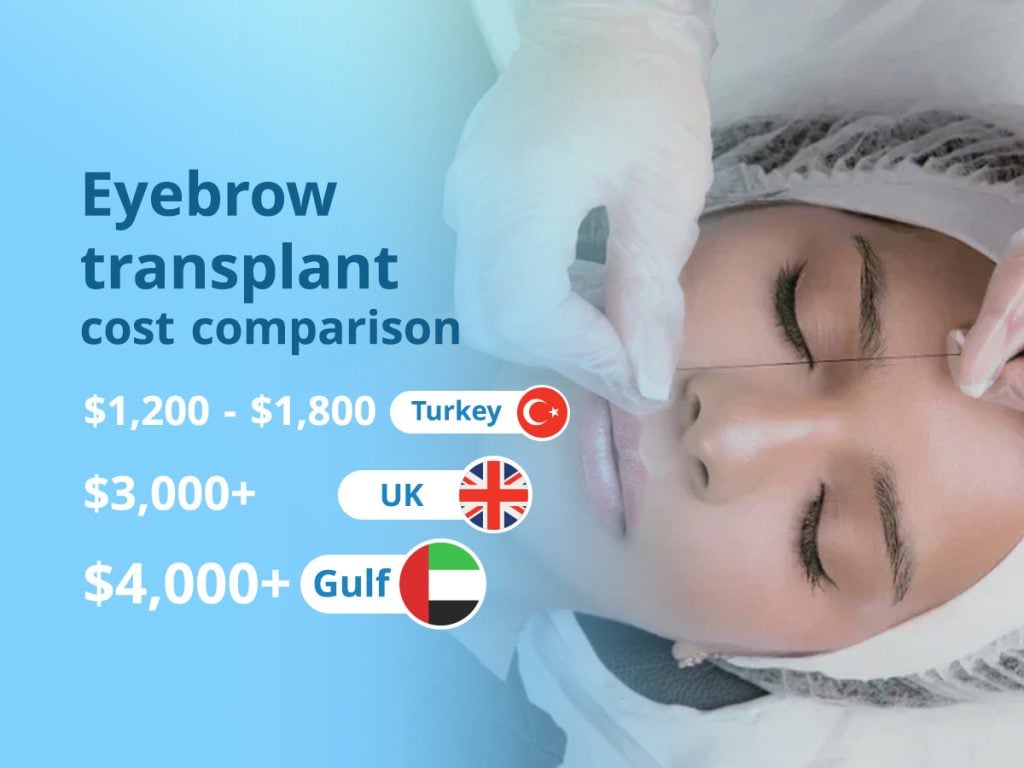
In Istanbul, you will find clinics offering eyebrow transplants for as little as €800. However, when it comes to your face, bargain hunting is dangerous. The price difference usually reflects one thing: Time.
A standard technician might rush through the procedure in 2 hours, placing grafts quickly without regard for curl or direction. An artistic surgeon, however, treats the procedure as facial architecture.
- The Difference: You are paying for the extra 2 hours spent on micro-sorting single hairs under a microscope. You are paying for the surgeon’s eye in designing an arch that lifts your face, not just fills it.
- The Investment: Considering this is a permanent change to the center of your face, the difference between a “budget brow” and a “bespoke brow” is priceless. In 2026, reputable clinics typically charge between €1,500 and €2,500 for this level of detailed artistry—still a fraction of UK/US prices, but high enough to ensure uncompromising quality.
Final Thoughts: Frame Your Beauty, Don’t Just Fill It
An eyebrow transplant is more than just moving hair from point A to point B; it is about restoring balance to your features.
Whether you have lost your brows to over-plucking, illness, or simply genetics, the goal of modern restoration is to make you look like you—just defined.
In 2026, you don’t have to settle for “painted on” brows. By choosing a clinic that prioritizes artistic design and soft restoration, you can wake up every morning with full, natural arches that frame your eyes perfectly—no pencil required.
Ready to design your perfect arch? Contact our medical team today for a free evaluation of your facial symmetry.

Eyebrows are the architecture of the face. A subtle arch can lift the eyes, while a full, soft brow can take years off your appearance. But for many women, achieving this look is a daily struggle involving pencils, powders, and microblading sessions that fade too quickly. In 2026, the conversation has shifted. It is no […]
For over a decade, Istanbul has undisputedely held the crown as the global capital of hair restoration. In 2025 alone, hundreds of thousands of men traveled to Turkey, drawn by the promise of premium results at a fraction of European prices. However, if you are planning your trip in 2026, you might have noticed a shift: […]
This full hair transplant guide for Canadians in Turkey leads you through the hair transplant process from the first consultation to aftercare following the procedure. We’ll review the consultation, expenses, and recovery tips following a hair transplant in Turkey. What to Expect from a Hair Transplant Consultation in Turkey A consultation with the hair surgeon […]


Thank you!
Your details have been successfully submitted. Thanks!