


Eyebrow Transplant vs Microblading: Longevity and Natural Results
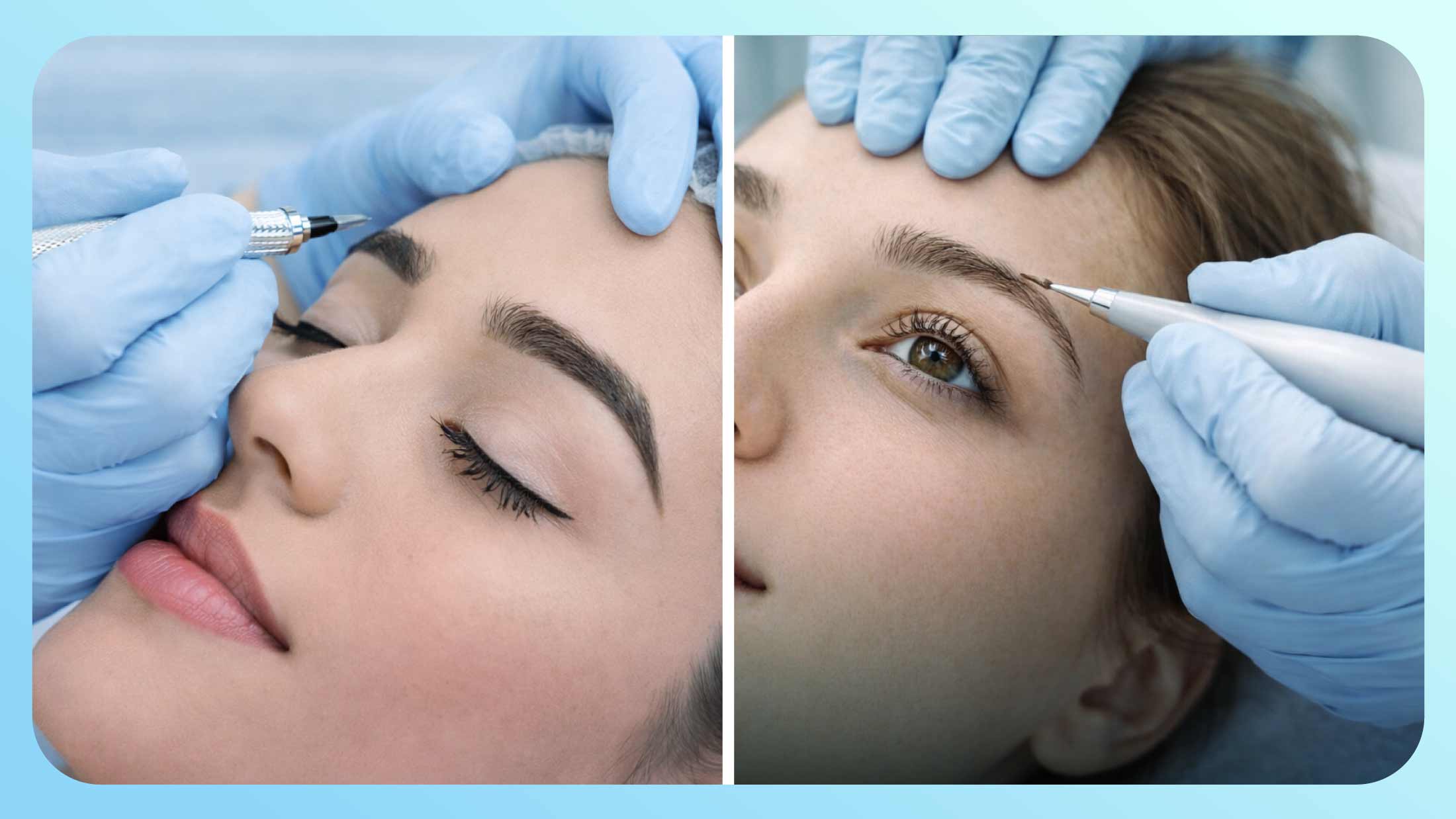
The eyebrows are one of the most defining features of the face, framing the eyes and conveying emotion. However, for many people, achieving the perfect brow is a daily struggle involving pencils, powders, and gels.
Over-plucking in the past, genetic thinning, or medical conditions can leave brows sparse or misshapen.
In the quest for a lasting solution, two primary contenders have emerged: Microblading and Eyebrow Transplantation.
While both promise to enhance your look, they are fundamentally different procedures—one is a cosmetic tattoo, and the other is a medical restoration.
At our clinic, we often meet patients who are tired of the temporary nature of makeup but unsure about surgical options.
This guide is designed to provide a clear, medical comparison between eyebrow transplant vs microblading, helping you understand the longevity, naturalness, and maintenance of each to make the choice that is right for you.
Eyebrow Transplant vs Microblading: Which Lasts Longer?
The Quest for Perfect Brows (Ink vs. Hair)
The trend in aesthetics has shifted decisively towards thick, natural, and defined eyebrows. The “thin line” of the 90s is long gone, replaced by a desire for volume and texture.
However, biology does not always cooperate with fashion. Many individuals find that after years of plucking, their brow hair simply refuses to grow back.
This leads to the “morning routine fatigue”—the exhausting daily task of drawing on eyebrows before leaving the house. To escape this cycle, patients typically consider two paths:
- Tattooing the Skin (Microblading): Creating the illusion of hair using ink.
- Restoring the Hair (Transplant): Moving living follicles to the brow area to grow real hair.
Understanding the difference between 2D ink and 3D hair is crucial for managing your long-term expectations.
What is Microblading? (The Semi-Permanent Makeup)
Microblading is a cosmetic procedure, often performed by aestheticians rather than doctors. It falls under the category of permanent makeup, though “semi-permanent” is more accurate.
How it works
The practitioner uses a handheld tool with a blade formed of tiny needles. They make fine cuts into the upper layers of the skin (epidermis) and deposit pigment.
These strokes are designed to mimic the appearance of individual brow hairs.
The Pros
- Instant Gratification: You see the immediate shape and color change as soon as the session is done.
- Lower Upfront Cost: The initial session is generally cheaper than a surgical transplant.
- Shape Correction: It is excellent for people who have plenty of hair but want to slightly alter the arch or tail shape.
The Cons
- Fading and Discoloration: Because the pigment is not implanted as deep as a traditional tattoo, it fades. Over time, brown ink often degrades into unnatural shades of blue, red, or gray, requiring color correction.
- Lifetime Cost: Results typically last 12 to 18 months. To maintain the look, you must pay for touch-ups indefinitely. Over 5-10 years, the cumulative cost often exceeds that of a transplant.
- 2D Flat Look: Microblading stains the skin; it does not add volume. Under certain lighting or from the side profile, the brows can look flat because there is no actual hair texture.
What is an Eyebrow Transplant? (The Permanent Restoration)
An eyebrow transplant is a medical procedure performed by a physician or specialized medical team. It uses the same principles as a scalp hair transplant but with much higher precision.
How it works
We use the DHI (Direct Hair Implantation) method to extract individual hair follicles from a donor area (usually the back of the head) and implant them into the brow ridge.
We specifically select fine hairs (often from behind the ear) to match the texture of eyebrow hair.
The Pros
- Real 3D Texture: Because it is your own living hair, it has volume, texture, and movement. It looks natural from every angle, not just straight on.
- Permanent Results: Once the transplanted follicles anchor (usually after 10-14 days), they are permanent. They will grow for a lifetime, just like the hair on your head.
- Complete Freedom: You can dye, wax, thread, or reshape these hairs just like natural brows. You are not stuck with a tattooed shape.
The Cons
- Trimming Required: The transplanted hair comes from the scalp, so it retains its genetic growth cycle. It will grow longer than native brow hair and requires trimming (usually once a week or two) to maintain the desired length.
- Higher Upfront Cost: It is a surgical procedure requiring a medical team, so the initial investment is higher than a single microblading session.
Comparison: Natural Look & Maintenance
To help you visualize the trade-offs, here is a direct comparison based on clinical parameters.
| Feature | Microblading (Ink) | Eyebrow Transplant (Real Hair) |
| Appearance | 2D (Flat, drawn-on look). | 3D (Real volume and texture). |
| Longevity | Semi-permanent (1–2 years). | Permanent (Lifetime). |
| Maintenance | Annual touch-ups; daily makeup to cover fading. | Trimming every 1–2 weeks. |
| Pain Level | Mild to moderate (scratching sensation). | Painless (performed under local anesthesia). |
| Cost (5 Years) | High (Initial + 3-4 touch-ups). | One-time investment. |
| Risk | Ink discoloration, scarring from repeated cuts. | Temporary shedding (shock loss). |
4 Signs You Are Ready for a Transplant (Not Ink)
Not everyone needs surgery. However, in our medical practice, we recommend a transplant over microblading if:
1. You have over-plucked brows that stopped growing
If the follicles have been permanently damaged by years of tweezers (traction alopecia), no amount of serum or time will bring them back. Only a transplant can restore the hair count.
2. You are tired of “faded ink” discoloration
If you have had microblading before and are frustrated by the ink turning orange or gray, or by the scarring that can occur from repeated blade cuts, a transplant can cover and conceal the old tattoo with real hair.
3. You have scars or alopecia in the brow area
Scar tissue (from injury or burns) does not hold tattoo pigment well. However, we can successfully implant hair grafts into scar tissue, effectively hiding the scar.
4. You want volume, not just color
If your main complaint is that your brows look “flat” or “invisible” without makeup, ink will not solve the problem.
Only adding physical hair follicles will provide the density and shadow that creates a youthful, defined brow.
The Art of Eyebrow Design at Clinicana
Creating a natural eyebrow is one of the most challenging tasks in hair restoration. It is not just about filling a space; it is about architecture.
Direction and Angle: The secret to natural results
Scalp hair grows at a 45-degree angle. Eyebrow hair, however, grows almost flat against the skin.
- The Upper Brow: Hairs often point downward and outward.
- The Lower Brow: Hairs point upward and outward.
- The Spine: Where these two directions meet, forming a subtle ridge.
If a surgeon implants the hairs at the wrong angle (sticking straight out), the result is unruly and unnatural.
Why DHI pens are crucial
At Clinicana, we use DHI Choi Implanter Pens for eyebrows. This tool allows us to control the angle of implantation precisely, ensuring the new hairs lay flat against the skin surface, mimicking the natural “flow” of a brow.
Selecting the right donor hair
We do not just take any hair. We carefully examine the donor area (usually the nape of the neck or behind the ears) to find the finest, thinnest single hairs. This ensures the transplanted brow doesn’t look coarse or bushy.
Frequently Asked Questions (FAQ)
Will transplanted eyebrow hair grow long?
Yes. Because the grafts are taken from the scalp, they will grow at the same rate as the hair on your head.
You will need to trim your eyebrows with small scissors periodically (usually once every 7–10 days) to keep them at the desired length.
Over time, the growth may slow down slightly as the hair adapts (a process called recipient dominance), but trimming will always be necessary.
Can I microblade over an eyebrow transplant?
Yes, but it is rarely needed. Some patients choose to have a very light microblading session (“shading”) a year after their transplant to add a background “powder effect” beneath the real hairs.
However, most patients find the density of the transplant is sufficient on its own.
Is the transplant procedure painful?
The procedure is performed under local anesthesia, so you will feel no pain during the extraction or implantation.
You may feel a slight pressure, but it is generally very comfortable. Post-op, there may be mild itching or swelling, but significant pain is rare.
Does eyebrow transplant leave scars?
The extraction from the donor area is done using FUE (Follicular Unit Extraction), which leaves tiny, dot-like micro-scars that are virtually invisible, even with short hair. In the eyebrow area, the use of DHI pens ensures there is no visible scarring or pitting around the new hairs.
How soon can I wear makeup after surgery?
You must avoid applying makeup to the eyebrow area for at least 10–14 days to prevent infection and allow the grafts to anchor securely. After the scabs have fallen off, you can resume your normal makeup routine.
Conclusion: Invest in Real Hair, Not Just Ink
When deciding between an eyebrow transplant vs microblading, consider your long-term goals. Microblading is a temporary fix that simulates the look of hair.
An eyebrow transplant is a permanent restoration it is a “one-and-done” investment in your confidence. You wake up every day with real, full brows—no drawing required.
When Should You See a Doctor?
If you are noticing thinning eyebrows, it is important to rule out underlying medical causes before seeking cosmetic restoration. Consult a doctor if:
- You are losing hair from the outer third of your eyebrows (a common sign of thyroid issues).
- You have patchy hair loss in the brows or scalp (Alopecia Areata).
- You have redness, scaling, or itching in the brow area.
Contact us now – get a free medical consultation
Are you ready to frame your face with permanent, natural volume? Contact our medical team at Clinicana today for a free assessment. Let us design the brows you were meant to have.
Medical Disclaimer: This content is for informational purposes only and does not replace professional medical consultation, diagnosis, or treatment.
Always seek the advice of your physician or other qualified health providers with any questions you may have regarding a medical condition. Results vary by individual.


Scalp psoriasis and seborrheic dermatitis are chronic inflammatory conditions that frequently cause discomfort, itching, redness, and scaling. For individuals experiencing hair thinning alongside these conditions, severe anxiety often arises regarding permanent follicle loss and the feasibility of hair restoration. A central concern among patients is whether undergoing a hair transplant while managing scalp psoriasis is […]
Medical Review by: Prof. Dr. Soner Tatlıdede – October 2026 Hair loss—specifically androgenetic alopecia (pattern baldness)—is driven by a progressive cellular process known as follicular miniaturization. Under the influence of dihydrotestosterone (DHT) and localized micro-inflammation, the growth phase (anagen) of the hair cycle shortens, while the resting phase (telogen) lengthens. Over successive hair cycles, blood flow to the […]
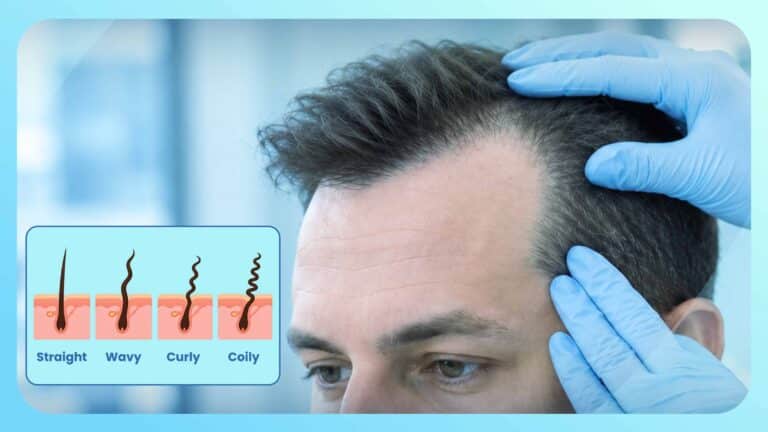
Medical Review by: Prof. Dr. Soner Tatlıdede – September 2026 Quick Summary (TL;DR) Hair types are globally categorized into four main classes—Type 1 (Straight), Type 2 (Wavy), Type 3 (Curly), and Type 4 (Coily/Afro-textured)—determined by the biological shape and exit angle of the hair follicle beneath the scalp surface. While straight hair grows from round, perpendicular follicles, […]


Thank you!
Your details have been successfully submitted. Thanks!