

English


Best Hair Transplant in Turkey
Clinicana is a hair transplant clinic in Istanbul, Turkey, offering FUE, DHI and Sapphire FUE treatment at Acıbadem Taksim Private Hospital. Rated 4.9 from over 6,000 reviews on Google and Trustpilot. Contact us today for a free consultation.


Graft Calculator Hair Transplant
Select the areas with hair loss that you'd like to treat
Approximate number of grafts
0 Grafts
0 Hairs
Selected zones
Hair Transplant Turkey Before and After Pictures
All
Afro
Beard
Eyebrow
Front Line
Full coverage
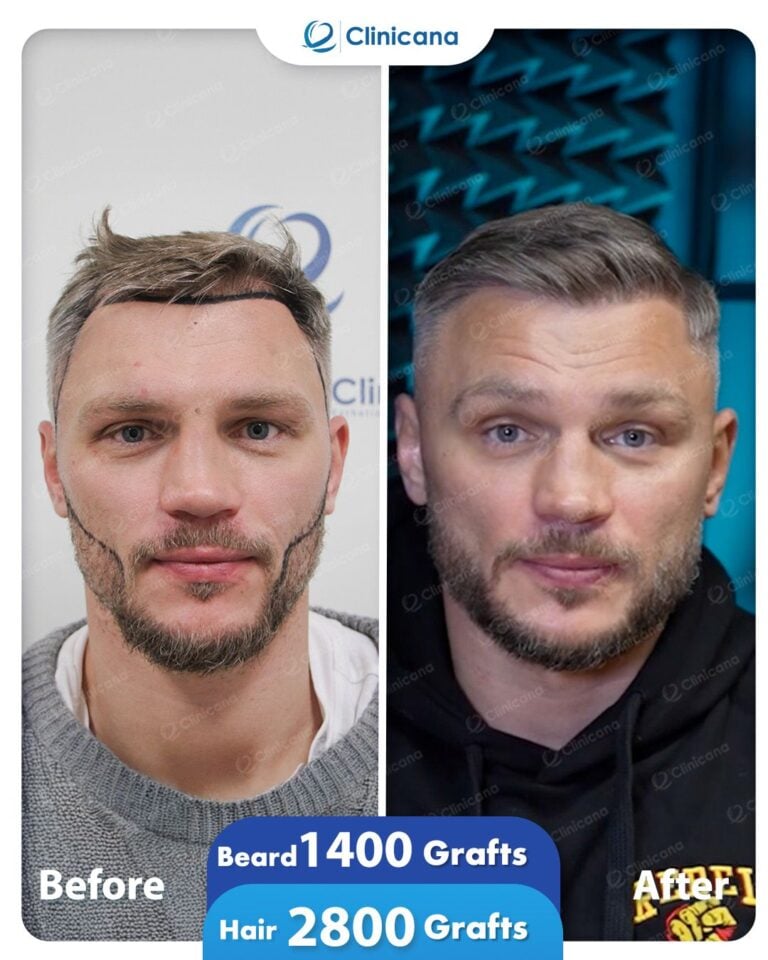
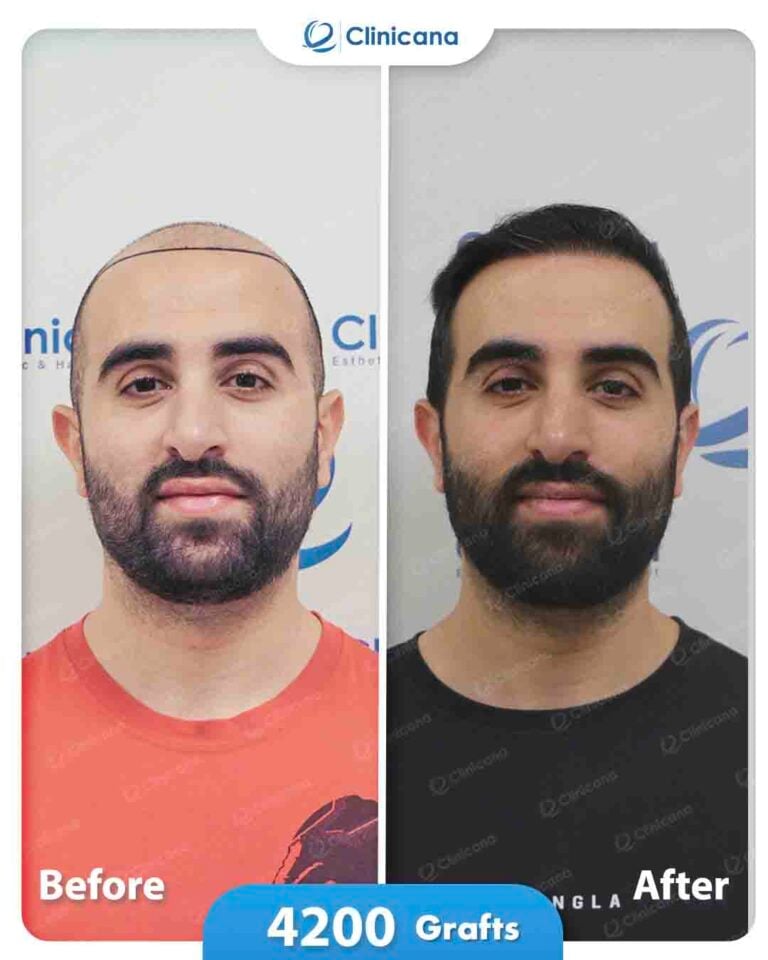
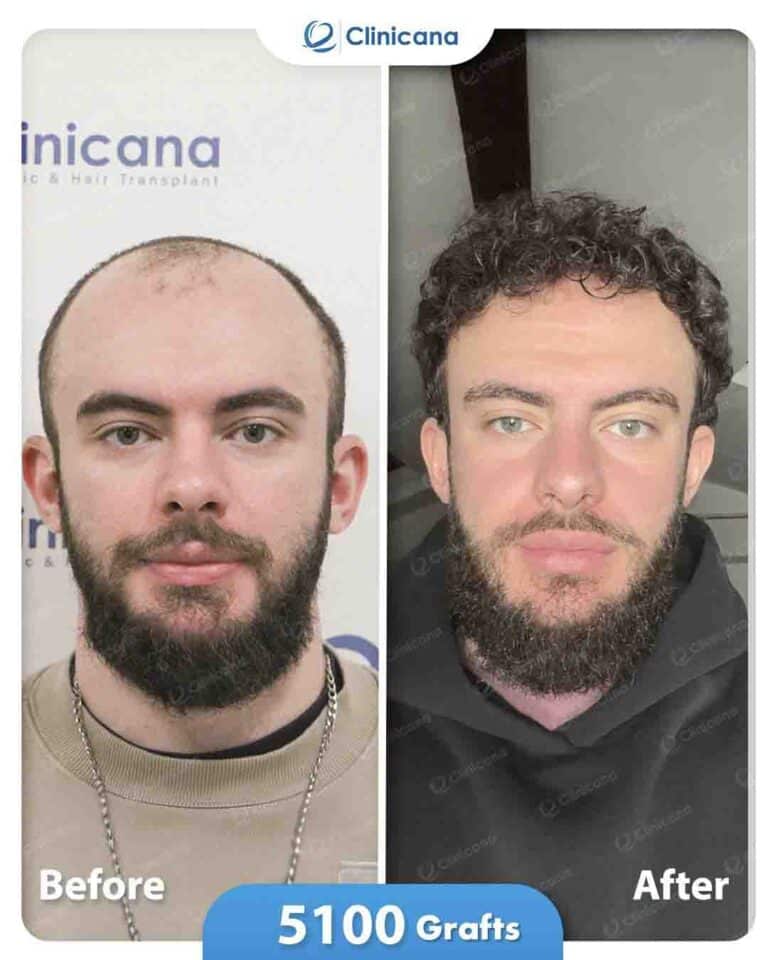
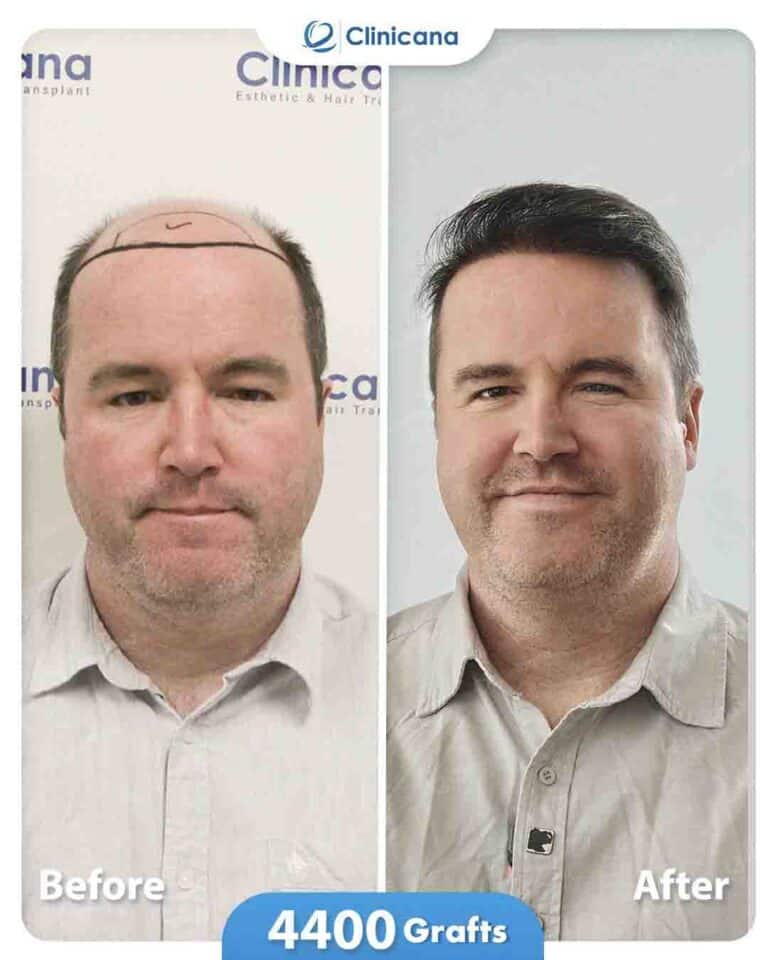
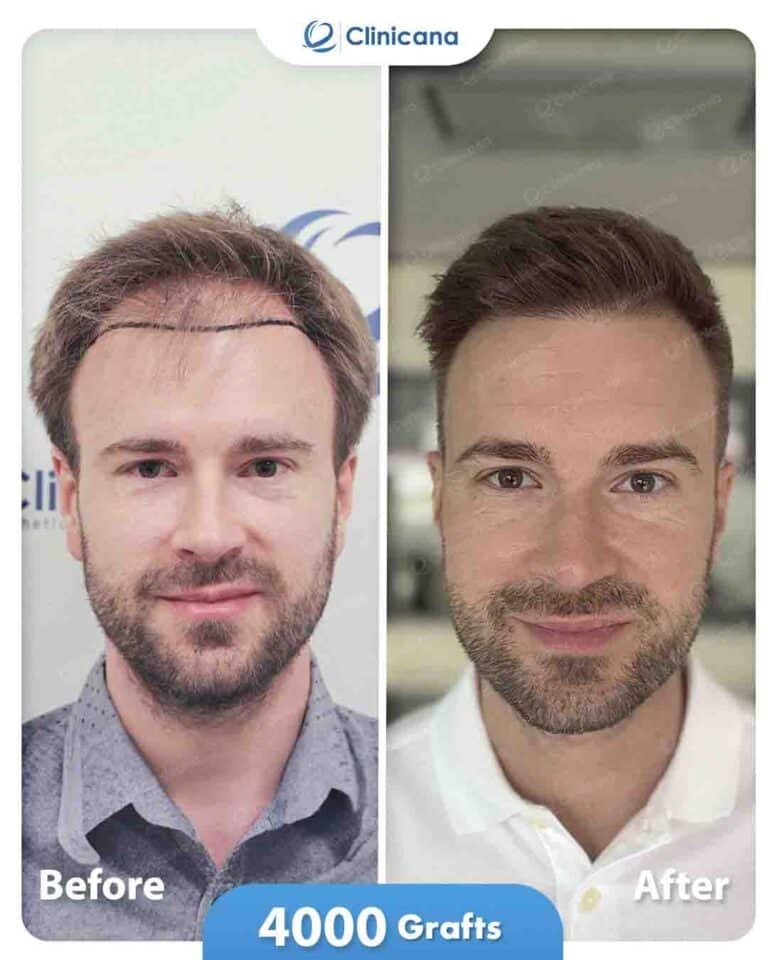
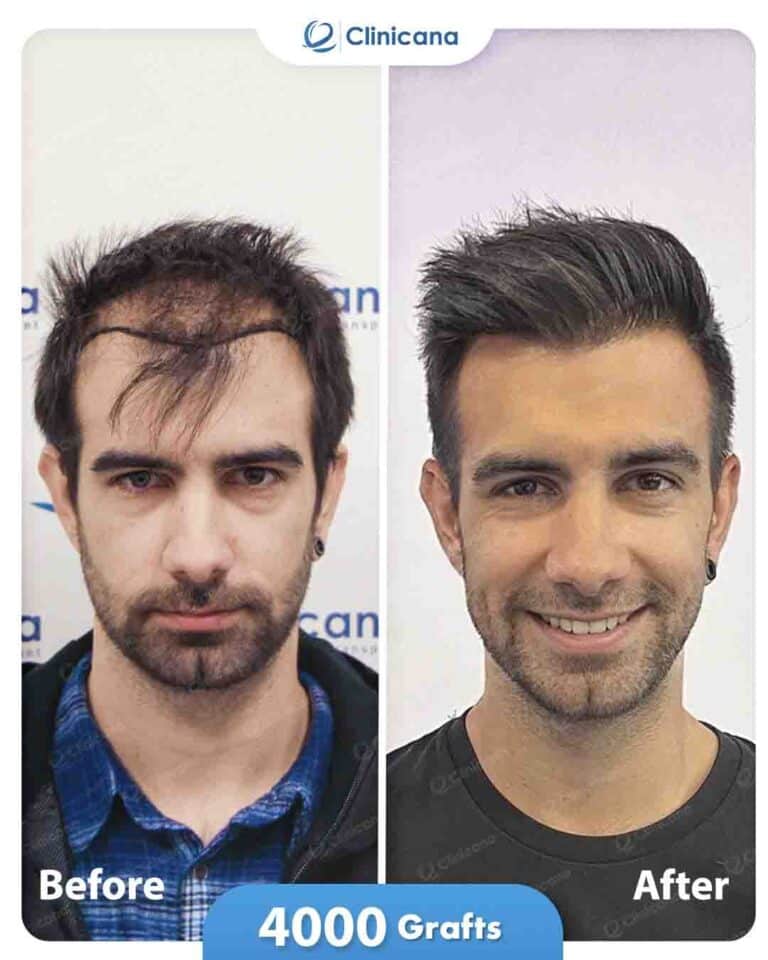
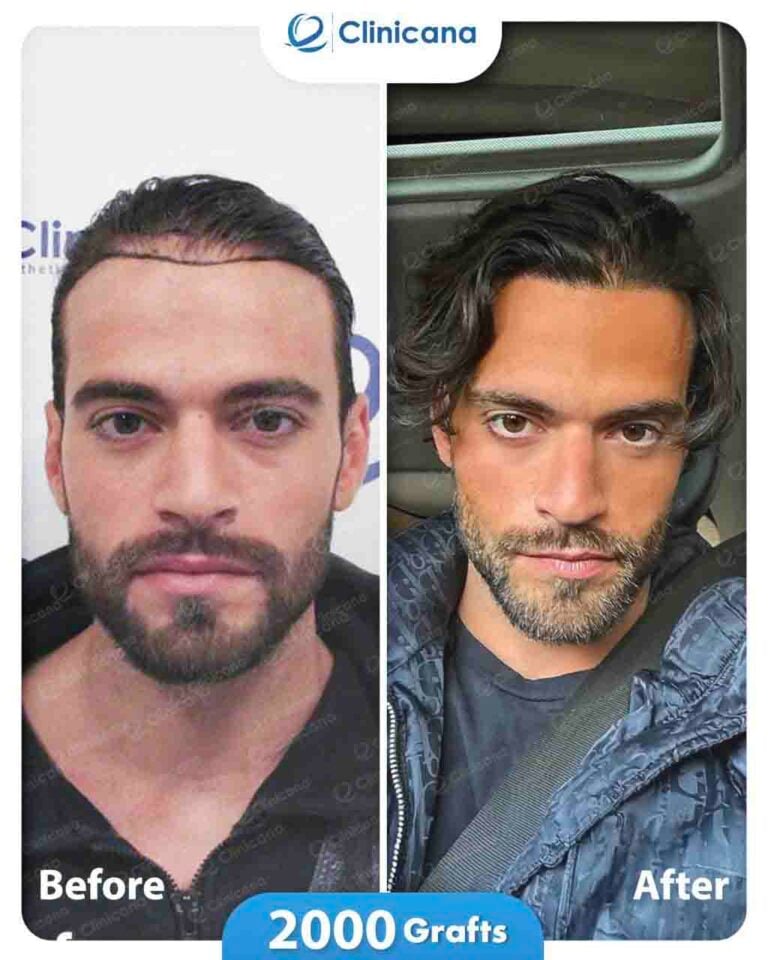
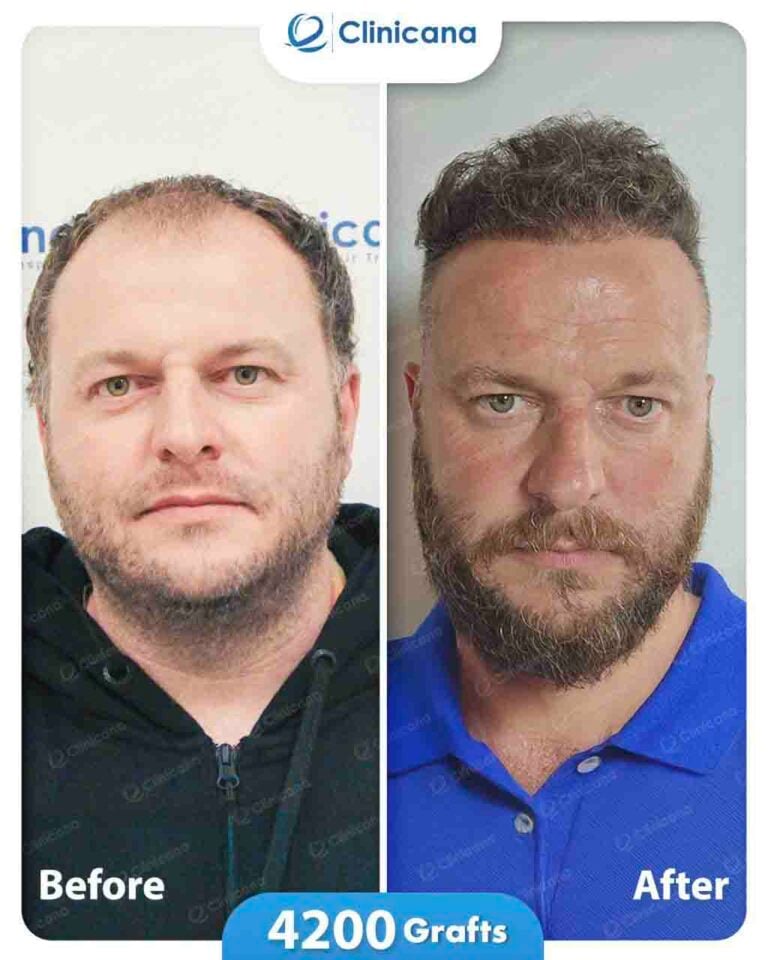
Real Clients, Real Results hair transplant success rate
1
Adam’s Hair Transplant Result


Date of hair transplant in Turkey:
February 2023
Evaluation before hair transplantation:
Receding hairline and patchy areas in the front, middle, and crown regions are evident due to genetic male pattern baldness. The hair type is thin. Although the volume of hair in the donor area is very good, it is still insufficient to achieve complete coverage at the top of the scalp. (Norwood Scale: Stage 5)
Number of grafts:
First session 4600 hair follicles
Technique:
Micro FUE + Sapphire
Hair transplant result:
A nice head of hair has been achieved, with a new hairline and good density. The density in the crown area is also satisfactory; a second procedure may be considered to enhance the density at the top of the scalp. We are proud to share Adam's words: “I am so happy looking at the mirror now.”
2
Graeme’s Hair Transplant Result

Date of hair transplant in Turkey:
January 2023
Evaluation before hair transplantation:
Graeme presented with a receding hairline and hair loss in the frontal area of the scalp and around the temples, consistent with a genetic hair loss pattern. The hairline design was tailored to complement the facial features, incorporating both straight and curvy elements to harmonise with the sides. (Norwood Scale: Stage 3).
Number of grafts:
3700 hair follicles
Technique:
FUE + Sapphire
Hair transplant result:
The outcome features a naturally appearing new hairline with excellent density at the front and temples. Please watch the video review to view before-and-after photos, as well as to observe the hair growth process month by month until achieving the remarkable final result.
3
Andrew’s Hair Transplant Result


Date of hair transplant in Turkey:
December 2022, June 2024
Evaluation before hair transplantation:
Andrew presented with full baldness due to genetic hair loss. While the donor area is very good, it is limited in comparison to the extensive baldness. Achieving full coverage in one session is not feasible; therefore, a second hair transplantation in the crown area was necessary to enhance the volume following a successful first hair transplant at our clinic. (Norwood Scale: Stage 7)
Number of grafts:
First: 4,500. Second: 3600 Grafts
Technique:
FUE + Sapphire
Hair transplant result:
The outcome features a natural hairline with excellent density at the front, temples, and mid scalp. The density in the crown area is acceptable. We anticipate a good final result after the second procedure and will provide updates once the final result is available. (approximately in June 2025).
4
Ben’s Hair Transplant Result

Date of hair transplant in Turkey:
December 2021
Evaluation before hair transplantation:
Receding hairline, generally around the temples due to genetic male hair loss (androgenetic alopecia) in the frontal part of the head, thinning or loss of hair at the Vertex area (the top of the scalp) front and crown hair transplantation required (Norwood scale: stage 5)
Number of grafts:
3300 hair follicles
Technique:
Micro FUE + Sapphire
Hair transplant result:
Amazing result for Ben. A new hairline was created, and higher density was achieved at the curves, temples and the crown area. 3 or 4 months after hair implantation you can expect some new hairs to start growing. You can watch the hair growth cycle (hair growth after hair transplant timeline) in the video month by month until the final results.
And everywhere else patients review us


Take a look at your 4-day
hair transplant journey
Day 1

Arrival at the airport
You will be met by one of our drivers who will take you to the clinic for a blood test, then to your hotel
max 1 hour

Transfer to the clinic
max 45 mins

Blood sampling
Day 2
1 - 2 hours

1st consultation
Meeting your doctor and discussing your hair transplant options and hairline design

Free time in Istanbul
You will have plenty of time to think about your transplant options including hairlines until the following day, meanwhile you can relax and enjoy fascinating Istanbul
Day 3
1 hours

2nd consultation
Further expert advice about achieving a natural look, joint finalization of your hair transplant plan to get the best possible result
5 – 7 hours

The procedure
The procedure is performed under local anaesthesia and usually takes about 5 to 7 hours, depending on the number of hair follicles being transplanted. Once it’s completed, we’ll take you back to your hotel so you can rest and recover comfortably.
Day 4
1 hour

Hair washing
1 hour

Advice on aftercare
Check the grafts to make sure everything is going well
max 1 hour

Transfer to the airport
Make an Appointment
Hair Transplant Timeline: Day 1 To Final Results
With hair transplants it can take approximately a year to get a nice new head of hair of the density you want.


After your hair transplant
Day 1

Bandage removal and washing
Day 2

Initial Healing
3 – 10 Days
Share your photos with us
Day 11

Hair Shedding
2 – 4 Weeks

Dormancy (sleeping) Period
1 – 3 Months

Early Growth
3 – 6 Months

Noticeable Improvement
6 – 10 Months

Final Results
10 – 16 Months



The Hospital
Finding the best hair transplant clinic means recognizing that you're undergoing a medical procedure. Look for experienced professionals and state-of-the-art facilities working together to deliver exceptional results.
Learn More

Main lobby

Main Hall 1

Main Hall 2

Examination room


Concentrate shampoo on the scalp. When washing your hair, concentrate on cleaning primarily the scalp, rather than washing the entire length of hair. Washing only your hair can create flyaway hair that is dull and coarse.
Daily advice
Hair Transplant in Turkey: Planning, Techniques and Cost
Planning your hair transplant
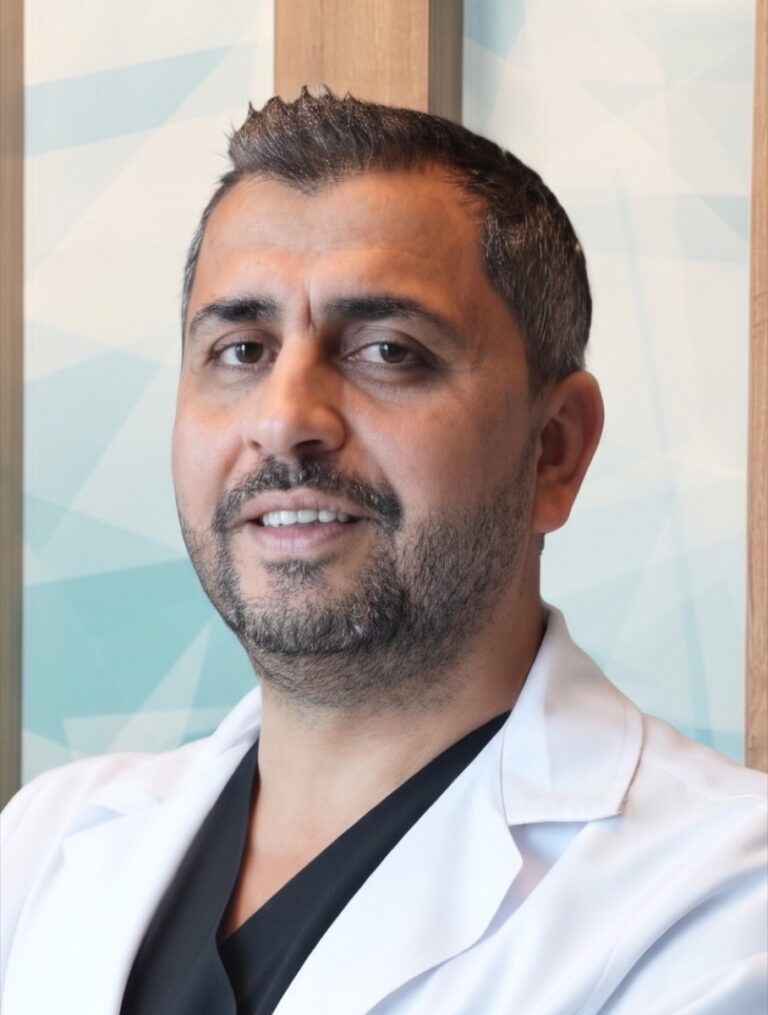
Every hair transplant at Clinicana starts with a surgeon-led plan, not a graft number. Our team is led by Prof. Dr. Soner Tatlıdede, a plastic surgeon who completed a fellowship at Harvard Medical School’s Massachusetts General Hospital. Your plan is built around your pattern of hair loss, the donor hair available, your existing density and the coverage you want. Together these decide whether treatment suits you, which areas to treat and how grafts are allocated. More grafts don’t automatically mean a better result, and the donor area limits how many grafts can be safely harvested. In some extensive cases, covering everything from hairline to crown may require two procedures, usually around 12 months apart, which is discussed during your assessment. Use our hair transplant graft calculator (above) for a first estimate, then send photos for a free assessment.
FUE, DHI and sapphire techniques
Your surgeon chooses the technique to fit your case. FUE removes follicles one by one from the back of the scalp, and sapphire blades can be used to open the recipient channels. DHI uses a Choi implanter pen to open the channel and place each follicle in a single step. The procedure itself usually takes 5 to 7 hours under local anaesthesia at Acıbadem Taksim Hospital, a JCI-accredited hospital in central Istanbul. Read our guides to FUE hair transplant in Turkey, DHI and the sapphire technique. You can judge outcomes for yourself in our before-and-after results, and we also treat the beard and moustache area with facial hair transplants.
Cost and what’s included
Clinicana’s packages are fixed-price and are not charged per graft. Prices start at €2,500 for the Basic operation-only package, and the Standard package at €2,850 adds two nights in a 4★ Taksim hotel and VIP transfers. Flights, extra nights and meals outside the hotel are not included. Our guide to hair transplant cost in Turkey breaks down every package and what to compare between quotes. There is no deposit: you pay in person once your treatment plan is agreed. Transplanted hair is long-lasting and results develop over roughly a year, but the natural hair around it can keep thinning, so ask your surgeon about aftercare and long-term planning. Send us photos of your hairline and crown for a free assessment and a personalised price before you book flights.
Blog
Stay informed with our insightful blog - your resource for the latest in medical news and healthcare management tips
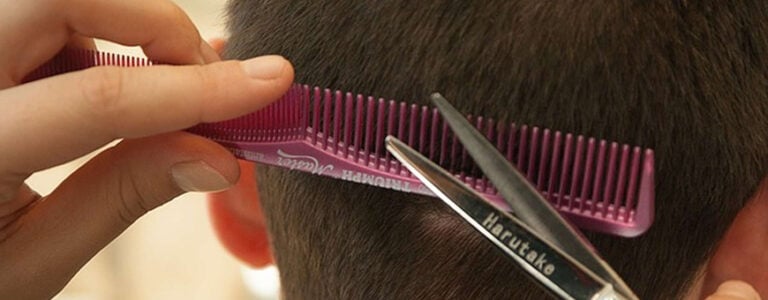
13 Oct 2026
When and How to Cut Your Hair After a Hair Transplant
Medical review by: Prof. Dr. Soner Tatlıdede, hair transplant surgeon (22+ years, 18,947 procedures) – October 2026 When can you cut your hair after a hair transplant? Hair in the donor area can be trimmed after 1 month using scissors or clippers. As for the recipient area, trimming only the ends of the hair using […]

13 Oct 2026
What to Avoid After a Hair Transplant to Protect Your Grafts
Medical review by: Prof. Dr. Soner Tatlıdede, hair transplant surgeon (22+ years, 18,947 procedures) – October 2026 Congratulations on completing your hair transplant. While the surgical part is finished, the success of your restoration now depends heavily on the recovery phase. In our clinical experience, the first two weeks post-surgery are just as critical as […]
08 Oct 2026
Scalp Psoriasis and Hair Loss: Pre and Post-Transplant Safety Guidelines
Scalp psoriasis and seborrheic dermatitis are chronic inflammatory conditions that frequently cause discomfort, itching, redness, and scaling. For individuals experiencing hair thinning alongside these conditions, severe anxiety often arises regarding permanent follicle loss and the feasibility of hair restoration. A central concern among patients is whether undergoing a hair transplant while managing scalp psoriasis is […]
Frequently Asked Questions About Hair Transplants in Turkey
-
Is Clinicana one of the best hair transplant clinics in Turkey?

We believe that Clinicana is one of the best hair transplant clinics in Turkey, and you can check the evidence yourself. We are rated 4.9/5 on Google from more than 4,500 reviews and 4.9/5 on Trustpilot from more than 1,500 reviews. Other reasons include:
- Medical expertise: the medical team is led by Prof. Dr. Soner Tatlıdede, a Professor of Plastic, Reconstructive and Aesthetic Surgery with more than 20 years of experience. His published qualifications include a fellowship at Massachusetts General Hospital, affiliated with Harvard Medical School, and European board certification in plastic, reconstructive and aesthetic surgery.
- Hospital facilities: treatment takes place at Acıbadem Taksim Hospital, a JCI-accredited hospital with on-site intensive care and emergency services.
- Individual treatment planning: each patient receives an assessment to establish suitability, discuss the appropriate technique, estimate graft requirements and confirm the treatment cost.
- Transparent pricing: fixed-price packages are not charged per graft, and inclusions are published before treatment.
- Documented results: patient experiences and before-and-after photographs show treatment details, graft counts, techniques and progress over time.
- Aftercare: Standard packages and above include monthly WhatsApp photo check-ins for 6 to 12 months.
-
How much does a hair transplant in Turkey cost at Clinicana?
Clinicana’s packages range from €2,500 to €5,500, depending on technique and length of stay. Basic (€2,500) covers the operation only. Standard (€2,850) adds hotel accommodation and VIP transfers, and Premium (€3,000) extends the stay and adds a second consultation. DHI packages run up to €4,500 (Mega DHI, a double session), while the Exosome (€3,950) and Stem Cell (€5,500, selected cases only) packages add a regenerative therapy. Across Basic, Standard and Premium, the main differences are hotel nights and consultations, and the DHI, Exosome and Stem Cell packages differ by technique and added therapy. Prices are the same for every patient and are confirmed before treatment. There is no deposit: you pay in person once your treatment plan is agreed. Flights are not included. See the hair transplant cost guide for current prices, and the package question below for what each tier includes.
-
How much does a 3,000-graft hair transplant cost in Turkey?
Clinicana does not price by the graft, so a 3,000-graft procedure has no separate price. Each package covers your graft requirement up to a set maximum for a fixed fee. Around 3,000 grafts commonly fits within the Standard package (€2,850), subject to the final treatment plan confirmed at your medical assessment. If a clinic quotes per graft, ask for the total including hotel, transfers, medication and aftercare before comparing, because these may be billed separately. How many grafts you need is a clinical decision, covered in the graft question below. See the package details.
-
Is it safe to have a hair transplant in Turkey?
Hair transplantation is generally safe when carried out by a qualified surgeon, but it is still surgery. The NHS lists a small risk of bleeding, infection, an allergic reaction to the anaesthetic, grafts failing to take, and visible scarring. Suitability matters too: a transplant is intended for permanent, inherited hair loss and is not usually suitable for other types, such as alopecia areata, so a medical assessment comes first. Clinicana operates within Acıbadem Taksim Hospital, a JCI-accredited hospital with anaesthesiology, intensive care and emergency cover on site, and blood tests are taken before surgery. Your own risk depends on your health, so discuss your medical history at your consultation. The NHS guide to hair transplant surgery explains the main risks.
-
Are hair transplants in Turkey good?
Results depend on the clinic, so judge any provider on what you can verify before booking:
- Clinician: who is responsible for your procedure, their qualifications, how many transplants they have performed, and who carries out each stage.
- Hospital: the facility’s licence, its accreditation and the emergency cover on site.
- Treatment plan: whether it follows an assessment of your hair loss and donor area rather than a graft number alone.
- Price transparency: whether the quote is itemised, and what is and is not included.
- Aftercare: how follow-up works once you are home.
Then check the results. Documented cases should state the date, Norwood stage, graft count and technique, and show progress over time. Clinicana’s patient experiences do this, for example a Norwood 5 patient treated with 4,600 grafts using FUE and sapphire, and the before-and-after gallery shows more. Individual results vary, and photographs of previous patients cannot guarantee your own outcome.
-
Is Turkey better than the UK for a hair transplant?
Neither country is automatically better for every patient. What differs is how you verify the provider and how aftercare works. In England, the NHS advises checking that an independent clinic is registered with the CQC and that the surgeon is registered with the GMC. In Turkey, check the facility’s Ministry of Health licence and any hospital accreditation (Acıbadem Taksim is JCI-accredited). Compare total price rather than headline price: the NHS says UK costs range from £1,000 to £30,000 depending on the extent of hair loss, the procedure and the clinic, so ask every provider, in either country, for an itemised quote. If you are travelling, add flights and any hotel nights the package does not cover. Clinicana publishes its package inclusions and exclusions so you can compare like for like. Finally, ask how aftercare works once you are home. A UK clinic can see you in person, whereas treatment abroad relies on remote follow-up. Our guide to choosing a hair transplant clinic in Turkey lists what to check.
-
What is the difference between FUE, DHI and Sapphire FUE?
They are not three separate operations but different stages of the same one. FUE is the extraction, where follicles are removed one by one from the donor area. Sapphire FUE changes how the recipient channels are opened, using a sapphire blade instead of a metal one. DHI changes how grafts are placed, loading each into a Choi implanter pen that opens the channel and implants the graft in one step. At Clinicana, FUE is the standard approach, and your surgeon chooses sapphire blades or DHI according to your hair type, donor density and treatment area. DHI can cost more because it takes more clinical time. No technique guarantees a result. Read more about FUE, DHI and the sapphire technique.
-
How many grafts do I need for a hair transplant?
The number depends on the area affected, the coverage you want and how much hair your donor area can safely provide, and it is confirmed at a medical assessment. As a guide, around 1,000 to 2,000 grafts treats a smaller area such as a hairline touch-up. About 2,000 covers the hairline and frontal area, about 3,000 adds mid-scalp coverage, and 4,000 or more is for extensive loss from hairline to crown. The donor area limits how many grafts can be safely harvested, so the number you need is not always the number that can be transplanted. In some extensive cases, treatment may be staged as two procedures about 12 months apart, with the front treated first and the crown later. A graft holds one to four hairs, so two clinics quoting 3,000 grafts may not deliver the same density. Try the graft calculator for a first estimate and the Norwood scale guide to find your stage, then send photos for a free assessment.
-
How long does it take to recover from a hair transplant?
Plan for one to two weeks off work, and protect the transplanted area carefully for the first two weeks while the grafts settle. Your first wash and aftercare check are done at the clinic before you fly home, and the NHS says gentle hand washing is usually possible from around day six. Transplanted hairs often shed within the first few weeks, new growth usually appears around month four, and full results take 10 to 18 months. The NHS advises cutting back on exercise for the first month. Clinicana’s guidance is to wait one month before trimming the donor area and two months before trimming the ends of the transplanted hair with scissors. Packages from Standard upwards include monthly WhatsApp photo check-ins for 6 to 12 months. See the NHS recovery guidance, Clinicana’s post-operative care advice and what to avoid after a transplant.
-
What happens 10 or 20 years after a hair transplant?
Transplanted follicles typically keep growing long-term, but a transplant does not stop hair loss elsewhere. The NHS notes that the hair around a transplant may continue to thin, which is why surgeons plan the design to stay natural as time passes. It is also why doctors usually avoid transplanting very young patients with active hair loss, where “islands” of transplanted hair can end up surrounded by new bald areas. Long-term planning can mean medication for your natural hair or a later procedure, as your surgeon advises.
-
Who performs hair transplants at Clinicana?
Clinicana’s medical team is led by Prof. Dr. Soner Tatlıdede, a Professor of Plastic, Reconstructive and Aesthetic Surgery with more than 20 years of experience. His training includes a fellowship at Harvard Medical School’s Massachusetts General Hospital, and he holds European board certification in plastic, reconstructive and aesthetic surgery (EBOPRAS). The team also includes dermatologist Dr. Melda Koyuncu.
-
What is included in a Clinicana hair transplant package?
Every package includes your surgeon consultation, pre-operative blood tests, the procedure under anaesthesia and post-operative medication. Standard and above add hotel accommodation with breakfast at a 4★ hotel in Taksim, VIP transfers, an aftercare kit (shampoo, lotion, cotton pillow and protective hat), a translator, a medical report and the monthly WhatsApp photo check-ins. Hotel nights and consultations increase by tier: Basic has no hotel and one consultation, Standard has two nights and one consultation, and Premium has three nights and two consultations. Flights, extra hotel nights, meals outside the hotel, optional treatments such as PRP and any second session are not included. See the full package and service breakdown.

Thank you!
Your details have been successfully submitted. Thanks!