


14-Day Post-Hair Transplant Daily Care Guide: Step-by-Step Protocol
By Prof. Dr. Soner Tatlıdede · August 2026
Post-Op Field Checklist
| Time Phase | Primary Clinical Objective | Washing & Care Protocol | Recommended Sleep Position | Activities & Essentials |
| Days 1 – 3 | Protection & graft stabilization | No washing allowed (spray moisturizing saline spray only) | Sleep on back at a 45° incline with neck pillow | Complete rest, avoid bending forward, take prescribed medications |
| Days 4 – 7 | Scalp cleansing & softening crusts | Apply lotion (30 mins) + gentle dab-washing with medical shampoo | Sleep on back using an elevated pillow | Wear button-up shirts, drink 3L of water, avoid sun exposure |
| Days 8 – 10 | Gradual removal of scabs/crusts | Extend lotion time (45 mins) + light circular massage with finger pads | Gradual return to side sleeping (if swelling has subsided) | Light walking, strictly avoid excessive sweating |
| Days 11 – 14 | Complete crust elimination & clean scalp | Warm washing with continuous fingertip massage to remove remaining crusts | Normal comfortable sleep without direct pressure on grafts | Return to desk work; avoid gym, swimming, and saunas |
The Recovery Phase is 50% of Surgical Success
Hair transplant surgery is a precise procedure that relies heavily on the microscopic expertise of the medical team. However, achieving the desired density and sustainable natural results depends equally (50%) on how you handle your scalp and transplanted grafts during the first two weeks following your departure from the medical center.
During the first 14 days after transplantation, hair follicles are in their most fragile state, undergoing a gradual vascular anchoring process with the surrounding tissues.
Based on our clinical experience at Clinicana Center in Istanbul, adhering strictly to a post-op care protocol minimizes infection risks, accelerates the resolution of swelling and micro-bleeding, and ensures safe scab removal without compromising graft survival.
This comprehensive guide provides a detailed step-by-step roadmap covering every aspect of daily life during your recovery period.
Detailed Daily Care Timeline (Day by Day)
Phase 1: Strict Protection & Absolute Rest (Days 1 to 3)
- Day 1 (Operation Day):
- Bandages & Pressure Dressings: The medical team applies a protective bandage to the donor area to absorb serous fluids and prevent contamination. Do not attempt to remove this bandage yourself.
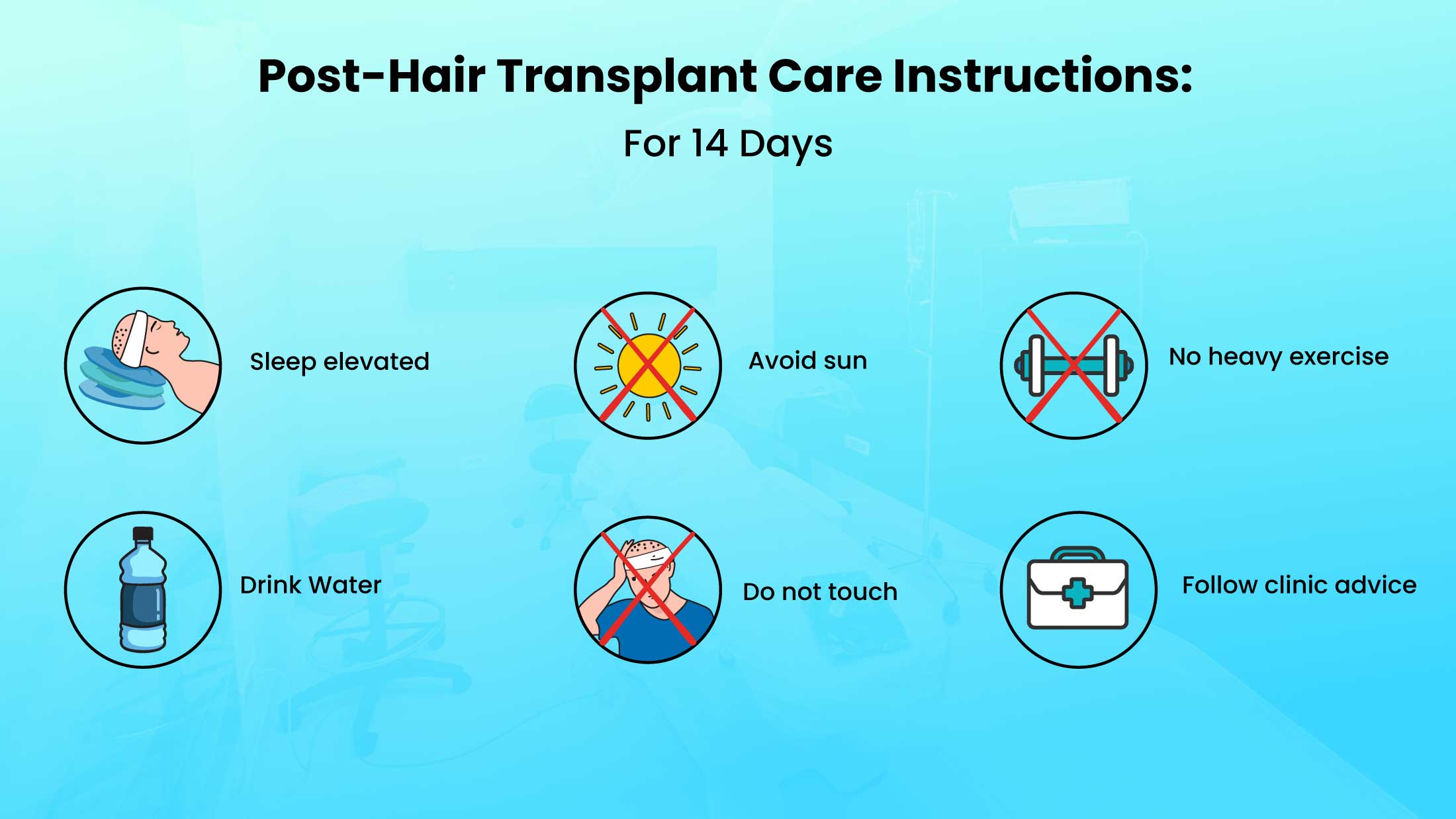
- Reclining Position: Keep your head elevated at a 45-degree angle at all times, utilizing a travel neck pillow to prevent lateral movement.
- Saline Spray Application: Spray the prescribed saline solution onto the recipient area every 1 to 2 hours to keep grafts hydrated and prevent dry blood accumulation, without touching the scalp with your hands.
- Day 2 (Bandage Removal & First Medical Follow-up):
- Clinic Visit: Visit Clinicana Center to have the donor area bandage safely removed and cleaned by a specialized nurse, followed by a clinical evaluation of graft placement.
- Avoid Touching the Scalp: Refrain from touching, scratching, or applying any unprescribed products to the recipient or donor zones.
- Nutrition & Medications: Strictly follow your medication schedule (antibiotics, anti-inflammatories, and pain relievers) immediately after meals.
- Day 3 (Peak Potential Swelling Phase):
- Managing Facial Swelling: Mild swelling may appear on the forehead or around the eyes due to local anesthesia fluids. Apply cold compresses to the forehead (well below the hairline and around the eyes) for 10 minutes every hour, ensuring compresses never touch the transplanted zone.
- Hydration: Drink at least 3 liters of water daily to assist the lymphatic system in flushing out fluids.
Phase 2: Gentle Washing & Graft Care Protocol (Days 4 to 7)
Starting on Day 4, you begin the daily routine washing protocol using Clinicana’s specialized medical care kit (moisturizing lotion and specialized hair transplant shampoo).
- Step-by-Step Daily Washing Protocol:
- Lotion Application:
- Gently pat the medical lotion or foam onto both the recipient and donor areas using your fingertips without rubbing or wiping.
- Leave the lotion on the scalp for 30 to 40 minutes to soften dried blood clots and crusts.
- Safe Rinsing:
- Rinse off the lotion using clean, lukewarm water. Direct pressure from a showerhead on the head is strictly prohibited.
- Pour water gently over the head using a small jug or bowl.
- Medical Shampoo Application:
- Lather the shampoo between your hands with a small amount of water until a dense foam is created.
- Apply foam to the recipient area using vertical tapping/dabbing motions, avoiding circular friction.
- The donor area may be washed with light circular pressure to maintain hygiene.
- Safe Drying Method:
- Allow the scalp to air-dry naturally.
- If drying is necessary, use medical paper towels to gently dab the area without wiping. Fabric towels are strictly forbidden as their fibers can snag and dislodge grafts.
- Lotion Application:
Phase 3: Crust Elimination & Graft Anchoring (Days 8 to 14)
- Days 8 – 10 (Crust Shedding Begins):
- Scabs begin to loosen. To facilitate removal, leave the medical lotion on the scalp for 45 to 60 minutes prior to washing.
- During shampooing, begin massaging the scalp using the pads of your fingers (never fingernails) in soft, gentle circular motions to encourage crust shedding.
- Days 11 – 14 (Final Scalp Cleansing):
- By Day 14, the scalp should be completely free of all crusts, returning to its natural appearance.
- If stubborn crusts remain, increase lotion duration and gentle massage time. Never forcefully pick or scratch off crusts, as this can trigger bleeding or dislodge anchored follicles.
Safe Sleeping Positions & Friction Prevention
Incorrect sleeping positions during the first week are a primary cause of accidental graft dislodgement and bleeding.
- The 45-Degree Rule: Keep your upper body elevated at approximately 45 degrees while sleeping for the first 6 nights.
- Travel Neck Pillow: Use a memory foam neck pillow to lock head positioning and prevent accidental turning during sleep.
- Avoid Stomach or Face Sleeping: Sleeping on your stomach causes fluid accumulation in facial tissues, worsening edema and exposing grafts to pillow friction.
- Return to Normal Sleeping Positions: From Day 10 onwards, once crusts have shed and swelling has resolved, you may gradually resume side or back sleeping without the neck pillow.
Prohibited Activities & Precautions
To protect graft integrity and prevent surgical complications, strictly observe the following rules:
- Physical Activity & Sports:
- First 14 Days: Avoid heavy lifting, intense cardio, running, and sexual activity. Elevated blood pressure and excessive sweating can induce vascular dilation and graft displacement.
- After 14 Days: Light walking and low-impact activities may be resumed.
- Swimming & Steam Rooms (Saunas):
- Swimming pools (indoor or outdoor), seawater, saunas, and hot tubs are strictly prohibited for at least one full month to shield the scalp from chlorine, high salinity, and bacterial infections.
- Direct Sun Exposure & Heat:
- Avoid direct exposure to harsh sunlight for longer than 10 minutes without head protection during the first two weeks.
- A loose, non-restrictive hat (such as a bucket hat) may be worn starting from Day 5, provided its edges do not touch transplanted grafts during placement or removal.
- Smoking & Alcohol Consumption:
- Abstain from all forms of smoking and alcohol for a minimum of 7 days post-surgery. Nicotine causes microvascular constriction, diminishing oxygen delivery to newly implanted roots.
- Tight Clothing:
- Avoid t-shirts or tight sweaters pulled over the head. Wear button-down or zippered shirts exclusively for the first two weeks to avoid friction.
Red Flag Symptoms Requiring Immediate Medical Contact
While recovery is generally smooth, contact Clinicana’s follow-up team immediately if you experience any of the following symptoms:
- Persistent Bleeding: Continuous active bleeding from the recipient zone that does not stop after applying gentle pressure with sterile gauze for 15 minutes.
- Signs of Infection: Progressively increasing severe redness, localized heat, or yellow/green purulent discharge with an unpleasant odor.
- Severe Uncontrolled Pain: Throbbing scalp pain that does not subside after taking prescribed analgesics.
- Fever: Body temperature exceeding 38.5°C (101.3°F).
Frequently Asked Questions
Is it alarming if short hair shafts fall out with the crusts?
No, this is completely normal. The loss of hair shafts attached to shedding crusts during weeks 2 to 4 (known clinically as “Shock Loss”) is a routine biological event. The hair shaft falls off while the follicle root remains securely anchored beneath the skin, initiating new hair growth starting around Month 3.
When can I use direct shower pressure and a regular towel?
You may use normal shower pressure and towel drying after 14 days post-op, provided all crusts have completely fallen off and swelling has fully resolved.
What should I do if I accidentally bump my head?
Remain calm and inspect the area under bright lighting. If there is no bleeding or serous fluid oozing, the follicle remains undamaged. If active bleeding occurs, apply gentle pressure with sterile gauze, take a clear photo, and send it immediately to Clinicana’s medical team for guidance.
When can I cut or shave my hair after surgery?
Hair in the donor area can be trimmed with scissors or clippers after 1 month. In the recipient area, hair may be cut only with scissors after 2 months. Razor blades or electric clippers on the transplanted area are strictly forbidden for 6 months post-surgery.
Medical Disclaimer & Clinical Review
- Medical Disclaimer: The information provided in this guide is intended strictly for educational and instructional post-op care purposes. It does not substitute formal medical consultation or individual clinical orders provided by your attending surgeon.
- Medical Review: Content prepared and clinically reviewed by Prof. Dr. Soner Tatlıdede, Lead Hair Restoration Specialist at Clinicana Hair Transplant Center, Istanbul (Over 22 years of clinical experience and 18,000+ successful procedures).
Academic & Medical References:
- National Library of Medicine (NCBI): Postoperative Management and Patient Compliance in Hair Transplantation.
- ScienceDirect: Graft Survival Dynamics and Post-Transplant Scalp Care Protocols.
- International Journal of Surgery (IJS): Surgical Quality Assurance and Patient Post-Op Guidelines in Medical Tourism.
- International Society of Hair Restoration Surgery (ISHRS): Official Post-Operative Care and Recovery Guidelines for Patients.

By Prof. Dr. Soner Tatlıdede · August 2026 Post-Op Field Checklist Time Phase Primary Clinical Objective Washing & Care Protocol Recommended Sleep Position Activities & Essentials Days 1 – 3 Protection & graft stabilization No washing allowed (spray moisturizing saline spray only) Sleep on back at a 45° incline with neck pillow Complete rest, avoid bending forward, […]

By Prof. Dr. Soner Tatlıdede · June 2026 TL;DR: Why does my head sweat so much? Excessive head sweating (craniofacial hyperhidrosis) affects 3% of the population and occurs when sweat glands are overactive, triggered by stress, heat, certain foods, or medical conditions. Treatment options include proper scalp care, dietary changes, Botox injections, and prescription medications. […]

By Prof. Dr. Soner Tatlıdede • July 2026 Determining the best age for a hair transplant is one of the most frequent questions raised by individuals experiencing progressive hair thinning or androgenetic alopecia. In the medical world, answering this question goes far beyond a patient’s emotional desire to restore density and youthfulness; it relies on a deep […]


Thank you!
Your details have been successfully submitted. Thanks!