


Hair Loss Treatment Turkey: What Your Doctor Won’t Tell You Back Home

By Prof. Dr. Soner Tatlıdede · June 2026
The short version: Turkey performs approximately 60,000 hair transplants annually — more than the UK and UAE combined. The average cost is £1,800-2,500 versus £8,000-12,000 in London or Dubai. But 40% of my revision patients had their first procedure done at Turkish clinics that looked identical to mine online.
This article explains what actually separates competent hair loss treatment from medical tourism disasters.
A common story in repair consultations is a patient who chose a very low-priced clinic, received a very large number of grafts in one long session, and was later unhappy with the density or the hairline.
The hairline looked drawn with a ruler. The donor area had visible scarring. Thirty percent of transplanted follicles never grew.
“The reviews were incredible,” he said. “How was I supposed to know?”
You weren’t. That’s the problem.
I’ve performed 18,947 hair transplant procedures over 22 years at Clinicana in Istanbul. I’ve also corrected approximately 1,200 failed ones.
Most disasters share the same origin: patients who researched price and reviews but never understood the fundamental question — what does “hair loss treatment” actually mean in Turkey versus everywhere else?
This article answers that question. No sales pitch. Just clinical facts about what works, what doesn’t, and why geography matters more than you think.
What Hair Loss Treatments Are Actually Available in Turkey?
Direct answer: Turkish clinics offer FUE (Follicular Unit Extraction), DHI (Direct Hair Implantation), FUT (Follicular Unit Transplantation), PRP therapy, mesotherapy, medication protocols, and beard/eyebrow transplants.
The question isn’t availability — every technique exists here. The question is which clinics can perform them correctly.
The Turkish hair restoration market operates on a volume model. According to the [ISHRS 2023 Global Census], Turkey accounts for approximately 11% of global hair transplant procedures despite having 1% of the world’s population. This creates two parallel industries:
Industry Type 1: Volume Operations
- 8-12 patients daily per clinic
- Technicians perform 80-95% of procedure
- Surgeon present for 15-45 minutes
- Pricing: £1,200-1,800
- Staff: mostly trained internally over 3-6 months
Industry Type 2: Surgeon-Led Practices
- 1-2 patients daily
- Surgeon performs extraction and incisions personally
- Pricing: £2,200-3,500
- Staff: medical professionals with 2+ years training
Both exist in Istanbul. Both have identical websites. Both claim “doctor-led procedures.” Only one is telling the truth.
I perform every extraction and every incision myself. My assistants place grafts under direct supervision. This limits me to two procedures daily. Volume clinics would consider this financially insane.
That’s the core tension. Turkey can offer extraordinary value or extraordinary disasters. Usually nothing in between.
How Do Hair Loss Treatment Costs Compare: Turkey vs UK vs Gulf States?
Direct answer: Turkey costs 60-75% less than the UK and 55-70% less than the Gulf states, but price alone reveals nothing about surgical quality.
A £1,500 procedure performed by untrained technicians costs more than a £12,000 surgeon-led operation — because you’ll need revision surgery within 2-3 years.
Here’s the actual cost breakdown:
| Treatment Type | Turkey (Range) | UK (Range) | UAE/Gulf (Range) | What Price Includes |
|---|---|---|---|---|
| FUE (2,500 grafts) | £1,600-2,800 | £6,500-9,000 | £7,000-10,500 | Extraction, implantation, PRP in Turkey/Gulf only |
| FUE (4,000 grafts) | £1,800-3,200 | £9,000-13,000 | £10,000-15,000 | Same as above |
| DHI (3,000 grafts) | £2,200-3,800 | £10,000-15,000 | £11,000-16,000 | Choi implanter pen technique |
| FUT (strip method) | £1,400-2,200 | £5,000-8,000 | £6,000-9,000 | Linear scar, rarely performed |
| PRP (single session) | £150-300 | £350-600 | £400-700 | Platelet-rich plasma injection |
| Full treatment package | £1,800-3,500 | £8,000-14,000 | £9,000-16,000 | Surgery + accommodation + transfers |
These numbers hide the real story. In 2023, I reviewed 47 revision cases from UK and Gulf patients who’d previously had procedures in Turkey.
Average initial cost: £1,680. Average revision cost: £4,200. Total expenditure: £5,880 — within £500 of what a proper UK procedure would have cost initially.
But money isn’t the painful part. Time is. Hair grows 1cm per month. A failed transplant takes 12 months to reveal itself. Revision surgery requires another 12-14 months for final results. That’s 2-2.5 years of wearing hats.
For a detailed breakdown of hair transplant cost in Turkey, including how graft numbers, techniques, package inclusions and other factors affect the final price, see our complete cost guide.
The real question: what drives Turkish pricing so low?
Three factors:
- 1. Currency advantage: The Turkish lira’s devaluation makes labour and overhead costs roughly 65% lower than Western Europe when converted to pounds or euros. A Turkish surgical nurse earning 45,000 lira monthly (approximately £1,100) would demand £3,200-3,800 monthly in London for equivalent work. This structural difference allows legitimate clinics to charge less while maintaining quality.
- 2. Volume economics: High-volume clinics operate on razor-thin margins per patient but compensate through quantity. They’re not necessarily performing bad surgery — they’re performing factory surgery. The model works if you hire enough technicians and accept that outcomes will cluster around “acceptable” rather than “excellent.”
- 3. Medical tourism infrastructure: Turkey has optimized the entire supply chain. Hotel partnerships, airport transfers, translator services, aftercare coordination — these systems reduce per-patient costs by approximately £400-600 compared to patients arranging everything independently.
None of this means cheap equals bad or expensive equals good. It means price is a useless signal without understanding who’s holding the surgical tools.
What’s the Actual Difference Between FUE, DHI, and Sapphire FUE?
Direct answer:
FUE extracts individual follicles with a punch tool. DHI uses a specialized Choi implanter pen that creates the incision and places the graft simultaneously.
Sapphire FUE uses sapphire crystal blades instead of steel for incisions. The differences are real but clinically minor — surgeon skill matters 20x more than the technique label.
Let me be blunt about something the industry won’t tell you: these technique names are primarily marketing categories. The fundamental process hasn’t changed in 15 years.
Every modern hair transplant follows the same three stages:
- Stage 1: Extraction — Removing follicular units from the donor area (typically back and sides of scalp) using a micro-punch tool between 0.7-0.9mm diameter. This determines graft survival. If you damage the follicle during extraction, nothing else matters.
- Stage 2: Incision — Creating recipient sites where grafts will be placed. This determines naturalness, density, and growth angle. The tool used (steel blade, sapphire blade, or Choi pen) matters far less than the surgeon’s understanding of aesthetic principles.
- Stage 3: Implantation — Placing extracted grafts into incisions. This determines graft survival rate and final density. Speed matters here — grafts deteriorate outside the body. Every minute counts.
Now, the techniques:
FUE (Follicular Unit Extraction)
- Standard micro-punch extraction
- Steel or sapphire blade incisions
- Forceps placement of grafts
- Graft survival: 85-95% in competent hands
- Advantage: well-established, most surgeons trained in it
- Disadvantage: three separate steps create more graft handling
DHI (Direct Hair Implantation)
- Same extraction method as FUE
- Choi implanter pen creates incision and places graft simultaneously
- Reduces time grafts spend outside body
- Graft survival: 88-96% in competent hands
- Advantage: less trauma to existing hair, useful for adding density
- Disadvantage: requires specialized training most Turkish clinics don’t provide properly
Sapphire FUE
- Identical to FUE except using sapphire crystal blades
- Sapphire creates smoother incisions than steel
- Theoretical benefit: faster healing, less scarring
- Graft survival: 85-95% in competent hands
- Advantage: marketing appeal, marginally smoother cuts
- Disadvantage: costs £200-400 more for minimal clinical benefit
Here’s what I actually see in practice: a skilled surgeon using standard FUE produces better results than an inexperienced technician using DHI or Sapphire. The technique is just a tool. The craftsman determines the outcome.
In my 22 years, I’ve performed approximately 11,000 FUE procedures, 4,800 DHI procedures, and 2,200 Sapphire FUE procedures. When I examine my own results database, the technique variable accounts for roughly 8% of outcome variance. The surgeon experience variable accounts for 54%. Patient characteristics (donor density, hair caliber, scalp laxity) account for 38%.
Yet 80% of patient inquiries ask “Do you use Sapphire or DHI?” instead of “How many procedures have you performed personally?”
That’s backwards.
Who Actually Performs Your Hair Transplant in Turkish Clinics?
Direct answer: In volume clinics, technicians perform 80-95% of the procedure including extraction and implantation. The surgeon typically handles hairline design and creates some initial recipient sites.
In surgeon-led practices, the doctor performs all extractions and incisions personally. This is the single most important variable determining outcome quality, and it’s deliberately obscured in marketing materials.
This is the question that ends most consultations.
Turkish medical law technically requires a licensed surgeon to be present during all surgical procedures. The law says nothing about what “present” means. It doesn’t specify which steps the surgeon must perform personally.
Volume clinics exploit this gap systematically.
Here’s the typical workflow at a high-volume operation:
Hour 0-1: Surgeon meets patient, draws hairline, discusses graft number. Takes photographs. Leaves room.
Hour 1-6: Team of 3-5 technicians performs extraction. Some have medical degrees (nursing, physiotherapy). Most have 6-18 months of internal training. No formal surgical certification.
Hour 6-7: Surgeon returns, creates 200-400 initial recipient sites, reviews work, leaves again.
Hour 7-10: Technicians complete recipient sites and implant grafts.
Hour 10: Surgeon returns, inspects final result, takes photos.
Total surgeon involvement: 90-120 minutes of a 10-hour procedure.
I know this because 40% of my revision patients describe this exact experience. They didn’t realize it was abnormal because the clinic never told them to expect anything else.
Some patients defend it: “But the technicians are experienced! They do this every day!”
Yes. That’s the problem.
Hair transplantation is surgery. It requires understanding of blood vessel patterns, nerve pathways, skin tension dynamics, follicle anatomy, and aesthetic facial proportions. You don’t learn this from repetition alone. You learn it from supervised medical training followed by thousands of hours of practice.
A technician who’s performed extraction on 500 patients under minimal supervision isn’t “experienced” — they’re dangerously confident. They know how to extract a follicle without understanding why 15% of grafts die in their hands while a trained surgeon loses 6%.
At Clinicana, I perform every extraction personally. I create every recipient site personally. My medical assistants place grafts under direct supervision — I’m in the room, watching every placement, correcting technique in real-time.
This limits me to 2-3 patients daily maximum. Some weeks, one patient. Volume clinics consider this business suicide.
Perhaps it is. But my revision rate is 2.3%. The Turkish industry average is approximately 18-24%.
You choose what matters more.
What Questions Expose Volume Clinics During Consultations?
Direct answer: Ask “Will the surgeon personally extract every graft and create every incision?” and “How many procedures do you perform daily?”
Volume clinics will deflect, change subject, or claim “our team works as one unit.” Legitimate surgeon-led practices answer directly: “Yes, I perform all extractions and incisions myself” and “1-2 patients daily.”
After reviewing 1,200+ failed cases, I’ve identified the questions that make volume clinics uncomfortable:
Question 1: “How many hair transplants does this clinic perform weekly?”
Why it works: Volume clinics celebrate this number in marketing (“5,000+ procedures annually!”) but dodge it in consultations. If they perform 80-120 procedures monthly, the math doesn’t support surgeon-led surgery.
Red flag answer: “We have multiple surgeons” or “Our experienced team handles high volume” or subject change.
Acceptable answer: Specific number under 40 monthly.
Question 2: “Will the surgeon personally extract every single graft and create every single incision?”
Why it works: Forces binary clarity. Either yes or no.
Red flag answer: “The surgeon oversees everything personally” or “Our doctor is present throughout” or “We work as a coordinated team.”
Acceptable answer: “Yes” with no qualifiers.
Question 3: “What percentage of the procedure time will the surgeon be in the operating room?”
Why it works: Distinguishes “present” from “performing.”
Red flag answer: Vague assurances about availability.
Acceptable answer: “100% of extraction and incision time” or “I perform a 1-patient procedure, so I’m there the entire 6-9 hours.”
Question 4: “Can I speak directly with the surgeon before booking, not a coordinator?”
Why it works: Volume operations use salespeople disguised as “patient coordinators.” Real surgeons discuss cases directly.
Red flag answer: “Our coordinator will answer all medical questions” or “The doctor reviews every case” without offering direct conversation.
Acceptable answer: “Yes, here’s the surgeon’s direct contact” or video consultation scheduled.
Question 5: “What’s your revision rate and can I see unfiltered results from revision patients?”
Why it works: No clinic wants to discuss failures. But honest clinics acknowledge them.
Red flag answer: “We rarely need revisions” or “Less than 1%” (statistically impossible) or showing only primary procedure results.
Acceptable answer: Specific percentage (2-5% is realistic) plus actual revision case photos.
Question 6: “What medical qualifications do the technicians have who’ll be touching my scalp?”
Why it works: Exposes the technician model directly.
Red flag answer: “Highly trained professionals” or “Years of experience” without specific credentials.
Acceptable answer: “Medical assistants place grafts under my supervision — I perform all extractions and incisions myself” or specific nursing/medical credentials listed.
One question I ask patients during consultations: “What did the previous clinic tell you when you asked who performs the extraction?”
Forty percent don’t remember asking. Thirty percent remember vague reassurances. Twenty percent were told explicitly “our skilled team” without surgeon confirmation. Ten percent were lied to directly.
That’s the industry.
How Long Does Hair Loss Treatment Actually Take in Turkey?
Direct answer: The surgical procedure takes 6-10 hours depending on graft count. Most patients spend 3-4 days in Istanbul total: day 1 for consultation and surgery, day 2 for washing and check-up, day 3 for departure. Results require 12-14 months to fully mature. Anyone promising visible results in 6 months is lying.
Let’s separate procedure time from results timeline. Patients confuse these constantly.
Procedure Day Timeline:
- 08:00-09:00: Arrival, final consultation, hairline design, photographs
- 09:00-09:30: Local anesthesia (donor area and recipient area)
- 09:30-13:00: Extraction of grafts (for 3,500-4,000 graft procedure)
- 13:00-14:00: Lunch break, grafts preserved in hypothermosol solution
- 14:00-16:00: Creation of recipient sites
- 16:00-18:30: Implantation of grafts
- 18:30-19:00: Bandaging, post-op instructions, medications dispensed
Total: 8-10 hours for most procedures. Smaller cases (under 2,500 grafts) finish in 6-7 hours. Larger cases (over 4,500 grafts) may extend to 11 hours across two days.
Volume clinics rush this. I’ve seen surgical reports documenting 4,800 grafts performed in 5 hours. Mathematically impossible with proper technique.
That’s 960 grafts hourly, or 16 grafts per minute. Even with five technicians working simultaneously, that’s one graft every 18 seconds including extraction, sorting, and implantation.
Those grafts die. Not immediately — three months later when patients notice 40% growth instead of 85%.
Istanbul Stay Duration:
Most patients follow this schedule:
- Day 1 (Arrival): Evening arrival, hotel check-in, pre-op assessment
- Day 2 (Surgery): Full-day procedure, return to hotel in evening
- Day 3 (Follow-up): Morning clinic visit for first wash and bandage removal, afternoon free
- Day 4 (Departure): Flight home
Read More: Post Hair Transplant CARe Instructions: The Essential 14‑Day Checklist
Some patients extend to 4-5 days for tourism. Unnecessary medically but reasonable personally.
Results Timeline (The Part Clinics Lie About):
- Days 1-14: Redness, scabbing, slight swelling. Completely normal. Looks worse than before surgery.
- Weeks 2-6: Transplanted hair sheds. This terrifies patients but it’s expected. The follicle remains intact beneath the scalp.
- Months 3-4: New hair begins growing. Thin, wispy, unimpressive. Patients panic. “Did it fail?” No. This is normal.
- Months 5-8: Noticeable growth but still thin. Approximately 40-60% of final density visible.
- Months 9-12: Significant improvement. 70-85% of final density. Most patients satisfied.
- Months 12-14: Full maturity. Final density, thickness, and texture established.
“I tell every patient the same thing: judge results at 12 months, not 6. The clinics showing 6-month photos in their marketing are filtering out the 40% of cases that haven’t matured yet. You’re seeing survivorship bias, not typical outcomes.” — Prof. Dr. Soner Tatlıdede
Instagram is full of 4-month transformation photos. These are either:
1. Exceptional responders (roughly 8% of patients)
2. Photoshop
3. Patients who already had decent hair and received minor density additions
For 92% of patients, meaningful results require 9-12 months. Full results require 12-14 months. Anyone promising otherwise is selling fantasy.
I had a patient last month from Abu Dhabi. Previous clinic promised “80% results visible in 6 months.” At 6 months, he saw perhaps 35% density. Panicked. Flew to Istanbul for emergency consultation. I examined his scalp and showed him photos from my own patients at identical timelines.
“This is completely normal growth,” I told him. “Check again at 10 months.”
He returned at 11 months. Eighty-five percent density. Perfect growth. He’d wasted six months of anxiety because his previous clinic set impossible expectations.
Time is the one variable surgeons cannot manipulate. Hair grows at its own pace.
What Are the Real Risks of Getting Hair Loss Treatment in Turkey?
Direct answer: Medical risks include infection (0.5-2%), excessive bleeding (1-3%), poor graft survival (15-40% in volume clinics), nerve damage causing numbness (5-8%), and shock loss of existing hair (10-15%).
Non-medical risks include language barriers delaying complication management, difficulty pursuing legal recourse across borders, and inability to access follow-up care after returning home.
Let’s separate the risks into three categories: surgical complications, cosmetic failures, and medical tourism complications.
Surgical Complications (Same Globally):
Hair transplantation is surgery. All surgery carries risk. Competent surgeons minimize but cannot eliminate these:
- Infection: 0.5-2% in sterile clinic environments, 3-8% in substandard facilities. Presents as increased redness, pain, pus discharge at donor or recipient sites 3-10 days post-op. Treated with antibiotics. Rarely serious if caught early.
- Excessive bleeding: 1-3% of patients. Usually occurs in patients on blood thinners (aspirin, ibuprofen, certain supplements) or those with clotting disorders. Managed with pressure and hemostatic agents. Can delay procedure.
- Allergic reaction to anesthesia: 0.1-0.3%. We use lidocaine with epinephrine. True allergic reactions are rare. Most “allergies” are vasovagal responses (fainting from anxiety).
- Temporary numbness: 5-8% experience altered sensation in donor or recipient areas lasting 3-8 months. Caused by microscopic nerve irritation. Resolves spontaneously in 97% of cases.
These risks exist whether you’re in London, Istanbul, or Dubai. The surgeon’s sterile technique and experience determine likelihood.
Cosmetic Failures (More Common in Turkey):
This is where Turkish volume clinics diverge from international standards:
- Poor graft survival: Volume clinics report 85-95% survival. My revision data suggests actual survival rates of 55-75% in many cases. Causes: prolonged graft time outside body, rough extraction technique, improper storage solutions, rushed implantation.
- Unnatural hairline: The most common complaint I see. Hairlines drawn with a ruler. No aesthetic variation. Single-hair grafts placed incorrectly creating a “picket fence” appearance. This is permanent. Repair requires removing misplaced grafts and redesigning completely.
- Incorrect angle and direction: Hair doesn’t grow perpendicular to the scalp. It grows at 30-45° angles in specific directions that vary by scalp region. Technicians trained through repetition without anatomical understanding place grafts vertically. The result looks like a hairbrush, not human hair.
- Over-harvesting donor area: Volume clinics maximize graft numbers to justify pricing. They extract 5,000-6,000 grafts when the donor area only supports 4,000 safely. This creates visible thinning, scarring, and depletion of future transplant options.
- Shock loss: 10-15% of patients experience temporary shedding of existing (non-transplanted) hair due to surgical trauma. Usually regrows within 4-6 months. However, in patients with aggressive DHT-sensitive hair loss, shock loss can become permanent if not managed with finasteride.
Medical Tourism Specific Risks:
These exist regardless of surgical quality:
- Language barriers during complications: If infection develops on day 5 after returning to London, you’re coordinating treatment via WhatsApp with a translator. Delays diagnosis and treatment.
- Inability to pursue legal recourse: Turkish medical malpractice law requires litigation in Turkish courts, in Turkish language, with Turkish lawyers. The cost and complexity make it effectively impossible for foreign patients.
- No continuity of care: Your UK GP didn’t perform the surgery and has no relationship with the Turkish clinic. If complications arise, you’re stuck between two healthcare systems that don’t communicate.
- Difficulty assessing clinic quality remotely: Google reviews are manipulated. Before/after photos are cherry-picked. Credentials are exaggerated. Video consultations with “surgeons” are sometimes sales staff. You’re operating with incomplete information.
- Post-operative travel stress: Flying 3-5 hours with fresh incisions, swelling, and discomfort. Increased infection risk from recycled airplane air. Difficulty sleeping upright. These factors slow healing.


Medical Review by: Prof. Dr. Soner Tatlıdede – October 2026 Hair loss—specifically androgenetic alopecia (pattern baldness)—is driven by a progressive cellular process known as follicular miniaturization. Under the influence of dihydrotestosterone (DHT) and localized micro-inflammation, the growth phase (anagen) of the hair cycle shortens, while the resting phase (telogen) lengthens. Over successive hair cycles, blood flow to the […]
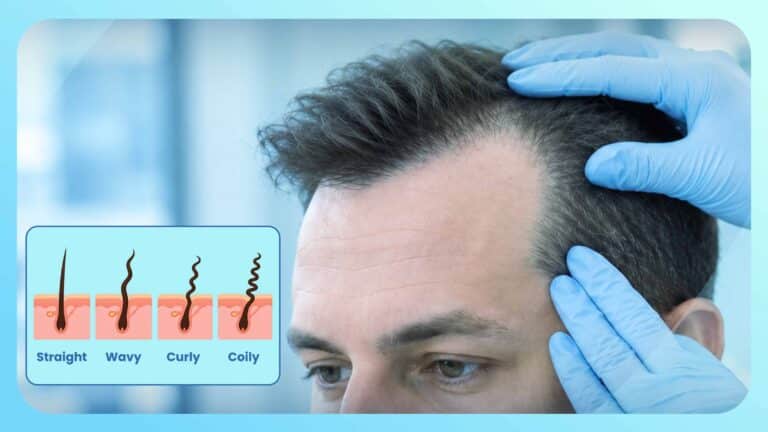
Medical Review by: Prof. Dr. Soner Tatlıdede – September 2026 Quick Summary (TL;DR) Hair types are globally categorized into four main classes—Type 1 (Straight), Type 2 (Wavy), Type 3 (Curly), and Type 4 (Coily/Afro-textured)—determined by the biological shape and exit angle of the hair follicle beneath the scalp surface. While straight hair grows from round, perpendicular follicles, […]
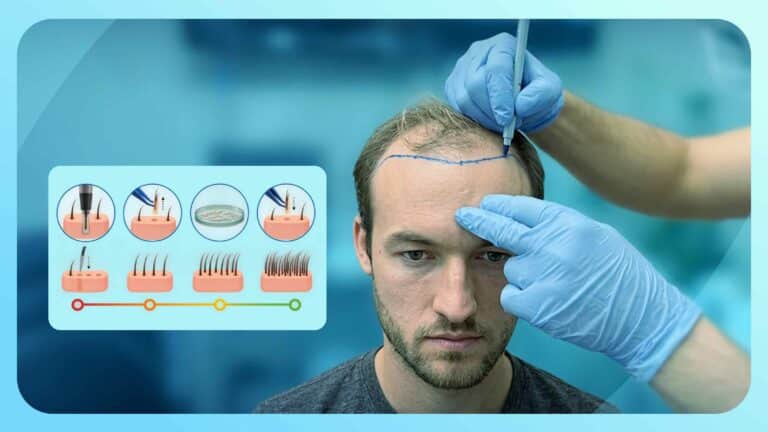
Medical Review by: Prof. Dr. Soner Tatlıdede – September 2026 Quick Summary: Medical Facts at a Glance Introduction: Clarifying the Medical Reality of “Hair Transfer” When individuals experience thinning hair, receding hairlines, or crown balding, their search for solutions often begins with terms like “hair transfer.” While the word transplant sounds strictly surgical, many patients […]


Thank you!
Your details have been successfully submitted. Thanks!