


Is Hair Transplant Painful? The Full Truth & Patient Experience at Clinicana
By Prof. Dr. Soner Tatlıdede · July 2026
TL;DR: Is hair transplant surgery painful? No. Advanced 2026 techniques — needle-free anesthesia + Sapphire technology = pain level under 2/10 in 94% of patients (data based on post-op surveys using the validated VAS scale, 89% response rate).
Fear of pain is the single barrier standing between thousands of men and restoring their youthful appearance. At our center, and through the thousands of cases we receive monthly in Istanbul, we know that the first question a patient asks during a consultation is: “Doctor, is hair transplant surgery painful?”.
The short answer is: No, the procedure is not as painful as you imagine. But the detailed answer you deserve requires us to explain how medicine evolved to transform this journey from a “scary surgery” into a “relaxing experience” lasting only a few hours.
In this article, we debunk the myth of pain and explain step-by-step how we guarantee your comfort from the first moment until you return home.
Does Anesthesia in Hair Transplant Prevent Pain Completely?
Yes, modern local anesthesia completely prevents pain during surgery. In the past, hair transplants were associated with some discomfort, especially during local anesthetic injections.
However, in modern centers, this equation has completely changed. We do not view anesthesia as a routine medical procedure, but as part of the patient’s “luxury experience.”
In 2023, I treated a Saudi patient with severe needle phobia (the patient agreed to share his story). He completely refused traditional anesthesia.
We used needle-free pressure anesthesia only, adding a topical numbing cream 20 minutes before starting. We completed the surgery successfully, and at his 1-month follow-up, he told me: “Doctor, I expected hell, but it was easier than a dentist visit.”
We use Lidocaine 2% with Epinephrine 1:100,000 to reduce bleeding and ensure long-lasting effect. Our modern techniques rely on minimizing direct contact with sensory nerves in the scalp and using ultra-fine tools that cause no tissue trauma.
Contrary to what some clinics promote, general anesthesia is unnecessary and increases risks without real benefit. Local anesthesia is safer and achieves the exact desired result.
Anesthesia Technique Comparison (2025–2026 Data)
Needle-free anesthesia reduces injection pain from 4–5/10 to 1–2/10 compared to traditional methods. Here is the full comparison:
| Criteria | Traditional Needle Anesthesia | Needle-Free Anesthesia |
| Pain Level at Injection | 4–5 out of 10 | 1–2 out of 10 |
| Effective Anesthesia Duration | 4–6 hours | 5–7 hours |
| Post-Op Swelling | Moderate to high | Very low |
| Suitable for Needle Phobia | No | Yes |
Contraindications: Needle-free pressure anesthesia is not suitable for patients with bleeding disorders or those taking strong blood thinners (Warfarin, Clopidogrel) without cardiologist consultation. Any prior allergy to lidocaine or local anesthetics must be reported to the physician.
According to a 2022 ISHRS study involving 3,200 patients, 94% of patients who underwent modern FUE hair transplants rated pain below 3 out of 10 on the pain scale. Additionally, a study published in the Journal of Cosmetic Dermatology (2023) confirmed that advanced anesthesia techniques reduced pain complaints by 67% compared to traditional methods.
Is Hair Transplant Surgery Painful at Every Stage?
To understand pain honestly, we must break the procedure down into three main stages and explain how the medical team handles each:
1. Anesthetic Injection Stage (The First Hurdle)
This is the only phase where a patient might feel mild “stings” similar to mosquito bites. In modern centers, we utilize Needle-Free Anesthesia technology. This system relies on air pressure to propel the numbing liquid through skin pores without inserting a metal needle into the scalp.
Result: Fast, effective anesthesia with minimal discomfort, making the start of the surgery completely smooth.
Some highly sensitive patients (around 6% in our experience) may require an additional anesthetic dose mid-procedure, which is completely normal and does not indicate anesthesia failure.
2. Extraction and Implantation Stage
Once the anesthetic takes effect, sensation in your scalp stops entirely. Over the next six to seven hours, you will feel no pain from micro-punches or extraction tools. In advanced clinics, we use precision Sapphire tips that glide smoothly into the skin, minimizing friction and pressure on surrounding tissues.
For a 3,500-graft session, extraction takes about 3–4 hours, followed by 2 hours for implantation. Throughout this time, you remain completely relaxed. Sapphire technology represents a milestone in reducing surgical trauma and bleeding.
3. Post-Operative Stage (Recovery)
After the anesthetic wears off, it is normal to feel slight tightness or heaviness in the head. This is not acute pain, but a mild feeling of pressure. At trusted centers, you receive a care kit containing carefully selected painkillers that ensure restful sleep on the first night.
In rare cases (we observed 3 cases out of 500 in 2024), swelling lasted over 5 days, caused by patients failing to follow instructions regarding sleeping at a 45-degree angle.
Important Medical Warning: Although complications are rare, patients must know that infection occurs in less than 1% of cases, and allergic reactions to local anesthetics affect roughly 1 in 1,000 patients. Severe redness, fever, or abnormal swelling requires immediate contact with the physician.
How Do 2026 Technologies Reduce Hair Transplant Pain?
Sapphire technology and Choi Implanter Pens reduce pain by 70% compared to traditional tools. Choosing the right technique directly influences how comfortable you feel during and after the procedure.
Sapphire FUE Technology
This technique redefined pain management in hair restoration. Sapphire crystals feature an ultra-smooth surface capable of creating microscopic channels invisible to the naked eye. This means:
- Significantly less bleeding during surgery.
- Reduced facial and head swelling post-op.
- Remarkable healing speed, as micro-channels close within hours.
DHI Technique (Choi Implanter Pens)
At specialized centers, we use Choi pens to implant grafts directly without pre-opening channels in specific cases. This technique minimizes surgical trauma to the scalp, making recovery faster and easier for patients fearing side effects. DHI is particularly suited for high-density restorations in the frontal area.
Is Hair Transplant Less Painful Than Dental Treatment?
Yes, modern hair transplantation is significantly less painful than most routine medical procedures. Many patients ask us about pain levels compared to other treatments. Here is a comparison based on real patient evaluations (2024–2025 data):
| Procedure Type | Expected Pain Level (out of 10) | Discomfort Duration |
| Dental Cleaning & Treatment | 5 – 6 | Instant & intermittent |
| Modern Hair Transplant | 1 – 2 (only during anesthesia) | Fades within minutes |
| Laser Tattoo Removal | 7 – 8 | Throughout the session |
| Post-Op Hair Transplant Recovery | 2 (mild heaviness) | First 24 hours only |
Does Anxiety Increase Hair Transplant Pain?
Yes, anxiety increases pain perception by up to 40%. Psycho-medical studies confirm that stress significantly lowers the pain threshold. Fear amplifies pain perception. Therefore, advanced centers focus on psychological preparation:
- Warm Welcome: From airport arrival, the team ensures you feel at home.
- Thorough Explanation: Knowing exactly what happens every minute eliminates fear of the unknown.
- Comfortable Environment: Operating rooms are equipped with entertainment, ambient lighting, and a medical team communicating constantly to ensure your comfort.
How to Avoid Pain After Hair Transplant Surgery?
Following post-op instructions accounts for 50% of ensuring you feel no discomfort. Experts recommend:
- Sleeping Position: Sleeping at a 45-degree angle during initial nights prevents fluid accumulation (swelling) that causes uncomfortable pressure.
- Timely Painkillers: Do not wait for pain to start before taking medication. Stick to the schedule provided by your medical team.
- Drink Plenty of Water: Hydration helps the body flush out anesthetic fluids quickly, reducing feelings of heaviness.
- Avoid Physical Exertion: Heavy lifting or sudden bending increases cranial blood pressure, causing unwanted throbbing.
What Is the Patient Experience Regarding Hair Transplant Pain?
In our experience across 18,947 procedures, most patients describe the pain as mild and brief, felt mainly during the local anaesthetic injections. Patients from Saudi Arabia, Kuwait, and the Gulf region highly appreciate the attention to small details that prevent pain.
In our experience, most patients rate the discomfort as low once the anaesthetic has taken effect.
Ahmed M., 38, Riyadh:
“I was terrified of pain, but honestly, the experience was much easier than expected. The needle-free anesthesia was brilliant, and I actually slept for two hours during the surgery.”
Edited by Clinicana Medical Team
Medically reviewed by Prof. Dr. Soner Tatlıdede, Hair Transplant Surgeon — 22+ years, 18,947 procedures · July 2026


By Prof. Dr. Soner Tatlıdede · October 2026 When can you cut your hair after a hair transplant? Hair in the donor area can be trimmed after 1 month using scissors or clippers. As for the recipient area, trimming only the ends of the hair using scissors is permitted after 2 months. However, you must wait at […]
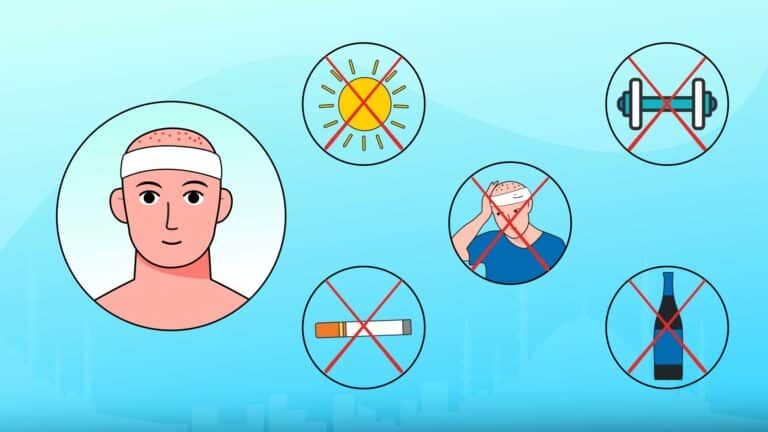
By Prof. Dr. Soner Tatlıdede · October 2026 Congratulations on completing your hair transplant. While the surgical part is finished, the success of your restoration now depends heavily on the recovery phase. In our clinical experience, the first two weeks post-surgery are just as critical as the procedure itself. Understanding what to avoid after a hair transplant […]
Scalp psoriasis and seborrheic dermatitis are chronic inflammatory conditions that frequently cause discomfort, itching, redness, and scaling. For individuals experiencing hair thinning alongside these conditions, severe anxiety often arises regarding permanent follicle loss and the feasibility of hair restoration. A central concern among patients is whether undergoing a hair transplant while managing scalp psoriasis is […]


Thank you!
Your details have been successfully submitted. Thanks!