


What Does Hair Transfer Mean? Medical Process, Survival Rates, and Second Sessions
Medical Review by: Prof. Dr. Soner Tatlıdede – September 2026
Quick Summary: Medical Facts at a Glance
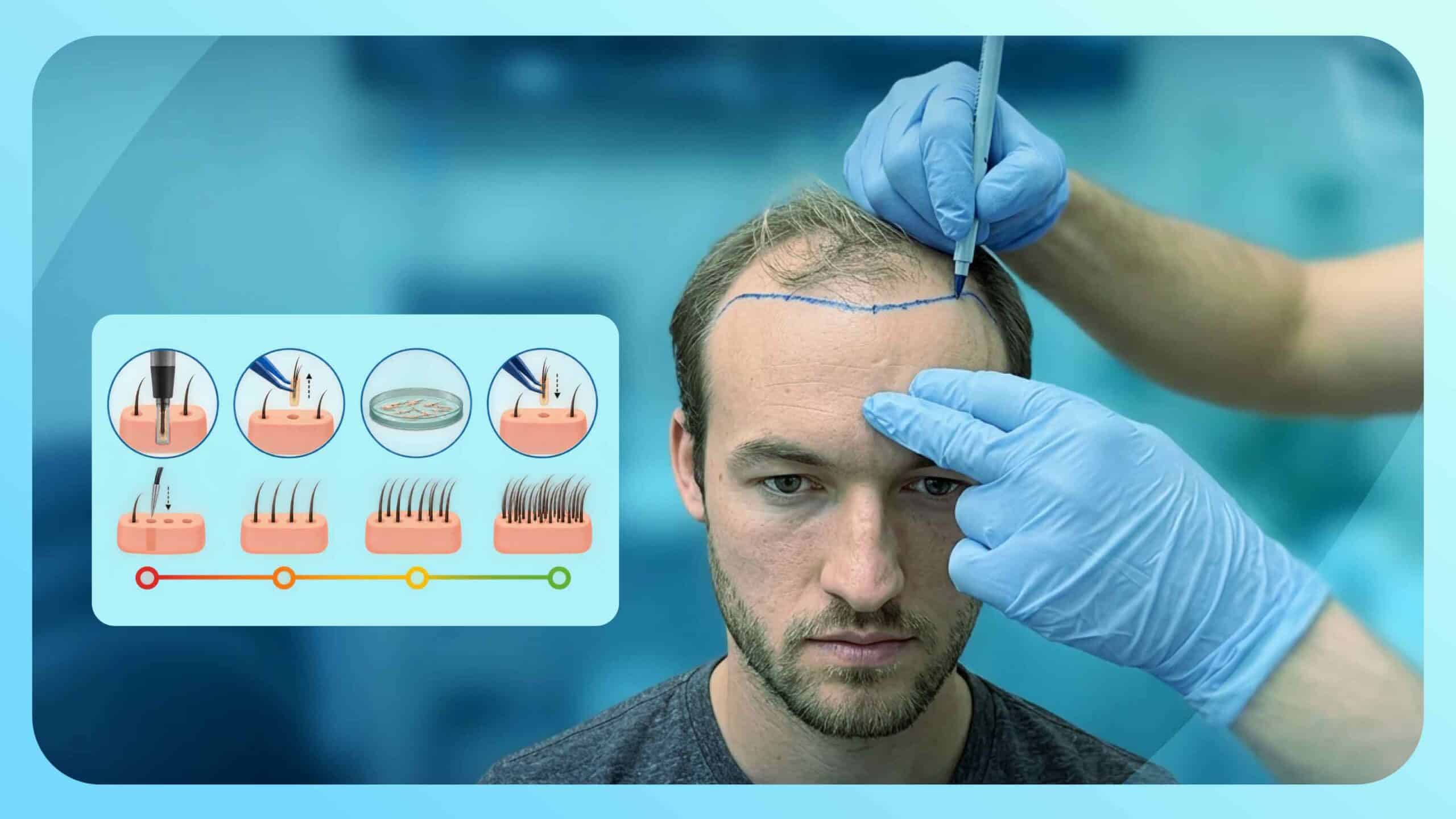
- Medical Definition: “Hair transfer” is the colloquial term for hair transplantation, scientifically defined as autologous tissue transfer—moving living, permanent hair follicles from one part of your scalp to another.
- Genetic Permanence: Transferred follicles are harvested from the occipital donor zone (back of the head), which is genetically programmed to resist dihydrotestosterone (DHT), the hormone causing male pattern baldness.
- The 3-Step Procedure: Successful hair transfer relies on micro-extraction, precise channel opening (incision), and direct graft implantation.
- Survival Rates: Modern microsurgical handling, hypothermic storage solutions, and refined extraction yield graft survival rates between 90% and 95%.
- Second Sessions & Repair: Patients seeking a second session or revision surgery require a careful evaluation of remaining donor capacity, hair loss stabilization, and strict harvesting safety limits.
Introduction: Clarifying the Medical Reality of “Hair Transfer”
When individuals experience thinning hair, receding hairlines, or crown balding, their search for solutions often begins with terms like “hair transfer.” While the word transplant sounds strictly surgical, many patients naturally use transfer because it intuitively describes what they hope to achieve: moving healthy hair from areas of abundance to areas of scarcity.
From a clinical standpoint, this intuitive understanding is spot on. Hair transplantation is fundamentally an autologous tissue transfer. It does not involve synthetic implants, foreign human donor tissue, or hair extensions. Instead, it relies on harvesting live, functional organ structures—follicular units—from your own scalp and relocating them to restore lost density.
However, confusing terminology can lead to unrealistic expectations. Some patients wonder if hair transfer means moving individual hair strands or moving hair from someone else.
At Clinicana Hair Transplant Center in Istanbul, we prioritize clear patient education. Understanding the biological mechanisms behind hair transfer, how grafts survive outside the body, and what factors govern a successful second session or repair procedure is essential before embarking on your hair restoration journey.
The Science of Hair Transfer: What Does It Actually Mean?
In human dermatology, hair loss (most commonly Androgenetic Alopecia) is not caused by the scalp skin dying; rather, it is caused by the progressive miniaturization of hair follicles under the influence of dihydrotestosterone (DHT), a byproduct of testosterone.
Over successive growth cycles, DHT-sensitive follicles shrink, produce thinner hair shafts, and eventually stop producing visible hair altogether.
However, not all hair on your head is sensitive to DHT. Follicles located in the donor area—the occipital region at the back of the head and the parietal regions along the sides—are genetically programmed to be resistant to DHT.
| Search Term / Concept | Clinical Medical Equivalent | Biological & Surgical Reality |
|---|---|---|
| Hair Transfer | Autologous Follicular Unit Transfer (FUE / DHI) | Relocating live DHT-resistant grafts from the donor site to recipient balding areas. |
| Hair Graft | Follicular Unit (FU) | A distinct anatomical tissue bundle containing 1 to 4 hair follicles, nerves, and glands. |
| Second Hair Transfer | Revision Surgery / Second Session | Harvesting remaining donor reserves to increase density or repair previous artificial work. |
The medical principle governing hair transfer is known as donor dominance. When a DHT-resistant follicle is extracted from the back of the head and transferred to the receding frontal hairline or crown, it retains its genetic memory and DHT resistance permanently.
The follicle does not “know” it has been moved; it simply continues its natural, lifetime growth cycle in its new location.
The 3-Step Process: How Follicular Grafts Are Transferred
Transferring microscopic, living tissue requires extreme surgical precision, speed, and delicate handling. Modern procedures, primarily using Follicular Unit Extraction (FUE) and Direct Hair Implantation (DHI), follow three critical stages:
| Stage Number | Surgical Phase | Primary Medical Objective & Clinical Impact |
|---|---|---|
| Stage 1 | Micro-Extraction | Isolating and harvesting grafts using micro-punches (0.7–0.9mm) without severing root bulbs (low transection). |
| Stage 2 | Channel Opening (Incision) | Creating recipient micro-slits (via Sapphire blades or Choi pens) setting growth angle, depth, and direction. |
| Stage 3 | Graft Implantation | Placing delicate grafts into opened recipient sites within strict timeframes to ensure cellular survival. |
1. Micro-Extraction (Harvesting the Donor Area)
The medical team uses a specialized micro-motor tool fitted with an ultra-thin punch (0.7mm to 0.9mm in diameter) to isolate each individual follicular unit.
The surgeon must carefully align the tool with the subcutaneous angle of the hair root. Misalignment risks transection—cutting or severing the follicle bulb beneath the skin—which renders the graft non-viable. Controlling transection rates (keeping them under 3–5%) is the mark of an experienced surgical team.
2. Preservation and Holding Solutions
Once extracted, live grafts are completely severed from their systemic blood supply. During this “out of body” (ex-vivo) period, follicles face ischemic stress and dehydration risk.
To ensure high survival rates, extracted grafts are meticulously sorted under microscopic magnification, separated into single-hair units (for the hairline) and multi-hair units (for volume), and immediately stored in chilled, nutrient-rich solutions such as HypoThermosol at 4°C.
3. Channel Opening and Direct Implantation
In the recipient area, micro-incisions are created to receive the grafts. Using advanced techniques like Sapphire FUE Hair Transplants, surgeons utilize gem-grade sapphire blades that create smaller, smoother channels, minimizing skin trauma and accelerating post-op healing.
The depth, angle, and direction of these incisions dictate the final aesthetic result. Hair naturally grows at acute angles (30 to 45 degrees relative to the scalp).
Opening channels at incorrect vertical angles leads to a unnatural “doll’s hair” look. Once channels are opened, technician teams delicately implant the living grafts into their new micro-environment.
Graft Survival Rates: What Determines Tissue Viability?
A common concern for patients researching hair transfer is whether the transferred hair will actually take root and survive. In accredited clinics with expert surgical oversight, modern hair transfer procedures achieve graft survival rates between 90% and 95%.
Several critical medical variables govern graft viability:
| Survival Factor | Biological Mechanism | Clinical Best Practice at Clinicana |
|---|---|---|
| Ischemia Time | Grafts deteriorate every minute they remain outside the human body without oxygen. | Limiting ex-vivo holding time to under 2–4 hours per batch. |
| Hydration & Temp | Dryness or heat kills stem cells in the dermal papilla within minutes. | Storing grafts in chilled (4°C) HypoThermosol nutrient solutions. |
| Mechanical Trauma | Crushing the graft bulb with forceps during placement destroys tissue integrity. | Utilizing microscopic atraumatic handling and trained implant technicians. |
| Revascularization | New micro-vessels must connect to the follicle within 3 to 5 days post-surgery. | Strict post-op care routines and avoiding smoking/nicotine for 14 days. |
Addressing Second Sessions & Revision Hair Transfers
A significant portion of search volume for “hair transfer” comes from patients asking two specific questions: “Can I do a second hair transfer?” or “Can I fix a bad hair transfer from another clinic?”
Whether you need a second stage to treat progressive hair loss in unoperated regions or wish to correct poor density or unnatural hairlines from a prior procedure, a second hair transfer is clinically feasible under specific conditions.
| Evaluation Requirement | Clinical Reason for Second Hair Transfer | Surgical Safety Threshold |
|---|---|---|
| Remaining Donor Reserve | Assessing whether the back of the scalp has sufficient density left without causing moth-eaten patches. | Never exceeding 40–50% total cumulative donor extraction across all lifetime sessions. |
| Scalp Healing & Vascularity | Ensuring donor and recipient tissues have fully recovered and re-established micro-blood flow. | Waiting a minimum of 10 to 12 months between sequential procedures. |
| Hair Loss Stabilization | Preventing a gap (“island effect”) between permanent transferred hair and thinning native hair. | Combining surgery with preventative therapies (Finasteride/Minoxidil or PRP). |
Key Conditions for a Successful Second Transfer:
- Donor Capacity Check: The donor area contains a finite number of lifetime grafts (typically 6,000 to 8,000 total safe harvestable units). If a commercial “mega-session” over-harvested 5,000 grafts in your first procedure, your remaining donor capacity may be severely restricted.
- Hair Loss Progression: Transferred hair stays permanently, but your original native hair around it may continue to thin over time. Strategic long-term planning ensures that a second session fills new areas of recession seamlessly.
- Repairing “Pluggy” Work: In revision cases, misaligned or multi-hair grafts placed incorrectly along the hairline during a failed first surgery can be punch-extracted, split under a microscope, and re-transferred naturally.
The Growth Timeline After a Hair Transfer
Understanding what happens after your hair transfer helps manage expectations and prevents post-operative anxiety:
- Days 1–14 (Anchoring Phase): Grafts anchor into the scalp via fibrin protein bonds. Redness and minor scabbing form, which fully resolve after 10 to 14 days of gentle washing.
- Weeks 2–6 (Shock Loss Phase): The short hair shafts attached to transferred follicles fall out. This is a completely normal physiological response. The living root remains resting safely underneath the scalp.
- Months 3–4 (Early Growth): New, fine hair begins to break through the skin surface. Initial growth appears thin and wispy.
- Months 6–9 (Density Accumulation): Hair shafts thicken noticeably, covering 50% to 70% of the final visual density.
- Months 12–15 (Final Maturation): Full density, texture normalization, and complete natural coverage are established.
Frequently Asked Questions (FAQ)
Is “hair transfer” different from “hair transplantation”?
No. “Hair transfer” is simply an informal or descriptive term used by patients for hair transplantation. Mechanically and medically, both refer to autologous tissue transfer—relocating live, DHT-resistant hair follicles from your donor area to balding recipient sites.
Can hair be transferred from another person to my scalp?
No. You cannot accept a hair transfer from another person (such as a family member or friend). Your immune system would immediately recognize foreign cellular tissue and reject the grafts unless you took lifelong immunosuppressant drugs, which carry severe medical risks. Hair transfer is strictly an autologous procedure (using your own tissue).
Can body hair be transferred to the scalp if my head donor area is weak?
Yes. In cases of severe baldness (Norwood 6 or 7) with limited scalp donor reserves, surgeons can perform Body Hair Transplant (BHT). Beard hair (harvested under the jawline) is the most effective body donor source due to its thick caliber and high survival rate, followed by chest hair.
How many grafts can be safely transferred in a single session?
Medical guidelines strictly recommend harvesting no more than 3,500 to 4,500 grafts in a single session. Exceeding this limit increases the risk of donor over-harvesting, patchy scarring, extended out-of-body graft ischemia, and lower graft survival rates.
Medical Disclaimer & Review
- Medical Disclaimer: The information provided in this article is intended strictly for educational and informational purposes and does not substitute for professional medical advice, clinical diagnosis, or treatment plans. Individual scalp biology, donor availability, and hair loss patterns vary significantly.
- Medical Review Conducted by: Prof. Dr. Soner Tatlıdede, Lead Plastic Surgeon and Hair Restoration Specialist at Clinicana Hair Transplant Center, Istanbul. with over 22 years of clinical experience and 18,947 successful hair restoration procedures.
Academic & Clinical References
- Goldin J, Zito PM, Raggio BS. Hair Transplantation. StatPearls / NCBI Bookshelf. Updated 2025.
- Journal of Cutaneous and Aesthetic Surgery: Assessment of Scalp Hair Density, Graft Viability, and Follicular Unit Handling.
- International Society of Hair Restoration Surgery (ISHRS): Global Practice Census & Safe Donor Harvesting Guidelines.
- Parsley WM, Perez-Meza D. Review of Factors Affecting the Growth and Survival of Follicular Grafts. Journal of Cutaneous and Aesthetic Surgery.


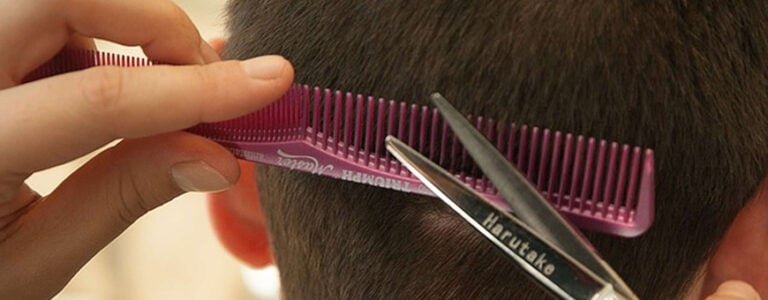
By Prof. Dr. Soner Tatlıdede · October 2026 When can you cut your hair after a hair transplant? Hair in the donor area can be trimmed after 1 month using scissors or clippers. As for the recipient area, trimming only the ends of the hair using scissors is permitted after 2 months. However, you must wait at […]
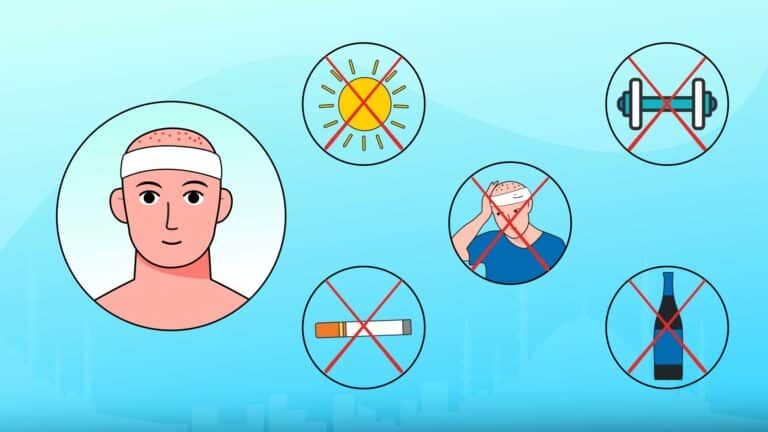
By Prof. Dr. Soner Tatlıdede · October 2026 Congratulations on completing your hair transplant. While the surgical part is finished, the success of your restoration now depends heavily on the recovery phase. In our clinical experience, the first two weeks post-surgery are just as critical as the procedure itself. Understanding what to avoid after a hair transplant […]
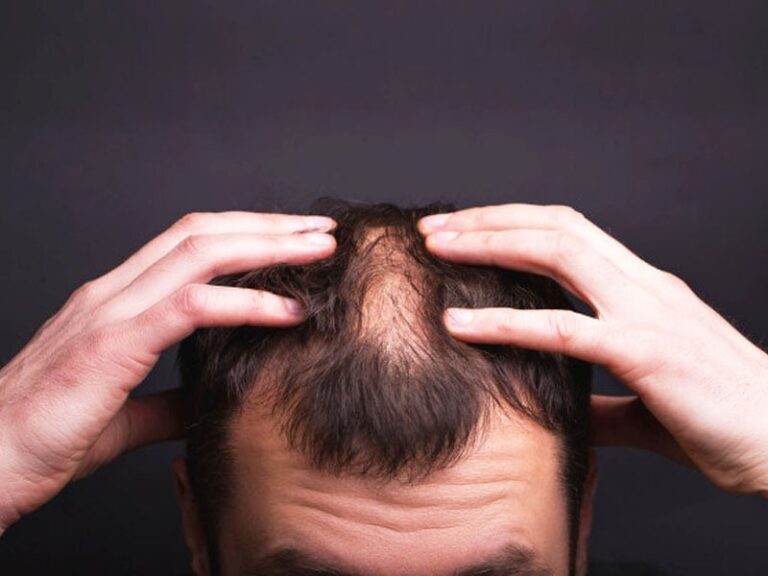
Scalp psoriasis and seborrheic dermatitis are chronic inflammatory conditions that frequently cause discomfort, itching, redness, and scaling. For individuals experiencing hair thinning alongside these conditions, severe anxiety often arises regarding permanent follicle loss and the feasibility of hair restoration. A central concern among patients is whether undergoing a hair transplant while managing scalp psoriasis is […]


Thank you!
Your details have been successfully submitted. Thanks!