


What Is DHT and How Does It Cause Hair Loss? Biological Mechanisms and Treatments
Medical Review by: Prof. Dr. Soner Tatlıdede – September 2026
Quick Summary (TL;DR)
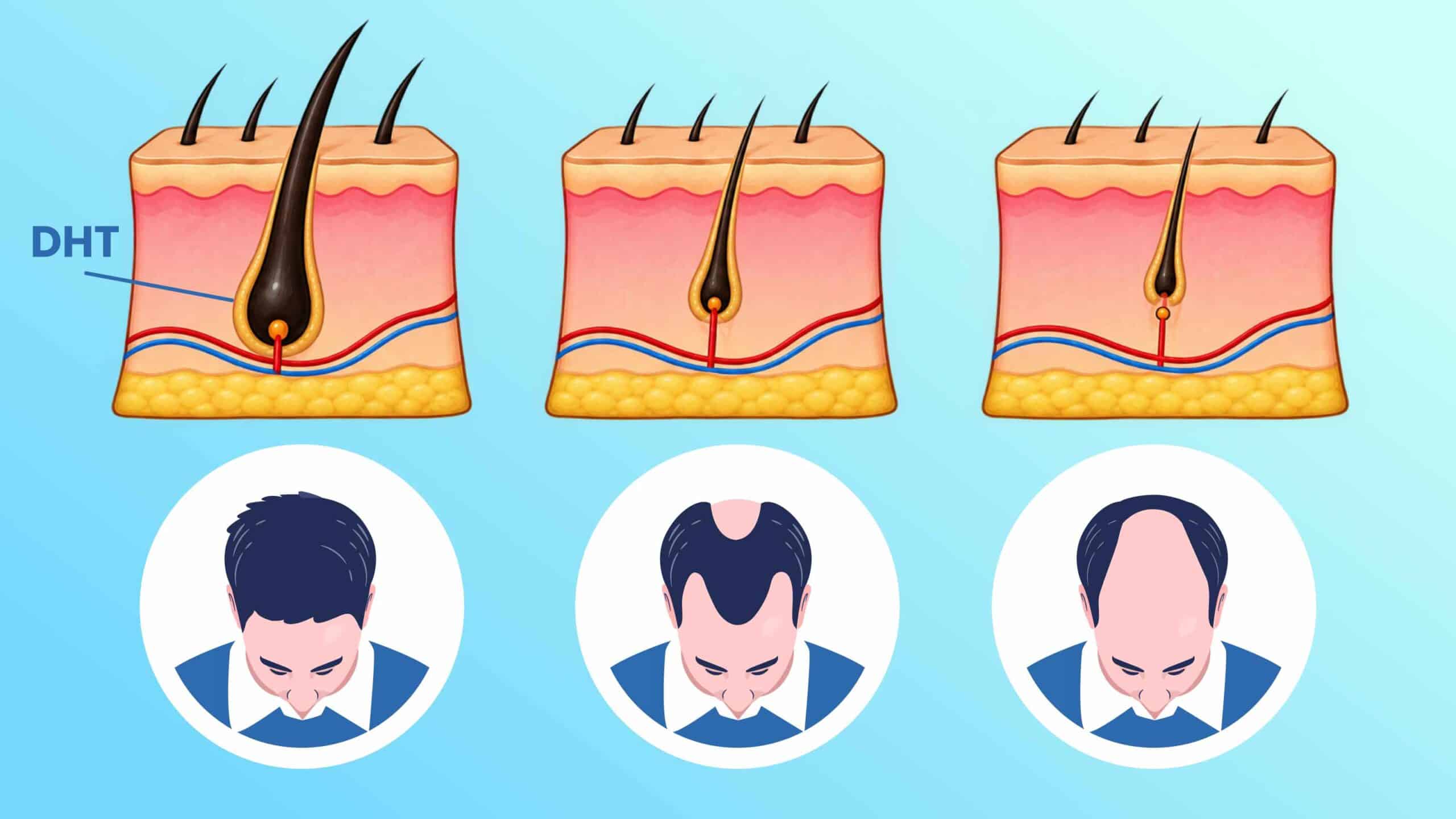
Dihydrotestosterone (DHT) is a potent androgenic steroid hormone derived from testosterone via the 5-alpha reductase enzyme. In individuals genetically predisposed to Androgenetic Alopecia (pattern baldness), DHT binds to sensitive androgen receptors in frontal and vertex scalp hair follicles.
This binding triggers follicular miniaturization—shortening the active growth phase (Anagen), shrinking hair shaft diameter, and eventually leading to follicle atrophy. Managing hair loss without managing DHT activity is like trying to fill a leaking bucket without plugging the hole.
While medical inhibitors (Finasteride/Dutasteride) and natural blockers (Saw Palmetto) stabilize living miniaturized follicles, completely dead follicles in bald areas require surgical restoration via Sapphire FUE or DHI techniques.
Transplanted donor grafts harvested from the occipital zone are genetically resistant to DHT permanently due to donor dominance.
Understanding the Primary Driver of Pattern Hair Loss
When individuals first observe thinning along their frontal hairline or vertex crown, their initial search for answers frequently leads to a central culprit: Dihydrotestosterone, widely known as DHT.
While hair loss can stem from nutritional deficiencies, acute psychological stress, or thyroid imbalances, progressive pattern hair loss—scientifically termed Androgenetic Alopecia—is fundamentally an androgen-driven condition. It affects roughly 85% of men by age 50 and millions of women worldwide.
Despite its notoriety, DHT is not a “toxin” or a harmful compound in itself; it is a naturally occurring sex hormone vital for human biological development.
However, when circulating DHT interacts with genetically susceptible hair follicles on the upper scalp, it initiates a destructive biological cascade known as follicular miniaturization.
At Clinicana Hair Transplant Center in Istanbul, under the medical direction of Prof. Dr. Soner Tatlıdede, we emphasize that successful hair preservation and restoration require understanding the underlying endocrinology.
This medical guide details the biological synthesis of DHT, explains how it causes hair follicles to shrink, evaluates medical versus natural DHT inhibitors, and clarifies why surgical hair restoration offers a permanent defense against DHT-induced baldness.
What Is DHT? The Endocrine Synthesis of Dihydrotestosterone
Dihydrotestosterone (DHT) is an endogenous androgenic steroid hormone derived directly from testosterone. While testosterone is the primary circulating male sex hormone (present in smaller quantities in women), DHT is significantly more potent in its binding affinity to androgen receptors.
THE ENDOCRINE SYNTHESIS PATHWAY OF DHT
The Conversion Process: 5-Alpha Reductase
Approximately 5% to 10% of free circulating testosterone in the human body is converted into DHT through an enzymatic reaction. This conversion is catalyzed by the nuclear membrane-bound enzyme 5-Alpha Reductase (5-AR).
There are two primary isoenzymes of 5-Alpha Reductase:
- Type 1 5-AR: Located primarily in the sebaceous glands, liver, and skin.
- Type 2 5-AR: Located predominantly in the hair follicle dermal papilla, prostate gland, and seminal vesicles. Type 2 is the principal driver of androgenetic hair loss.
Biological Function vs. Scalp Sensitivity
During fetal development and male puberty, DHT is crucial for the differentiation of male genitalia, facial and body hair growth, prostate development, and vocal cord deepening.
In adulthood, however, systemic DHT becomes unnecessary for hair maintenance. When high concentrations of DHT bind to androgen receptors within susceptible scalp hair roots, the hormone does not stimulate growth—as it does on the face or chest—but instead signals the follicle to begin progressive degeneration.
The Biological Mechanism: How DHT Causes Hair Miniaturization
Hair growth occurs in a continuous cycle comprising three primary phases: Anagen (active growth, lasting 2 to 6 years), Catagen (transitional regression, lasting 2 to 3 weeks), and Telogen (resting and shedding, lasting 2 to 4 months).
In a healthy scalp, roughly 85% to 90% of follicles reside in the Anagen phase, yielding full-caliber, deeply pigmented terminal hair shafts.
| Biological Stage | Cellular Mechanism inside Dermal Papilla | Visible Impact on Hair Shaft |
|---|---|---|
| 1. Receptor Binding | DHT binds to androgen receptors in the dermal papilla of frontal/crown follicles. | Hair appears normal, but growth cycle duration begins to shorten internally. |
| 2. Anagen Truncation | TGF-beta and apoptotic signals shorten the active growth stage from years to months. | Hair shaft cannot reach its maximum length; early shedding becomes visible. |
| 3. Structural Miniaturization | Dermal papilla volume shrinks; capillary blood flow around the root decreases. | Hair shaft grows progressively finer, thinner, lighter, and weaker (vellus-like). |
| 4. Complete Follicular Atrophy | The follicle loses regenerative stem cell capacity and turns into fibrotic tissue. | The follicle stops producing hair entirely; scalp becomes smooth and bald. |
Step-by-Step Breakdown of Follicular Miniaturization:
- Receptor Affinity: DHT binds to intracellular androgen receptors in the dermal papilla cells located at the base of susceptible hair roots.
- Gene Transcription & Cytokine Release: This androgen-receptor complex translocates to the cell nucleus, triggering the production of inhibitory signaling proteins, primarily Transforming Growth Factor-beta 1 and 2 (TGF-β1 / TGF-β2) and Dickkopf-1 (DKK-1).
- Anagen Phase Shortening: These inhibitory factors force the follicle prematurely out of the Anagen growth phase and push it rapidly into the Catagen resting state. Over consecutive growth cycles, the Anagen phase shrinks from several years down to a few months or weeks.
- Vellus Hair Conversion: As the growth period shortens, the dermal papilla shrinks in volume. The follicle produces progressively shorter, thinner, and less pigmented hair shafts. Robust terminal hairs degrade into fine, peach-fuzz vellus hairs.
- Fibrosis and Atrophy: Left unmanaged over 5 to 10 years, miniaturized follicles undergo perifollicular fibrosis—the formation of rigid collagenous scar tissue surrounding the root. Micro-vascular capillaries supplying oxygen regress, causing complete follicular atrophy and permanent baldness.
Managing DHT: Medical vs. Natural Inhibitors
At Clinicana, we often explain a foundational clinical rule to our patients: “Treating active hair loss without blocking or managing DHT is like trying to fill a bucket with a hole in it”.
You must plug the hole (block or suppress DHT binding) while simultaneously filling the bucket (stimulating microcirculation and tissue growth via PRP or Minoxidil).
| Inhibitor / Therapy | Biological Mechanism of Action | Clinical Efficacy & DHT Reduction | Indication & Target Candidate |
|---|---|---|---|
| Finasteride (Oral / Topical) | Inhibits Type 2 5-Alpha Reductase enzyme competitive binding. | Reduces serum DHT by ~70%; scalp DHT by ~60–65%. | First-line FDA-approved medical treatment for male pattern baldness. |
| Dutasteride (Oral / Topical) | Dual inhibitor of both Type 1 and Type 2 5-Alpha Reductase isoenzymes. | Reduces serum DHT by >90%; scalp DHT by ~80–85%. | Advanced or aggressive pattern loss resistant to Finasteride. |
| Saw Palmetto (Serenoa Repens) | Botanical liposterolic extract mildly inhibiting 5-AR and blocking receptors. | Mild, localized 5-AR suppression (~15–25% efficacy relative to drugs). | Early thinning, mild maintenance, or patients intolerant to pharmaceutical drugs. |
| Zinc & Botanical Oils | Zinc acts as a mild 5-AR cofactor inhibitor; pumpkin seed oil reduces oxidative stress. | Secondary nutritional support; insufficient alone for aggressive genetic loss. | Complementary adjunctive therapy alongside core treatment protocols. |
1. Pharmaceutical 5-Alpha Reductase Inhibitors
- Finasteride (1 mg daily): FDA-approved for male pattern hair loss. By selectively inhibiting Type 2 5-AR, Finasteride lowers systemic DHT levels by approximately 70%, halting hair loss progression in over 85% of men and stimulating visible regrowth in 60% to 65% of cases. Topical formulations are also available to minimize systemic exposure.
- Dutasteride (0.5 mg): A potent dual inhibitor blocking both Type 1 and Type 2 5-AR isoenzymes. While off-label in some regions for hair loss, clinical trials demonstrate superior DHT suppression compared to Finasteride, making it valuable for aggressive loss patterns.
2. Natural and Botanical DHT Blockers
- Saw Palmetto (Serenoa Repens): Plant extracts rich in fatty acids and phytosterols. Studies show Saw Palmetto partially inhibits 5-AR activity and reduces nuclear receptor binding. While less potent than pharmaceutical options, it provides a well-tolerated, natural option for early-stage thinning or preventive maintenance.
- Zinc & Micronutrients: Zinc plays a regulatory role in cellular enzyme activity. Correcting zinc deficiencies helps normalize scalp environment conditions, though micronutrients alone cannot override severe genetic androgen sensitivity.
Biological Distinction: Live Miniaturized Follicles vs. Atrophied (Dead) Follicles
A critical diagnostic step at Clinicana is differentiating between miniaturized hair roots that can be saved non-surgically and atrophied roots that require surgical replacement.
CLINICAL DIAGNOSTIC & DECISION PATHWAY
- The Live, Miniaturized Stage: Under digital trichoscopy, fine, miniaturized hair shafts remain visible emerging from follicle openings. Although weakened by DHT, the dermal papilla stem cells are still viable. Combining DHT inhibitors (to remove the hormonal stress) with biological stimulation like Platelet-Rich Plasma (PRP) or Mesotherapy (to supply growth factors and restore blood supply) can reverse miniaturization, restoring terminal shaft thickness.
- The Completely Atrophied Stage: When an area of the scalp becomes smooth, shiny, and devoid of follicular openings, the underlying hair roots have succumbed to fibrosis and complete atrophy. At this stage, no medication, laser cap, or plasma injection can reawaken non-existent stem cells. The only clinical solution is to transplant new, living hair roots into the area.
Why Transplanted Hair Resists DHT: The Donor Dominance Theory
Patients preparing for surgical hair restoration frequently ask a fundamental question: “If DHT caused my original hair to fall out, won’t it also cause my transplanted hair to fall out?”
The answer lies in a landmark scientific principle established in hair restoration dermatology: The Theory of Donor Dominance.
| Scalp Anatomical Zone | Genomic Coding & Androgen Receptors | Long-Term Response to Systemic DHT |
|---|---|---|
| Recipient Zone (Frontal Line, Temples & Crown) | High density of sensitive androgen receptors; elevated 5-AR expression. | Progressive miniaturization, Anagen shortening, and eventual permanent loss. |
| Donor Zone (Occipital & Lower Parietal Regions) | Genetically programmed with minimal androgen receptors; high aromatase presence. | Permanent resistance to DHT; robust lifelong terminal growth cycle. |
The Science of Donor Dominance
Hair loss sensitivity is not determined by the scalp location itself, but by the genetic memory stored within the individual hair follicle.
Follicles situated in the occipital zone (the back of the head) and parietal sides are embryologically distinct. They possess almost no androgen receptors sensitive to DHT and express higher levels of aromatase (an enzyme that converts minimal testosterones into estrogens, protecting the root).
When a surgeon extracts a healthy follicular unit from the donor area and implants it into a bald recipient area (such as a receded hairline or bare crown):
- The graft retains its native genetic programming.
- It does not absorb the vulnerability of the surrounding skin.
- It continues its natural, lifetime growth cycle permanently, unaffected by circulating DHT levels.
Surgical Precision at Clinicana: Sapphire FUE and DHI
To harvest and relocate these DHT-resistant grafts safely, Clinicana Hair Transplant Center uses state-of-the-art microsurgical techniques:
- Sapphire FUE (Follicular Unit Extraction): Micro-punches (0.7mm to 0.9mm) harvest grafts from the donor area. Channels in the bald recipient area are opened using ultra-smooth gem-grade sapphire blades. This technique allows high packing density, precise angle control, reduced tissue trauma, and rapid healing.
- DHI (Direct Hair Implantation): Extracted grafts are loaded into specialized Choi Implanter Pens and placed directly into recipient zones without prior channel incision. DHI is ideal for inserting permanent, DHT-resistant grafts directly between existing miniaturized hairs without damaging surrounding roots, creating seamless visual density.
Frequently Asked Questions (FAQs)
Does high DHT mean I have higher testosterone levels?
Not necessarily. Male pattern baldness is rarely caused by having excessive systemic testosterone. Rather, it is dictated by local receptor sensitivity and the rate of 5-Alpha Reductase enzyme activity within your scalp follicles. An individual with normal or low testosterone can still experience aggressive hair loss if their hair roots express a high density of sensitive androgen receptors.
Can I lower DHT naturally through diet alone?
A balanced diet rich in zinc, lycopene (found in tomatoes), green tea (containing EGCG), and pumpkin seed oil can offer mild antioxidant and weak 5-AR inhibitory benefits. However, dietary adjustments alone are generally insufficient to stop aggressive genetic pattern hair loss driven by strong hereditary factors.
If I get a hair transplant, do I still need to take DHT blockers?
Transplanted hair from the donor zone is permanent and DHT-resistant. However, your native, non-transplanted hair surrounding the grafted areas remains genetically susceptible to DHT. Taking a DHT blocker post-surgery helps preserve your remaining native hair, preventing a gap from forming behind your newly transplanted hairline over time.
Are the side effects of medical DHT blockers permanent?
Clinical trials (including FDA review data) show that sexual side effects from 5-alpha reductase inhibitors occur in a small percentage of users (typically 1.5% to 2%, compared to ~1.1% in placebo groups). In the vast majority of cases, these side effects resolve fully upon discontinuing the medication or adjusting the dosage under medical supervision. Topical formulations also offer an alternative with lower systemic absorption.
Medical Disclaimer & Review
- Medical Disclaimer: The information provided in this article is intended strictly for educational and informational purposes. It does not constitute formal medical diagnosis, advice, or individual treatment plans. Scalp biology and hormonal responses vary per patient.
- Medical Review Conducted by: Prof. Dr. Soner Tatlıdede, Lead Plastic Surgeon and Hair Restoration Specialist at Clinicana Hair Transplant Center, Istanbul. With over 22 years of clinical experience and 18,947 successful hair restoration procedures.
Academic & Clinical References
- National Center for Biotechnology Information (NCBI): Biochemistry, Dihydrotestosterone & Androgenetic Alopecia Pathophysiology.
- Journal of the American Academy of Dermatology (JAAD): Follicular Miniaturization Dynamics and 5-Alpha Reductase Inhibition in Pattern Loss.
- International Society of Hair Restoration Surgery (ISHRS): Donor Dominance Principles, Graft Viability, and Surgical Standards in Hair Transplantation.
- Dermatologic Surgery Journal: Clinical Comparison of FUE and DHI Microsurgical Techniques for Advanced Alopecia.


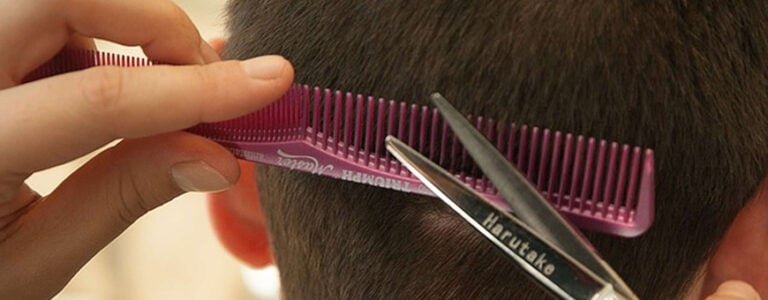
By Prof. Dr. Soner Tatlıdede · October 2026 When can you cut your hair after a hair transplant? Hair in the donor area can be trimmed after 1 month using scissors or clippers. As for the recipient area, trimming only the ends of the hair using scissors is permitted after 2 months. However, you must wait at […]
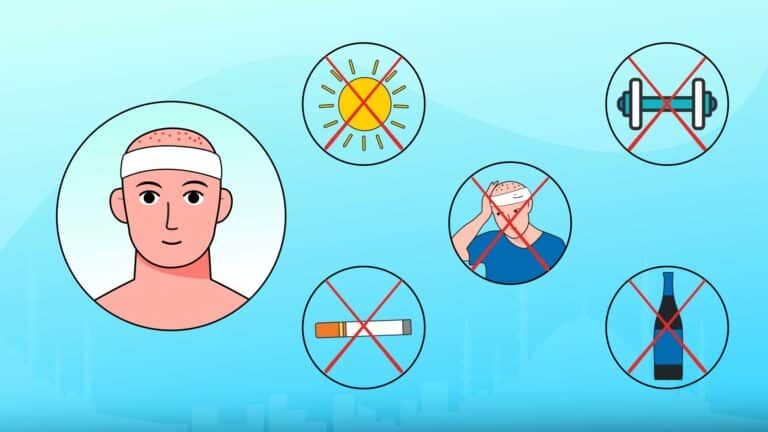
By Prof. Dr. Soner Tatlıdede · October 2026 Congratulations on completing your hair transplant. While the surgical part is finished, the success of your restoration now depends heavily on the recovery phase. In our clinical experience, the first two weeks post-surgery are just as critical as the procedure itself. Understanding what to avoid after a hair transplant […]
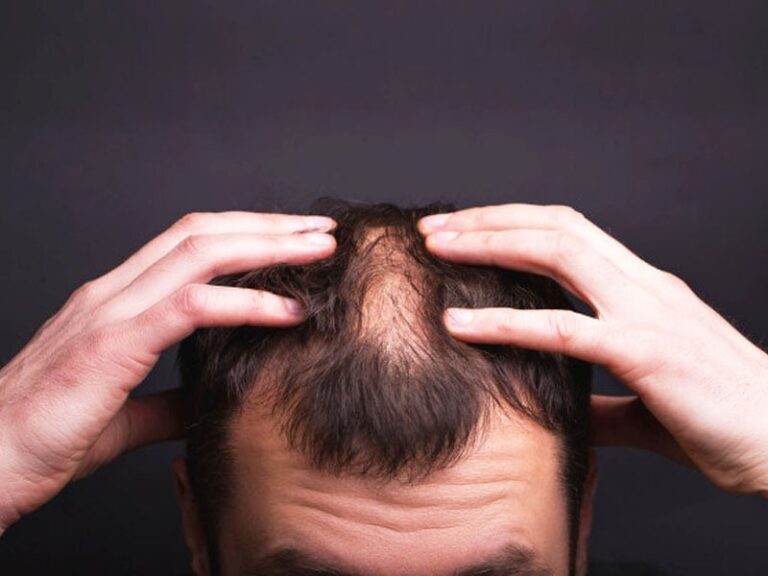
Scalp psoriasis and seborrheic dermatitis are chronic inflammatory conditions that frequently cause discomfort, itching, redness, and scaling. For individuals experiencing hair thinning alongside these conditions, severe anxiety often arises regarding permanent follicle loss and the feasibility of hair restoration. A central concern among patients is whether undergoing a hair transplant while managing scalp psoriasis is […]


Thank you!
Your details have been successfully submitted. Thanks!