


What to Avoid After a Hair Transplant to Protect Your Grafts
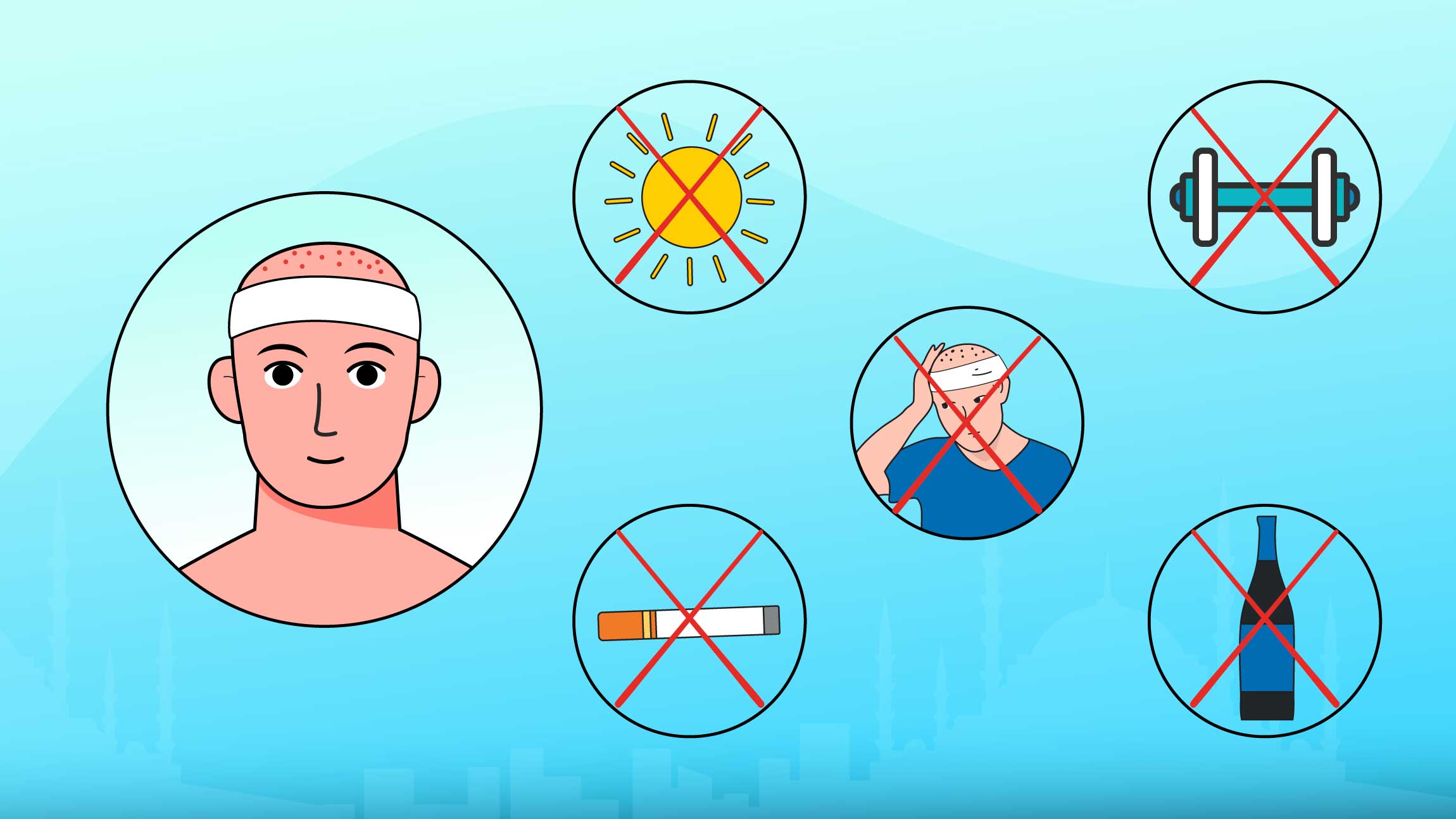
Congratulations on completing your hair transplant. While the surgical part is finished, the success of your restoration now depends heavily on the recovery phase.
In our clinical experience, the first two weeks post-surgery are just as critical as the procedure itself.
Understanding what to avoid after a hair transplant is essential because your new follicles are currently vulnerable. They are in a biological process of “anchoring” into the scalp.
This guide is designed to help you navigate this delicate period, highlighting the specific activities, habits, and environments to avoid in order to protect hair transplant grafts and achieve the best possible density.
Why Avoiding the Wrong Things Is Critical for Graft Survival
When you leave the clinic, your grafts are technically in place, but they are not yet secure.
How fragile your grafts are in the first days
- Anchoring Phase: For the first few days, the grafts are held in place only by a microscopic blood clot (fibrin). They are not structurally connected to the surrounding tissue yet.
- Dislodgement Risk: During this window, even minor pressure, friction, or scratching can physically pull a graft out of its channel.
- The Critical Window: The first 10–14 days are the most critical. After this period, the follicles typically root securely into the blood supply.
What can happen if you ignore aftercare rules
- Infection and Swelling: Ignoring hygiene protocols or exposing the scalp to dirt can introduce bacteria, leading to folliculitis or infection that threatens the result.
- Poor Growth: Physical trauma to the grafts can lead to “empty spots” or patchy regrowth, compromising the overall aesthetic density you paid for.
Activities and Movements to Avoid After a Hair Transplant
Your body needs energy to heal. Strenuous activity diverts blood flow and can increase intracranial pressure, which is dangerous for fresh grafts.
Physical activities that put pressure on your scalp
- Intense Exercise: We advise patients to avoid running, heavy gym workouts, weightlifting, and contact sports for at least 2–3 weeks. High exertion raises your blood pressure, which can cause the grafts to “pop” out or bleed excessively.
- Bending Over: For the first 3–5 days, avoid bending at the waist to tie your shoes or pick up objects. Lowering your head below your heart level increases pressure in the scalp, promoting swelling and bleeding.
Sleeping positions that can harm your grafts
- Avoid Stomach/Side Sleeping: Sleeping flat on your stomach or side can press the recipient area against the pillow, causing friction that dislodges grafts.
- Elevation is Key: We recommend sleeping on your back with your head elevated at a 45-degree angle (using two pillows or a neck pillow) for the first 5 nights. This helps reduce forehead swelling and keeps the grafts safe from contact.
Things You Should Not Do With Your Hair and Scalp
One of the most common questions we receive is what not to do after hair transplant regarding hygiene and itchiness.
Touching, scratching and rubbing the grafts
- The “Itch” Phase: As the scalp heals, it will itch. This is a sign of healing, but you must not scratch. Scratching can rip out the graft along with the scab.
- Clothing Choices: Avoid pullover shirts or tight turtlenecks for the first week. Wear button-up shirts to prevent fabric from dragging across the scalp when dressing.
- Headwear: Do not wear tight hats, beanies, or helmets for at least 10–14 days. Any compression on the grafts can compromise their blood supply.
Washing mistakes to avoid
- Water Pressure: Do not let a high-pressure shower head spray directly onto the recipient area for the first 10 days. The force of the water can traumatize the follicles.
- Temperature and Technique: Avoid very hot water, which increases swelling. Use lukewarm water and the prescribed medical shampoo. Do not rub; instead, gently pat the foam onto the area.
Environments and Exposures to Avoid
Your scalp is essentially a healing open wound. You must control your environment to prevent complications.
Sun, heat and humidity
- Direct Sunlight: Avoid exposing your scalp to strong, direct sunlight for the first month. The skin is numb and can burn easily, leading to permanent hyperpigmentation (dark spots) or scarring.
- Heat Sources: Avoid saunas, steam rooms, and solariums for at least one month. Excessive heat causes sweating, which creates a breeding ground for bacteria and can irritate the healing incisions.
Water, pools and sea
- Swimming Pools: Avoid pools and hot tubs for at least 3–4 weeks. Chlorine is a harsh chemical that damages healing tissue, and communal water is full of bacteria.
- Ocean and Lakes: While salt water can be healing later on, open bodies of water contain unpredictable bacteria. Stay out of the sea until your doctor clears you, typically after the scabs have fallen off (around day 14).
Products, Habits and Substances That Can Harm Your Grafts
To protect hair transplant grafts, you must also be mindful of what you put in and on your body.
Hair products to avoid
- Styling Chemicals: Do not use hair gels, sprays, waxes, or dry shampoos for the first 2–3 weeks. These products can clog the pores and suffocate the new grafts.
- Coloring: Avoid dyeing or bleaching your hair for at least 4–6 weeks. The harsh chemicals in dyes can damage the fragile skin and the new follicles.
Smoking, alcohol and medication without approval
- Smoking: Nicotine constricts blood vessels, reducing oxygen flow to the scalp. This can “starve” the grafts during their most critical survival phase. We strongly recommend stopping smoking for a few weeks before and after surgery.
- Alcohol: Alcohol thins the blood, which increases the risk of bleeding. Avoid it for at least 3–5 days post-surgery.
- Blood Thinners: Avoid aspirin or ibuprofen unless prescribed, as they can encourage bleeding. Stick to the pain management plan provided by your clinic.
How Long Do You Need to Be Careful After a Hair Transplant
Patients often ask for a timeline of things to avoid after a hair transplant. While individual healing varies, here is a general clinical guide.
The critical period for graft protection
- Days 1–3: Absolute caution. No touching, no bending, sleep elevated.
- Days 4–10: The grafts are settling, but mechanical damage is still possible. Scabs will form.
- Day 14: Once the scabs fall off, the follicles are usually secure.
When you can slowly return to normal activities
- Light Cardio: Usually safe after 10–14 days.
- Heavy Weights/Sports: Usually safe after 3–4 weeks.
- Swimming/Sauna: Usually safe after 4 weeks.
- Note: Always prioritize your clinic’s specific post-op instructions over general advice.
What to Do If You Think You Damaged Your Grafts
Accidents happen. You might bump your head on a car door or wake up scratching. Knowing the dos and don’ts after hair transplant includes knowing how to react to mishaps.
Common accidents after a hair transplant
- Dislodged Graft: If you see a small amount of bleeding and a bulb-like tissue, you may have lost a graft.
- Bumps: Minor bumps are common. If there is no bleeding, the graft is likely safe.
When and how to contact your clinic
- Document It: Immediately take a clear, well-lit photo of the area.
- Contact Us: Send the photo to your medical consultant. Do not apply ice or pressure unless instructed.
- Stay Calm: Losing one or two grafts will not ruin your overall result. The most important thing is to prevent infection in the open wound.
FAQs About What to Avoid After a Hair Transplant
Can I wear a cap or hat after a hair transplant?
We generally recommend waiting 10 to 14 days before wearing a fitted cap. If you must go outside earlier, wear a loose-fitting bucket hat that does not touch the grafts.
When can I go back to the gym or do heavy exercise?
You should wait at least 2 weeks for light exercise and 3 to 4 weeks for heavy lifting or high-intensity interval training (HIIT) to avoid blood pressure spikes.
When is it safe to swim or use a sauna?
Avoid swimming pools, the ocean, and saunas for at least one month post-surgery to prevent infection and irritation from chemicals or salt.
When can I dye or style my hair normally again?
You can usually return to using styling products after 3 weeks. However, you should wait 4 to 6 weeks before using harsh chemical dyes or bleaches.
Contact us now – get a free medical consultation
Medical Disclaimer: This content is for informational purposes only and does not replace professional medical consultation.
Read More:
How to Choose the Right Hair Transplant Clinic in Turkey: 7 Red Flags to Avoid
Manual FUE vs Robotic ARTAS: Which Transplant is Better?
Eyebrow Transplant vs Microblading: Longevity and Natural Results



In our daily practice at the hospital, we meet two types of patients. The first group is ready for transformation and seeks the permanent solution of a hair transplant. The second, and perhaps larger group, asks a critical question: “Doctor, is surgery my only option?” The answer, fortunately, is no. While hair transplantation remains the […]

Hair loss is a progressive condition that affects not only your appearance but also your psychological well-being. For decades, patients felt their only choices were invasive surgery or ineffective topical creams. However, the field of regenerative medicine has evolved rapidly, offering powerful biological solutions that harness the body’s own ability to heal. If you are […]

Managing the daily challenges of an autoimmune condition like lupus is demanding, and noticing sudden hair thinning or scarring can add a significant emotional burden. While lupus-related hair loss can be complex, understanding the difference between systemic shedding and discoid lesions is the first step toward finding the right treatment to manage symptoms and encourage […]


Thank you!
Your details have been successfully submitted. Thanks!