


What If a Hair Transplant Fails? A Complete Medical Guide
By Prof. Dr. Soner Tatlıdede • June 2026
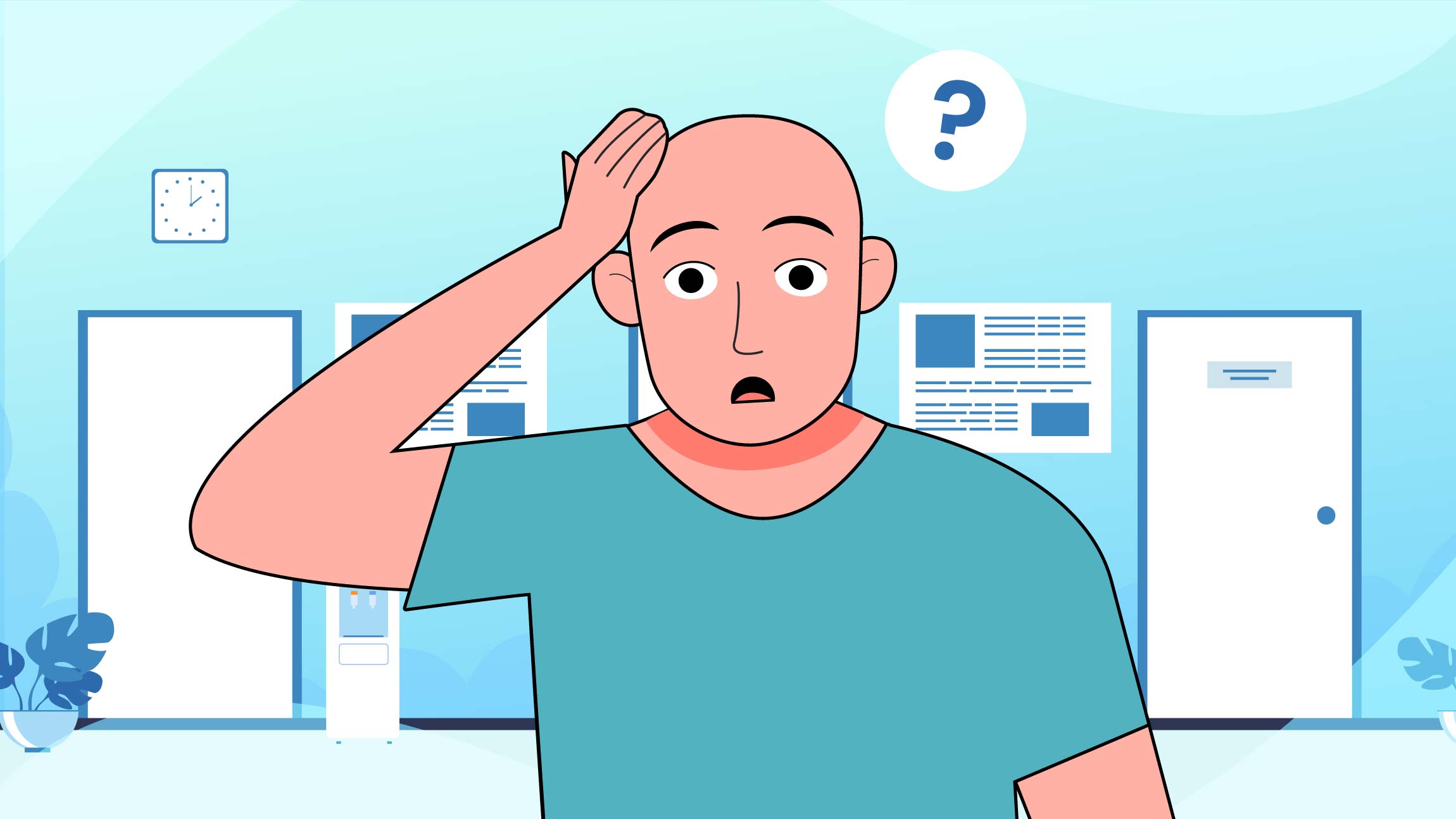
“What if a hair transplant fails?” This question is constantly asked by individuals seeking a hair restoration procedure. A failed hair transplant is considered a real risk when undergoing surgery to solve hair loss problems, especially if the right clinic is not carefully chosen.
Although the FUE technique is fundamentally safe, choosing a reliable clinic with a professional medical team and excellent patient reviews cannot be compared to any option that lacks these characteristics—no matter how low the cost.
When patients contact Clinicana to ask about the cost of a hair transplant, we always inform them about the potential risks.
While FUE is minimally invasive, significant issues arise from poor execution caused by incorrect practices, rushing, or a lack of medical expertise. Let us explore what happens when an FUE hair transplant fails and how to avoid these mistakes.
Can a Hair Transplant Really Fail?
Unfortunately, yes. The issue does not lie within the technique itself, but with the medical team performing the procedure. Before scheduling a patient for surgery, a precise diagnosis and complete analysis must be conducted to determine the most appropriate treatment—which is not always a hair transplant.
- The danger of wrong diagnosis: A flawed or incomplete diagnosis, or operating on an unsuitable candidate, will cause unnatural aesthetic results, severe side effects, and permanent tissue damage.
- Irreversible donor damage: This is especially critical if the donor area is over-harvested, leaving no remaining healthy hair follicles for a future corrective session.
- The technical requirement: Modern FUE technology revolutionized the field because it is virtually painless, leaves no linear scars, and achieves natural, long-lasting outcomes. However, it requires a high degree of specialization. When a team lacks this experience, specific clinical failures occur.
Common Signs and Outcomes of a Failed Hair Transplant
- Severe damage to the donor area: Due to fierce commercial competition, many budget clinics race to offer packages promising to plant the highest number of grafts in a single session. Harvesting massive amounts of hair under inexperienced hands can permanently deplete and scar the donor zone, making a repair session impossible.
- The “doll hair” effect: At Clinicana, we treat many repair cases. Inexperienced or rushed technicians often implant hair follicles in strict, uniform grids. This creates a synthetic, harsh distribution known as doll hair.
- A perfectly straight front hairline: To save time, novice practitioners often create a completely straight, continuous hairline. This creates a visibly artificial, “drawn-on” appearance on the forehead that exposes the surgery immediately.
- An unnaturally dense front line: True FUE mastery requires selecting only single-hair follicular units for the outermost boundary of the hairline, gradually transitioning to multiple-hair grafts toward the vertex. Rushed or poorly trained teams fail to sort these grafts, resulting in an unnaturally pluggy and heavy front line.
- Receding lines with unnatural angles: While a naturally mature receded hairline adds distinction to a man’s face, a failed procedure creates harsh, geometric angles or incorrect hair directions, resulting in a stark, manufactured look.
Can a Failed Hair Transplant Be Repaired?
When a hair transplant fails, the physical and psychological consequences are profound. In addition to the financial loss, many severe cases have limited options for correction.
- The repair process: To fix poor work, a surgeon must carefully extract the misplaced follicles and replace them with healthy ones. However, if the donor area has been depleted or heavily scarred by the first clinic, a secondary surgery will not succeed.
- Addressing root causes: A hair transplant should be the final step in a hair restoration journey. Treating the underlying medical causes of hair loss must come first. If a clinic blindly offers a surgical package before a thorough medical evaluation, they cannot be trusted.
- The complexity of corrective surgery: While poor results can often be improved—and we perform these delicate revisions daily at Clinicana—corrective surgery is vastly more complex than a primary transplant. It stands as a true clinical challenge and cannot always guarantee a 100% restoration.
Conclusion: Securing Your Results Safely
Fixing a surgical disaster is never easy. To protect yourself from these outcomes, it is essential to choose an accredited clinic with highly trained, board-certified surgeons like Prof. Dr. Soner Tatlıdede.
This medical dedication is what makes Clinicana the premier choice for a hair transplant in Turkey. Request your free medical consultation today: we can save your hair!
Edited by the Clinicana medical team
Medically reviewed by Prof. Dr. Soner Tatlıdede, Hair Transplant Surgeon — 22+ years of experience, ~18,000 procedures • June 2026


Medical Review by: Prof. Dr. Soner Tatlıdede – September 2026 Direct Definition: What Is Female Pattern Baldness? Female pattern baldness (androgenetic alopecia in women) is a genetically influenced condition characterized by progressive hair thinning across the vertex and widening of the central part line, while usually preserving the frontal hairline. Unlike male pattern hair loss, which frequently causes […]
Medical Review by: Prof. Dr. Soner Tatlıdede – September 2026 Quick Summary Table (At-a-Glance Overview) Diagnostic Parameter Low Porosity Hair (Tightly Closed) High Porosity Hair (Lifted / Damaged) Cuticle Alignment Flat, tightly overlapping, roof-shingle arrangement Raised, chipped, widely spaced, or damaged cuticle scales Water Absorption Speed Very slow; water beads up and repels initially Instantaneous absorption; wets almost […]
Medical Review by: Prof. Dr. Soner Tatlıdede – September 2026 Quick Summary (TL;DR) Dihydrotestosterone (DHT) is a potent androgenic steroid hormone derived from testosterone via the 5-alpha reductase enzyme. In individuals genetically predisposed to Androgenetic Alopecia (pattern baldness), DHT binds to sensitive androgen receptors in frontal and vertex scalp hair follicles. This binding triggers follicular miniaturization—shortening the […]


Thank you!
Your details have been successfully submitted. Thanks!