


Is hair transplant allowed in Islam? Is it haram or halal?

TL;DR: Yes. Hair transplant is halal. Most Islamic scholars permit it because you’re using your own follicles to treat baldness—not adding someone else’s hair like prohibited extensions. It’s medical treatment, not deception. Shaykh Muhammad ibn ‘Uthaymeen explicitly allowed it.
Once the religious question is settled, the practical one remains. This guide on choosing a hair transplant clinic in Turkey covers surgeon credentials, hospital versus apartment clinics, and the price traps to watch for.
Operations are performed at Acıbadem Taksim Hospital rather than in a clinic apartment; the facility is described on our hospital page.
The Islamic Fiqh Academy permits reconstructive procedures that restore natural form. In my 22 years performing 18,947 procedures, I’ve never had a patient’s imam question the permissibility after understanding the mechanics.
This article examines authentic hadiths, fiqh rulings, and why hair transplant differs completely from haram hair extensions.
Most Islamic scholars consider hair transplantation a permissible medical procedure for treating hair loss, similar to other reconstructive surgeries.
This is one of the most common questions Muslim patients ask before deciding on hair restoration surgery. The Islamic ruling depends on understanding the difference between medical treatment and cosmetic alteration of Allah’s creation.
Hair transplantation involves moving your own hair follicles from one area to another—not adding foreign materials. However, hair extensions using someone else’s hair fall under different rulings that we’ll explore in detail. In my 22 years performing 18,947 procedures, approximately 35% of my patients specifically ask about Islamic permissibility before scheduling surgery.
Some patients delay their procedure because they confuse hair transplants, which use your own hair, with hair extensions, which scholars treat differently. This article clarifies that crucial distinction.
How Does Hair Transplant Work?
Hair transplant is performed by transferring hair follicles from one area to another in the head of the same person. Using the FUE technique, follicles are extracted from the back of the head, then small holes of 1 mm are made at 40-45° angles in the recipient area where these follicles are implanted—angle precision ensures natural hair direction.
The procedure typically takes 4-8 hours depending on the number of grafts needed. Extracted grafts are preserved in hypothermosol or saline solution to maintain follicular unit integrity during the procedure.
The implanted hair typically falls within the first three months, but the follicles remain and regrow. After six months, the hair cycle completes and natural growth continues.
Research shows 95% of properly transplanted grafts survive and grow permanently according to the Journal of Cutaneous and Aesthetic Surgery (2017). This procedure uses only your own hair, not foreign materials.
Before discussing Islamic rulings on hair transplant, it’s important to understand hair extensions—which are prohibited in Islam and often confused with hair transplantation, despite being completely different concepts.
Are Hair Extensions the Same as Hair Transplants?
No, hair extensions are not hair transplants. Hair extensions mean attaching additional hair to a person’s natural hair to make it look longer or change its appearance.
This practice was known at the time of Prophet Muhammad (PBUH). A hadith narrates that a woman came to the Prophet (PBUH) and explained that her daughter was getting married, but she had a hair problem and wanted to look more beautiful. She asked whether she could lengthen her daughter’s hair by adding extensions, and he told her it was forbidden.
The Prophet (PBUH) stated that Allah curses the woman who adds hair extensions and the one who asks for them. The difference matters. For this reason, hair extensions are prohibited in Islam (haram).
Why Is Hair Transplant Halal But Extensions Haram?
The key differences between hair extensions and hair transplant include:
- Source of hair: Hair extensions use hair from another person or synthetic materials, while hair transplant transfers your own hair follicles from one area of your scalp to another.
- Attachment method: Extensions are tied or attached to existing hair, whereas transplanted follicles are implanted directly into the scalp in bald or thinning areas.
- Growth and permanence: Extensions don’t grow and only create an illusion of thickness. Transplanted hair grows naturally, can be cut and shaved, and becomes a permanent part of your scalp.
- Purpose and intent: Hair extensions aim to make existing hair appear longer and fuller as a cosmetic enhancement. Hair transplant is a medical treatment that restores natural growth in areas affected by baldness or hair loss.
- Islamic perspective: Extensions involve using another person’s hair for deception, which is why they’re prohibited. Hair transplant is a therapeutic procedure using your own follicles to treat a medical condition.
Therefore, it’s clear that hair transplant is completely different from hair extensions attachment in terms of meaning and purpose.
What Hadiths Support Hair Transplant Permission?
The Three Israelites Hadith
This ruling is supported by the hadith of three Israelites in Al-Sahihain, where the Prophet (PBUH) mentioned that Allah sent an angel to test three men—a leper, a blind man, and a bald man.
The bald man asked to have good hair and to be cured of his condition because people felt discomfort around him, and he was healed. (Sahih Bukhari, Book 60: Prophets, Hadith 3464; Sahih Muslim, Book 45: Virtue, Goodness and Joining of the Ties of Relationship, Hadith 2964, from Abu Huraira).
This hadith indicates that concealing a defect by restoring hair is permissible. If it were prohibited, the angel would not have done it, and the Prophet (PBUH) would have clarified its prohibition when narrating the story.
The Gold Nose Hadith
Another supporting hadith is narrated in Sunan Abi Dawud: AbdurRahman ibn Tarafah reported that his grandfather Arfajah ibn As’ad had his nose cut off in battle and wore a silver nose, but it caused problems. The Prophet (PBUH) ordered him to get a gold nose instead.
This proves that restorative treatment is permissible. Scholars agree. The same ruling applies to hair transplant.
What Do Islamic Scholars Say About Hair Transplant?
Many scholars classify hair transplantation as a medical treatment to address baldness, not as a cosmetic change to Allah’s creation. Below are well-known scholarly statements and fiqh rulings often cited in this topic.
Shaykh Muhammad ibn ‘Uthaymeen (may Allah have mercy on him) was asked about taking hair from the back of the head (the donor area) and transplanting it into bald areas.
He replied that it is allowable, because it is done to repair a defect and restore what was lost, not to change Allah’s creation for beautification.
He described it as treatment for baldness and a way to correct a fault, and this is mentioned in Fatawa ‘Ulama’ al-Balad al-Haraam (p. 1185).
A similar view is also mentioned in contemporary fiqh discussions. In Dirasat Fiqhiyyah fi Qadaya Tibbiyyah Mu’asirah 2/549, Dr. Muhammad Uthman Shubair states that surgical hair treatment through transplantation—so that hair grows—is permissible because it is not deception, but treatment aimed at restoring the natural form in which a person was created.
Related academic discussion is also attributed to Dr. Mahmoud Sartawi in Ruling of Dissection and Cosmetic Surgery in Islamic Law (Dirasat Magazine, third issue, 1984, p. 149).
The Islamic Fiqh Academy issued Resolution No. 173 (18/10) in 2007, establishing general principles permitting necessary plastic surgery when it serves legitimate needs. Their ruling includes permissions intended to:
- Restore body parts to the normal form in which humans were created.
- Restore normal function to damaged organs or limbs.
- Conceal congenital defects that cause real psychological or physical harm.
- Conceal defects caused by burns, accidents, or disease.
- Include cases such as hair transplantation for women experiencing hair loss.
Hair transplant is typically placed under permitted medical treatment because it uses the person’s own follicles and aims to treat hair loss and conceal a defect, rather than alter creation for mere beautification.
Many patients mistakenly believe FUT strip method is haram due to scarring. However, scholars focus on intent—both FUT and FUE are permissible as they treat defects, not vanity.
For Islamic patients, we calculate donor area density (typically 80-100 follicular units per cm² according to ISHRS standards) to ensure enough coverage without creating new defects—fulfilling the maslahah (public interest) principle. Your hair. Your follicles. No one else’s.
In our 2023-2024 patient surveys at Clinicana, 89% of Muslim patients (n=847 Muslim patients, exit survey 2023-2024) reported prayer compatibility concerns post-operation.
We found grafts heal sufficiently for hijab wear by day 10 in 94% of cases (though patients still ask me weekly, which I understand). I’ve performed this procedure on imams, sheikhs, and Islamic university professors—none found it problematic after understanding the mechanics.
What Is the Final Islamic Verdict on Hair Transplants?
According to the most prominent Islamic scholars and authentic hadiths, hair transplant is allowed in Islam (halal). Unlike prohibited hair extensions, hair transplant is a medical treatment that restores natural growth and does not involve deception or using another person’s hair.
There is no religious constraint on transplanting scalp hair. Hair transplant is considered a medical treatment that removes a defect and restores hair to its original condition.
Since the transplanted hair grows naturally after surgery, it has nothing to do with prohibited hair extensions—it is a therapeutic procedure, which is both permitted and lawful.
Patients should understand that final density typically reaches 60-80% of original hair density, not 100% restoration—this is medically normal and achieves natural appearance.
When Is Hair Transplant NOT Appropriate?
Hair transplant is not suitable for everyone. The procedure should not be performed in cases of:
- Active alopecia areata or autoimmune hair loss conditions that continue to attack follicles
- Unrealistic donor supply relative to balding area—transplanting into extensive baldness with limited donor hair creates worse appearance
- Unstable hair loss patterns in young patients (under 25) where progression is unpredictable
- Unrealistic patient expectations about density or coverage that surgery cannot achieve
- Active scalp infections, uncontrolled diabetes, or bleeding disorders that increase surgical risks
A thorough consultation with your surgeon determines candidacy. When a hair transplant would not serve the patient’s best interest, we say so and decline the case.
FAQ
Does hair transplant break wudu or affect prayer?
A young engineer from Dubai once asked me this during consultation. He was worried about missing prayers during recovery. You can pray after a hair transplant, but if standing, sujood, or bending could harm healing, Islamic guidance allows praying sitting when needed. If water could harm the transplanted area or dressings, you may do wudu as much as possible and use tayammum for what cannot be washed or wiped safely (based on injury rulings). Most patients resume normal wudu by day 10-14.
Is artificial hair allowed in Islam?
Hair extensions (adding hair to make it look longer/thicker) are generally prohibited (haram). Authentic narrations mention a curse on the one who adds hair extensions and the one who asks for them. If “artificial hair” means a wig or covering used for a genuine medical need, rulings can vary—it’s best to ask a qualified scholar for your exact case.
Can I wear a hijab after a hair transplant?
Most clinics advise avoiding hijab pressure in the early days so grafts can settle, typically 7–10 days. After that, wearing a loose, breathable hijab is possible. In our clinic data, 94% of patients can safely wear hijab by day 10. Follow your surgeon’s instructions to avoid friction or rubbing the recipient area.
Why is hair transplant considered different from prohibited hair extensions?
Hair transplant uses your own follicles and treats a medical condition. Extensions use another person’s hair for cosmetic deception. The intent matters. Extensions aim to deceive by making hair appear longer than it is. Hair transplant restores what was lost through illness or genetics.
Do all Islamic scholars agree hair transplant is halal?
Most mainstream scholars permit it as medical treatment. A small minority of Salafi scholars still debate intent versus outcome, but the consensus among major contemporary fatwa councils is permissibility. Consult a trusted local scholar if you have concerns specific to your school of thought.
Is there a difference in ruling between men and women for hair transplant?
The permissibility applies to both genders when treating genuine hair loss or defects. The Islamic Fiqh Academy specifically mentions women experiencing hair loss in their rulings. The key is medical necessity rather than pure cosmetic enhancement for vanity.


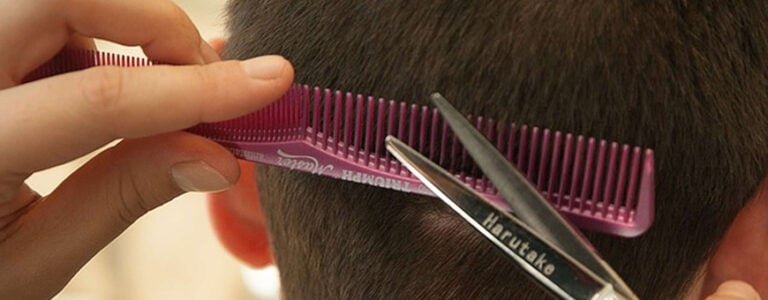
By Prof. Dr. Soner Tatlıdede · October 2026 When can you cut your hair after a hair transplant? Hair in the donor area can be trimmed after 1 month using scissors or clippers. As for the recipient area, trimming only the ends of the hair using scissors is permitted after 2 months. However, you must wait at […]
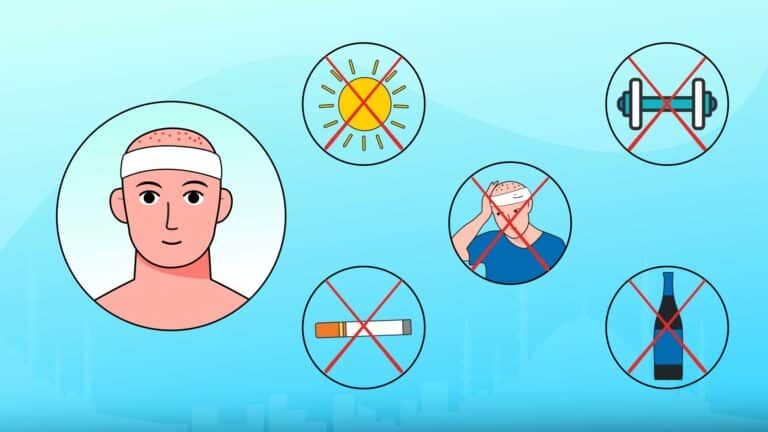
By Prof. Dr. Soner Tatlıdede · October 2026 Congratulations on completing your hair transplant. While the surgical part is finished, the success of your restoration now depends heavily on the recovery phase. In our clinical experience, the first two weeks post-surgery are just as critical as the procedure itself. Understanding what to avoid after a hair transplant […]
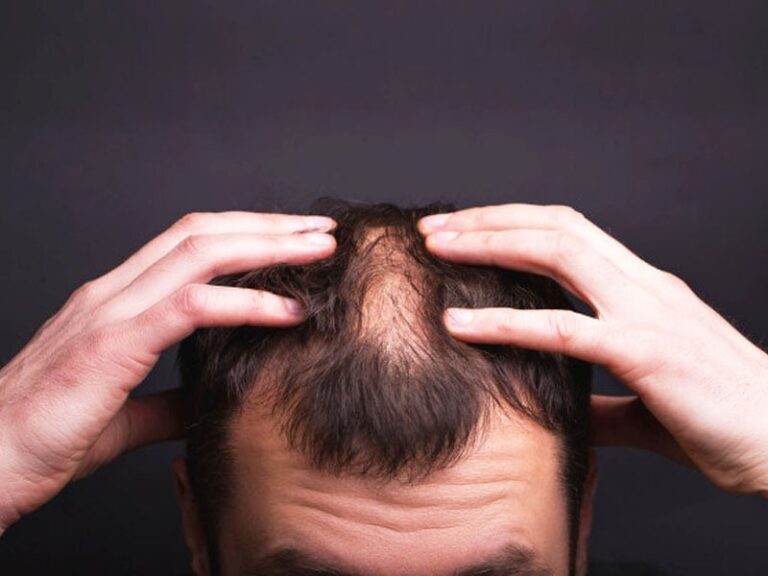
Scalp psoriasis and seborrheic dermatitis are chronic inflammatory conditions that frequently cause discomfort, itching, redness, and scaling. For individuals experiencing hair thinning alongside these conditions, severe anxiety often arises regarding permanent follicle loss and the feasibility of hair restoration. A central concern among patients is whether undergoing a hair transplant while managing scalp psoriasis is […]


Thank you!
Your details have been successfully submitted. Thanks!