


Post Hair Transplant Care Instructions: The Essential 14‑Day Checklist
The success of your hair transplant doesn’t end when you leave the operating room. In fact, the most critical work begins the moment you step out of the clinic.
The first two weeks are the defining period for your results.
During this time, your new hair grafts are fragile, living entities that are working hard to establish a blood supply and anchor themselves into your scalp.
In our clinical experience, patients who follow a strict post hair transplant care protocol achieve significantly better density and faster healing than those who are lax with aftercare. This guide is your daily medical companion.
We have broken down the post hair transplant care instructions into a clear, 14-day checklist to help you navigate recovery with confidence and ensure the highest possible survival rate for your new hair.
Why the First 14 Days After a Hair Transplant Matter
Biologically, the first two weeks are known as the “anchoring phase.” Understanding what is happening beneath the surface helps explain why we are so strict about safety protocols.
What happens to your grafts in the first two weeks
- Fragility: The grafts are not instantly glued in place. They are held only by a protein bond (fibrin) and are extremely susceptible to mechanical damage.
- Dislodgement Risk: During this window, any friction, pressure, or accidental scratching can physically pull a graft out of its channel, permanently losing that hair.
- Healing Process: You will see scabs form and likely experience mild redness. This is a normal part of the healing process, but signs like heavy bleeding or infection are not normal and require attention.
How proper care affects your final result
- Survival Rate: Diligent hair transplant aftercare directly correlates to a higher percentage of graft survival, meaning more density for you.
- Complication Prevention: Proper hygiene reduces the risk of infection, excessive swelling, and poor scarring (necrosis).
+1 - Success Assurance: Following these rules is the only way to ensure you reach the hair transplant success rate quoted by your surgeon.
Day 1–3: Immediate Post‑Op Care Checklist
The first 72 hours are the “danger zone.” Your primary goal is to protect the grafts from any contact.
General rules for the first 72 hours
- No Touch Policy: Do not touch, rub, or scratch the recipient area under any circumstances. Even a light touch can dislodge a fresh graft.
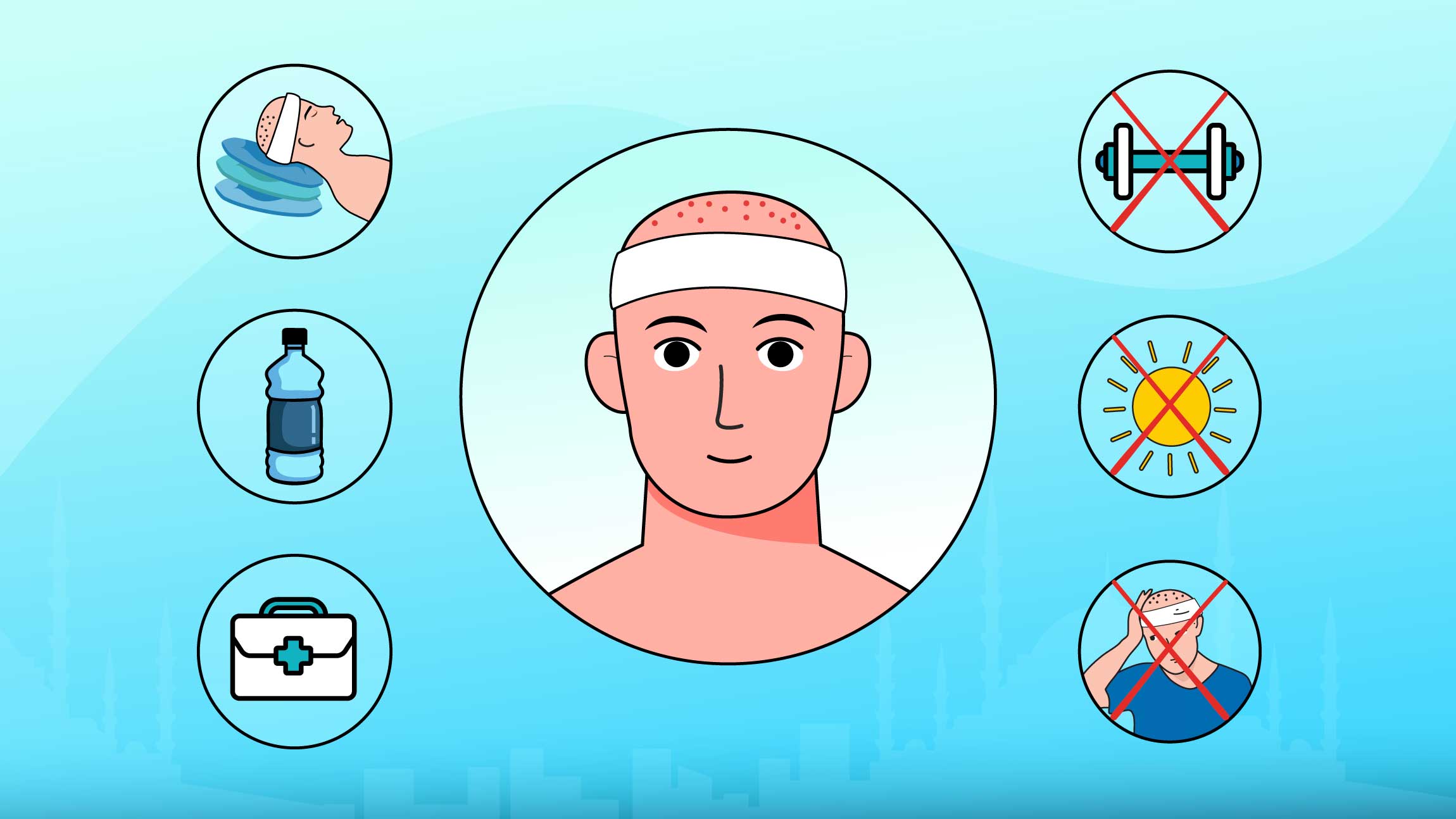
- Sleep Elevated: Sleep on your back with your head elevated at a 45-degree angle. Use a travel pillow or extra pillows to keep your head stable and prevent rolling over onto your face.
- Medication Adherence: Take your prescribed painkillers, antibiotics, and anti-inflammatory medications exactly as instructed to manage comfort and prevent infection.
Washing and cleaning instructions (if allowed)
- First Wash: Most clinics perform the first wash for you or instruct you to do it 24–48 hours after surgery. Follow their specific timing.
- Gentle Technique: Use the recommended medical foam or lotion. Apply it by patting, not rubbing. Rinse with a cup of lukewarm water poured gently over the head.
- Avoid Pressure: Never let a high-pressure shower head spray directly onto the grafts. Do not massage the recipient area.
Day 4–7: Gentle Washing and Scab Care
By day 4, the grafts are slightly more secure, but the “no scratch” rule remains absolute. This period is about keeping the scalp clean to prevent crust buildup.
How to wash your hair safely
- Daily Routine: Wash your hair once daily (or as advised) using the prescribed medical shampoo.
- Fingertip Technique: Create a lather in your hands and gently pat it onto the grafts. You can use your fingertips to lightly clean the donor area (back of the head), but be extremely gentle on the top.
- Drying: Do not rub with a towel. Gently pat the area dry with a paper towel or let it air dry.
Managing scabs and itching
- No Picking: As the skin heals, it will itch. Do not pick or scratch the scabs. Picking a scab can pull out the root underneath.
- Softening Scabs: Use the prescribed moisturizing spray or foam to keep the scabs soft, which helps them fall off naturally.
- Itch Management: If the itching is unbearable, contact your doctor. They may recommend an antihistamine or specific topical relief. Do not apply unapproved creams.

Day 8–14: Transition Back to a More Normal Routine
You are entering the home stretch. By the end of this week, the grafts should be secure.
What you can start doing again
- Return to Work: Most patients feel well enough to return to office work or light activities, provided they don’t require hard hats or heavy lifting.
- Scab Removal: Continue daily washing. Your clinic may advise a specific massage technique to help the last scabs fall off by day 10–12.
- Headwear: You may start wearing a loose, soft bucket hat if approved by your surgeon. Avoid tight baseball caps or wool beanies.
What you should still avoid
- No Intense Sport: Avoid heavy weightlifting, running, high-intensity cardio, and contact sports. These increase blood pressure and sweat, which can harm the grafts.
- No Water Immersion: Stay out of swimming pools, the sea, saunas, and steam rooms. Chlorine and salt can irritate the healing skin.
- Sun Protection: Keep the grafted area out of direct, strong sunlight. UV rays can damage the healing tissue.
What to Avoid During the First 14 Days
To protect hair transplant grafts, you must remain vigilant against common hazards.
Movements and physical activities to avoid
- Bending Over: Do not bend at the waist to pick things up. Squat down instead. Bending increases blood pressure in the head.
- Stomach Sleeping: Never sleep on your stomach or side where your face presses into the pillow. This causes friction on the temporal grafts.
- Head Bumps: Be hyper-aware of car doors, kitchen cabinets, and low ceilings. Bumping your head is a common cause of graft loss.
Products, habits and environments that can harm grafts
- Smoking and Alcohol: Avoid alcohol and smoking, as they restrict blood flow and impair healing.
- Harsh Products: Do not use gels, sprays, or hair products containing alcohol.
- Hygiene Risks: Avoid dirty pillowcases, shared helmets, or tight hats that can introduce bacteria or cause friction.
Medications and Products in the First 14 Days
Your medication kit is part of your safety net.
Painkillers, antibiotics and anti‑inflammatories
- Strict Schedule: Take antibiotics and anti-inflammatories exactly as prescribed—do not skip doses or stop early just because you feel fine.
- Communication: If you feel nauseous or have a reaction, inform your clinic immediately.
When to start shampoos and topical treatments
- Approved Products Only: Use only the shampoo and lotion provided by your clinic. Commercial shampoos may be too harsh.
- No Minoxidil Yet: Do not resume Minoxidil (Rogaine) or other topical treatments until your doctor gives the “all clear,” usually after 2–3 weeks.
- Timeline: Ask your surgeon specifically when you can return to your normal grooming routine.
Red Flags: When to Contact Your Clinic Immediately
While complications are rare, you should know the warning signs.
Signs of infection or serious problems
- Infection: Contact us if you see pus, feel excessive heat radiating from the scalp, or notice spreading redness.
- Unusual Symptoms: Persistent bleeding that doesn’t stop with light pressure, a foul smell, or a fever are urgent signs.
Concerns about graft loss or trauma
- Trauma: If you hit your head and see blood or a graft (which looks like a small bulb), contact your clinic.
- Empty Patches: If you notice a distinct empty spot where grafts were placed, send a photo immediately.
- Peace of Mind: When in doubt, send a photo. Our medical team would rather reassure you than have you worry.
End of Week Two: What’s Next?
Congratulations on reaching day 14!
What your scalp should look like around day 14
- Clean Scalp: By now, the scabs should be gone or nearly gone.
- Pinkness: The recipient area may still be pink, which is normal and will fade over the coming weeks.
- Stability: The grafts are now secure. You might soon start to see the transplanted hairs shedding (shock loss), which is a normal part of the cycle.
Planning follow‑up and long‑term care
- Check-in: Schedule your follow-up, whether in-person or via online photos, to ensure everything is on track.
- Next Steps: Discuss when to start supportive treatments like PRP or resuming finasteride/minoxidil.
- The Wait: Ask your doctor about the growth timeline so you aren’t alarmed when the shedding phase begins.
FAQs About the First 14 Days After a Hair Transplant
Can I wash my hair every day after a hair transplant?
Yes, typically starting from day 3 or 4, daily gentle washing is recommended to keep the area clean and help remove scabs. Always follow your specific clinic’s instructions.
hen can I sleep normally on my side or stomach?
You can usually return to normal sleeping positions after day 10–14, once the grafts are fully anchored and the risk of dislodging them is minimal.
Is it normal to see hair shedding in the first weeks?
Yes. “Shock loss” typically begins around week 2–4. Seeing hair fall out is scary, but usually, it is just the hair shaft shedding while the root remains safely under the skin.
When can I go back to the gym or swimming pool?
Light exercise is often allowed after 2 weeks, but heavy lifting, high-intensity cardio, and swimming (pools/sea) should usually wait until at least 3–4 weeks post-op to avoid infection and strain.
Contact us now – get a free medical consultation
Medical Disclaimer: This content is for informational purposes only and does not replace professional medical consultation.
Read More:
What to Avoid After a Hair Transplant to Protect Your Grafts
Post‑Op Hair Transplant Care and Graft Survival: What You Need to Know
PRP vs Stem Cell Therapy for Hair Loss: Which Non‑Surgical Option Is Better?



In our daily practice at the hospital, we meet two types of patients. The first group is ready for transformation and seeks the permanent solution of a hair transplant. The second, and perhaps larger group, asks a critical question: “Doctor, is surgery my only option?” The answer, fortunately, is no. While hair transplantation remains the […]

Hair loss is a progressive condition that affects not only your appearance but also your psychological well-being. For decades, patients felt their only choices were invasive surgery or ineffective topical creams. However, the field of regenerative medicine has evolved rapidly, offering powerful biological solutions that harness the body’s own ability to heal. If you are […]
Managing the daily challenges of an autoimmune condition like lupus is demanding, and noticing sudden hair thinning or scarring can add a significant emotional burden. While lupus-related hair loss can be complex, understanding the difference between systemic shedding and discoid lesions is the first step toward finding the right treatment to manage symptoms and encourage […]


Thank you!
Your details have been successfully submitted. Thanks!