


Combien y a-t-il de cheveux sur une tête humaine?

Combien y a-t-il de cheveux sur une tête humaine? Vous vous êtes certainement posé cette question plus d’une fois, surtout si vous avez constaté que vous avez commencé à perdre de la densité capillaire ou que vos cheveux tombent. En réalité, au-delà de la curiosité de savoir combien de follicules pileux il y’a sur une tête humaine, ce qui compte vraiment, c’est l’état de santé de vos cheveux et de votre cuir chevelu, et de détecter à temps d’éventuels problèmes de perte de cheveux.
Une chose, cependant, est sûre : lorsque quelqu’un commence à chercher des informations sur le coût d’une greffe de cheveux, le moment est venu où cette personne commence à compter non pas le nombre de cheveux qui restent… mais le nombre de cheveux qui tombent. Et tout comme il existe de nombreuses causes qui influencent la perte de cheveux, il existe également plusieurs facteurs qui déterminent le nombre de cheveux dans une tête humaine. Vous vous demandez “combien de cheveux ai-je sur la tête ?”. Voulez-vous en savoir plus sur ce sujet ? Alors, ne manquez pas la suite !
Combien de cheveux avons-nous sur la tête?
Combien y a-t-il de cheveux sur la tête d’un être humain moyen ? Comme nous sommes des mammifères, notre corps tout entier est recouvert d’une couche de poils de formes et de tailles différentes, ce qui représente au total environ 5 millions de poils… Cela semble beaucoup, n’est-ce pas ? Heureusement, ils ne sont pas tous visibles à l’œil nu : mais oui, ils sont là, et ils ont tous une fonction.
Mais sur ces 5 millions… combien y a-t-il de cheveux sur une tête humaine ? En ce qui concerne nos têtes, ce nombre se réduit considérablement. Il est difficile de donner un chiffre précis, mais s’il faut en donner un, on peut dire qu’il y a entre 100 000 et 200 000 cheveux, en fonction de plusieurs facteurs que nous verrons plus tard.
Combien de follicules pileux y a-t-il sur une tête humaine?
Combien y a-t-il de cheveux par centimètre carré sur une tête humaine ? Là encore, il est difficile de donner des chiffres exacts, mais nous pouvons dire que la tête humaine compte en moyenne 250 cheveux par centimètre carré, même si nous verrons plus loin que ce chiffre peut être inférieur.
Savez-vous combien de follicules pileux se trouvent sur votre tête ? Eh bien, ce nombre est en fait beaucoup plus élevé que celui des cheveux : environ 4 millions, chez une personne adulte. Pourquoi ? Parce que tous les follicules ne produisent pas des cheveux en même temps… d’où la différence.
L’âge et le sexe sont importants…
Il n’est pas facile de dire combien de cheveux il y a en moyenne sur la tête humaine… parce que chaque personne est différente. Mais il existe aussi d’autres facteurs qui influencent le nombre de cheveux sur le cuir chevelu. L’un d’entre eux est l’âge : à la naissance, nous avons plus de 1 100 follicules par centimètre carré, qui conservent plus ou moins leur activité jusqu’à l’âge de 20 ans.
À partir de ce moment-là, ils cessent de produire des cheveux et s’atrophient. Par exemple, à 80 ans, nous n’aurons plus qu’environ 400 follicules/cm2, soit près de 3 fois moins qu’à notre naissance. Mais un autre facteur influe également sur le nombre de cheveux sur la tête : le sexe.
En effet, le nombre de cheveux d’un homme n’est pas le même que celui d’une femme. Si vous êtes une femme, nous avons une bonne nouvelle pour vous : nous ne savons pas exactement combien de cheveux vous avez sur la tête… mais il est fort probable qu’ils soient plus nombreux que ceux d’un homme, du moins d’un homme du même âge. Les hommes, en revanche, ont plus de poils sur les autres parties du corps que les femmes.
…Mais aussi la couleur des cheveux
L’âge et le sexe ne sont pas les seuls facteurs qui influencent le nombre de cheveux sur une tête. La couleur (naturelle, bien sûr) détermine également la densité des cheveux et le nombre de cheveux présents sur le cuir chevelu d’une personne. Les roux sont ceux qui occupent la dernière place du classement, puisque dans la tête d’une personne rousse, on ne trouve qu’entre 75 000 et au maximum 90 000 cheveux.
Les personnes aux cheveux noirs ou bruns ont une densité capillaire un peu plus importante : entre 100 000 et 110 000 cheveux sur leur cuir chevelu ; en outre, les cheveux noirs sont généralement plus épais, ce qui augmente le volume des cheveux. Quoi qu’il en soit, les personnes qui ont le plus de cheveux sur la tête sont de loin les blonds : on estime qu’ils en ont en moyenne entre 140 000 et 150 000, c’est-à-dire pratiquement le double des roux.
Est-il normal que les cheveux tombent?
Peu importe que nous soyons blonds ou non, il y a une chose qui, inévitablement, préoccupe tout le monde : la chute des cheveux. Parfois, lorsque nous nous levons, que nous nous coiffons ou que nous prenons une douche, nous constatons que des cheveux tombent de notre tête, ce qui nous inquiète. La question qui se pose est la suivante : est-ce normal ? Dois-je vraiment m’en inquiéter?
En général, la réponse est oui : il est normal de perdre quelques cheveux chaque jour, car cela fait partie du cycle naturel de croissance des cheveux. Il est intéressant de noter qu’à ce stade, les femmes ont également un avantage sur les hommes : chez les femmes, un cheveu a une durée de vie moyenne de 4 à 7 ans avant de tomber, alors que chez les hommes, la durée de vie moyenne d’un cheveu n’est normalement que de 3 ans.
Et, combien de cheveux tombent par jour? Là encore, le nombre de cheveux qui tombent chaque jour varie : il peut être de 50, 100, 150… voire 200, si nous souffrons d’une perte de cheveux saisonnière, notamment au printemps ou à l’automne. Normalement, cette perte de cheveux ne devrait pas nous inquiéter, car même en période de perte saisonnière les cheveux tombés repoussent, et les cheveux perdus sont compensés par les nouveaux cheveux. Toutefois, si les cheveux perdus ne sont pas remplacés et que des zones à faible densité capillaire commencent à apparaître sur notre tête, il est temps de consulter un spécialiste.
Que se passe-t-il si mes cheveux ne repoussent pas après la chute?
Quel que soit le nombre de cheveux que l’on a sur la tête, personne n’est à l’abri d’un certain type d’alopécie : en particulier la calvitie commune (alopécie héréditaire), qui est à l’origine de la grande majorité des cas de calvitie, surtout chez les hommes. Lorsqu’elle apparaît et que les cheveux tombés ne se rétablissent pas, la seule solution était, jusqu’à il y a quelques années, de se résigner, d’utiliser des prothèses capillaires ou d’avoir recours à une greffe de cheveux douloureuse selon la méthode dite “de la bandelette” (FUT/FUSS).
Cependant, depuis l’apparition de la technique moderne FUE (Follicular Unit Extraction), les greffes de cheveux sont devenues très populaires, et de plus en plus de personnes se font opérer avec cette méthode, dans laquelle les unités folliculaires sont extraites de la zone donneuse une par une, puis greffées dans les zones où les cheveux ont disparu. Contrairement à la technique FUT, la FUE est indolore, ne laisse pas de cicatrices… et le patient peut rentrer chez lui une fois l’opération terminée.
Oui, il peut être intéressant de savoir combien de cheveux il y a sur une tête humaine, mais l’essentiel est de prendre soin de ses cheveux, tous les jours, et de s’adresser à des professionnels compétents dès que l’on détecte les premiers problèmes capillaires, afin de minimiser le risque de perdre ses cheveux. Vous cherchez une clinique digne de confiance ? Clinicana est la meilleure clinique de transplantation capillaire. Demandez une consultation gratuite et un devis gratuit et sans engagement pour votre traitement capillaire.


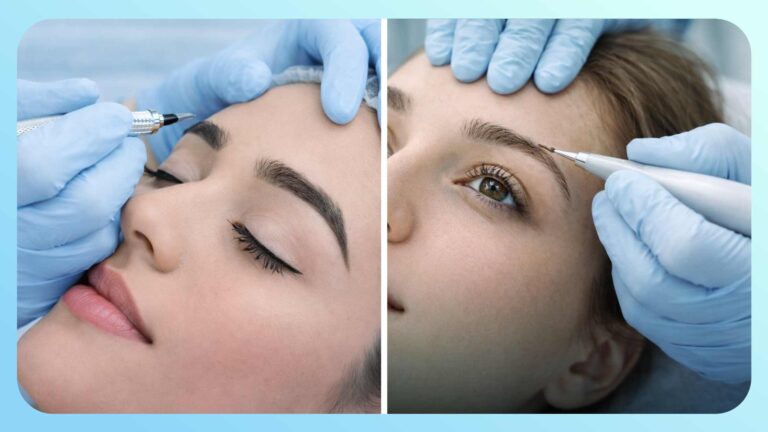
Relecture médicale : Pr Dr Soner Tatlıdede, – octobre 2026 La Quête des Sourcils Parfaits : Encre 2D vs Poils Vivants en 3D Les sourcils constituent la charpente esthétique du visage. Ils encadrent le regard, soulignent l’expression des émotions et équilibrent les proportions du front et du nez. Cependant, des années d’épilation intensive, des facteurs […]

Relecture médicale : Pr Dr Soner Tatlıdede, chirurgien spécialisé en greffe de cheveux · plus de 22 ans d’expérience et 18 947 interventions · octobre 2026 La mésothérapie cheveux (ou mésothérapie capillaire) consiste à injecter dans la couche superficielle du cuir chevelu un mélange de vitamines, d’acides aminés, d’oligo-éléments et parfois d’acide hyaluronique ou d’actifs […]

Relecture médicale : Pr Dr Soner Tatlıdede, chirurgien spécialisé en greffe de cheveux · plus de 22 ans d’expérience et 18 947 interventions · octobre 2026 Le finastéride est l’un des deux traitements médicaux les plus étudiés contre la calvitie masculine (alopécie androgénétique), avec le minoxidil. Il agit sur la cause hormonale de la chute. […]


Merci beaucoup !
Vos coordonnées ont bien été envoyées. Merci de votre confiance.