


How many hairs fall out a day? How much falling is too much?

How many hairs fall out a day? Surely, if you are a person prone to alopecia or you fear losing your hair, you have asked yourself this very question more than once, especially after seeing your shower or pillow full of hairs. The truth is that, at certain times of the year or during some stages of our lives, it becomes alarming to see how much hair falls out a day: therefore, it’s quite logical to think if it is something normal, or if we should think about long-term solutions, such as a hair transplant.
In fact, our clinic receives many inquiries from people who want to know how many human hairs fall out a day normally, and who are distressed because they do not know if they have a hair loss problem or, on the contrary, it´s nothing to worry about.
Although thanks to techniques such as FUE transplantation and the affordable cost of hair transplants in Turkey, recovering hair is now easier than ever, before thinking of getting hair implants we want to explain how much hair falls out each day, in which cases should we worry about (and in which not)… and what the available solutions are.
Is losing 200 hairs a day normal?
We must bear in mind that we are mammals: this means that our hair – although we are not always aware of this – is always regenerating in a continuous cycle; therefore, losing hair every day is absolutely normal and it is a completely natural process. Of course, questions arise when we lose too much hair: for example, and average hair fall out per day of 200 hairs, or even more hairs a day, may sound alarming; but this is not necessarily a sign of an incipient and definitive hair loss.
Let’s remember that a hair can live up to 6 years, and that throughout that time it inexorably goes through three evolution phases: growth (anagen), stabilisation (catagen) and fall (telogen). Although normally around 85% of our head hair is in the anagen phase, we must not forget that we have more than 100,000 hairs on head, and it is normal for many of them to be in the telogen phase, and so end up falling out.
In order to know if we are losing more hair than we should or not, the first thing is to know, on average, how many hairs fall out a day; however, it is not easy to give an exact figure since it depends on factors such as genetics, the year season, the health status of each person… As a general rule, we can say that losing up to 150 or even 200 hairs per day (when suffering from seasonal hair loss), can be considered normal and should not be a cause of concern.
A very frequent question is: how many hairs fall out a day in females? Well, the truth is that there are no big differences when it comes to how many hairs fall out a day in males or females. The differences, if they exist, are due to factors unrelated to gender: the existence of stress situations or some diseases, poor diets, the intake of certain medications… Although it is true that, in the postpartum period, it is common for women to lose more hair.
How much hair falling out is too much?
Once we know how many strands of hair fall out a day normally, the question is to make sure that we are not losing an excessive number of hairs. Although this is not about counting how many hairs we lose, an excess of hair loss is not hard to be detected. Normally, it is as simple as taking a look to how many hairs fall in the shower, on our shoulders, on our pillow after getting up in the morning, or when brushing our hair.
If we regularly check how much hair falls out (e.g. in the shower), checking if the amount has increased can be an easy and effective way to know if we are losing more hair than usual. But there are also some tricks to know this; for example, if when passing the hand through our hair several times, we count the hairs that remain in our hand and the number is superior to 15, it can be considered that we are suffering an abnormal hair loss.
In any case, we must emphasise that this is only a trick, a no more than an indicator telling us that we should go to a specialist’s consultation; but in no way it means that we are suffering from some type of irreversible alopecia. Fallen hairs may have accumulated just because you didn´t wash or comb your hair for several days; or we may simply facing temporarily a more abundant fall, caused for example by telogen effluvium, but hair will grow back after just a few months.
Do you have hair loss or hair shedding?
Even so, beyond looking at how many hair follicles fall out a day, there are certain signs that can warn us that we are facing a more serious problem of hair loss, whom an abnormal number of hairs found in the pillow can be just the first symptom. For example, we should worry if besides hair shedding, we observe that our hair appears weak or brittle, or if there is a loss of hair density that it’s not recovered with time.
Besides, if hair loss is also accompanied by a loss of hair in other areas of our body, or by itching, redness, or swelling; or if we observe round bald spots or even scars on our scalp… it is time to go to a doctor to diagnose our problem, because these could be the first signs of a disease causing hair loss.
Normal Shedding in Different Situations
The often-quoted figure of 50–100 hairs a day is an average. What you see depends on the day and on your hair:
| Situation | What is normal |
|---|---|
| Wash day after 2–3 days without washing | Clearly more hair in the drain: you are collecting several days of shedding |
| Long hair | Each hair looks like more; see does long hair fall out more? |
| Autumn | Many people shed more for a few weeks; see seasonal hair loss |
| 2–4 months after giving birth | Heavy shedding that usually settles within a year; see hair loss after pregnancy |
| 2–3 months after illness, high fever or stress | Diffuse shedding that usually recovers; see telogen effluvium |
How to Check Your Own Shedding
- Comb test: before washing, comb dry hair forward over a light towel for 60 seconds and count the hairs. Repeat on several days and compare.
- Pull test: gently pull about 50 hairs between your fingers in several areas. Losing more than a few hairs each time suggests active shedding.
- Look at the root: a shed hair has a small white bulb at the end. Hairs that break without a bulb point to damage, not hair loss.
- Photos: take the same photos of your parting, temples and crown every month in the same light.
Shedding or Hair Loss?
Shedding is a temporary increase in hairs falling out; the hair grows back. Hair loss (alopecia) means hair stops growing back or grows back thinner. These signs suggest real hair loss rather than shedding: a widening part, receding temples, a crown that shows through, or shorter, finer hairs in one area, known as miniaturization.
What can I do if my hair is shedding?
If we are worried after looking how many head hairs fall out per day, and we go to a specialist to diagnose our condition, the time has come to think about recovering our hair. Depending on its causes, hair loss may be irreversible or not; but in any case, there are treatments to stop hair loss and stimulate hair growth, such as Platelet Rich Plasma (PRP), hair mesotherapy, minoxidil, or biotin supplements.
Before and excess of hair loss appears, we can also prevent hair shedding with a balanced diet rich in iron (red meat, spinach, etc.), zinc (meat, fish) and group A and B vitamins, and avoiding foods with too much sugar, salt or fat.
In our hair clinic in Turkey we have the solution. Read Clinicana patient reviews and our guide on how to choose a hair transplant clinic in Turkey, then send us clear photos of your scalp for a medical assessment.
Many people notice more shedding when their hair is long, simply because each lost hair is more visible; we explain this in does long hair fall out more?.


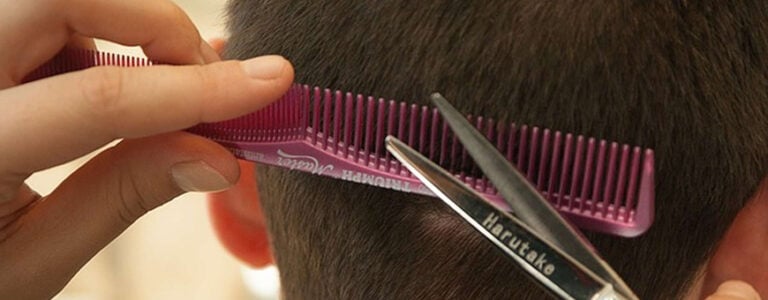
Medical review by: Prof. Dr. Soner Tatlıdede, hair transplant surgeon (22+ years, 18,947 procedures) – October 2026 When can you cut your hair after a hair transplant? Hair in the donor area can be trimmed after 1 month using scissors or clippers. As for the recipient area, trimming only the ends of the hair using […]

Medical review by: Prof. Dr. Soner Tatlıdede, hair transplant surgeon (22+ years, 18,947 procedures) – October 2026 Congratulations on completing your hair transplant. While the surgical part is finished, the success of your restoration now depends heavily on the recovery phase. In our clinical experience, the first two weeks post-surgery are just as critical as […]
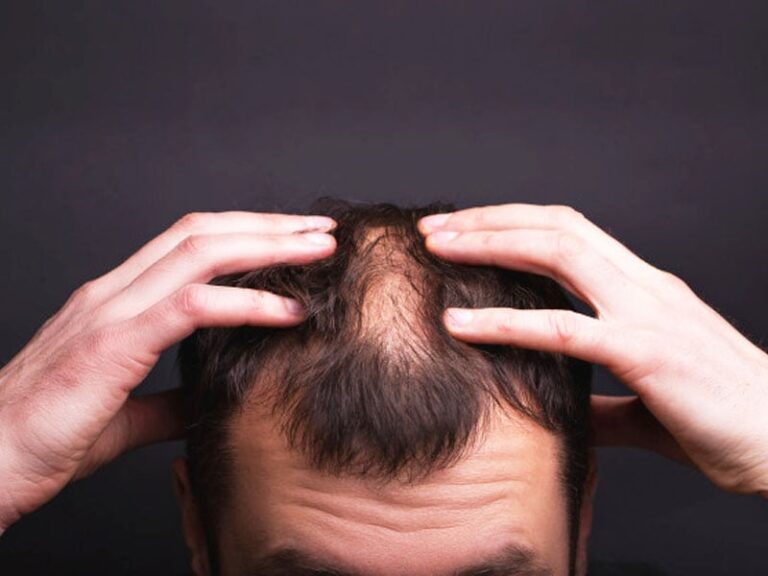
Scalp psoriasis and seborrheic dermatitis are chronic inflammatory conditions that frequently cause discomfort, itching, redness, and scaling. For individuals experiencing hair thinning alongside these conditions, severe anxiety often arises regarding permanent follicle loss and the feasibility of hair restoration. A central concern among patients is whether undergoing a hair transplant while managing scalp psoriasis is […]


Thank you!
Your details have been successfully submitted. Thanks!