


Do Grafted Hair Grafts Fall Out When Touched?
By Prof. Dr. Soner Tatlıdede · July 2026
How many grafts a case needs, and what each range costs, is set out on our hair transplant cost page.
The Short Version: Grafted hair follicles undergo three distinct stages of binding and anchoring after surgery. From days 1 to 5, the follicles are extremely fragile and can be displaced by any direct pressure. From days 6 to 10, they begin to root and secure themselves but are not yet fully integrated into the tissue.
After days 10 to 14, the follicles become completely permanent and secure; at this point, touching, scratching, or even normal pulling will not dislodge them. In my experience performing 18,947 hair transplant procedures,
I have witnessed only about 30 cases where grafts were actually lost due to touching, and the common denominator in all those cases was aggressive scratching of the scalp within the first 72 hours.
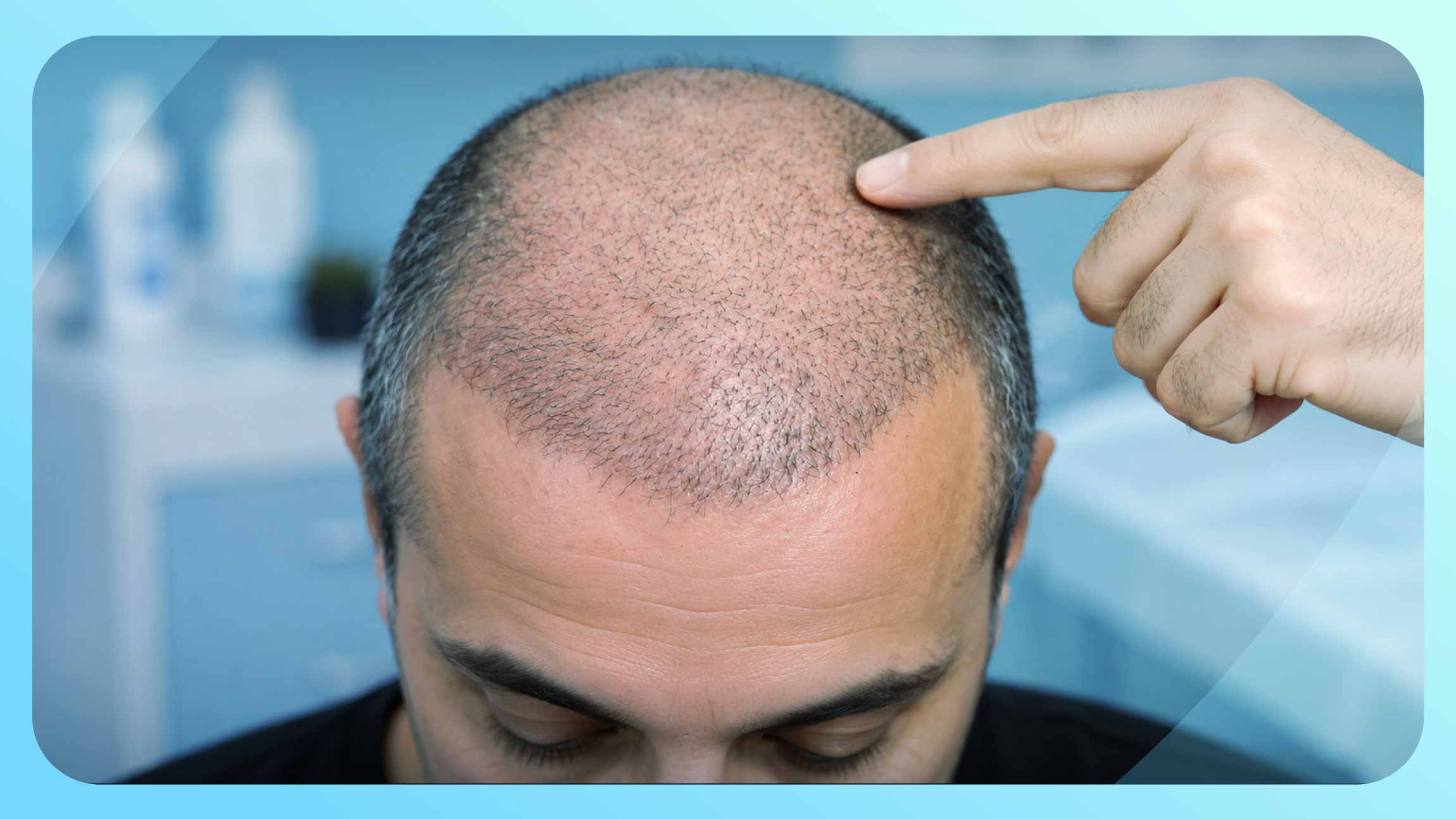
A very common worry is accidentally knocking or tapping the recipient area in the first days, and fearing that grafts have been lost.
He was absolutely convinced that he had “ruined everything.” I asked him to direct his phone camera closely at the transplanted area; the result was excellent, and not a single follicle had moved from its place. This situation happens to me on a weekly basis.
Many Arabic-speaking patients, especially from the Arabian Gulf region, ask this specific question during consultations: “Do grafted follicles fall out when touched?”.
In truth, this question is not silly at all; you have just paid an amount ranging between £3,000 and £5,000 to open 4,000 tiny micro-incisions, inside of which 4,000 highly delicate biological structures were placed.
They look fragile and feel like they could fall out, and indeed they are fragile during the first 5 to 7 days. However, the panic and anxiety that hits patients is usually far worse than the actual risks.
What Anchors Transplanted Hair Follicles in Place After the Procedure?
Three consecutive biological mechanisms work together to secure the follicle in its new location:
1. Days 0-5: The Natural Fibrin Seal
The follicle rests inside a channel ranging from 3 to 4 mm in depth, and a small blood clot forms around it immediately. According to a scientific study published in the journal Dermatologic Surgery, fibrin proteins form a natural biological glue within 6 to 12 hours, and the tensile strength of this bond reaches about 80% within the first 48 hours.
This seal is strong enough to maintain graft stability under normal conditions, but it is not strong enough to resist direct mechanical friction.
If you apply pressure to the graft with your fingertips during this period, the fibrin bond may tear, leading to graft protrusion or displacement. For this reason, we strictly prohibit wearing hats, headbands, and sleeping on the face during the first week.
2. Days 6-10: Cellular Integration
Fibroblasts begin migrating from the surrounding tissues, and new collagen starts to form. At this stage, the follicle no longer relies solely on the blood clot; it begins to anchor and weave within the living dermis layer.
By the seventh day, you would need deliberate and very aggressive scratching or rubbing to displace the graft from its place. I always tell my patients: after the seventh day, normal touching is fine, and even firm touch and light pressure are safe.
What is strictly forbidden, however, is scratching the skin when feeling the urge by forcefully dragging fingernails across the scalp.
3. Days 10-14: Permanent Anchorage
New microvascular connections form, and the follicle becomes an integral part of your scalp’s blood circulation. It becomes completely secure and permanent, just like your original hair; you can wash it, comb it, and even pull it (although we do not recommend pulling) without fear of it falling out.
After the fourteenth day, the only way a transplanted follicle can come out is by plucking the hair shaft with excessive force equal to the force required to pluck a natural hair from its roots.
How Do I Know If I Have Actually Dislodged a Follicle?
You will notice it clearly with your eyes; a graft lost in the first 5 days looks like a very tiny white grain of rice, sometimes attached to a dark hair, and you will find it stuck to your pillowcase, towel, or finger. What you will not see is heavy bleeding, severe pain, or a visible gap in the transplanted area.
The insertion channels are only 1 mm wide, and even if one graft is lost, the proximity of the surrounding grafts makes it almost impossible to detect the gap with the naked eye without high medical magnification.
Most patients who believe they have lost follicles have actually seen one of the following normal occurrences:
- Shedding of dry scabs (completely normal between days 7 and 14).
- Shedding of the transplanted hair shafts (normal in weeks 2 to 6).
- Flaking of dried blood or excess lymphatic fluids.
Many patients have sent me photos of fallen scabs in a state of absolute panic, believing they were follicles, when they were not at all.
Can Follicles Fall Out During the First Wash?
No, provided you adhere to the approved medical protocol; we advise patients to begin washing their hair very gently starting from the third day.
By that time, the fibrin bond is strong enough to withstand water pressure, but it is not strong enough to withstand rubbing. The biggest mistake patients make is massaging or rubbing the head.
Correct Washing Technique:
- Pour lukewarm water into a cup or small bowl.
- Gently pour the water over the transplanted area without directing the showerhead stream directly at it.
- Apply the medical shampoo to your palm, lather it, and then gently pat the foam onto the scalp.
- Rinse the head by gently pouring water over it again.
- Dry the scalp by patting very lightly with a clean towel; never rub.
What Causes Damage to Follicles During Washing:
- Rubbing the scalp with fingertips or fingernails.
- Using a loofah or washcloth to rub the head (yes, I have seen some patients do this!).
- Directing a high-pressure shower stream directly toward the grafted follicles.
If washing is done correctly, the rate of follicle loss is close to zero. Out of 18,947 cases in our clinic, I can count on one hand the times a patient was proven to have lost follicles due to washing.
What Happens If I Scratch My Head While Sleeping Unconsciously?
This is the real, actual risk; you cannot control your hand movements while unconscious. If you are someone who scratches their skin aggressively while sleeping—especially if you suffer from allergies, eczema, or anxiety—you might drag your nails across the transplanted area during the first 5 nights.
To protect patients, at Clinicana we hand every patient a soft surgical cap to wear while sleeping for the first seven nights. This cap is not tight or compressing; rather, it acts as a physical barrier that prevents your fingernails from reaching the follicles.
Data extracted from our internal medical database (covering 18,947 FUE hair transplants performed between 2003 and 2025 at Clinicana Center in Istanbul) shows that only three patients caused follicles to fall out due to nighttime scratching.
It later turned out that all three were under severe work stress and admitted they had been scratching their arms and legs while sleeping for many months before the procedure.
If you know you scratch your body while sleeping, take an antihistamine (allergy medication) tablet before bed during the first week; it reduces the urge to scratch and grants you deep sleep that minimizes unconscious micro-movements.
Does Touching the Donor Area Cause Follicles to Fall Out?
No, simply because there are no transplanted follicles there. The donor area—which is usually at the back and sides of the head—is the region from which we extracted the follicles.
What remains there are circular micro-wounds ranging from 0.8 to 1 mm in diameter, which close completely within 24 hours. Touching the donor area will not cause any loss, but it may cause some minor pain due to the presence of 3,000 to 4,000 small punctures.
Confusion occurs in patients when they feel bumps or ridges in the donor area during the first week and believe they are follicles. Those are not follicles; rather, they are:
- Micro-scabs forming over extraction sites for healing.
- Temporary swelling (edema) caused by fluids and local anesthesia injections.
- Small clusters of dried blood mixed with lymphatic fluids.
All these matters disappear completely and fade away by days 10 to 14.
What Happens If I Accidentally Bump My Head After the Procedure?
It depends on the nature and force of the “bump.” If your forehead lightly bumps against a cabinet door on the sixth day, you are fine; the impact must be strong enough to break the skin and cause a real wound to pose a danger to the follicles.
However, if you receive a soccer ball blow directly to your face and head on the second day, that is a completely different story.
I remember the case of a patient who worked as a professional goalkeeper in Dubai and received a powerful elbow strike to his head during a match on the fourth day after the procedure. He was wearing a headband under his cap (against my medical advice).
The blow did not dislodge the follicles, but it caused subcutaneous bleeding that delayed healing for two full weeks.
General Rule:
- Days 1-5: Completely avoid contact sports, heavy lifting (because high blood pressure can cause venous bleeding), and any situations that might expose your head to collisions.
- Days 6-10: Very light friction is fine, but deliberate pressure is forbidden.
- Day 10 and beyond: You can return to your normal daily activities.
Can Hair Products Make Follicles Fall Out?
No, chemical products do not have the ability to dissolve or drop the follicle, but they can cause severe irritation to the scalp, driving you to aggressive scratching.
After the tenth day, you can use any shampoo, conditioner, or styling product you wish. Before the tenth day, however, you must stick exclusively to the medical shampoo prescribed by the clinic; because it is pH-balanced, fragrance-free, and does not trigger histamine release in the skin.
One patient used hair styling gel on the fifth day to attend a wedding; the gel did not chemically drop the follicles, but it dried on the scalp and formed a hard layer that caused severe itching for the patient.
When he scratched his head, he caused the displacement of three grafts. The problem was not the product itself, but the scratching and rubbing that resulted from it.
Is “Shock Loss” the Same as Follicle Loss?
No, shock loss is a temporary shedding of the natural hair surrounding the transplanted area, resulting from the surgical trauma the scalp was exposed to.
Reports from the International Society of Hair Restoration Surgery (ISHRS) indicate that this symptom occurs in about 20% to 30% of patients, usually appearing between the second and eighth weeks.
This scene looks highly alarming; the area you expected to become denser suddenly looks thinner and emptier. But let me reassure you, these are not the transplanted follicles falling out; rather, it is your old original hair entering a temporary resting phase, and it will fully regrow within 3 to 6 months.
Likewise, the shafts of the transplanted hairs themselves shed; they fall from the shaft only, while the living follicle remains fixed deep in the tissue to produce strong new hair that begins to appear by the fourth month.
How Many Follicles Are Typically Lost Due to Touching?
In FUE hair transplant operations performed with high medical efficiency, and with the patient’s full compliance with instructions, the percentage of follicle loss due to touching is less than 1%.
If we transplant 4,000 grafts, we expect the growth and survival of 3,960 to 3,980 grafts. The few remaining grafts that do not succeed are usually caused by other medical factors such as:
- Poor blood supply in the recipient area (a technical error in channel distribution).
- Desiccation (drying out) of grafts during their time outside the body during extraction.
- Excessive bleeding during implantation.
The percentage of what is lost due to patient errors like scratching, rubbing, or light collision does not exceed 5 to 10 grafts only.
However, if the procedure is performed at an unqualified center and the doctor places the grafts too superficially (less than 3 mm deep), or uses blunt extraction tools that crush and damage the follicle, the failure rate may jump to 10% or 20%.
In this case, even the most cautious touch will not protect you, because the skill and experience of the medical team and the doctor are the primary foundation for success, not just your behavior after the procedure.
Comparison of Follicle Stability Between FUE and FUT Techniques
FUT (strip) grafts are characterized by being more stable and mechanically secure during the first 48 hours; this is because the follicle is not extracted isolated, but comes out surrounded by a precise 1-2 mm cushion of skin tissue to protect it.
In FUE, the follicles are “stripped” and completely isolated with a very thin layer of tissue, making them more vulnerable to mechanical displacement when exposed to any direct pressure during the first 72 hours.
But once day 5 is reached, these differences disappear completely, and both methods achieve the same high level of stability and permanent healing.
I Am a Manual Laborer, When Can I Return to My Work?
In this case, you must take a leave ranging between 10 to 14 days, or you must accept losing a portion of the transplanted follicles. I am very frank and firm about this during consultations; if your work is in the construction sector, warehouses, or any profession that requires continuous repeated bending, heavy sweating, or carries risks of head collision, you can absolutely not return to work on the third day.
Some patients lied to me about the nature of their jobs and claimed they were “desk work,” then returned to standing on scaffolding and hard physical labor on the fifth day; the result was fragmented and failed hair growth, and they tried to blame the doctor. If you are unable to take sufficient leave, my medical advice to you is to postpone the operation completely.
Returning to heavy, sweaty physical work too early, and wiping the scalp roughly, is one of the few ways grafts can genuinely be lost in the first week.
Does Sweating Loosen Follicles?
Sweating itself does not have a chemical effect that loosens or unlocks the follicle bonds. The problem lies in the fact that sweating automatically prompts you to wipe your head, and this wiping generates dangerous mechanical friction.
Also, the salts present in sweat may cause irritation in the healing wounds, triggering an intense urge to scratch. Therefore, we prohibit strenuous exercise for 10 days.
Light walking is acceptable, but running, going to the gym, and playing soccer must wait until the tenth day. If you sweat during sleep (which is common in the hot Arabian Gulf climate), make sure to run the air conditioner and keep the room cool below 22°C during the first week.
When Can I Wear a Hat After a Hair Transplant?
It depends on the type of hat and the timing:
- Days 1-5: Wearing any type of hat is prohibited; as soon as the fabric touches the follicles, direct pressure is generated that can tear the biological fibrin bonds.
- Days 6-10: Extremely loose and breathable hats can be worn provided they do not touch the transplanted area at all. At Clinicana, we hand patients a custom flexible hat with a high, raised front that ensures the fabric stays completely away from the grafts.
- Day 10 and beyond: You can wear whatever you wish with complete freedom.
Some patients coming from the Gulf countries insisted on wearing the Ghutra or Shemagh starting from the second day for work-related reasons, and I refused to go ahead with the surgery until they agreed to take a week off or stay bareheaded inside the offices.
Your culture and identity are undoubtedly important, but the results of your procedure and protecting your health investment are medically most important.
What About Helmets After a Hair Transplant?
Motorcycle helmets, hard construction hats, and sports helmets of all kinds are strictly and categorically prohibited for 10 to 14 days. If your work legally requires you to wear a hard hat, you cannot practice work during the first two weeks, and there are no exceptions to this matter.
I remember a single case of a British Army officer who had to wear a military beret to attend an official ceremony on the seventh day.
We negotiated medically and provided an exceptional solution: he wore the military cap for 15 minutes only, adjusted its position to rest completely behind the transplanted area, and then took it off immediately after the ceremony ended; the follicles suffered no damage.
But this was a very exceptional case and under close, direct medical supervision; do not try to experiment with this yourself.
I Am Used to Sleeping on My Stomach, What Is the Solution?
You must change your sleeping position immediately or postpone the surgical operation; sleeping on the face or stomach during the first 10 days presses the transplanted area directly into the pillow for 6 to 8 continuous hours, leading to the tearing of fibrin bonds and graft failure.
We provide the patient with a medical neck pillow (travel pillow) that forces the body to sleep lying on the back at a 45-degree angle during the first week. Sleeping in this position may be annoying and uncomfortable, and you will not enjoy deep sleep for several nights, but this is the necessary price to protect your transplanted follicles.
If you are completely unable to adapt to this position, you can use some alternative solutions:
- Take melatonin pills or a mild sleep aid and relaxation assistant during the first 7 nights (after consulting your doctor).
- Sleep in a rocking chair or a reclinable armchair instead of a regular bed to fix the body’s position.
Do Hair Dyes or Bleaching Affect Follicles?
Not after the thirtieth day; before that, the answer is yes, strongly. The harsh chemicals present in hair dyes (especially ammonia) cause severe irritation to the scalp and the skin that is still undergoing healing, triggering an intense urge for aggressive scratching; but they do not chemically dissolve the follicles from the inside.
Our medical protocol mandates waiting for 4 full weeks before dyeing transplanted hair, and 6 weeks before bleaching it. If you are urgently forced to dye your hair (to attend an emergency social event or wedding), use an ammonia-free dye, and make sure to apply it to the visible hair shafts only without touching the scalp and skin at all.
What Is the Most Common Mistake Patients Make After the Operation?
Touching the follicles constantly to check their presence and stability! I see this behavior repeated permanently; patients tap and touch the transplanted area with their fingertips dozens of times a day to feel the small bumps and verify that they have not moved.
Every small touch or tap applies cumulative mechanical pressure, and over 7 days, this behavior represents more than 100 consecutive micro-shocks to the same follicles!
The strict golden rule in our clinic is: do not touch at all. Do not touch to check, nor to feel, nor to contemplate density; just leave the scalp alone to heal in peace.
If you are anxious about your progress, take a clear daily photo from the same angle and distance and send it to our medical follow-up team; let the doctor’s eye evaluate the situation instead of your fingers.
Medical Timeline for Follicle Stability and Scalp Activities
| Day | Follicle Stability Status | What You Can Safely Do | What Is Strictly Forbidden |
| 1 – 2 | Extremely fragile and weak | Very light rinsing with water (without any skin contact) | Touching, scratching, sleeping on the face, wearing hats |
| 3 – 5 | Fragile and binding together | Begin approved gentle hair washing (cup-pouring method) | Massaging, rubbing, wearing tight clothes over the head |
| 6 – 7 | Partially stable and cohesive | Very light touch only when absolutely necessary | Scratching with nails, aggressive washing, sports exercises |
| 8 – 10 | Stable and secure | Return to normal washing, wear loose hats cautiously | Contact sports, heavy weights, hard helmets |
| 10 – 14 | Fully rooted and secured | Return to most normal daily life activities | Deliberate aggressive scratching, using harsh chemicals |
| 14+ | 100% permanent and secure | Treat it exactly like your original natural hair | No restrictions – enjoy your new hair |
When Should You Worry and Contact the Doctor Immediately?
Call the clinic and medical follow-up team directly in the following cases only:
- Seeing many white grafts (resembling rice grains) shed on your pillow or towel during the first 5 days.
- Occurrence of heavy, continuous bleeding in the scalp that does not stop after applying light, gentle pressure with a towel for 10 continuous minutes.
- High body temperature above 38°C during the first week (an indicator of a potential infection).
- Appearance of pus, or yellow or green purulent discharge from insertion or extraction channels.
- Occurrence of severe, acute swelling on one side of the face or forehead asymmetrical with the other side.
There is no need to worry or call in the following normal cases:
- Shedding of small dry scabs (completely normal from day 7 to 14).
- Shedding of the transplanted hair shafts (a normal biological occurrence from week 2 to 6).
- Accidentally touching the head once without the occurrence of bleeding or continuous pain.
- Feeling a light tingling, numbness, or a normal urge to itch (signs indicating the healing of micro-nerves and tissues).
Results after full growth are shown in our before and after gallery.
FAQs
If I scratch my head while sleeping accidentally, will I know immediately upon waking up?
Yes, in most cases you will notice it immediately; you will wake up and find remnants or flakes of dried blood under your fingernails, or you will see small spots of fresh blood on your pillowcase, and you will feel a clear sting and pain in the area that was subjected to scratching. If the scratching was violent enough to drop the follicles, it will leave behind clear physical evidence. As for light superficial scratching—where the nails pass over the scabs without uprooting them from the roots—it may not leave a trace, which makes wearing a sleeping cap highly necessary to protect you from your unconscious movements.
Can I swim during the first two weeks after the operation?
Chlorine-treated pool water will not cause follicle damage chemically, but swimming is always associated with diving, plunging in water, and forcefully wiping the face and head with a towel upon exiting, and all these activities represent a major mechanical risk to follicle stability. Swimming in the sea is coupled with additional risks because saltwater causes severe irritation in open wounds that have not fully healed. We advise waiting until day 14 for pool swimming, and day 21 for sea swimming. If you are on vacation and intensely wish to enter the water, you can lie on your back and float on top of the water without submerging your head at all.
What happens if I get punched or receive a direct blow to the head a week after the operation?
I have gone through two similar cases of patients in our clinic; one was assaulted on public transport, and the other got involved in a fight inside a cafe, and both were approximately on the eighth and ninth day after the operation. In both cases, the transplanted follicles survived completely and were not affected because they had passed the fragile fibrin stage and became cellularly integrated; but the powerful strike caused an acute subcutaneous hematoma (blood accumulation under the scalp) that required medical intervention to drain. These blows caused a delay in the full healing of the scalp for a period ranging between 3 to 4 weeks, and the final results took longer to appear. Protecting your head from any fight or violent collision is your primary responsibility.
Is there a difference between touching the follicles with clean or dirty hands?
The danger here relates to the occurrence of a bacterial infection and not to displacing the follicle mechanically; touching the follicles with dirty hands will not make them fall out faster, but it transfers bacteria and dirt directly into open wound channels, causing bacterial folliculitis. This inflammation leads to delayed healing, and in acute severe cases, it may cause follicle death and damage from the inside. Always make sure to wash your hands well with soap and sanitizer before touching your scalp even after the tenth day, whereas during the first five days my strict advice is not to touch it at all.
Do hair loss medications like “Finasteride” help anchor follicles and protect them from falling when scratched?
No, Finasteride helps reduce the DHT hormone responsible for hereditary baldness and protects your old original hair from receding, but it does not have any biological effect on the mechanical or physical stability of newly transplanted follicles. The only thing that protects your follicles from damage and collision is time and the natural bio-healing of skin tissues; medications do not possess the ability to speed up the process of converting fibrin bonds into collagen.
If I lose some follicles during the first week, can I undergo a second operation to fix the gaps immediately?
You must wait for a full 10 to 12 months; the scar tissues resulting from the first operation must mature and the skin layers must heal deeply and ideally before re-opening new channels and planting grafts in the same area. Attempting an early repair operation in the third or fourth month will end in failure and poor hair growth because the recipient area is still in the stage of restructuring and restoration under the skin. I have performed many repair operations for patients who scratched their heads violently in the first week, and they always had to bear the burden of waiting for a whole year.
Do older patients lose more follicles due to touching compared to young people?
Yes, by a very small percentage; with aging, skin elasticity decreases, and older patients (50 years old and above) possess a thinner and more fragile dermis layer, making the insertion channels less mechanically stable during the first five days. But the difference in the actual loss rate based on our internal data does not exceed 1% to 2% only; it is a negligible percentage that does not warrant worry or avoiding surgery, but it simply means that older patients need to exercise more caution and strictly adhere to instructions.
When can I use a hairdryer after a transplant?
Using a hairdryer is completely prohibited during the first ten days; the heat emitted from it increases acute venous blood flow to the scalp, which raises the risks of bleeding or follicles moving from their place due to air pressure. After the tenth day, you can use the dryer provided you set it to the “cold air” position or very low heat, and avoid directing hot air directly toward the transplanted area for more than a few seconds. High heat will not drop the follicles after the fourteenth day, but it dries the scalp severely and causes an annoying skin itch that eventually leads you to commit the mistake of scratching with fingernails.
The Real Reason Behind Patient Panic
The matter at its absolute core relates not to physical medical risks, but to financial and psychological fear; you have spent a large sum ranging between £3,000 to £5,000, traveled to Turkey, taken time off from your work, and informed your family of your decision. The psychological burden and fear of “ruining” this huge financial and health investment with just a mistaken touch to your head is massive and sleepless.
But here is the clinical and medical truth: if you stick to the basic, simple post-operative instructions—avoid scratching, avoid rubbing, avoid sleeping on the face—the risk of losing follicles due to touching is less than 1%. Your feeling of anxiety and panic is normal and expected, but the actual risks are extremely low.
If you are reading these lines before undergoing your surgery: prepare yourself well psychologically; the first week will be strange, accompanied by some itching and discomfort, and you will feel an overwhelming urge to touch. Do not do it; occupy yourself, work from home if possible, watch your favorite series, and take antihistamines if the itching intensifies.
As for if you are reading these lines after you accidentally touched your head: all you have to do is take a clear photo, send it to our medical follow-up team, and immediately stop practicing anxiety and dark scenarios; in 99% of these cases, no damage to the follicles has occurred at all.
Medical Disclaimer: This article provides general information based on clinical experience and published research. Results vary from individual to another, and you must always follow the specific instructions prescribed by your surgeon, which may vary based on the details of your unique case.
Financial Disclosure: Prof. Dr. Soner Tatlıdede is the lead surgeon at Clinicana Hair Transplant Center in Istanbul. This content was prepared for the purpose of patient awareness and education and does not represent a substitute personal medical consultation.


By Prof. Dr. Soner Tatlıdede · October 2026 When can you cut your hair after a hair transplant? Hair in the donor area can be trimmed after 1 month using scissors or clippers. As for the recipient area, trimming only the ends of the hair using scissors is permitted after 2 months. However, you must wait at […]
By Prof. Dr. Soner Tatlıdede · October 2026 Congratulations on completing your hair transplant. While the surgical part is finished, the success of your restoration now depends heavily on the recovery phase. In our clinical experience, the first two weeks post-surgery are just as critical as the procedure itself. Understanding what to avoid after a hair transplant […]
Scalp psoriasis and seborrheic dermatitis are chronic inflammatory conditions that frequently cause discomfort, itching, redness, and scaling. For individuals experiencing hair thinning alongside these conditions, severe anxiety often arises regarding permanent follicle loss and the feasibility of hair restoration. A central concern among patients is whether undergoing a hair transplant while managing scalp psoriasis is […]


Thank you!
Your details have been successfully submitted. Thanks!