


How to Avoid Hair Transplant Failure? Comprehensive Procedural Guide to Ensure the Best Results
By Prof. Dr. Soner Tatlıdede • June 2026
Table of Safety Steps to Ensure Hair Transplant Success
| Time Phase | Crucial Preventive Action | Desired Outcome |
| Preparatory Phase | Assessing hair loss stability, performing comprehensive blood tests, and medical transparency. | Preparing the scalp as a viable biological environment suitable for receiving the grafts. |
| Inside the Operating Room | Choosing a center that adopts microscopic sorting of follicles and anatomical adjustment of angles. | Elevating the tissue survival rate of the roots and guaranteeing a natural appearance. |
| First Recovery Period | Protecting the head from direct friction, limiting smoking, and organized washing. | Anchoring the roots in their new pores and nourishing them with the necessary oxygen. |
| On the Long Term | Periodic medical follow-up and utilizing the prescribed nutrients and complementary treatments. | Maintaining the growth of transplanted hair and protecting the surrounding original hair. |
Hair transplant surgery is considered a leading and sustainable medical solution to get rid of genetic baldness problems and restore lost density.
With the technical leaps witnessed in this field, micro-surgery has come to feature very high safety rates; however, achieving the ideal outcome requires following a strict preventive strategy. Many individuals planning to undergo this procedure ask: How to avoid hair transplant failure?
What are the practical steps that protect the follicles from damage or lack of harmony? In this comprehensive educational guide from Clinicana, we will review together a clear roadmap built on clinical foundations, clarifying for you the vital procedures before and after the operation to ensure a successful experience and a natural appearance that lasts long.
Preventive Steps in the Preparatory Phase (Before the Operation)
The actual safety of a hair transplant operation begins weeks before sitting on the operating room chair; proper planning is the first line of defense against poor growth outcomes.
Health Transparency and Conducting Comprehensive Examinations
Some might overlook the importance of the general health status of the scalp and body. To guarantee a suitable and sheltering tissue environment, the following is advised:
- Conducting blood tests: Checking iron levels, Vitamin D, ferritin, and thyroid functions; as a deficiency in these elements may be directly linked to a weakness in the viability of new roots.
- Transparency in disclosing medical history: Notifying the medical team of all utilized medications, especially blood thinners or vitamin supplements, to avoid the occurrence of bleeding that may affect follicle stability.
- Evaluating hair loss stability: Avoiding conducting the surgery during the presence of active and acute hair loss without establishing a prior treatment plan to control and stabilize it.
Quick Points for Safety Before Surgery:
- Choosing the appropriate timing after the pattern of genetic baldness has stabilized or been medically controlled.
- Treating any localized infections or acute dandruff on the scalp before the operation date.
- Refraining from taking medications and supplements that affect blood fluidity based on the directions of the physician.
Crucial Standards Inside the Medical Center (During the Operation)
The factors of excellence and aesthetic quality inside the operating room are distributed based on the skill of the certified medical team and the technical protocols followed.
Microscopic Sorting and Gentle Handling of Tissues
- Adopting sorting under magnification: It must be ensured that the medical center examines the extracted follicles under the microscope; to isolate damaged roots and guarantee implanting only live tissues of high efficiency.
- Protecting follicles from dehydration shock: The quality of the final density is linked to the speed of implanting follicles and preserving them in a moist, chilled environment throughout their presence outside the body, protecting stem cells from vital regression.
- Anatomical adjustment of channel angles: A fluid appearance requires opening channels at acute tilt angles that mimic the original hair flow direction of the patient, avoiding harsh vertical angles.
Quick Points to Guarantee Technical Quality:
- Designing the front hairline in a soft zigzag manner that mimics human nature and suits facial features and age.
- Sorting follicles accurately, placing fine single hairs at the front, and postponing multi-hair density to the back.
- Adherence to balanced extraction to protect the donor area at the back of the head from over-harvesting and wide scars.
Follow-up knowledge links: To understand the precise technical and aesthetic details that protect the front of the head from an artificial appearance, you can view our simplified article: [Why Does a Front Hairline Hair Transplant Fail?].
Behavioral Care in the First 10 Days (The Critical Anchoring Phase)
Once you exit the operating room, calm and cautious daily practices become the essential pillar to protect live roots that have not yet fully connected to the blood vessels.
Avoiding Mechanical Influences and Protecting the Scalp
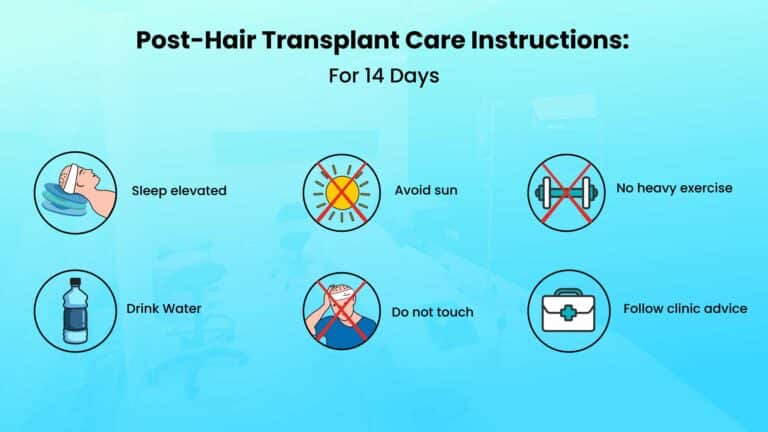
- Preventing direct friction: Follicles in their first week are very sensitive; therefore, touching them, scratching them with fingernails, or accidental impact with car ceilings or doors must be avoided.
- Adhering to the correct sleeping position: It is advised to sleep on the back with the head elevated at a 45-degree angle utilizing a special pillow in the first days, to reduce the occurrence of natural swelling and protect the implantation area from pressure.
- Caution while washing the head: Following the method of organized and gentle washing utilizing lukewarm water and very light massaging with the fingertips without violent rubbing, to help get rid of surgery traces gradually.
Quick Points for Daily Care:
- Avoid removing dry scabs by force; and let them fall naturally during organized washing to prevent localized bleeding.
- Refraining completely from practicing strenuous physical activities or heavy weightlifting in the first two weeks so as not to raise blood pressure in the head.
- Staying away from swimming and direct exposure to scorching sunlight or dust in the first weeks to protect the sensitive skin.
Read also for more prevention: To view a comprehensive list of the most prominent daily slips that may be linked to poor hair growth and how to avoid them, see our article: [Mistakes Leading to Reduced Hair Transplant Density: Awareness and Prevention Guide].
Modifying Lifestyle to Enhance Follicle Survival and Stability
Preventive procedures do not stop at external care only, but extend to the internal and vital environment of the body that nourishes the new hair through the blood.
The Impact of Smoking and Limiting Nicotine
Medical evidence-based data indicates that heavy smoking represents a crucial factor in slowing skin recovery and reducing follicle tissue survival rates. Nicotine causes vasoconstriction of peripheral blood vessels, limiting the flow of oxygen and essential nutrients heading to the scalp. To avoid poor density and a regression in the thickness of sprouting hairs, it is strongly advised to limit smoking or refrain from it completely before and after the operation for sufficient periods that guarantee a healthy and natural blood flow to the roots.
Balanced Nutrition and Psychological Patience
Roots in the awakening and growth stage need a continuous supply of proteins, zinc, and iron. Adhering to a balanced diet contributes directly to supporting hair vitality.
Also, understanding the nature of growth stages and awareness of the natural “Shock Loss” phenomenon that occurs in the second month helps manage psychological anxiety and avoid stress; true growth needs a long time for its final features to become clear.
Long-Term Complementary Medical Follow-Up System
Prevention and ensuring sustainable success do not end with hair growth after the first months, but extend to maintaining the results and protecting the surrounding original hair from continuing genetic hair loss.
Periodic Review and Utilizing Auxiliary Treatments
Upon clinical evaluation throughout the first year, doctors may suggest complementary protocols in some cases to enhance results:
- Platelet-Rich Plasma (PRP) sessions: May contribute to stimulating peripheral blood circulation and nourishing the sprouting follicles.
- Localized treatments and nutrients: Utilizing vitamins designated for hair or treatments scientifically proven to maintain the vitality of natural non-transplanted hair to guarantee the homogeneity of the total density of the head over the years.
Expanding knowledge horizons: To view the comprehensive objective analysis of how the final appearance is evaluated and how success factors are distributed between the medical side and the patient’s behavior, see our article: [Who is Responsible for Hair Transplant Failure? Doctor or Patient?].
Conclusion: Planning and Commitment Are the Keys to Sustainable Density
In conclusion, it becomes clear that the answer to the question of how to avoid hair transplant failure lies in adopting a comprehensive preventive vision that begins from good choice and ends with the responsibility of care.
The chances of a poor outcome decrease very significantly when you merge between choosing a reputable medical center that relies on surgical and microscopic precision and honest diagnosis, and your personal calm commitment to follow washing instructions, protecting the head from mechanical influences, and adjusting a healthy lifestyle.
Accurate knowledge and absorbing these simple steps are the true guarantee for a safe journey and a harmonious natural appearance that grants you permanent confidence throughout life.
Frequently Asked Questions About How to Ensure Hair Transplant Success
Do preventive procedures to avoid a drop in density differ between DHI and FUE techniques?
From a medical standpoint, there are no fundamental differences in general preventive rules between the two techniques; both are microscopic surgeries that depend on the same controls of protecting and nourishing follicles. The choice between the two techniques returns to the decision of the surgeon based on the baldness area and the nature of the original hair, and commitment to sleeping and washing instructions and protecting the head remains fixed and guaranteeing success in both cases.
When can I return to cutting hair or utilizing styling products safely?
It is medically advised to avoid utilizing a sharp razor or clippers with harsh metallic heads on the transplanted areas for a duration of no less than 6 months to protect the roots from pulling; it is sufficient to utilize scissors gently to trim visible hair after the third week. As for harsh styling products like gel and wax or chemical hair dyes, it is preferred to postpone them completely for at least six months to avoid any irritation in the scalp that may negatively affect the quality of the growing density.
Can the operation fail and density regress after succeeding for several years?
The transplanted follicles are extracted from the back of the head, which is a region that genetically features resistance to genetic baldness hormones; therefore, transplanted hair continues to grow throughout life in a natural manner. However, the patient may notice a regression in the total density of the head after years as a result of the continuation of the shedding of original hair surrounding the transplant, which requires complementary medical follow-up and utilizing preventive treatments to maintain natural hair and guarantee the homogeneity of the general appearance.
Edited by the Clinicana team
Medically reviewed by Prof. Dr. Soner Tatlıdede, Plastic and Hair Transplant Surgeon — 22+ years of experience, ~10,950 procedures. Last reviewed on June 10, 2026
Medical Sources and References
- Goldin J, Zito PM, Raggio BS. Hair Transplantation. StatPearls / NCBI Bookshelf. Updated 2025.
- Mysore V, et al. Hair Transplant Practice Guidelines. Journal of Cutaneous and Aesthetic Surgery. 2021.
- Vañó-Galván S, Bisanga CN, Bouhanna P, Farjo B, et al. An International Expert Consensus Statement Focusing on Pre and Post Hair Transplantation Care. Journal of Dermatological Treatment. 2023.
- Parsley WM, Perez-Meza D. Review of Factors Affecting the Growth and Survival of Follicular Grafts. Journal of Cutaneous and Aesthetic Surgery. 2010.
- Bernstein RM, Rassman WR. Graft Anchoring in Hair Transplantation. Dermatologic Surgery. 2006.
- Kerure AS, Patwardhan N. Complications in Hair Transplantation. Journal of Cutaneous and Aesthetic Surgery. 2018.
- Garg AK, Garg S. Complications of Hair Transplant Procedures—Causes and Management. Indian Journal of Plastic Surgery. 2021.
- Sharma R, Ranjan A. Follicular Unit Extraction Hair Transplant: Curves Ahead. Journal of Maxillofacial and Oral Surgery. 2019.
- Shapiro R, Shapiro P. Hairline Design and Frontal Hairline Restoration. Facial Plastic Surgery Clinics of North America. 2013.
- Hughes EC, Syed HA, Saleh D. Telogen Effluvium. StatPearls / NCBI Bookshelf. Updated 2024.
- Patel P, Dhamoon MS. Minoxidil. StatPearls / NCBI Bookshelf. Updated 2023.
- Leavitt M, Perez-Meza D, Rao NA, Barusco M, Kaufman KD, Ziering C. Effects of Finasteride 1 mg on Hair Transplant. Dermatologic Surgery. 2005.
- World Health Organization (WHO). Smoking Greatly Increases Risk of Complications After Surgery. 2020.
Disclaimer: All analyses and information contained in this article are for general awareness and simplification of medical concepts for those undergoing hair transplant surgeries. They do not replace a direct medical consultation and clinical review of individual cases by specialized physicians at Clinicana.


By Prof. Dr. Soner Tatlıdede · August 2026 Post-Op Field Checklist Time Phase Primary Clinical Objective Washing & Care Protocol Recommended Sleep Position Activities & Essentials Days 1 – 3 Protection & graft stabilization No washing allowed (spray moisturizing saline spray only) Sleep on back at a 45° incline with neck pillow Complete rest, avoid bending forward, […]

By Prof. Dr. Soner Tatlıdede · June 2026 TL;DR: Why does my head sweat so much? Excessive head sweating (craniofacial hyperhidrosis) affects 3% of the population and occurs when sweat glands are overactive, triggered by stress, heat, certain foods, or medical conditions. Treatment options include proper scalp care, dietary changes, Botox injections, and prescription medications. […]

By Prof. Dr. Soner Tatlıdede • July 2026 Determining the best age for a hair transplant is one of the most frequent questions raised by individuals experiencing progressive hair thinning or androgenetic alopecia. In the medical world, answering this question goes far beyond a patient’s emotional desire to restore density and youthfulness; it relies on a deep […]


Thank you!
Your details have been successfully submitted. Thanks!