


Does radiotherapy cause hair loss? Is it permanent?

Facing a cancer diagnosis is challenging enough, but the prospect of losing your hair during treatment can add a heavy emotional burden to an already difficult journey.
While it is a common concern, understanding that radiotherapy-induced hair loss is often localized and manageable can help you prepare mentally and physically for the road ahead.
Many patients often confuse the effects of chemotherapy with radiotherapy, not realizing that hair loss from radiation only occurs in the specific area being treated.
Whether the loss is temporary or permanent depends on several factors, including the dosage and the exact location of the therapy.
In this comprehensive guide, we will explain the science behind how radiation affects hair follicles, what timelines you can expect for shedding and regrowth, and provide expert advice on scalp care and restoration options to help you maintain your confidence throughout your recovery
Does radiotherapy cause hair loss?
Will radiotherapy cause hair loss? Radiation therapy is a treatment used in oncology in which ionising radiation – that is, X-rays, photons and protons – applied locally with the aim of destroying cancer cells, are used;
since healthy cells are more resistant to this type of radiation than cancer cells, it is a therapy that makes it possible to reduce or eliminate malignant tumours locally, causing less damage to healthy tissues. However,
in some cases it is necessary to combine radiation therapy with surgery, or even with chemotherapy.
Answering to the question: yes, hair loss after radiotherapy can occur.
However, unlike chemotherapy (in which hair falls out all over the body, no matter where the treatment is applied), radiation therapy usually makes hair fall out only in the treated area: that is, If radiation is applied to the chest, we will lose hair in that area, but hair on the head will not become affected.
However, the effects also depend on the patient, the dose of radiation administered, etc.
Is hair loss from radiation permanent?
Does hair grow back after radiation therapy? Hair loss caused by this treatment is usually temporary, especially in low doses of radiation, although it must be taken into account that the reaction in each patient is different.
However, sometimes hair loss is permanent after radiation therapy: this is common especially when patient has to undergo multiple sessions and gets high doses of radiation, which ends up damaging hair follicles until they die, so they can no longer generate new hair.
But, why does radiation therapy cause hair loss? We mentioned before that healthy cells are more resistant to ionising radiation;
however, they can also become affected, especially in tissues that have a high reproduction rate such as nails or hair, as studies have shown. In the case of hair, radiation can cause it to become weak or thin, and in some cases a complete hair loss.
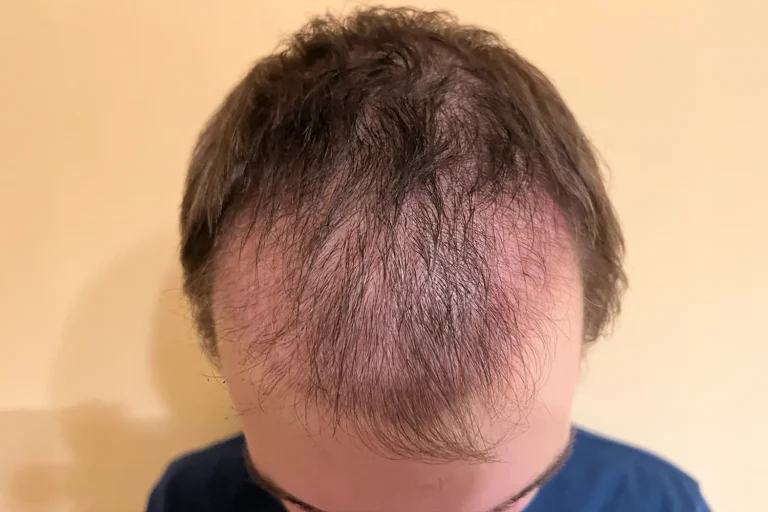
Hair on scalp is most affected when radiation is applied directly to treat tumours in head or neck, resulting in what is called radiation-induced alopecia. In these cases, the irradiated area presents a loss of hair in the form of patches, with an appearance similar to that of alopecia areata.
Hair loss may also appear on the opposite side where radiation exits, although in a milder way.
It must be taken into account that, in addition to hair loss, the irradiated area becomes especially sensitive, so we must take special care and use – for example – special soaps or shampoos, avoiding rubbing the treated area and protecting it when we go out.
Also, if the radiation treatment is applied on scalp, hair cannot be dyed during radiation therapy without consulting your doctor first.
How long does hair take to grow back after radiotherapy?
How long does it take for hair to grow back after radiotherapy? The answer is 3 to 6 months, although there will be changes in texture, shape (normally regrowth hair is curlier) and even colour.
While hair grows back, you may choose to wear a scarf, a cap, or even prosthetic hair.
If hair loss caused by radiotherapy is irreversible, it is possible to resort to a hair transplant to repopulate those areas where alopecia has become permanent, but always once the radiotherapy treatment has completely finished: otherwise, new hair implants will become affected by radiation and will fall out, too.
Once we have answered to the question “Does radiotherapy cause hair loss?”, if hair falls out with radiotherapy and we want to recover our hair, the most important thing is to consult our doctor or oncologist, and that an expert in hair treatments carries out a thorough diagnosis of our case.
At Clinicana we have the best professionals and we are the best hair transplant clinic in Turkey, specialised in all hair treatments. Request a free consultation, and ask us for a free, no obligation estimate for your treatment.


Diagnostic Parameter Tinea Capitis Alopecia Areata Seborrheic Dermatitis Primary Etiology Dermatophyte fungal infection (Microsporum / Trichophyton) Autoimmune response targeting hair follicles Overgrowth of Malassezia yeast and inflammatory reaction Scalp Scaling Present (fine grayish scales or thick crusting) Absent (scalp is smooth and clinically normal) Present (greasy, yellowish, or diffuse white flakes) Hair Shaft Appearance Broken […]

Medical Review by: Prof. Dr. Soner Tatlıdede – September 2026 Quick Summary (TL;DR) Iron deficiency—specifically depleted serum ferritin stores—is one of the most prevalent nutritional triggers of diffuse hair shedding, particularly among women and vegetarians. Iron is not merely a component of blood cells; it serves as a critical biological catalyst for cellular division and oxygen transport inside […]
Medical Review by: Prof. Dr. Soner Tatlıdede – September 2026 Direct Definition: What Is Female Pattern Baldness? Female pattern baldness (androgenetic alopecia in women) is a genetically influenced condition characterized by progressive hair thinning across the vertex and widening of the central part line, while usually preserving the frontal hairline. Unlike male pattern hair loss, which frequently causes […]


Thank you!
Your details have been successfully submitted. Thanks!