


Global Pricing Gap: Why Turkey’s Premium Hair Transplants Cost 70% Less
The global approach to hair restoration has undergone a fundamental paradigm shift in 2026. No longer is hair loss viewed as an inevitable part of aging to be managed with temporary serums or concealers.
Instead, surgical restoration has become the definitive standard for the modern professional. According to recent healthcare data, there has been a 35% year-on-year increase in patients seeking permanent surgical solutions over topical treatments.
This surge is driven by a “results-first” mindset where efficiency and self-image are paramount.
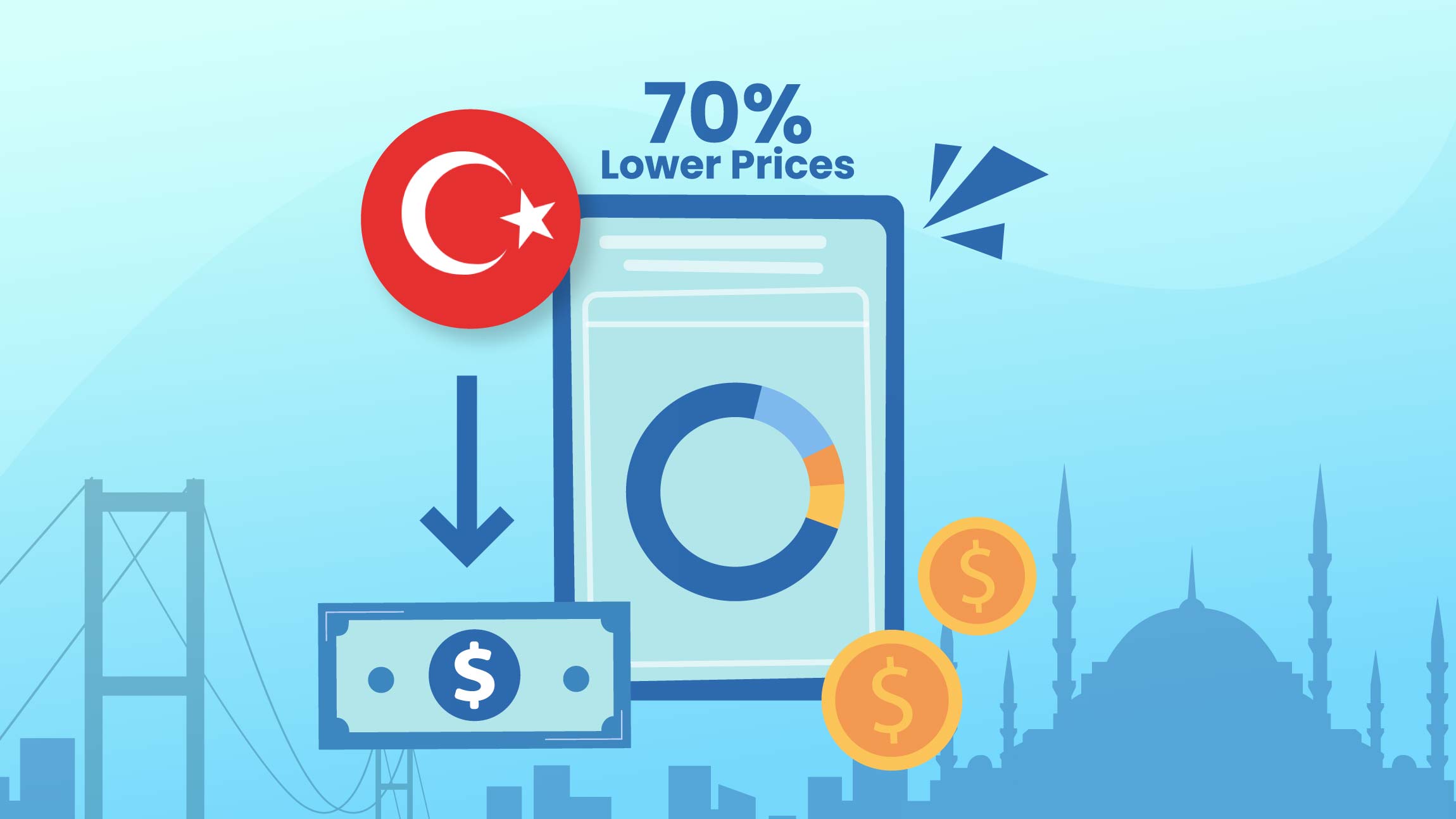
However, as patients begin comparing hair transplant prices by country results, they inevitably encounter a staggering statistic: Turkey remains consistently 70% more cost-effective than most Western nations.
This massive price gap often triggers a common cognitive bias known as the Price-Quality Heuristic—the instinctual belief that a lower price must equate to lower standards.
To the uninitiated, saving 70% on a medical procedure feels “too good to be true.” At Clinicana, we challenge this skepticism by reframing the narrative.
This 70% difference isn’t a result of cutting corners; it is the result of Economic Arbitrage. In 2026, the real question for the savvy patient is no longer “Why is Turkey so affordable?” but rather, “Why is the rest of the world so expensive?”
The 2026 Global Cost Map: A Regional Breakdown
When comparing hair transplant prices by country results, it is essential to distinguish between the “cost of surgery” and the “cost of the environment.”
In 2026, the global price map reveals that most patients in the West are paying for local economic factors rather than superior medical technology.
North America: The High-Overhead Anchor (USA & Canada)
In 2026, the United States and Canada remain the world’s most expensive regions for hair restoration. A standard FUE session (2,500–3,000 grafts) in hubs like New York or Toronto typically ranges between $12,000 and $20,000.
This pricing is anchored in extreme administrative costs, high malpractice insurance premiums, and labor taxes.
When you pay these prices, a significant portion of your investment goes toward the clinic’s rent and insurance rather than the actual grafts.
This creates a false perception that a higher price equals better safety, whereas it actually reflects the high cost of doing business in North America.
United Kingdom & Europe: The “Prestige” vs. Expertise Gap
Despite being geographically close to more affordable hubs, London, Berlin, and Paris maintain a high-price barrier, with costs often falling between £5,000 and £12,000.
Many patients instinctively trust these locations due to their prestigious reputation.
However, the reality of 2026 is that many European clinics perform fewer procedures annually than their Turkish counterparts. In hair restoration, surgical precision is a result of high-volume repetition.
By choosing a high-volume center like Clinicana, you benefit from a level of specialized, daily expertise that a low-volume local clinic—regardless of its prestigious London address—simply cannot match.
The Middle East: The Luxury Service Tax (UAE & Saudi Arabia)
In the Gulf region, particularly in Saudi Arabia and the UAE, pricing is often driven by “Luxury Positioning.” A hair transplant cost in Saudi Riyal (SAR) can easily range from 18,000 SAR to over 35,000 SAR.
While the medical facilities in Riyadh or Dubai are world-class, the price point often rivals European rates due to high operational luxury taxes.
For a Saudi patient, the journey to Istanbul isn’t just about saving money; it is about accessing a clinical ecosystem where hair transplantation is the primary national medical specialty, offering more “experience per Riyal” than any local alternative.
Turkey: The Global Epicenter of Value
In 2026, Turkey has solidified its position as the global leader by achieving Economies of Scale. High-volume excellence allows elite clinics to offer all-inclusive packages between €2,500 and €3,500.
Turkey’s advantage is purely logical: lower real estate costs, government-backed medical tourism, and a massive concentration of specialized talent.
At Clinicana, your investment is directed toward the most advanced Sapphire blades and senior surgical expertise, rather than inflated Western overhead.
2026 Price Index: Global Hair Restoration Comparison
To make an informed medical decision, a clear side-by-side comparison is essential. The following table highlights the significant gap between traditional high-cost markets and the optimized medical model found in Turkey for 2026.
Detailed Comparison Table: 2026 Global Price Index
| Country | Average Price (3,000 Grafts) | Advanced Technology | Accommodation & VIP Transfer |
| USA | $12,000 – $18,000 | Extra Charge | Not Included |
| United Kingdom | £6,000 – £12,000 | Standard FUE | Not Included |
| Germany | €7,000 – €10,000 | Standard FUE | Not Included |
| Saudi Arabia | 18,000 – 35,000 SAR | Available | Rarely Included |
| Spain | €5,000 – €8,000 | FUE | Not Included |
| Thailand | $4,500 – $6,500 | FUE / DHI | Sometimes Included |
| Turkey (Clinicana) | €2,500 – €3,500 | Sapphire & DHI Included | All-Inclusive (5-Star) |
Beyond the Numbers: Understanding the Value Difference
When analyzing the hair transplant price by country results, it is important to look at what is included in the final bill.
In the United States and Europe, the quoted price is often strictly for the surgical procedure. Additional costs for consultations, post-operative medications, and local travel can increase the final total by another 10–15%.
In the Middle East, specifically when looking at the hair transplant cost in Saudi Riyal, the price point in Riyadh or Dubai often rivals European rates.
This is largely due to the high operational costs and “luxury taxes” associated with Gulf-based clinics.
In contrast, the Turkish model—specifically at Clinicana—is built on Total Transparency. Our all-inclusive approach covers your entire journey: from VIP airport transfers and 5-star hotel stays to the most advanced Sapphire FUE or DHI techniques.
By removing the “hidden costs” that are common in Western clinics, Turkey offers a high-end medical experience where your investment is spent entirely on your results, not on administrative overhead.
The Economics of “70% Lower”: Why Turkey is More Affordable
When patients see a 70% price reduction, the natural instinct is to question the quality.
However, a deeper look at the 2026 economic landscape reveals that these savings are the result of a highly optimized medical ecosystem, not a compromise on surgical standards.
Operational Expenses: Istanbul vs. New York
The primary driver of medical costs is “Overhead.” In global financial hubs like New York, London, or Riyadh, a clinic’s expenses—including prime real estate rent, high utility rates, and administrative staff salaries—are among the highest in the world.
- The Difference: A premium clinic in Istanbul operates with significantly lower fixed costs. These operational savings are passed directly to the patient. At Clinicana, your investment goes into the surgeon’s hands and the latest Sapphire technology, rather than paying for a clinic’s Manhattan or Harley Street rent.
Strategic Government Support: The “Health Turkey” Initiative
Turkey has strategically positioned itself as the world’s “Operating Room” through the “Health Turkey” national initiative.
To maintain this status, the government provides substantial tax incentives and subsidies to accredited medical facilities.
- The Impact: This support allows top-tier clinics to maintain elite medical infrastructure while keeping the final price to the patient low. It is a national commitment to medical excellence that ensures Turkey remains the most competitive destination for high-end healthcare.
High-Volume Efficiency: Precision Through Experience
There is a fundamental rule in surgery: Practice leads to perfection. Because Turkey is the global epicenter for hair restoration, Turkish specialists perform a much higher volume of procedures than their Western counterparts.
- The Efficiency Paradox: This high volume allows for a “Flow State” of medical operations. Refined protocols, specialized nursing teams, and streamlined surgical stages mean that procedures are completed with higher precision and less wasted time. In 2026, Turkish clinics have transformed hair transplantation into a master-level specialty, achieving better results at a fraction of the cost.
The Currency Exchange Advantage
For international patients, the power of their local currency plays a decisive role. Whether you are analyzing the hair transplant cost in Saudi Riyal (SAR), Dollars, or Euros, your purchasing power in Turkey is at an all-time high in 2026.
- Smart Arbitrage: Your currency simply “buys” more in Turkey. You aren’t choosing a “cheap” surgery; you are exercising financial intelligence by choosing a destination where your money provides the highest return in terms of luxury accommodation, VIP service, and medical expertise.
Maintaining Quality: It’s Not “Cheap,” It’s “Efficient”
When comparing hair transplant prices by country treatment, many patients mistakenly equate a higher price tag with a higher safety profile.
However, in 2026, the Turkish medical model has proven that elite surgical results are a product of extreme specialization and a high-volume infrastructure.
Medical Specialization: A Primary National Field
In many Western countries, hair restoration is often a “secondary specialty” for general plastic surgeons who perform various cosmetic procedures. In Turkey, it is a primary medical industry.
Turkish surgeons and medical teams are among the most specialized in the world because they focus exclusively on hair restoration.
This singular focus creates a level of intuitive expertise and refined technique that generalists simply cannot match.
At Clinicana, you aren’t just visiting a clinic; you are entering a center where every protocol is designed for one specific goal: the perfect transplant.
Technological Adoption: Why “Premium” is the Standard
A classic example of the innovation gap in 2026 is the use of Sapphire FUE and DHI (Direct Hair Implantation) technologies.
- The Global Shift: In London or New York, clinics often frame Sapphire blades or DHI pens as a “Premium Upgrade” with an additional price tag.
- The Turkish Standard: In Istanbul, and specifically at Clinicana, these are the clinical baselines. Because of the massive volume of procedures, Turkish clinics have the purchasing power and the technical “know-how” to integrate the latest medical tech into every single surgery without inflating the cost. You receive the world’s most advanced treatment as a standard, not a luxury add-on.
JCI Accreditation: International Safety Benchmarks
There is a common misconception that seeking treatment abroad means stepping into a less regulated environment.
The reality in 2026 is quite the opposite for top-tier Turkish institutions. Clinicana operates within JCI-Accredited hospitals (Joint Commission International).
This is the “Gold Standard” of healthcare—the same accreditation held by the most prestigious university hospitals in the US and Europe. It mandates rigorous protocols for sterilization, patient safety, and emergency care.
When you analyze the hair transplant cost in Saudi Riyal or Euros, you are looking at a price that includes the highest global safety certifications available today.
The Efficiency Paradox
In the medical world, efficiency saves both lives and money. By streamlining the entire patient journey—from the initial digital consultation to the final 12-month follow-up—Turkey has removed the administrative “waste” from the medical process.
The 70% savings you see are the direct result of a highly tuned, specialized system that prioritizes surgical outcomes over bureaucratic overhead.
The “All-Inclusive” Factor: A Financial Game-Changer
When comparing hair transplant prices by country treatment, most patients focus solely on the surgical fee.
However, the true financial “trap” in the West often lies in the hidden line items that appear after the initial quote. In 2026, Turkey’s all-inclusive model has redefined transparency in medical tourism.
Total Transparency: One Price, Zero Stress
In the Turkish medical model, the “Bundle Effect” is used to provide psychological comfort and financial security.
When you receive a quote from Clinicana, it isn’t just for the follicular units; it is a comprehensive contract that covers your entire journey.
- The Comprehensive Package: This includes VIP airport transfers, 5-star hotel accommodation, the surgical procedure, all pre-operative blood tests, and a full post-operative medication kit.
- The Result: This eliminates “Decision Fatigue.” By covering every detail in a single price, the clinic removes the anxiety of navigating a foreign city and the risk of “hidden fee” shocks that often plague medical travelers in other regions.
The Hidden Costs of the West: Why “Local” Quotes Can Be Misleading
In many Western hubs, the “starting price” is rarely the final price. Patients often discover that essential components of the recovery process are billed separately, leading to a much higher final cost.
- The “Add-On” Culture: In the US, UK, or Germany, you might be charged extra for the initial consultation ($200+), the post-operative care kit ($150+), follow-up appointments, and even the local anesthesia.
- The Reality: When you factor in these “extras,” a local procedure that seemed “comparable” can suddenly become 30–40% more expensive than the original estimate. In Turkey, all-inclusive hair transplant packages explained causes for high satisfaction because the final price is truly final, allowing for better financial planning.
Luxury as a Medical Standard
One of the most distinct aspects of the Turkish model is the integration of luxury into the recovery process.
Because of high-volume medical tourism, elite clinics have exclusive partnerships with international 5-star hotels.
- The Prestige of Recovery: Recovering in a world-class hotel in a central location like Taksim Square isn’t just a “vacation perk”—it is a strategic part of a stress-free recovery environment.
- The Value Comparison: In London or New York, a three-night stay at a similar 5-star hotel could cost more than the entire hair transplant procedure in Istanbul. Turkey’s economic efficiency allows this luxury to be a standard part of the medical protocol, ensuring you recover in comfort without the luxury price tag.
Here is the refined Section 6. In this part, we transition from simple cost-saving to a more sophisticated ROI (Return on Investment) analysis.
By framing the procedure as a “long-term asset” and the travel as a “value-added experience,” we help the reader justify the trip as the most rational choice.
Is It Worth Traveling Abroad? (The ROI Analysis)
When patients ask, “Is it worth traveling abroad for a hair transplant cost?” they are often weighing the perceived effort of travel against the potential savings.
In 2026, the answer is found by looking at the long-term Return on Investment—both financially and in terms of the total experience.
Cost vs. Quality: The 30-Year Investment
A hair transplant is not a recurring expense; it is a one-time investment in a permanent result.
- The Math of Value: If you pay $15,000 in the US or UK for a result that lasts 30 years, your cost is $500 per year. However, by choosing Clinicana at approximately €2,850, your annual investment drops to less than €100 per year for the same—or often superior—graft density.
- The Takeaway: When viewed over a lifetime, the “Turkey Advantage” represents an incredible financial gain. You aren’t just saving 70% today; you are maximizing the value of every graft for the next three decades.
The “Medical Vacation” Element: Istanbul as a Recovery Hub
One of the unique advantages of the Turkish model is the environment in which you recover. Instead of returning to the stresses of daily life immediately after a local procedure, the Turkish “All-Inclusive” model encourages a different approach.
- The Experience: Patients spend their recovery days in Istanbul—one of the world’s most iconic cultural and historical hubs.
- The Added Value: Since your all-inclusive hair transplant package already covers a 5-star hotel stay, the “vacation” aspect of the trip is essentially a built-in bonus. This turns a medical necessity into a prestigious life event, replacing the “fear” of surgery with the excitement of a high-end travel experience.
Case Study: The Londoner vs. The Clinicana Journey (2026 Comparison)
Let’s look at a typical 2026 cost breakdown for a patient traveling from the UK:
- The Local Option (London/Manchester):
- Surgery (3,000 Grafts): £8,500
- Consultation & Post-Op Kit: £350
- Local Travel & Food: £150
- Total: £9,000 (with no accommodation or VIP service).
- The Clinicana Journey (Istanbul):
- Premium All-Inclusive Package: £2,450 (approx. €2,850)
- Return Flight: £300
- Personal Expenses: £250
- Total: £3,000 (Includes 5-star hotel, VIP transfers, and a specialized surgical team).
The Verdict: The patient saves £6,000—enough to cover several future family holidays—while receiving care in a JCI-accredited facility that performs more transplants in a month than most UK clinics do in a year.
When you look at the hair transplant price by country results, the “worth” of traveling abroad becomes undeniable: you are paying 70% less for a 100% premium experience.
Success and Survival Rates: Global Benchmarks
When comparing hair transplant prices by country results, the most vital metric isn’t the initial cost—it’s the Graft Survival Rate.
A surgery that costs $15,000 but only achieves 60% growth is far more expensive in the long run than a high-precision procedure that ensures every follicle thrives.
High-Volume Mastery vs. Low-Volume Generalists
In 2026, clinical data indicates that elite Turkish centers like Clinicana consistently achieve a 95–98% graft survival rate.
- The Experience Curve: This is a direct result of specialization. Because Turkish specialists perform thousands of procedures annually, their “tissue handling” is exceptionally delicate. In contrast, a Western general plastic surgeon who may only perform one hair transplant a week lacks the repetitive “muscle memory” required for the highest density. In surgery, volume leads to a refined, intuitive precision that protects the life of every follicle.
2026 Storage Innovations: ATP & HypoThermosol
One of the primary reasons the average cost of hair transplant in Turkey results in such high-density growth is the standard adoption of advanced bio-preservation.
- The Technology: Leading clinics in Istanbul have moved away from basic saline solutions. Instead, we utilize HypoThermosol and ATP (Adenosine Triphosphate) storage. These solutions act as “life support” for the grafts while they are outside the body, preventing cellular stress and ensuring they begin growing the moment they are implanted. While these are often “premium upgrades” in the West, at Clinicana, they are the baseline for success.
Identifying Red Flags: When “Too Cheap” is Dangerous
While the 70% discount in Turkey is rooted in economic logic, there is a limit. In 2026, the market is divided between “Reputable JCI-Accredited Hospitals” and “Underground Hair Mills.”
Reputable Hospital vs. Underground Clinic
To protect your results, you must look for transparency. A common red flag is a clinic that is vague about its medical staff or its physical location.
- The “Unlimited Grafts” Trap: If a clinic promises “unlimited grafts” for a price significantly below the Turkish average (e.g., under €1,500), they are likely over-harvesting the donor area, which can lead to permanent thinning.
- Safety First: A reputable clinic like Clinicana operates within a JCI-accredited hospital. This means every step follows international safety protocols. Avoiding hidden costs in hair transplant clinics causes patients to realize that “ultra-cheap” clinics often skip essential blood tests or use unlicensed technicians. Choosing a JCI-accredited facility ensures you are receiving the 70% discount due to efficiency, not by cutting corners on your health.
Post-Op Care & Long-Distance Support in 2026
The surgical journey doesn’t end when you leave Istanbul. In 2026, the “distance” between the clinic and your home has been bridged by digital innovation.
AI-Driven Follow-Ups and Digital Consultations
Turkey has pioneered the use of AI-driven recovery monitoring. Patients can upload high-resolution photos of their healing scalp through dedicated apps at specific intervals (Day 10, Month 3, Month 6).
- Proactive Monitoring: These systems can detect early signs of redness or improper washing techniques, alerting the medical team instantly. This level of proactive care is often superior to a local clinic where you might only see a nurse once every six months.
The All-Inclusive Post-Op Kit
In the US or UK, your “post-op kit” (specialized shampoos, antibiotics, and serums) is often an additional pharmacy expense.
- The Complete Package: In Turkey, this entire medical kit is included in your package. You leave the clinic with everything required for the first critical month of recovery. This total care model ensures that your savings are protected, with no “surprise” expenses waiting for you when you get home.
FAQ
Why is the price per graft lower in Turkey?
In 2026, Turkey’s “price per graft” is lower due to Operational Efficiency and high-volume specialization. While a Western clinic must pay for generalist overhead, a dedicated center like Clinicana optimizes every cent toward specialized hair restoration. You are paying for the procedure, not the London or New York “location tax.”
Are there hidden taxes for international patients?
No. In fact, under the “Health Turkey” 2026 initiatives, international medical tourists are often exempt from the value-added taxes (VAT) that locals might pay. This government-backed “Tax Holiday” for medical travelers is a primary reason why the average cost of hair transplant in Turkey results in such significant savings.
How do I pay? (Modern 2026 Payment Options)
To accommodate global patients, Clinicana offers maximum flexibility. In 2026, we accept:
Major Credit Cards: Visa, Mastercard, and American Express.
Bank Transfers: Secure international SEPA or SWIFT transfers.
Digital Assets: In line with 2026 financial trends, we accept major Cryptocurrencies (BTC/ETH/USDT) for patients who prefer decentralized, low-fee international transactions.
Cash: Competitive rates for USD, EUR, GBP, and SAR.
Conclusion: The Smart Patient’s Choice
As we have analyzed throughout this 2026 guide, the 70% price difference between Turkey and the rest of the world is not a “discount on quality.”
It is a reflection of a superior medical ecosystem that has mastered the art of high-volume, high-precision hair restoration.
Turkey remains the undisputed global leader because it has solved the Quality-Price Paradox.
By combining JCI-accredited safety, state-of-the-art Sapphire and DHI technologies, and a cost structure supported by favorable national economics, Istanbul offers a value proposition that Western clinics simply cannot replicate.
Ready to Benchmark Your Savings?
Don’t let the “Standard Price” anchor hold you back from the hair you deserve. Stop overpaying for local overhead and start investing in world-class results.
Request Your Private Global Price Comparison & Surgical Plan from Clinicana Today. Our experts will provide a personalized graft estimate and a transparent, all-inclusive quote so you can see exactly how much you can save while securing an elite medical outcome.

The global approach to hair restoration has undergone a fundamental paradigm shift in 2026. No longer is hair loss viewed as an inevitable part of aging to be managed with temporary serums or concealers. Instead, surgical restoration has become the definitive standard for the modern professional. According to recent healthcare data, there has been a […]

“Should I postpone the procedure until winter, or take advantage of my summer vacation?” This is the most frequent question echoing through the halls of Clinicana in Turkey. Behind this simple inquiry lie real anxieties. Patients aren’t just asking about the weather; they are concerned about the safety of their new follicles, the speed of […]

Shock loss after a hair transplant can be startling, but here is the good news: it’s often a natural sign that your scalp is healing. While it might feel counterintuitive to see hair falling after a procedure meant to restore it, this “shedding phase” is typically a temporary bridge to your final, permanent results. At […]


Thank you!
Your details have been successfully submitted. Thanks!