


Hair Transplant for Smokers in Turkey: Risks, Rules & Recovery Guide (2026)

Medically reviewed by Prof. Dr. Soner Tatlıdede, hair transplant surgeon · over 22 years of experience and 18,947 procedures · November 2026
If you smoke, vape or use nicotine pouches, the short answer is: you can have a hair transplant, but you need to stop all nicotine before surgery and stay nicotine-free through the first one to two weeks after it. Nicotine narrows the small blood vessels that newly implanted grafts depend on, and the carbon monoxide in smoke lowers the oxygen your blood can carry. That combination slows healing and raises the risk of infection and, in rare cases, skin necrosis in the transplanted area.
Every procedure takes place in a hospital rather than a clinic apartment, with anaesthetic and monitoring handled by hospital staff. This guide explains when to stop, what counts as nicotine, what to do if you slipped up, and which signs mean you should contact your clinic.
Smoking and hair transplant: the rules at a glance
The exact timing is set by your surgeon for your case. The table below shows the general rules most surgeons follow, and what the evidence from surgery in general supports.
| When | What to do | Why |
|---|---|---|
| 4 weeks or more before surgery | The best time to stop completely | In surgical studies, about four weeks without smoking gave the clearest drop in wound infections |
| 1–2 weeks before surgery | The usual minimum: no cigarettes, vapes, pouches or shisha | Gives blood vessels and oxygen levels time to recover |
| Surgery day | No nicotine at all | Grafts are placed into a scalp that needs good blood flow from the first hours |
| Days 1–7 after | Strictly nicotine-free | The most critical period: grafts are connecting to the blood supply |
| Days 8–14 after | Stay nicotine-free if at all possible | The scalp is still healing and scabs are still falling off |
| After 2 weeks | Ask your surgeon before restarting; quitting for good is best | The risk to the grafts is lower, but smoking still slows healing |
Why nicotine and smoke affect graft survival
A transplanted graft is a tiny piece of tissue that has been cut off from its blood supply. In the first days after surgery it survives on oxygen and nutrients that reach it from the surrounding scalp, until new small vessels connect to it. Anything that reduces blood flow or oxygen in this window works against the grafts.
- Nicotine narrows blood vessels (vasoconstriction), so less blood reaches the scalp.
- Carbon monoxide from burning tobacco binds to red blood cells and reduces the oxygen they can deliver.
- Healing slows down: research on smoking and wound healing shows that smoking impairs the cells that repair tissue and fight infection, and that stopping smoking restores tissue oxygen and part of this function.
This applies to every technique, whether FUE or DHI: in both, the grafts depend on the blood supply of the scalp.
A large review of 140 studies across surgical specialties found that smokers have higher rates of necrosis, delayed healing and wound infection than non-smokers. In hair transplantation specifically, necrosis of the recipient area is rare, but in a published series of patients who developed it after FUE, smoking was the most common risk factor, followed by high blood pressure and diabetes.
Before surgery: how long should you stop smoking?
Stop at least one to two weeks before your hair transplant, unless your surgeon gives you a different instruction. If you can stop earlier, do: a review of smoking-cessation trials found that each extra week without smoking before surgery increased the benefit, and that stopping for at least four weeks had a clearly larger effect.
Cutting down helps less than stopping. Switching to a vape or pouch is not a way around the rule, because the main problem for the grafts is nicotine itself, not only smoke.
Be honest with your surgeon about how much you smoke and for how long. A heavy, long-term smoker with high blood pressure or diabetes has a higher risk, and the surgeon may plan the session differently or ask you to stop for longer first. For the rest of your preparation, see what to do before a hair transplant.
After surgery: when can you smoke again?
The first 7 days after surgery are the most important. This is when the grafts are anchoring and new blood vessels are forming around them. Most surgeons ask patients to stay nicotine-free for at least the first one to two weeks, and longer if possible.
- Days 1–3: grafts are at their most fragile. No smoking, vaping or pouches.
- Days 4–7: scabs form and the grafts become more secure, but blood supply is still building up.
- Days 8–14: scabs fall off (usually by around day 10). The risk is lower than in the first week, but healing is not finished.
- After 2 weeks: check with your clinic before restarting. If you used the operation as a chance to quit, this is the best moment to stay quit.
Can one cigarette ruin a hair transplant?
One cigarette will not automatically destroy a transplant, but it does reduce blood flow to the scalp for a while, and it comes at the moment the grafts need it most. The risk adds up with every cigarette, so the safest answer during the first week is: not even one.
I smoked a few days after my hair transplant. What now?
Don’t panic, and don’t smoke again. Tell your clinic, follow your aftercare instructions exactly, and watch the recipient area. In most cases nothing visible happens. What matters is that you stop now and that you report any of the warning signs listed below.
Vaping after a hair transplant
Many patients switch to a vape thinking it is safe for the grafts. It is not, if the liquid contains nicotine: the nicotine still narrows blood vessels in the same way. Vapes avoid the carbon monoxide of burning tobacco, but nicotine strength varies widely between products, and a heavy vaping day can deliver as much nicotine as smoking.
- Nicotine vapes: follow the same rules as cigarettes, before and after surgery.
- Zero-nicotine vapes: they do not cause nicotine-related vasoconstriction, but there is little research on heated vapour and wound healing. It is safest to avoid them in the first week as well, and to ask your surgeon.
Nicotine pouches (Zyn), gum and patches
Nicotine pouches such as Zyn, nicotine gum and lozenges contain no smoke, but they deliver nicotine through the lining of the mouth. For the grafts, that nicotine matters, so treat them like cigarettes in the weeks around surgery.
Nicotine patches are a slightly different case. In a trial of smokers who stopped smoking before surgery, those using a nicotine patch did not have more wound infections than those who did not. A patch is therefore far less harmful than continuing to smoke, but it is still nicotine. If you cannot stop without nicotine replacement, discuss it with your surgeon rather than deciding on your own.
Shisha (hookah) after a hair transplant in Turkey
Shisha cafés are common in Istanbul, and many patients wonder if a water pipe is gentler than cigarettes. It is not. According to the CDC, a typical one-hour hookah session means inhaling 100–200 times the volume of smoke of a single cigarette, and a single session can expose you to nearly 9 times more carbon monoxide and 1.7 times more nicotine than one cigarette. The charcoal adds more carbon monoxide. Avoid shisha completely before surgery and during recovery.
Did smoking ruin my hair transplant? What is normal and what is not
Many smokers who slipped up start checking their scalp every day. A lot of what you see in the first weeks is normal for every patient, smoker or not:
- Normal: small crusts around each graft that loosen and fall off within about 10 days (see scabs after a hair transplant); mild redness; some swelling of the forehead in the first days; and shedding of the transplanted hairs, usually between weeks 2 and 8 (see shock loss after a hair transplant). Shedding does not mean the grafts died.
- Contact your clinic straight away if you notice: dark brown or black crusts that keep spreading instead of flaking off; areas that look grey or white; pain that gets worse instead of better; pus, a bad smell or fever.
The real result can only be judged months later: new growth usually becomes visible around months 3–4, and the final result takes 12 months or more. If you are worried, send clear photos of the area to your clinic rather than waiting.
When should a smoker postpone a hair transplant?
Smoking on its own rarely rules out a hair transplant. A surgeon may suggest waiting or stopping for longer first if you:
- are a heavy, long-term smoker and cannot stop before surgery;
- also have high blood pressure or diabetes that is not well controlled;
- have had poor healing after previous surgery;
- need a large, dense session in an area with weak circulation.
A careful clinic asks about your smoking, explains the risk, and puts the instructions in writing. A clinic that says smoking is “no problem at all” is not giving you the full picture.
Related aftercare guides
Nicotine is the biggest avoidable risk, but not the only one. For caffeine see coffee before and after a hair transplant, for the day-by-day routine see the 14-day aftercare checklist, and for the complete list read what to avoid after a hair transplant to protect your grafts.
If you smoke and are planning a procedure, send us photos of your hair and tell us how much you smoke. Our medical team will tell you what applies in your case.
Frequently asked questions
When can I smoke after a hair transplant?
Stay nicotine-free for at least the first one to two weeks after surgery; the first 7 days are the most critical. After that, ask your surgeon before restarting. The longer you wait, the better for healing, and quitting for good is best.
Can I vape after a hair transplant?
Not in the first one to two weeks if the liquid contains nicotine. Nicotine narrows blood vessels whether it comes from a cigarette or a vape. Zero-nicotine vapes are less of a problem, but it is safest to avoid them in the first week too.
Can I use Zyn or nicotine pouches after a hair transplant?
Treat nicotine pouches like cigarettes: no pouches before surgery or during the first one to two weeks of recovery. They contain no smoke, but the nicotine they release still reduces blood flow to the scalp.
Can one cigarette ruin a hair transplant?
One cigarette rarely destroys a transplant, but it reduces blood flow at the moment the grafts need it most, and the risk adds up with each cigarette. In the first week the safest rule is not even one. If it already happened, stop, tell your clinic and watch for warning signs.
How long should I stop smoking before a hair transplant?
At least one to two weeks before surgery, unless your surgeon tells you otherwise. Stopping earlier is better: in surgical studies, about four weeks without smoking gave the clearest reduction in wound complications.
Can I smoke shisha after my hair transplant in Turkey?
No. A hookah session exposes you to more carbon monoxide and nicotine than a single cigarette, so it is not a safer option. Avoid shisha before surgery and throughout recovery.
Can smokers get a hair transplant?
Yes. Smoking raises the risk of slower healing and complications, but it rarely rules out a hair transplant on its own. What matters is stopping all nicotine around the procedure and telling your surgeon honestly how much you smoke.
Sources
- Sørensen LT. Wound healing and infection in surgery: the clinical impact of smoking and smoking cessation. Arch Surg. 2012;147(4):373–383.
- Sørensen LT. Wound healing and infection in surgery: the pathophysiological impact of smoking, smoking cessation, and nicotine replacement therapy. Ann Surg. 2012;255(6):1069–1079.
- Mills E, et al. Smoking cessation reduces postoperative complications: a systematic review and meta-analysis. Am J Med. 2011;124(2):144–154.
- Sørensen LT, et al. Abstinence from smoking reduces incisional wound infection: a randomized controlled trial. Ann Surg. 2003;238(1):1–5.
- Ceran F. Recipient site necrosis after follicular unit excision technique for hair transplantation: evaluation of 18 patients. Aesthetic Plast Surg. 2024;48(19):3735–3740.
- American College of Surgeons. Statement on the effects of tobacco use on surgical complications. 2014.
- Centers for Disease Control and Prevention. Hookahs.


Medical review by: Prof. Dr. Soner Tatlıdede, hair transplant surgeon (22+ years, 18,947 procedures) – October 2026 When can you cut your hair after a hair transplant? Hair in the donor area can be trimmed after 1 month using scissors or clippers. As for the recipient area, trimming only the ends of the hair using […]
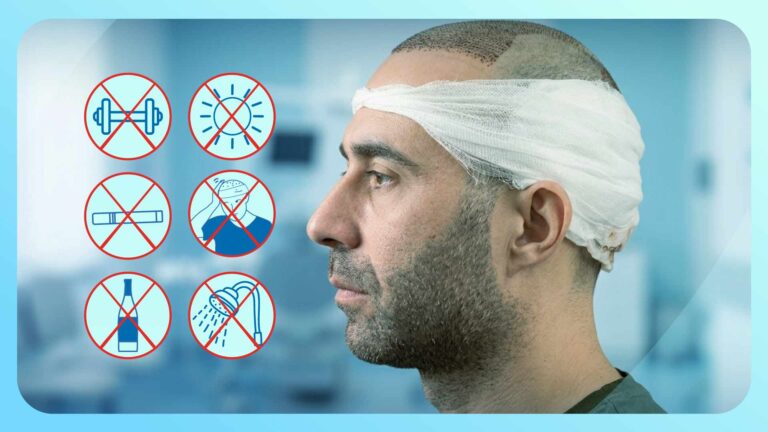
Medical review by: Prof. Dr. Soner Tatlıdede, hair transplant surgeon (22+ years, 18,947 procedures) – October 2026 Congratulations on completing your hair transplant. While the surgical part is finished, the success of your restoration now depends heavily on the recovery phase. In our clinical experience, the first two weeks post-surgery are just as critical as […]
Scalp psoriasis and seborrheic dermatitis are chronic inflammatory conditions that frequently cause discomfort, itching, redness, and scaling. For individuals experiencing hair thinning alongside these conditions, severe anxiety often arises regarding permanent follicle loss and the feasibility of hair restoration. A central concern among patients is whether undergoing a hair transplant while managing scalp psoriasis is […]


Thank you!
Your details have been successfully submitted. Thanks!