


Hair Loss After Pregnancy: Causes, Timeline and What Helps
Medically reviewed by Prof. Dr. Soner Tatlıdede, Hair Transplant Surgeon — 22+ years, 18,947 procedures · September 2026
Finding clumps of hair in your brush, the shower drain or your baby’s fist a few months after giving birth is alarming, but it is also one of the most common changes after pregnancy. Postpartum hair loss is temporary for most women and the hair grows back. This guide explains why it happens, how long it lasts, what helps, and the signs that something other than normal postpartum shedding is going on.
What is postpartum hair loss?
Postpartum hair loss is excessive shedding that starts a few months after childbirth. Doctors call it telogen effluvium: a large number of hairs move into the resting (telogen) phase of the growth cycle at the same time and then fall out together. It is not the same as balding. The follicles are not damaged, and new hairs start growing from them straight away. For how the growth cycle works in general, see our guide to telogen effluvium.
Why do you lose hair after pregnancy?
During pregnancy, high oestrogen levels keep more hairs in the growth (anagen) phase and fewer hairs shed than usual. That is why many women notice thicker hair while pregnant.
After delivery, oestrogen falls back to its normal level. The hairs that were held in the growth phase all move into the resting phase together, and about three months later they are pushed out by new hairs growing underneath. The result is a burst of shedding that makes up for the hair you did not lose during pregnancy.
Other factors can add to it: the physical stress of birth, blood loss, broken sleep, and low iron or other nutrients. Breastfeeding is often blamed, but women who do not breastfeed also get postpartum shedding. The main driver is the hormonal change itself.
When does postpartum hair loss start and how long does it last?
| Time after birth | What typically happens |
|---|---|
| 0–2 months | Hair usually looks the same as during pregnancy. |
| Around 3 months | Shedding starts: more hair on the pillow, in the shower and in the brush. |
| 3–6 months | Shedding is at its heaviest. Thinning is often most visible at the temples and along the hairline. |
| 6–12 months | Shedding slows and short new hairs appear, often as a “fringe” of baby hairs at the hairline. |
| Around 12 months | For most women, hair has regained its usual fullness by the baby’s first birthday. |
Normal daily shedding is roughly 50 to 100 hairs (see how many hairs fall out a day). During postpartum shedding it is usually well above that, which is why it can feel like all your hair is falling out. The amount varies: some women barely notice it, and the same woman may shed heavily after one pregnancy and hardly at all after another.
Can you go bald from postpartum hair loss?
No. Postpartum shedding on its own does not cause baldness. Because the follicles stay healthy, the hair regrows. It thins the hair overall rather than leaving bald patches.
What it can do is reveal a different, longer-term problem. In a 2024 study of 200 women assessed by dermatologists for postpartum shedding, most also showed signs of another hair-loss condition, most commonly female pattern hair loss, or traction hair loss from tight hairstyles. If your hair does not recover as expected, that is usually the reason.
What helps with hair loss after pregnancy?
There is no treatment that stops postpartum shedding, because the hairs that are going to fall are already in the resting phase. What you can do is protect the hair you have, support regrowth and make the thinning less noticeable:
- Eat well and keep up nutrients. Protein, iron, zinc and vitamin D all matter for hair growth. Many doctors advise continuing a prenatal vitamin, especially while breastfeeding. See our guide to nutrition and supplements for hair fall.
- Don’t megadose supplements. Extra biotin or hair vitamins help only if you are actually deficient, and high-dose biotin can interfere with some blood tests.
- Be gentle with your hair. Use a mild shampoo and conditioner, a wide-tooth comb, and low heat.
- Avoid tight ponytails, buns and braids. Constant pulling on thinning hair can cause traction hair loss on top of the shedding.
- Try a lighter, volumising routine. Volumising shampoos, lightweight conditioners applied only to the ends, and a shorter cut can make hair look fuller while it recovers.
- Rest where you can and manage stress. Easier said than done with a newborn, but prolonged stress and sleep loss can add to shedding.
If you are breastfeeding, talk to your doctor before starting any hair-loss medication, including topical treatments, as not all are considered suitable while nursing.
When to see a doctor
Contact your doctor or a dermatologist if:
- heavy shedding continues for more than six months, or your hair has not recovered by about a year after birth;
- you see bald patches, a widening parting or thinning concentrated on the top of the head;
- you also have tiredness, feeling cold, weight changes or a racing heart, which can point to postpartum thyroid problems;
- you lost a lot of blood during delivery or have symptoms of anaemia.
A doctor may check your thyroid function, iron stores (ferritin) and vitamin D, and examine the scalp to see whether another condition is involved. For thinning that continues because of female pattern hair loss, see female pattern baldness: causes and treatments.
Is a hair transplant ever an option after pregnancy?
Not for postpartum shedding itself. Because the hair grows back, a transplant is never the right answer in the first year after birth. It only becomes relevant if thinning persists long after the postpartum period because of a permanent condition such as female pattern hair loss or a receding hairline, and only if the donor area is strong enough. Our female hair transplant page explains who is and is not a suitable candidate.
Frequently asked questions
Is it normal for all my hair to feel like it is falling out after pregnancy?
Yes. At its peak, postpartum shedding can be dramatic, and it often feels like far more hair than it really is. As long as the shedding is spread across the scalp and you are within the first six months or so, it is almost always normal.
Does postpartum hair grow back?
In most women, yes. New hairs start growing from the same follicles, and fullness usually returns within about a year. If it does not, have it checked.
Does breastfeeding cause hair loss?
Breastfeeding does not cause postpartum shedding; it happens in women who do not breastfeed too. Breastfeeding does increase your nutritional needs, so a good diet matters more during this time.
Can you prevent postpartum hair loss?
Not fully, since it is driven by the normal drop in hormones after birth. Good nutrition, gentle hair care and avoiding tight hairstyles can limit breakage and support regrowth.
Will it happen again with my next baby?
It might, but not necessarily to the same degree. Many women shed a lot after one pregnancy and very little after another.
Sources: Cleveland Clinic, “Postpartum Hair Loss”; Johns Hopkins Medicine, “Postpartum Hair Loss”; Journal of Clinical and Aesthetic Dermatology (2024), “Postpartum Telogen Effluvium Unmasking Additional Latent Hair Loss Disorders”.


Medical review by: Prof. Dr. Soner Tatlıdede, hair transplant surgeon (22+ years, 18,947 procedures) – October 2026 When can you cut your hair after a hair transplant? Hair in the donor area can be trimmed after 1 month using scissors or clippers. As for the recipient area, trimming only the ends of the hair using […]
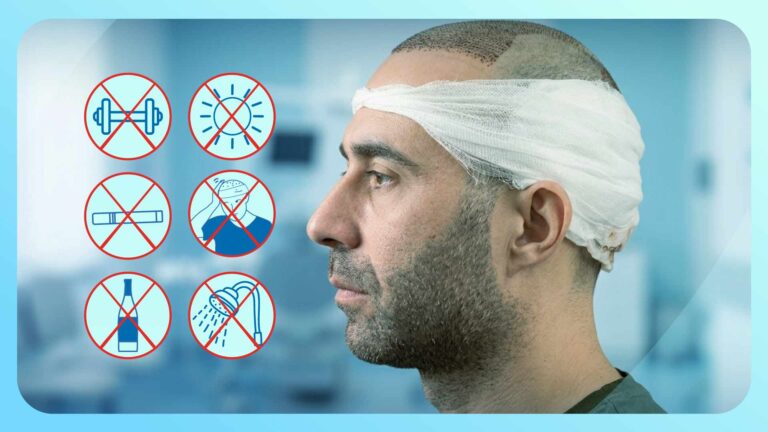
Medical review by: Prof. Dr. Soner Tatlıdede, hair transplant surgeon (22+ years, 18,947 procedures) – October 2026 Congratulations on completing your hair transplant. While the surgical part is finished, the success of your restoration now depends heavily on the recovery phase. In our clinical experience, the first two weeks post-surgery are just as critical as […]
Scalp psoriasis and seborrheic dermatitis are chronic inflammatory conditions that frequently cause discomfort, itching, redness, and scaling. For individuals experiencing hair thinning alongside these conditions, severe anxiety often arises regarding permanent follicle loss and the feasibility of hair restoration. A central concern among patients is whether undergoing a hair transplant while managing scalp psoriasis is […]


Thank you!
Your details have been successfully submitted. Thanks!