


Who is Responsible for Hair Transplant Failure? Doctor or Patient?

By Prof. Dr. Soner Tatlıdede • June 2026
Table of Factors Influencing Hair Transplant Results
| Surgical Stage | Factors Related to Medical Decisions | Factors Related to Behavior and Compliance |
| Planning & Diagnosis | Assessing loss stability, and suitability of donor area quality. | Transparency in disclosing medications and daily lifestyle. |
| During the Procedure | Extraction precision, microscopic sorting, and anatomical graft angles. | Compliance with immediate instructions and proper head positioning. |
| Recovery & Healing | Quality of the prescribed protocol and regular case follow-up. | Scalp protection, gentle washing, and limiting smoking. |
When the expected results of a hair transplant procedure are not achieved, a common question arises regarding who is responsible for the final low density after the growth stage is complete.
From a medical perspective, the roles interlock between the quality of the surgical planning by the medical team, the behavioral practices of the patient, and the biological response of the living tissues.
This educational guide from Clinicana aims to analyze these variables with scientific objectivity, helping you understand the shared guidelines that contribute to minimizing the chances of poor density and achieving a natural, sustainable appearance.
Medical Planning and Its Impact on Result Quality
Factors related to the medical team begin from the initial evaluation session and continue through the stages of microscopic surgical work inside the operating room. Clinical data indicates that some cases of reduced density may be linked to specific technical decisions during planning and execution:
Diagnostic Standards and Proper Candidate Selection
- Assessing loss stability: A drop in result quality can sometimes be attributed to accepting cases suffering from active hair loss without establishing a prior therapeutic strategy to stabilize it.
- Excluding health contraindications: Overlooking the presence of certain unstable immune or hormonal disorders can negatively impact follicle viability.
- Studying future baldness patterns: Proper planning helps distribute follicles in a way that ensures no new gaps appear with advancing age.
Microscopic Technical Handling of Live Follicles
- Minimizing graft damage (Transection): Follicle harvesting requires high skill to protect it from mechanical damage during its extraction from the back of the head.
- Precise microscopic sorting: Examining extracted tissue under magnification ensures that damaged follicles are isolated and only healthy roots are implanted into the targeted areas.
- Avoiding dehydration shock: Implanting follicles within a calculated timeframe and preserving them in a moist, chilled environment contributes to raising their chances of survival and growth after surgery.
Patient Behavior in the First 10 Days and Early Recovery Period
Once the surgical procedure concludes successfully, a major part of the influential factors shifts to the daily care regimen followed by the patient, especially during the first days which represent the phase of initial healing and anchoring of the roots.
Protecting the Scalp from Mechanical Variables
- Avoiding direct friction: Newly transplanted roots are in an entirely unstable position during the first week, and they need several days to integrate with the subcutaneous capillaries.
- Limiting aggressive scratching: Pressure from fingernails or scratching the scalp heavily in response to natural tingling can cause the follicles to dislodge or be lost completely.
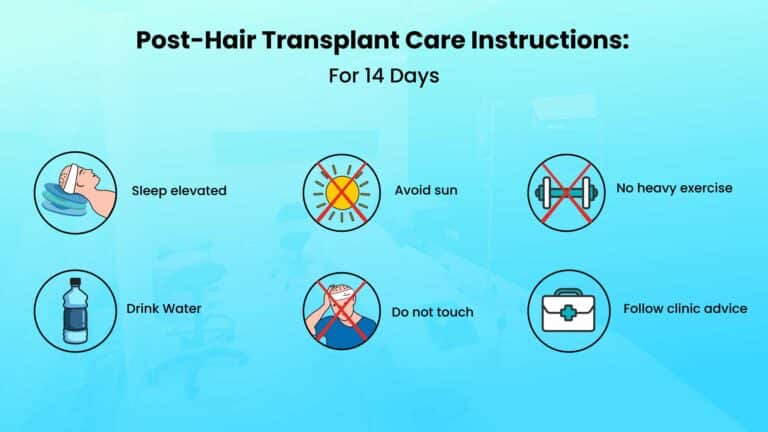
- Correct sleeping positions: Adhering to the prescribed sleeping positions helps protect the implantation area from impacting the pillow or hard surfaces.
The Impact of Smoking on Tissue Blood Circulation
- Peripheral vasoconstriction: High rates of nicotine lead to the narrowing of the capillaries that nourish the scalp, which limits oxygen flow to the treated areas.
- Slowing skin recovery: The lack of nutritional supply may be linked to decreased tissue survival rates for the follicles, and it negatively affects the thickness of new hairs and their ability to grow at full strength.
- Delayed wound healing: Weak blood flow prolongs the recovery period and increases the chance of thick scabs forming around the recipient channel openings.
Clinical Indicators That Help Determine the Cause of Low Density
From a scientific standpoint, the final evaluation usually relies on a precise clinical examination and comparing photographs of the case before and after the operation, in addition to reviewing microscopic examination results; personal impressions alone cannot be relied upon. However, there are clinical indicators that might suggest one cause over another:
Signs That May Be Linked to Technical and Surgical Deficiencies
- Unnatural growth angles: If the hair actually grew but in random or vertical directions that contradict the natural flow of the scalp, this may indicate a lack of precision while opening channels.
- A rigid geometric hairline: Designing the front line in a completely sharp and straight manner without a soft transition can give the face an artificial look that does not match the patient’s features and age.
- Wide scars in the back: The appearance of visible holes or vast blank spaces in the donor area may indicate that an aggressive and unbalanced extraction of follicles occurred.
Signs That May Be Linked to Behavioral Practices or Biological Response
- Localized circular gaps: If the hair distribution is harmonious at the angles but interspersed with specific spaces entirely devoid of growth, this suggests that violent localized friction occurred during the first days.
- Infections resulting from poor hygiene: Neglecting the prescribed hair washing protocol can cause the accumulation of secretions and localized infection that weakens the viability of the roots beneath the skin.
- Forced scab removal: The appearance of light bleeding or gaps in the path of scabs that were scraped off with fingernails links the poor growth to the patient’s personal behavior.
Follow-up knowledge links: To understand the aesthetic and anatomical details related to front hairline design to prevent an artificial appearance, you can view our simplified article: [Why Does a Front Hairline Hair Transplant Fail?].
The “Shock Loss” Stage and Managing Cognitive Anxiety
One of the common phenomena that cause confusion and unjustified blame is not comprehending the natural stages of the hair life cycle after surgery, and rushing to pass judgments before the required duration is complete.
Distinguishing Between Growth Stages and the Final Result
- The shock loss phenomenon: The vast majority of patients undergo a near-complete shedding of the transplanted hair between the fourth week and the eighth week after the operation, which is an entirely normal biological indicator.
- Follicle dormancy: The shedding of the external hair shaft does not mean the root is dead; the follicles remain alive under the skin and take several months to emerge and produce new hair that is stronger and thicker.
- The time rule for judgment: Objective judgments cannot be passed on density quality before 12 to 15 months have elapsed, as the treatment requires a long time for its final features to become clear.
Clinicana Medical Protocol to Minimize the Chances of Poor Results
At Clinicana, we work to manage this system by establishing clear controls aimed at raising medical safety standards and guiding the patient toward a precise care protocol:
- Specialized surgical supervision: Operations are managed entirely under the supervision of surgeons who rely on microscopic sorting of follicles and opening channels at the correct anatomical angles and curvatures.
- Awareness and close follow-up: We provide simplified educational guides explaining how to wash gently and sleep correctly, while accompanying the patient via a specialized support team for a full year to evaluate growth stages accurately.
- Transparency in case evaluation: If the clinical examination after a year shows that the low density is due to a technical deficiency, we bear the responsibility of repairing the case. However, if the cause was neglecting instructions, we help you by establishing an appropriate corrective treatment plan.
- Expanding knowledge horizons: To look into the most prominent behavioral practices and common technical errors and how to prevent them, see our article: [Mistakes Leading to Reduced Hair Transplant Density: Awareness and Prevention Guide].
Conclusion: Integration of Roles as an Essential Guarantee for Success
In conclusion, it becomes evident that the success and sustainability of a hair transplant do not depend absolutely on one party alone; rather, it is the product of close integration between the planning quality and surgical skill of the medical team, and the calm, understanding behavioral commitment of the patient.
Choosing a reputable medical center that applies international protocols, and observing daily care controls during the recovery period, are the most reliable ways to minimize the chances of poor results and reach a harmonious appearance that enhances confidence and lasts long.
Frequently Asked Questions About Operation Quality Responsibility
Does the occurrence of an allergy or severe itching after the operation indicate a medical error?
In most cases, feeling a slight tingling or mild itching days after the operation is a normal indicator of skin healing and peripheral nerve tissue regeneration. The doctor’s role lies in prescribing appropriate antihistamines and soothing lotions, while the responsibility falls on the patient to protect the head from scratching. However, if the itching is very severe and accompanied by a fever, yellow discharge, or increasing pain, it warrants an immediate medical evaluation and reviewing the doctor promptly to rule out any localized bacterial infection.
How is the case examined at the clinic to determine the cause of low density?
The precise clinical evaluation relies on examining the scalp microscopically to monitor skin integrity and determine whether the empty spaces contain tissue fibrosis or scar traces. Photographs from the day of the operation are also compared with the current situation to review the original distribution plan and root growth rate, allowing for the generation of an accurate scientific report explaining the reason behind the declined result and how to deal with it.
Does choosing DHI or FUE technique protect against the possibility of low density?
The surgical technique is a supporting tool for opening channels and implanting follicles, not an independent factor that creates success on its own. The surgeon is responsible for evaluating the case and determining the technique that aligns with the baldness area and the nature of the original hair. The manual skill and anatomical sense of the medical team are always the foundation in guiding the tool and ensuring that follicles anchor and grow in the optimal manner.
Edited by the Clinicana team
Medically reviewed by Prof. Dr. Soner Tatlıdede, Plastic and Hair Transplant Surgeon — 22+ years of experience, ~10,950 procedures.
Last reviewed on June 29, 2026
Medical Sources and References
- Goldin J, Zito PM, Raggio BS. Hair Transplantation. StatPearls / NCBI Bookshelf. Updated 2025.
- Vañó-Galván S, Bisanga CN, Bouhanna P, Farjo B, et al. An International Expert Consensus Statement Focusing on Pre and Post Hair Transplantation Care. Journal of Dermatological Treatment. 2023.
- Mysore V, et al. Hair Transplant Practice Guidelines. Journal of Cutaneous and Aesthetic Surgery. 2021.
- Patwardhan N, Mysore V. Hair Transplantation: Standard Guidelines of Care. Indian Journal of Dermatology, Venereology and Leprology. 2008.
- Parsley WM, Perez-Meza D. Review of Factors Affecting the Growth and Survival of Follicular Grafts. Journal of Cutaneous and Aesthetic Surgery. 2010.
- Bernstein RM, Rassman WR. Graft Anchoring in Hair Transplantation. Dermatologic Surgery. 2006.
- Kerure AS, Patwardhan N. Complications in Hair Transplantation. Journal of Cutaneous and Aesthetic Surgery. 2018.
- Garg AK, Garg S. Complications of Hair Transplant Procedures—Causes and Management. Indian Journal of Plastic Surgery. 2021.
- Sharma R, Ranjan A. Follicular Unit Extraction Hair Transplant: Curves Ahead. Journal of Maxillofacial and Oral Surgery. 2019.
- Venkataram A. Logic of Hair Transplantation. Journal of Cutaneous and Aesthetic Surgery. 2018.
- International Society of Hair Restoration Surgery (ISHRS). Surgical Treatments for Hair Loss.
- World Health Organization (WHO). Smoking Greatly Increases Risk of Complications After Surgery. 2020.


By Prof. Dr. Soner Tatlıdede · August 2026 Post-Op Field Checklist Time Phase Primary Clinical Objective Washing & Care Protocol Recommended Sleep Position Activities & Essentials Days 1 – 3 Protection & graft stabilization No washing allowed (spray moisturizing saline spray only) Sleep on back at a 45° incline with neck pillow Complete rest, avoid bending forward, […]

By Prof. Dr. Soner Tatlıdede · June 2026 TL;DR: Why does my head sweat so much? Excessive head sweating (craniofacial hyperhidrosis) affects 3% of the population and occurs when sweat glands are overactive, triggered by stress, heat, certain foods, or medical conditions. Treatment options include proper scalp care, dietary changes, Botox injections, and prescription medications. […]

By Prof. Dr. Soner Tatlıdede • July 2026 Determining the best age for a hair transplant is one of the most frequent questions raised by individuals experiencing progressive hair thinning or androgenetic alopecia. In the medical world, answering this question goes far beyond a patient’s emotional desire to restore density and youthfulness; it relies on a deep […]


Thank you!
Your details have been successfully submitted. Thanks!