


Beard Transplant Failure: Causes and Educational Solutions to Guarantee a Natural Beard
By Prof. Dr. Soner Tatlıdede • June 2026
Summary of Major Beard Transplant Challenges and Solutions
| Beard Transplant Phase | Influential Medical Factors | Behavioral and Preventive Factors |
| Design & Distribution | Determining the beard shape to suit facial features and avoiding rigid geometric distribution. | Transparency in revealing the hereditary pattern of facial hair growth in the family. |
| Angles & Technique | Implanting follicles at very flat and acute angles that mimic the natural fluid flow of the face. | Adhering to calmness and avoiding violent jaw muscle movements during the first two days. |
| Recovery Phase | Examining skin viability and its capacity to cradle the roots without forming wide scars. | Avoiding early shaving with a razor, and adhering to organized gentle washing. |
Beard and moustache transplant procedures are witnessing an increasing demand from men wishing to coordinate their facial appearance and increase density in regions suffering from gaps or a complete absence of hair due to hereditary factors or old scars.
Although this procedure relies on the exact same basic techniques utilized for scalp hair, facial skin and the hair that grows on it possess a unique anatomical specificity.
Understanding “Beard Transplant Failure: Causes and Solutions” from a simplified medical perspective represents an important educational step for everyone planning to undergo this step, as prior awareness helps avoid unnatural results and teaches how to direct daily care to achieve a harmonious and attractive appearance.
The Anatomical Specificity of Facial Skin and Its Impact on Beard Growth
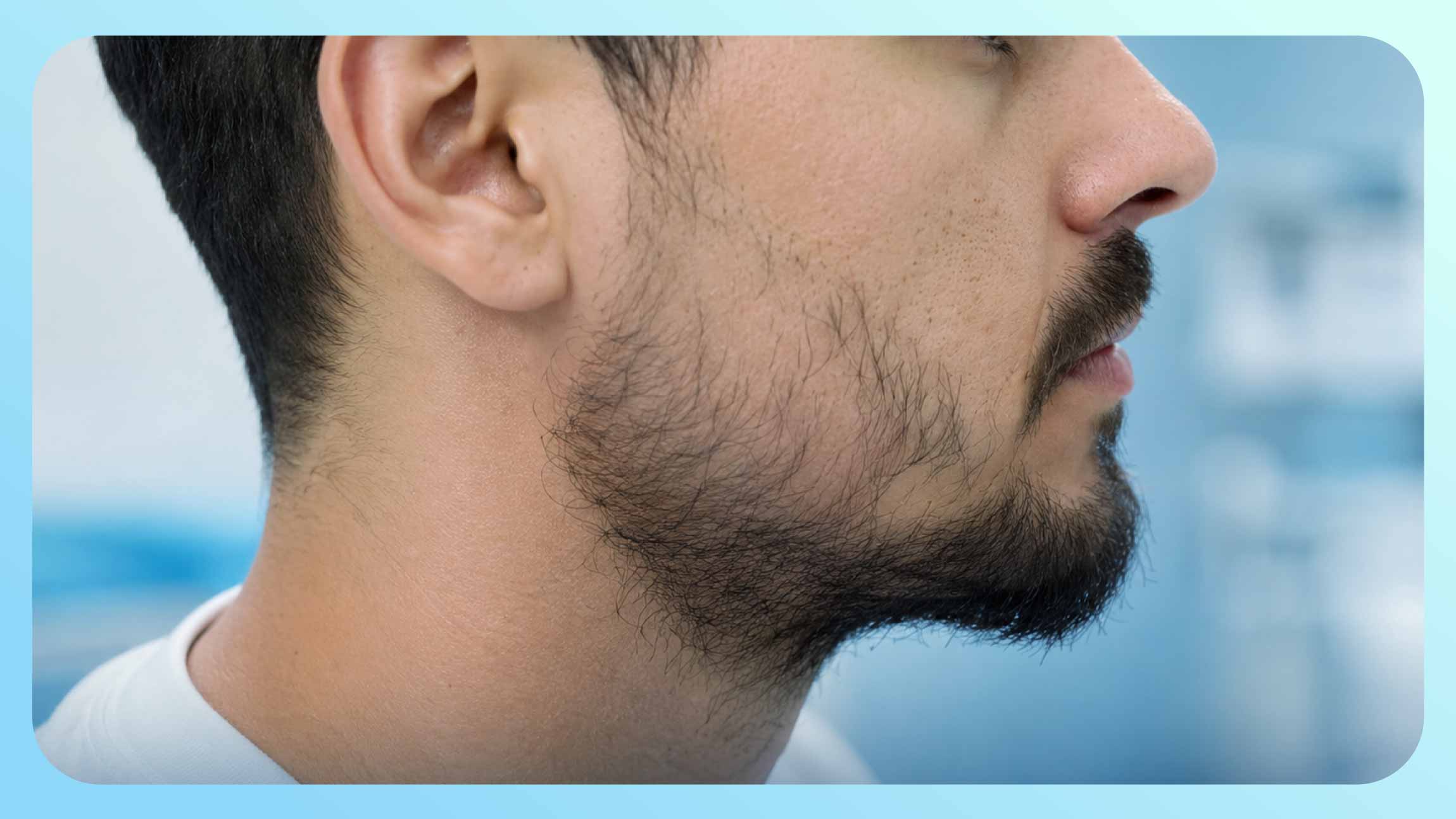
Facial skin is characterized by its thinness and high sensitivity compared to scalp skin, and the blood circulation and sebaceous gland distribution in the chin and cheek region are subject to different dynamics:
Tissue Elasticity and Implantation Depth
- Skin thinness: Implanting follicles in the face requires extreme precision in determining depth; excessive depth may cause the formation of sebaceous pimples, while superficial implantation may weaken nourishment.
- The nature of tissues surrounding the mouth: The moustache and chin area are considered continuous movement zones due to speech and eating food, which requires a highly precise anchoring protocol.
- Chances of scar formation: Due to the prominence of the face, any tiny scar resulting from using coarse instruments will be visible, which is classified as one of the aspects of an unnatural result.
Quick Points for Medical Prevention in Facial Skin:
- Utilizing ultra-fine microscopic extraction and implantation instruments that suit the thinness of cheek tissues.
- Studying skin elasticity and its capacity for recovery before making the surgical decision.
- Avoiding excessive density in narrow spaces to preserve the integrity of facial blood supply.
Technical Causes Leading to an Unsatisfying Outcome in Beard Transplants
The success of a beard transplant is linked to the artistic touch of the surgeon and his capacity to mimic human nature, as most unsuccessful cases appear as a result of technical slips in design and execution:
Failure to Adjust Growth Angles and Curvatures (Implantation Angle)
Natural beard hair grows in a very flat manner tilted downward, and it is almost parallel to the skin surface in the cheek and neck regions. A common technical mistake is opening follicle implantation channels at elevated or perpendicular angles (similar to the method used for scalp hair transplantation).
The result when the hair grows is a harsh, stiff appearance resembling “hedgehog hair,” where the hair protrudes outward vertically in an annoying manner that makes it impossible to style the beard or make it look fluid.
Poor Choice of Follicle Quality (Single versus Multiple Hair Grafts)
- Single grafts: Natural beard hair mostly consists of a single hair emerging from each pore, and you rarely find multi-hair follicles on the cheeks.
- The random density trap: Implanting coarse double or triple-hair follicles (extracted from the back of the head) in the cheek region causes a coarse and unfamiliar appearance.
- Soft transition: The upper beard line must begin with very fine hairs to gradually become denser as we move down the jaw.
Quick Points for Successful Design Standards:
- Sorting follicles under the microscope precisely to isolate single roots and direct them to the face.
- Opening channels at very acute and flat angles (ranging between 10 to 20 degrees) that follow the original beard direction.
- Drawing beard boundaries in a fluid manner that complies with the shape of the jaw and facial bones without artificial geometric sharpness.
Behavioral Factors Affecting the Anchoring of Chin Follicles After the Operation
After the operation concludes with success and follicles are distributed precisely, an important part of the safety standards shifts to the daily practices of the patient, especially since facial movement cannot be stopped entirely:
Excessive Movement of Jaw and Facial Muscles
In the first 48 hours after surgery, the roots are in an initial adhesion phase and have not yet connected to the capillaries. Incautious behaviors such as long talking, violent laughing, or eating hard foods that require arduous chewing can often lead to dislodging the follicles from their pores in the face. It is always advised to rely on liquid or soft foods in the first three days to guarantee the stillness of the area.
Early Shaving and Utilizing the Wrong Instruments
- The risks of a sharp razor: Utilizing a regular razor blade before 3 to 6 months have passed is a behavioral mistake that may uproot the follicles from their place or cause deep scars.
- Gentle trimming: Utilizing scissors gently is only allowed to trim visible hair after the third week without touching the skin surface.
- Electric shaver: Utilizing clippers or shavers with harsh metallic heads must be avoided until the supervising doctor completely decides the safety and stability of the skin.
Quick Points for Protecting the Beard During Recovery:
- Completely refraining from scratching the face or picking small scabs with fingernails to prevent localized bleeding.
- Washing the face with extreme gentleness utilizing lukewarm water and the prescribed shampoo without violent rubbing or massaging.
- Limiting smoking; nicotine reduces oxygen flow to the face, and it may be linked to decreased tissue survival rates for chin follicles.
Follow-up knowledge links: If you wish to learn more about the most important general behavioral practices and errors that must be avoided during the recovery period, you can view our article: [Mistakes Leading to Reduced Hair Transplant Density: Awareness and Prevention Guide].
The “Shock Loss” Phenomenon in the Face and Managing Expectations
A beard transplant patient undergoes growth stages that require psychological patience and an understanding of the nature of the hair life cycle, and rushing to pass judgments may cause unjustified anxiety.
The Natural Evolution of Transplanted Chin Hair
The patient often witnesses a near-complete shedding of the transplanted beard hair during the first four weeks after the operation, which is known as “Shock Loss.”
This shedding of the external “hair shaft” is considered a normal biological indicator and evidence of the roots entering a temporary resting phase before reproducing new hair that is thicker and more harmonious with the nature of the face.
Upon precise clinical evaluation, it becomes clear that the final judgment on beard density and harmony cannot be conducted before 10 to 12 months have elapsed from the date of the operation.
Read also for more awareness: To monitor the recovery stages of your scalp or face intelligently and understand the differences between natural healing and danger signs, we advise you to review our guide: [Mistakes Leading to Reduced Hair Transplant Density: Awareness and Prevention Guide].
Solutions and Options Available to Repair Poor Beard Transplant Results
Upon precise clinical evaluation after a year has passed, and if it becomes clear that the outcome was not compatible with medical expectations, modern medicine provides advanced corrective and restorative pathways to restore harmony:
Available Correction and Restoration Techniques:
- Softening and aesthetic camouflage: If the beard angles are correct but the density is low, a complementary session can be performed to fill the gaps with fine single follicles.
- Selective extraction of misplaced follicles: In cases of vertical growth angles (hedgehog hair) or poor geometric lines, incorrectly transplanted follicles can be extracted utilizing ultra-fine micro punches without leaving a trace, and redistributed correctly.
- Treating facial scars: Utilizing auxiliary medical protocols to improve the elasticity of facial skin affected by fibrosis resulting from previous operations before thinking about any new transplantation.
Expanding knowledge horizons: To view the comprehensive objective analysis of how success factors are distributed between the medical side and the patient’s behavior, see our article: [Who is Responsible for Hair Transplant Failure? Doctor or Patient?].
Conclusion: Accurate Knowledge Leads You to a Natural and Sustainable Beard
In conclusion, it clearly appears that avoiding poor beard transplant outcomes relies entirely on understanding the natural specificity of facial hair.
The factors of success and aesthetic excellence are distributed between choosing a reputable medical center whose doctors possess the technical skill to adjust flat tilt angles and sort single follicles, and your cautious behavioral commitment in the first days to protect the roots from movement and impact.
Conscious reading and absorbing these simplified concepts are your first step to guarantee a safe experience and a harmonious beard that enhances your masculine appearance with confidence and safety.
Frequently Asked Questions About Beard and Moustache Transplantation
Does the appearance of small sebaceous pimples on the face after a beard transplant indicate a dangerous sign?
In most cases, the appearance of some small sebaceous pimples resembling acne after the second month is a common matter and an indicator of new hair attempting to penetrate the skin to emerge outward. However, if these pimples are large, very painful, and accompanied by a fever, yellow discharge, or increasing pain, they warrant an immediate medical evaluation and reviewing the doctor promptly to rule out any bacterial infection in facial tissues.
Where are the follicles extracted from for a beard transplant and does their shape change in the face?
Follicles are usually extracted from the posterior region of the head (the donor area), and fine and single hairs are selected from them. After implanting them in the face, these follicles gradually acquire the characteristics of natural beard hair in terms of thickness and growth nature due to the effect of masculine hormones in facial skin, providing you with a homogeneous natural appearance over time.
When can I use an electric shaver or a razor after a beard transplant?
It is medically advised to avoid utilizing a sharp razor or electric shavers with harsh metallic heads for a duration of no less than 3 to 4 months after the operation to protect live roots from pulling or tearing. During the first months, it is preferred to rely on trimming visible hair utilizing scissors very gently and without touching the skin surface, until the stabilization of tissues is completely complete based on the evaluation of the supervising doctor.
Edited by the Clinicana team
Medically reviewed by Prof. Dr. Soner Tatlıdede, Hair Transplant Surgeon — 22+ years of experience, ~11,000 procedures • June 2026
Medical Sources and References:
- International Society of Hair Restoration Surgery (ISHRS). Everything You Need to Know About a Beard Transplant .
- Dua K, Verma V, Dua A. Beard and Moustache Reconstruction . Indian Journal of Plastic Surgery. 2021.
- Goldin J, et al. Hair Transplantation . StatPearls / NCBI Bookshelf. Updated 2025.
- Kerure AS, Patwardhan N. Complications in Hair Transplantation . Journal of Cutaneous and Aesthetic Surgery. 2018.
- Parsley WM, Perez-Meza D. Review of Factors Affecting the Growth and Survival of Follicular Grafts . Journal of Cutaneous and Aesthetic Surgery. 2010.
- Bernstein RM, Rassman WR. Graft Anchoring in Hair Transplantation . Dermatologic Surgery. 2006.
- Vañó-Galván S, Bisanga CN, Bouhanna P, Farjo B, et al. An International Expert Consensus Statement Focusing on Pre and Post Hair Transplantation Care . Journal of Dermatological Treatment. 2023.
- Patwardhan N, Mysore V. Hair Transplantation: Standard Guidelines of Care . Indian Journal of Dermatology, Venereology and Leprology. 2008.
- World Health Organization (WHO). Smoking Greatly Increases Risk of Complications After Surgery . 2020.
Disclaimer: All information and analyses contained in this article are for general awareness and simplification of medical concepts for those undergoing beard and moustache transplant surgeries. They do not replace a direct medical consultation and clinical review of individual cases by specialized physicians at Clinicana.


By Prof. Dr. Soner Tatlıdede · October 2026 When can you cut your hair after a hair transplant? Hair in the donor area can be trimmed after 1 month using scissors or clippers. As for the recipient area, trimming only the ends of the hair using scissors is permitted after 2 months. However, you must wait at […]
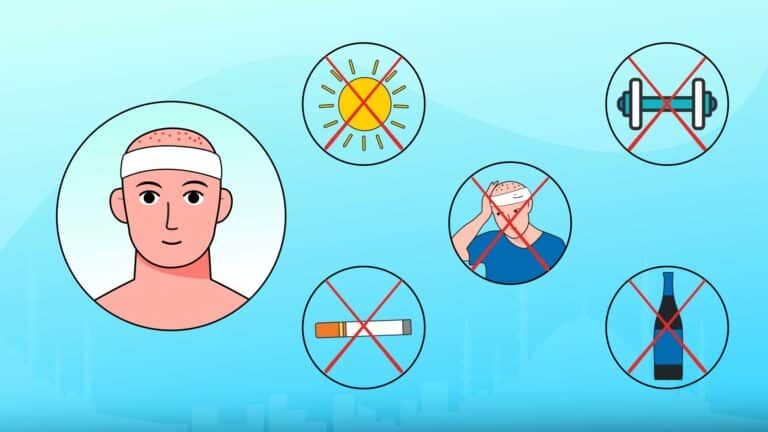
By Prof. Dr. Soner Tatlıdede · October 2026 Congratulations on completing your hair transplant. While the surgical part is finished, the success of your restoration now depends heavily on the recovery phase. In our clinical experience, the first two weeks post-surgery are just as critical as the procedure itself. Understanding what to avoid after a hair transplant […]
Scalp psoriasis and seborrheic dermatitis are chronic inflammatory conditions that frequently cause discomfort, itching, redness, and scaling. For individuals experiencing hair thinning alongside these conditions, severe anxiety often arises regarding permanent follicle loss and the feasibility of hair restoration. A central concern among patients is whether undergoing a hair transplant while managing scalp psoriasis is […]


Thank you!
Your details have been successfully submitted. Thanks!