





Hair transplant: Before and after photos
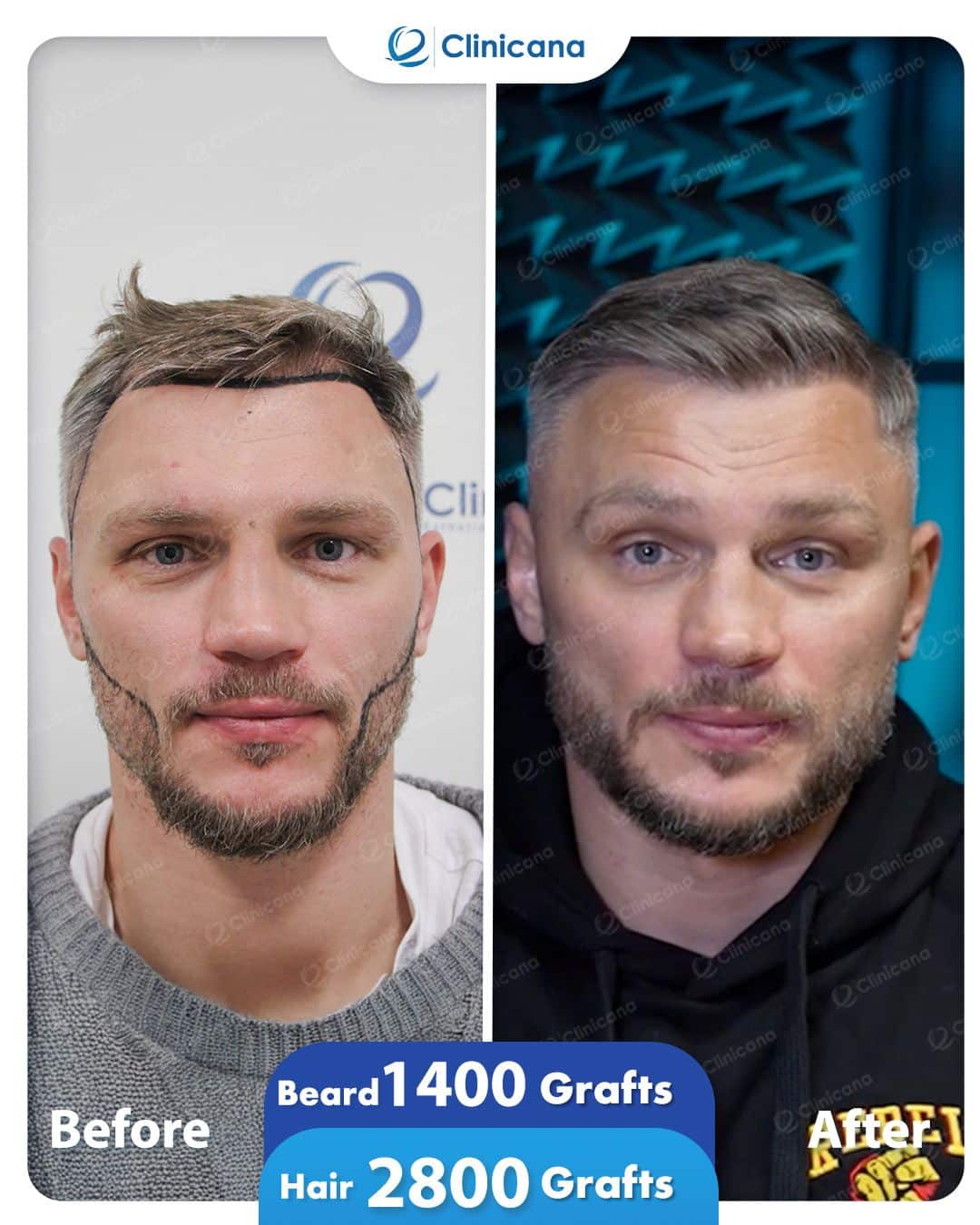
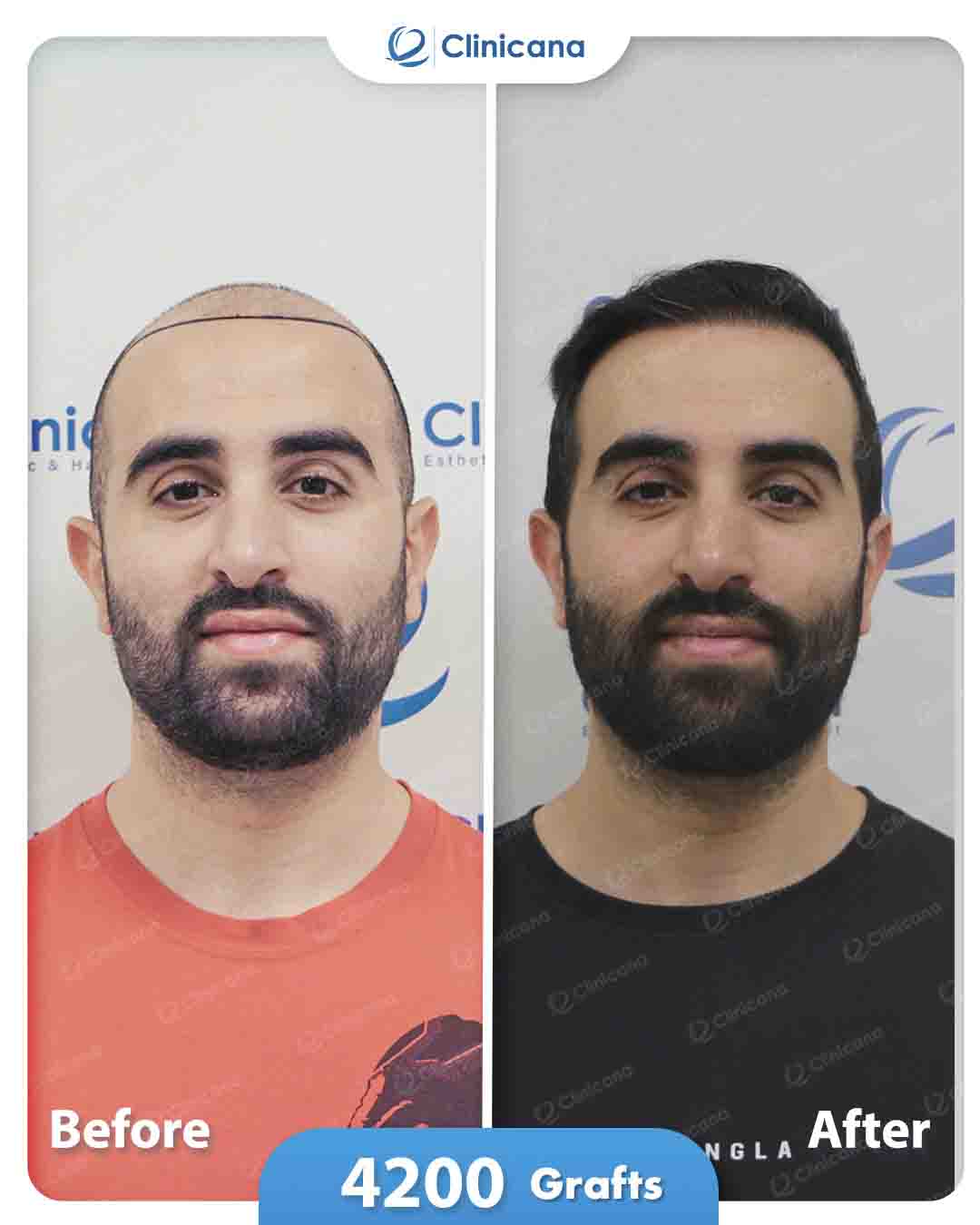
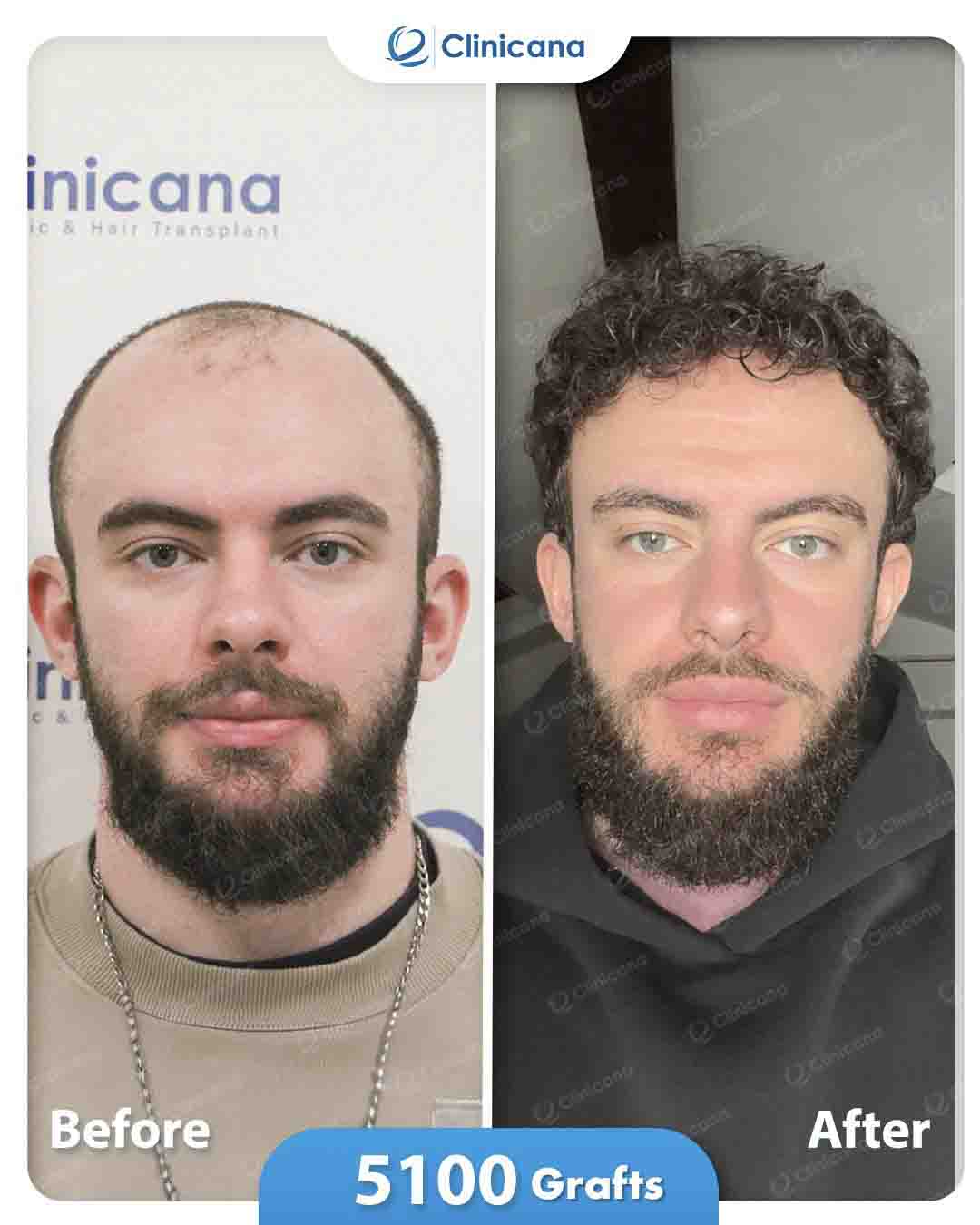
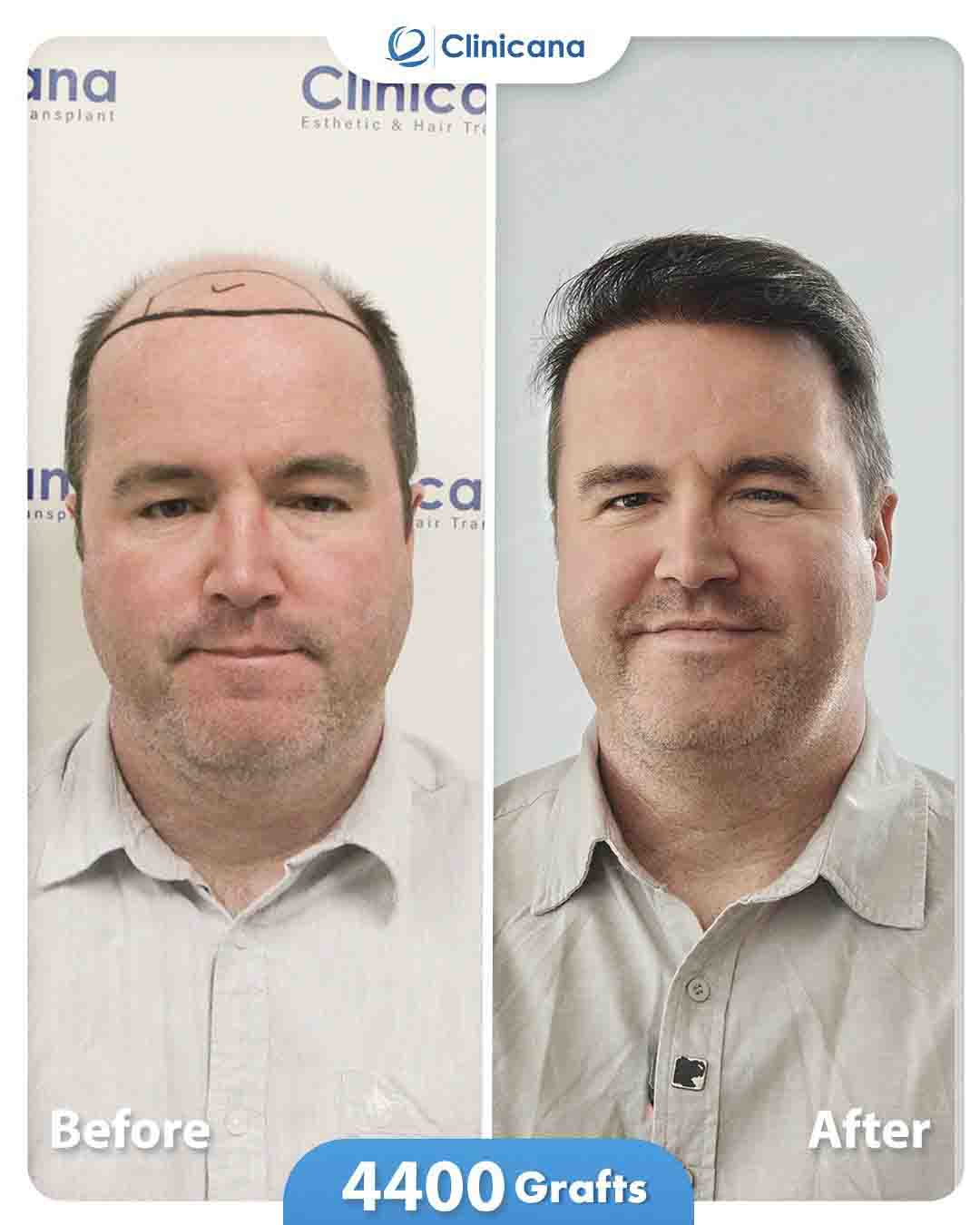
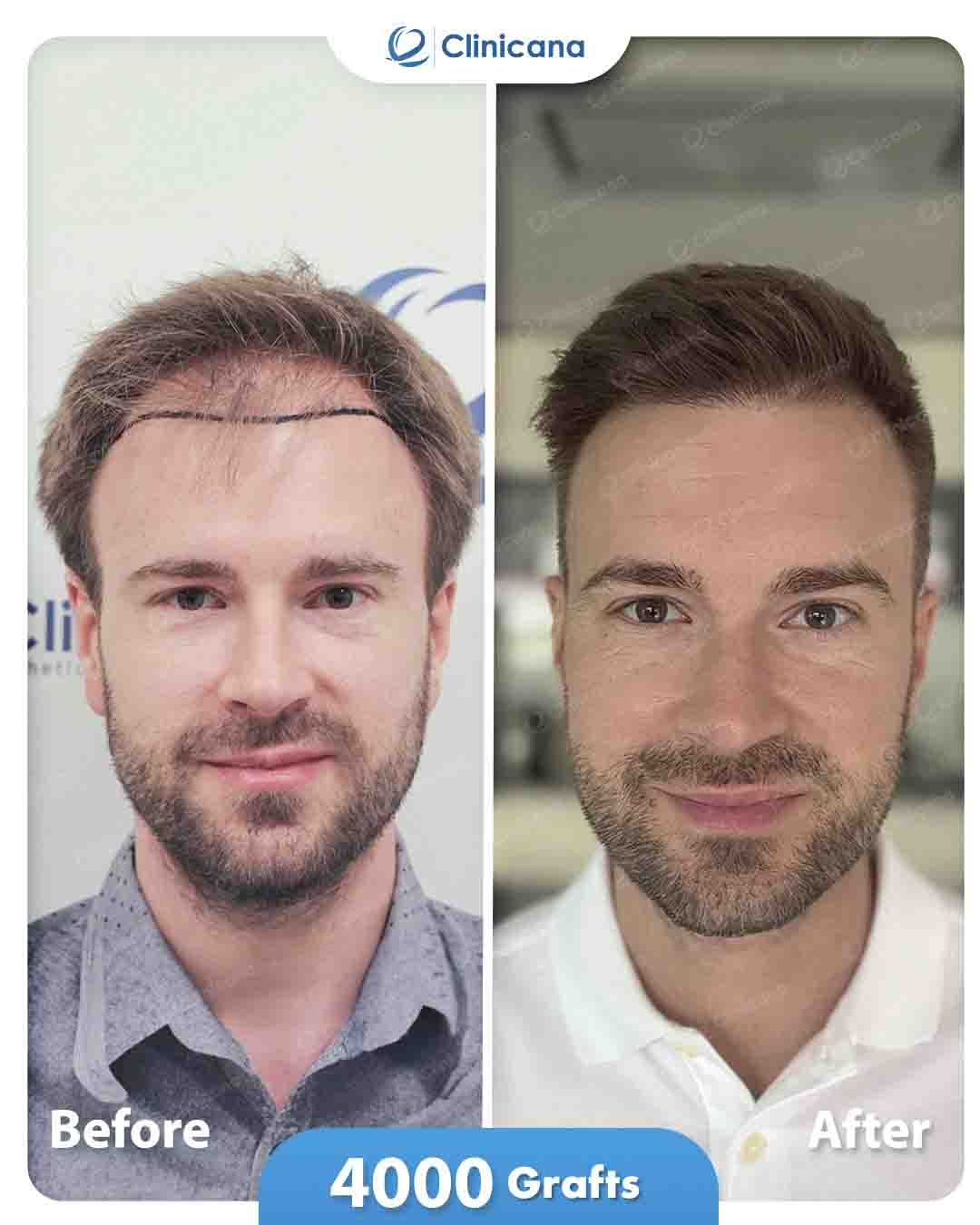
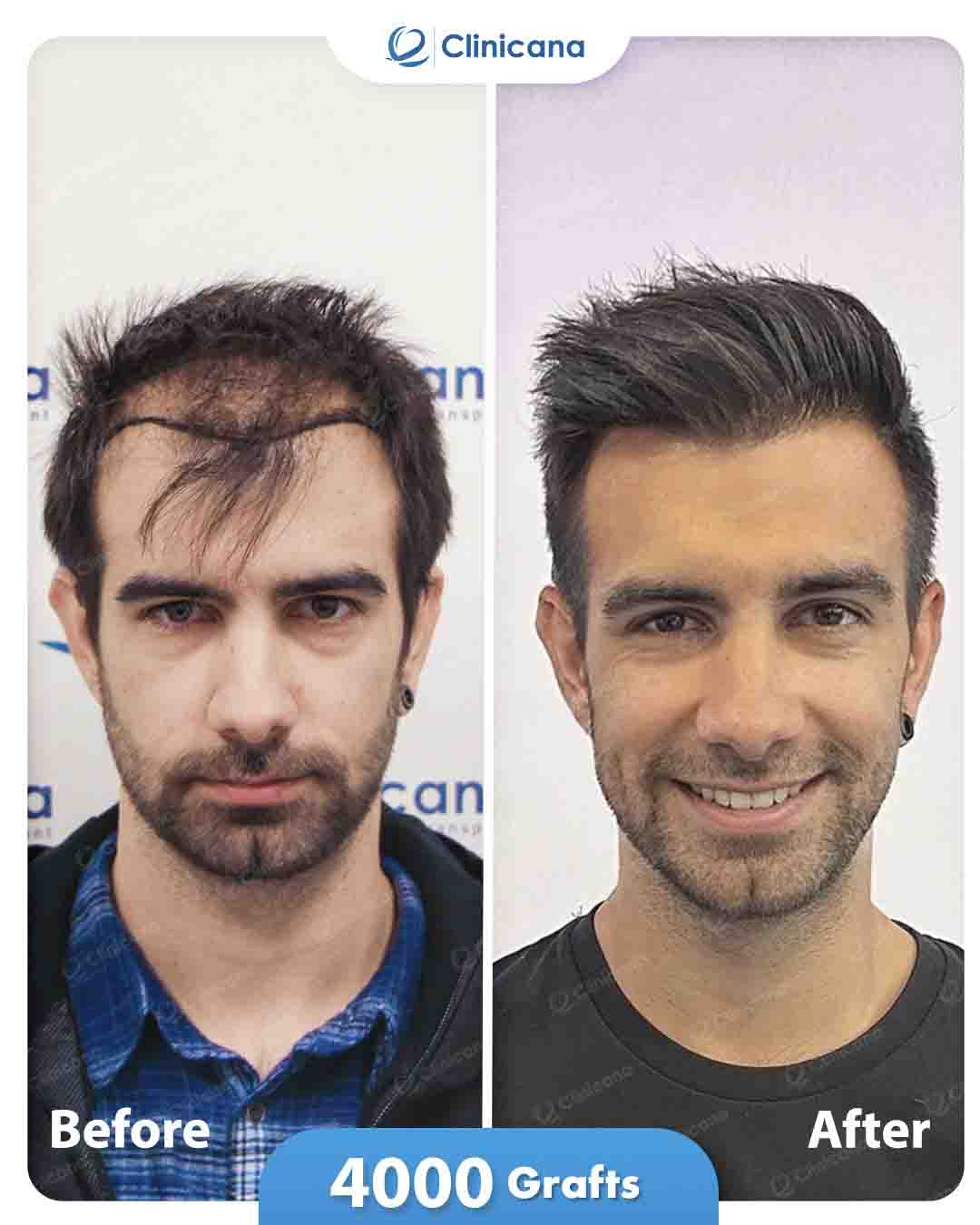
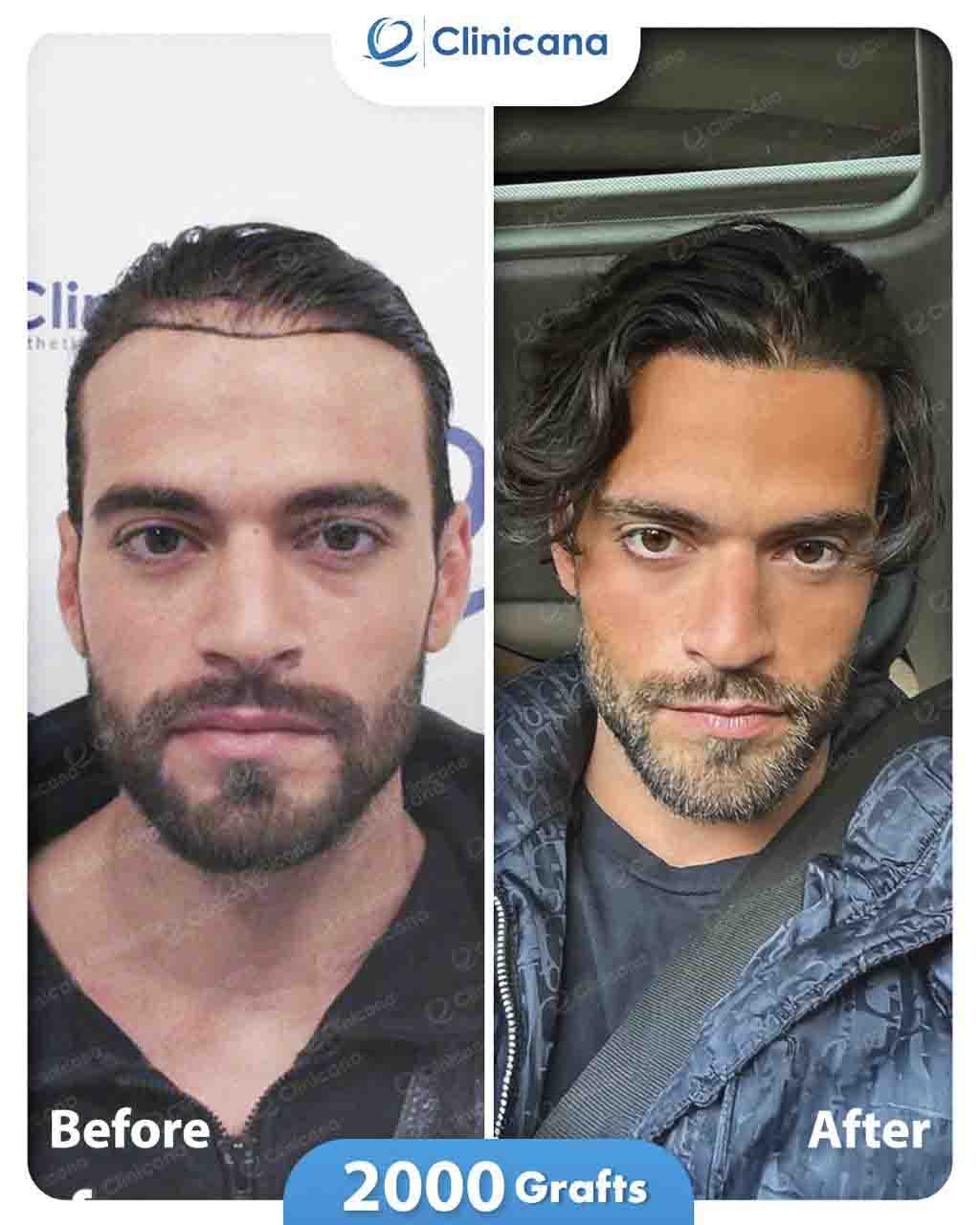
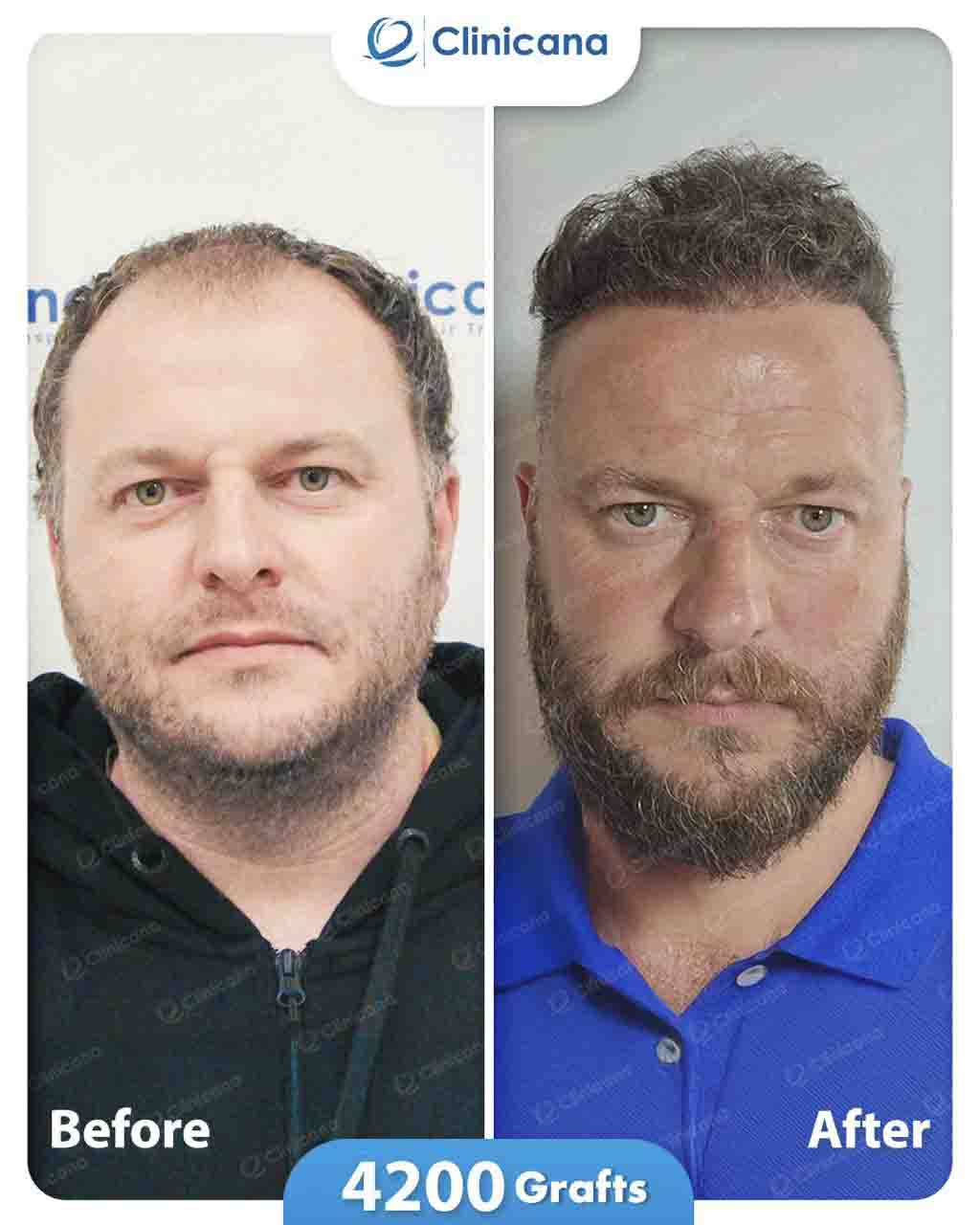
It´s important to see a hair transplant before and after the procedure to evaluate if this is going to be our choice to solve our alopecia problems.
Of course, each case and patient is different, but it´s a fact that usually only after seeing real results and experiences from other people, do we then make a final decision.
When we talk about hair loss problems, we think that the famous adage “A picture is worth a thousand words” is truer than ever, because usually real photos of real patients are the best proof of a successful treatment after coming to our clinic for a hair transplant in Turkey.
Therefore, we proudly show you on this page what a hair transplant looks like before and after passing through the hands of our skilled medical staff at Clinicana.
How to read hair transplant before and after photos
A before and after photo is only useful if you know what to look at. Density in a single dry, well-lit photo tells you very little. What tells you whether a hair transplant in Turkey has really worked is the design of the hairline, the direction of the hairs, the state of the donor area, and how the result changes month by month. The sections below explain what to check in any gallery, including ours.
A trustworthy before and after series has:
- The same lighting, angle and distance in every photo. Harsh overhead light makes thinning look worse, and soft side light makes density look better.
- At least one photo with wet or short hair, where poor density cannot be hidden.
- Month markers (1, 3, 6, 12 months), not just “before” and “after”.
- A close-up of the hairline, where you can see the grafts and their angles.
- A view of the crown and the donor area, not only the front.
Hair transplant results month by month
Most disappointment after a hair transplant comes from judging the result too early. Transplanted hair follows a predictable cycle, and the “after” photo only means something once that cycle has run its course.
| Time after surgery | What you will see |
|---|---|
| Days 1–10 | Small scabs over the recipient area, redness and some swelling, which peaks around day 3–4 and settles within about ten days. |
| Weeks 2–12 | Shock loss: most of the transplanted hair shafts fall out. The follicles stay under the skin. This is normal and expected. |
| Months 3–6 | New hair starts to grow, fine and soft at first. |
| Months 6–9 | The change becomes visible to other people. The hair is still finer than it will be. |
| Month 12 | Most of the final result is in place. Hairs have thickened and the hairline is defined. |
| Months 12–18 | Final maturation: remaining density fills in and hair calibre improves. This is the point at which a result, or the need for a second session, should be judged. |
If a before and after comparison uses a photo taken at three or four months, it is showing an unfinished result, in either direction.
What a good hair transplant result looks like
These are the details surgeons look at when they judge another surgeon’s work. They matter more than raw density.
| What to check | Good result | Poor result |
|---|---|---|
| Hairline shape | Slightly irregular, with small natural peaks and gaps | A perfectly straight, drawn-on line |
| Front edge of the hairline | Single-hair grafts only, with thicker grafts placed behind | Two- and three-hair grafts right at the edge (“pluggy” look) |
| Hair direction | Angles vary: forward at the hairline, flatter at the temples, a swirl at the crown | Every hair at the same angle |
| Temples | Recession appropriate to the patient’s age | A hairline that runs straight across the temples |
| Density | Graduated, denser just behind the hairline | The same density from front to back |
| Donor area | Tiny dot scars that are invisible unless the head is shaved very short | Visible white dots, thinning or a “moth-eaten” look |
What a poor result looks like
Repair cases that come to a surgeon after a hair transplant elsewhere tend to fall into a few patterns:
- Wrong angle. Hair grows backward or straight up. It can look acceptable combed forward and artificial when wet or short.
- Pluggy hairline. Multi-hair grafts at the front create an unnaturally dense, doll-like edge.
- Low density. The grafts were placed but too few survived, often because they spent too long outside the body.
- Unnatural hairline design. A straight line with no temple recession, the clearest sign that someone has had a transplant.
- Visible donor scarring. Usually caused by punches that are too large or by uneven extraction.
- Over-harvested donor area. Too many grafts taken from one zone leaves the back of the head thin and nothing in reserve for the future. This is the hardest problem to fix.
How to check that before and after photos are genuine
- Reverse image search. Upload the photo to Google Images. If the same patient appears on several clinics’ websites, it is not that clinic’s work.
- Ask for a short video. A patient turning their head under normal light is much harder to fake than a still photo.
- Ask for the original files. Original photos keep their date and camera data. Check that the dates match the timeline the clinic claims.
- Speak to a former patient. A clinic confident in its results can put you in touch with people it has treated.
- Compare with independent reviews. Reviews written by patients on an independent platform should tell the same story as the gallery. You can read ours on our patient reviews page.
Why results differ from one patient to another
Two patients with the same pattern of hair loss, the same technique and the same surgeon can still end up with different results. The main reasons are:
- Donor area. How many grafts can safely be taken depends on the density and size of your donor zone. We transplant as many grafts as your donor area can safely provide, rather than promising a fixed number it may not be able to deliver.
- Hair calibre and colour. Thick hair, and hair close to your skin tone, gives more visual coverage per graft.
- Scalp laxity. A tight scalp makes extraction harder.
- Smoking and general health. Smoking and poorly controlled chronic conditions slow healing and reduce graft survival.
- Aftercare. How you sleep, wash and protect the scalp in the first two weeks affects how many grafts survive.
- Ongoing hair loss. Pattern hair loss continues around the transplanted area, so the plan has to allow for how your hair will look in ten years, not just at twelve months.
To see how the techniques in these photos differ, read our guide to hair transplant techniques. For what a procedure costs and what each package includes, see our hair transplant prices in Turkey. If you would like your own case assessed from photos, send them to our medical team.

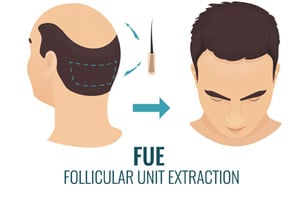
Medical Review by: Prof. Dr. Soner Tatlıdede – September 2026 Modern Hair Restoration Meets Surgical Precision Deciding to undergo hair restoration is a transformative step toward regaining self-confidence, hair density, and a youthful appearance. Over the past two decades, technological advancements have transformed hair transplantation from an aggressive surgical procedure into a refined, minimally invasive micro-surgical art. Today, […]

Medical Review by: Prof. Dr. Soner Tatlıdede – September 2026 Androgenetic alopecia (genetic male pattern baldness) is primarily driven by the hormone dihydrotestosterone (DHT), a potent byproduct of testosterone. The conversion of systemic testosterone into DHT occurs locally within tissue microenvironments via the action of the enzyme 5-alpha reductase (5-AR). When DHT binds to androgen receptors located in […]
Medical Review by: Prof. Dr. Soner Tatlıdede – September 2026 Biotin, historically known as Vitamin B7 or Vitamin H, serves as an essential coenzyme for five key carboxylase enzymes (ACC1, ACC2, PC, PCC, and MCC) within human cellular mitochondria. These carboxylases are responsible for catalyzed carboxylation reactions crucial for fatty acid synthesis, gluconeogenesis, and the catabolism of branched-chain […]

Thank you!
Your details have been successfully submitted. Thanks!