


Baking Soda for Gray Hair: What It Does and Is It Safe?
Medically reviewed by Prof. Dr. Soner Tatlıdede, Hair Transplant Surgeon — 22+ years, 18,947 procedures · September 2026
Baking soda does not reverse or prevent gray hair. It can strip oil and product build-up, and it may slightly fade hair dye or toner, but it is strongly alkaline, and regular use can leave hair dry, rough and more prone to breakage. Here is what baking soda actually does to gray hair and what works better.
What does baking soda do to gray hair?
- It does not bring colour back. Hair turns gray because the pigment cells in the hair follicle, under the skin, gradually stop producing melanin. Nothing applied to the hair shaft can restart them.
- It removes build-up. Baking soda is mildly abrasive and alkaline, so it lifts oil, residue and hard-water deposits. This can make gray hair look brighter for a while if it had turned dull or yellowish from build-up.
- It can fade colour. On dyed or toned hair, baking soda may lighten the colour slightly, which is why it is sometimes used to fade a dye that came out too dark. The effect is uneven and unpredictable.
- It roughens the hair. Gray hair is often already coarser and drier, so it is especially likely to feel wiry and frizzy after an alkaline wash.
Does baking soda damage hair?
It can. A baking soda solution has a pH of around 9, while the scalp and hair are mildly acidic, at around pH 5.5 and lower. Alkaline products raise the outer cuticle layer of the hair, increase friction between strands and make hair more likely to tangle, frizz and break. Used on the scalp, it can also cause dryness and irritation, especially on sensitive skin. An occasional clarifying wash is unlikely to cause lasting harm, but using baking soda as a regular shampoo replacement is not recommended.
Can baking soda help with hair loss or dandruff?
No. There is no evidence that baking soda makes hair grow or slows hair loss, and it does not treat the causes of dandruff. For dandruff, shampoos containing ketoconazole, zinc pyrithione, selenium sulfide or salicylic acid have much better evidence.
Better options for gray hair
- For brassiness or dullness: a purple or silver shampoo once a week, plus a sulfate-free clarifying shampoo occasionally for build-up.
- For dryness: a conditioner or leave-in suited to coarse hair, and heat protection when styling.
- For coverage: semi-permanent or permanent hair colour, or gray-blending services.
- If you are also thinning: see how to disguise thinning hair, and get persistent hair loss checked, as it has different causes from graying.
Frequently asked questions
Can baking soda turn gray hair back to its natural colour?
No. Gray hair lacks pigment from the root, and baking soda cannot restore it.
Will baking soda make gray hair whiter?
It may make gray hair look brighter briefly by removing build-up, but it does not bleach it, and repeated use can make it look dull and frizzy.
How often can I wash my hair with baking soda?
If you use it at all, keep it to an occasional clarifying wash, dilute it well, and follow with an acidic conditioner. A proper clarifying shampoo is gentler and more predictable.


By Prof. Dr. Soner Tatlıdede · October 2026 When can you cut your hair after a hair transplant? Hair in the donor area can be trimmed after 1 month using scissors or clippers. As for the recipient area, trimming only the ends of the hair using scissors is permitted after 2 months. However, you must wait at […]
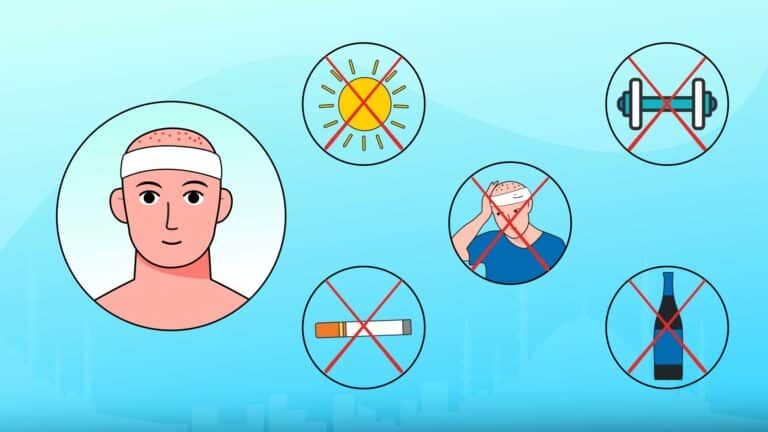
By Prof. Dr. Soner Tatlıdede · October 2026 Congratulations on completing your hair transplant. While the surgical part is finished, the success of your restoration now depends heavily on the recovery phase. In our clinical experience, the first two weeks post-surgery are just as critical as the procedure itself. Understanding what to avoid after a hair transplant […]
Scalp psoriasis and seborrheic dermatitis are chronic inflammatory conditions that frequently cause discomfort, itching, redness, and scaling. For individuals experiencing hair thinning alongside these conditions, severe anxiety often arises regarding permanent follicle loss and the feasibility of hair restoration. A central concern among patients is whether undergoing a hair transplant while managing scalp psoriasis is […]


Thank you!
Your details have been successfully submitted. Thanks!