


Can Diabetes Cause Hair Loss? Causes, Signs and Treatment

Medically reviewed by Prof. Dr. Soner Tatlıdede, Hair Transplant Surgeon — 22+ years, 18,947 procedures · September 2026
Yes, diabetes can cause hair loss, both directly and through conditions that often come with it. High blood sugar can affect the small blood vessels that feed hair follicles, disrupt the hair growth cycle and slow healing, and people with diabetes are more likely to have some other conditions that cause hair loss. The good news is that much of it improves once blood sugar is under control. This guide explains the links, the patterns to look for, what helps, and whether a hair transplant is possible if you have diabetes.
Does diabetes cause hair loss?
Diabetes is not the most common cause of hair loss, but it is a recognised contributor. Hair loss linked to diabetes usually develops gradually as thinning across the scalp, rather than as sudden baldness. It can also make other types of hair loss, such as pattern hair loss, progress faster or show earlier.
Research supports the link. In a large US study that followed more than 5,000 African American women, those with type 2 diabetes were significantly more likely to develop severe hair loss on the central scalp, and the risk was higher in women who had had diabetes for ten years or more.
Why does diabetes cause hair loss?
1. Reduced blood flow to the follicles
Over time, high blood sugar damages small blood vessels. Hair follicles are very active tissue and depend on a good blood supply for oxygen and nutrients. When that supply is reduced, hairs can grow more slowly and become thinner. Poor circulation is also why some people with diabetes notice less hair on their lower legs and feet, which can be a sign of peripheral artery disease and is worth mentioning to your doctor.
2. Disruption of the hair growth cycle
Hair grows in cycles: a long growth phase, a short transition, and a resting phase before the hair falls out. Uncontrolled blood sugar, illness and physical stress can push more hairs into the resting phase at once, causing diffuse shedding a few months later. This is called telogen effluvium and is usually temporary once the trigger is dealt with.
3. Insulin resistance and hormones
Insulin resistance, which underlies type 2 diabetes, has been associated with androgenetic (pattern) hair loss in both men and women. It does not cause pattern hair loss on its own, but it may make it appear earlier or progress faster in people who are genetically prone to it.
4. Autoimmune conditions
Type 1 diabetes is an autoimmune disease, and people with one autoimmune condition are more likely to develop others. These include alopecia areata, which causes round, smooth bald patches, and autoimmune thyroid disease, which can cause diffuse thinning.
5. Slower healing and scalp infections
Diabetes slows wound healing and makes skin infections, including fungal infections of the scalp, more likely. Untreated scalp infections can lead to hair loss in the affected area.
6. Medications and nutrition
Metformin is not considered a common cause of hair loss, but long-term use can lower vitamin B12 levels, so your doctor may check them. Restrictive diets aimed at weight loss or blood-sugar control can also leave you short of protein, iron or other nutrients that hair needs.
Type 1 vs type 2 diabetes and hair loss
| Type 1 diabetes | Type 2 diabetes | |
|---|---|---|
| Main links to hair loss | Associated autoimmune conditions (alopecia areata, thyroid disease); shedding during periods of poor control | Insulin resistance, small-vessel damage, shedding during poor control |
| Typical pattern | Diffuse shedding; round bald patches if alopecia areata is present | Gradual diffuse thinning; pattern hair loss may progress faster |
| Worth checking | Thyroid function | Blood sugar control, iron, vitamin B12 if on metformin |
Is hair loss a sign of diabetes?
Hair loss on its own is not a reliable sign of diabetes, since there are many more common causes. But if thinning comes with other symptoms such as increased thirst, frequent urination, tiredness, blurred vision, slow-healing cuts or unexplained weight loss, see your doctor and ask for a blood sugar test.
Is diabetic hair loss reversible?
Often, yes. Shedding caused by poor blood sugar control or illness usually improves once diabetes is well managed, although regrowth takes months because hair grows slowly. Hair loss from pattern hair loss or scarring is different: pattern hair loss is progressive and needs its own treatment, and hair lost to scarring does not grow back on its own.
What helps with diabetes-related hair loss?
- Get blood sugar under control. This is the foundation. Work with your doctor on diet, activity and medication.
- Check for other causes. Ask about thyroid function, iron (ferritin), vitamin D and vitamin B12, especially if you have been on metformin for a long time.
- Eat enough protein and nutrients. Avoid very restrictive diets. Supplements help only if you are deficient; see vitamins for hair growth.
- Treat the type of hair loss you have. Topical minoxidil is widely used for pattern hair loss, and alopecia areata has its own treatments. A dermatologist can confirm which type you have.
- Look after your scalp. Use gentle products and get any itching, flaking or sores checked early.
Discuss any hair-loss medication with the doctor who manages your diabetes, particularly oral medications, so they fit with your other treatment.
Can you have a hair transplant if you have diabetes?
Many people with diabetes can have a hair transplant safely, as long as their diabetes is well controlled. Diabetes affects healing and infection risk, so it matters more than the hair loss itself when planning surgery. Before a FUE hair transplant, expect your surgeon to ask for recent blood tests, including HbA1c, and a full list of your medications, and to coordinate with the doctor who manages your diabetes. Being operated on in a hospital setting, such as Acıbadem Taksim Hospital where we work, adds a further layer of safety.
A transplant is only worth considering for permanent hair loss such as pattern hair loss. It is not a solution for shedding caused by poorly controlled diabetes, which should first be treated medically.
Frequently asked questions
Can type 2 diabetes cause sudden hair loss?
It can trigger a period of heavier shedding (telogen effluvium), for example after a spell of very high blood sugar or illness. This typically shows up a few months later and settles once the trigger is under control.
Is diabetic hair loss permanent?
Usually not. Shedding linked to blood sugar tends to improve with good control. Pattern hair loss or scarring hair loss that occurs alongside diabetes may be permanent and needs separate treatment.
Does metformin cause hair loss?
Metformin is not a common cause of hair loss. Long-term use can reduce vitamin B12 levels, which your doctor can check.
Can diabetes cause hair loss in women?
Yes. Women with diabetes can have the same types of hair loss as men, and insulin resistance is also linked with conditions such as polycystic ovary syndrome, which can cause thinning.
Is minoxidil safe for people with diabetes?
Topical minoxidil is widely used and diabetes on its own is not usually a reason to avoid it, but check with your doctor, especially if you have heart or blood pressure problems or are considering oral minoxidil.
Edited by Team Clinicana · Last reviewed on
Medical sources and references
- American Diabetes Association Professional Practice Committee. Standards of Care in Diabetes. American Diabetes Association. 2026.
- Coogan PF, et al. Association of Type 2 Diabetes with Central-Scalp Hair Loss in a Large Cohort Study of African American Women. International Journal of Women’s Dermatology. 2019.
- Lu Y, et al. Vascular Complications of Diabetes: A Narrative Review. Journal of Clinical Medicine. 2023.
- Hughes EC, Syed HA, Saleh D. Telogen Effluvium. StatPearls / NCBI Bookshelf. 2024.
- Ho CH, Sood T, Zito PM. Androgenetic Alopecia. StatPearls / NCBI Bookshelf. 2024.
- Popoviciu MS, et al. Type 1 Diabetes Mellitus and Autoimmune Diseases: A Critical Review. Journal of Personalized Medicine. 2023.
- National Alopecia Areata Foundation. Related Conditions: Alopecia Areata.
- Aboalola D, et al. An Update on Alopecia and Its Association With Thyroid Autoimmune Diseases. Cureus. 2023.
- Almohanna HM, et al. The Role of Vitamins and Minerals in Hair Loss: A Review. Dermatology and Therapy. 2019.


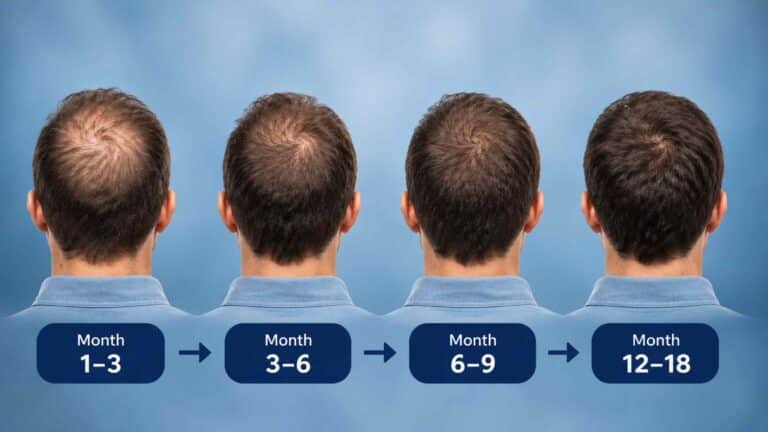
Medical Review by: Prof. Dr. Soner Tatlıdede – September 2026 Quick Summary: Crown Hair Transplant Growth Timeline Month-by-Month Timeline Stage Expected Growth & Hair Recovery Progress 0–2 Weeks Redness, scabbing, and temporary shock loss (shedding of transplanted hair). 2–4 Months Dormant phase ends; initial fine hair begins emerging from the scalp. 5–9 Months Considerable visible growth and […]

Medical Review by: Prof. Dr. Soner Tatlıdede – September 2026 Hair transplant costs in Turkey are up to 70% lower than in the US, UK, and Gulf region due to state healthcare subsidies, favorable economic exchange rates, lower operational overhead, and a specialized surgical infrastructure. However, low pricing carries risks: illegitimate “hair mills” operating around €1,350–€1,750 often […]

Medical Review by: Prof. Dr. Soner Tatlıdede – September 2026 17-Alpha Estradiol (commercially known as Alfatradiol or Pantostin) is a topically applied stereoisomer of the female sex hormone 17-Beta Estradiol. Unlike its systemic isomer, 17-Alpha Estradiol exhibits minimal systemic estrogenic activity (approximately 1/100th of the binding affinity to classical estrogen receptors). When applied topically to the scalp […]


Thank you!
Your details have been successfully submitted. Thanks!