


Golden Rules for the First 14 Days After Hair Transplant: Step-by-Step Recovery Guide
By Prof. Dr. Soner Tatlıdede · July 2026
A successful hair transplant surgery represents only half the journey toward restoring your full hair and achieving a natural appearance; the other critical half depends entirely on how you care for your scalp and transplanted grafts during the first 14 days post-procedure.
These first two weeks are the most sensitive and important phase in the entire recovery process. During this time, the newly implanted microscopic grafts are like delicate seedlings requiring a stable environment and meticulous care to anchor into deep blood vessels and achieve permanent mechanical stability within the skin.
This comprehensive guide from Clinicana highlights the golden rules and precise medical protocols to follow day by day during the first two weeks, serving as a safe and reassuring roadmap to protect your aesthetic investment and ensure highest success rates.
First: Recovery Timeline During the First 14 Days
To avoid anxiety regarding natural changes on the scalp, it is essential to understand the biological phases your hair grafts and skin undergo during the initial days:
- Days 1 to 3: Initial Stabilization and Coagulation
- Nature of Phase: Grafts are at peak sensitivity. Micro-incisions are surrounded by light plasma fluids mixed with residual anesthesia.
- Medical Goal: Keep the head completely dry; avoid touching, scratching, or applying external pressure to allow grafts to settle and coagulate safely within channels.
- Days 4 to 9: Tissue Healing and Scab Formation
- Nature of Phase: Skin around grafts begins closing, and small dry scabs form around transplanted hair shafts. Light itching may occur due to tissue regeneration and fluid drainage.
- Medical Goal: Begin regular daily washing protocol to moisturize the scalp and soften scabs without forcibly picking them.
- Days 10 to 14: Scab Shedding and Graft Securement
- Nature of Phase: Scabs become hard and ready to fall off. By day 14, grafts are fully anchored to deep tissue with permanent stability.
- Medical Goal: Gently shed all scabs using fingertip massage to clean the scalp and allow skin breathing.
Second: Golden Rules for Physical Protection and Safe Sleep
Your movements and sleeping posture during early days directly influence preventing graft dislodgement or facial swelling:
- Approved Sleeping Protocol (First 7 to 10 Days)
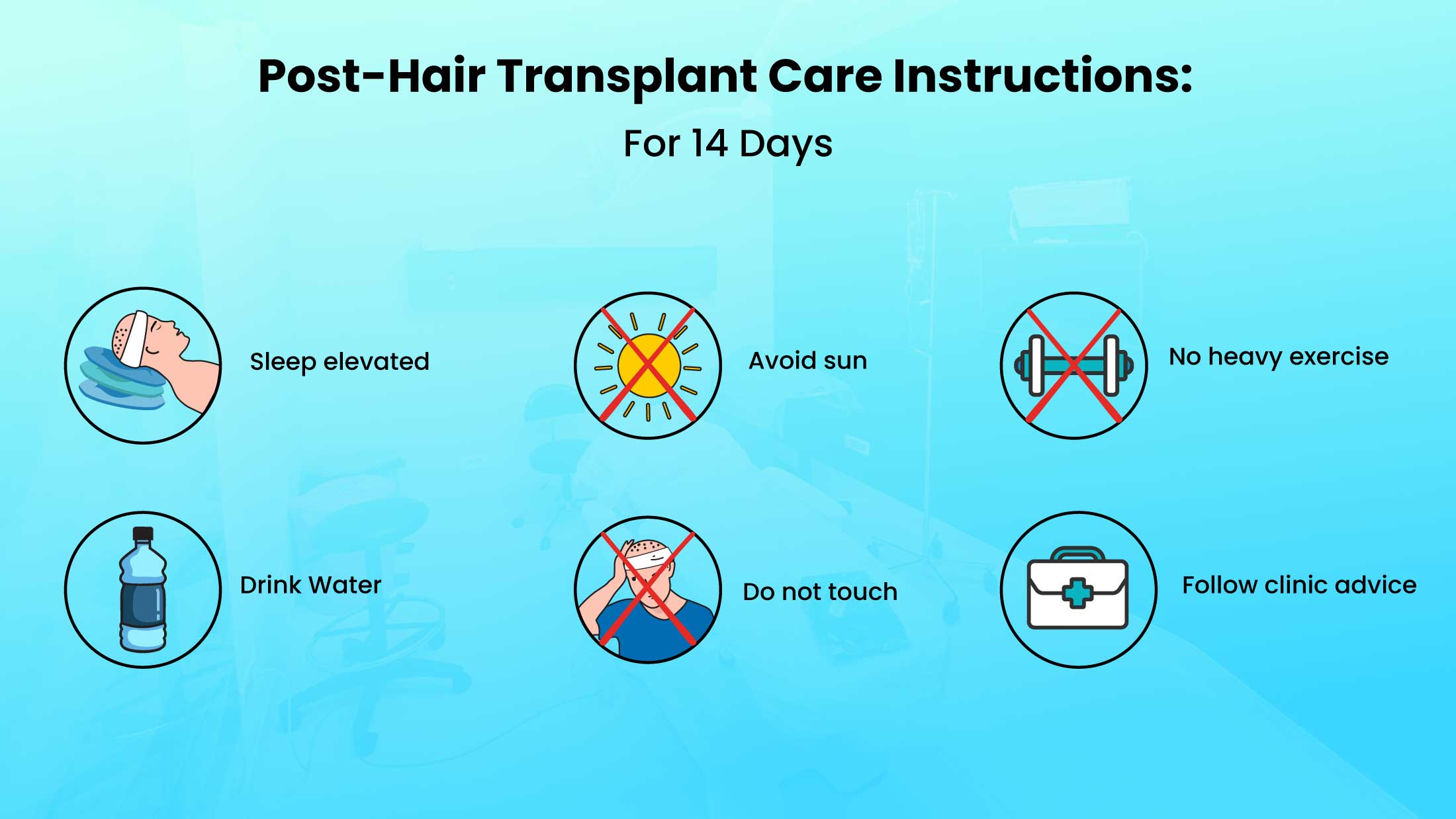
- Position: Sleep exclusively on your back, keeping your head and upper body elevated at a 45-degree angle.
- Medical Neck Pillow: Use a travel neck pillow to stabilize your head and prevent turning during sleep, avoiding friction between transplanted grafts and bedding.
- Managing Swelling and Forehead Protection
- Light swelling on the forehead and around eyes may appear between days 2 and 4 due to descending anesthetic fluids.
- Prevention: Avoid bending forward or lowering your head while reading or using phones. Keep your head upright, and apply cold compresses strictly to the forehead (never touching transplanted areas).
Third: Daily Washing Protocol and Scalp Care (Days 3 to 14)
Starting from day 3, scalp cleansing becomes an essential daily therapeutic routine using approved clinic products:
- Moisturizing Lotion Application: Apply moisturizing lotion to recipient and donor areas gently by dabbing with fingertips—never rubbing. Leave for 30–45 minutes to soften scabs.
- Safe Rinsing: Rinse lotion with lukewarm/cool water poured gently using a cup; avoid direct high-pressure shower spray on the head.
- Medical Shampoo Cleansing: Create rich foam between hands using chemical-free post-op shampoo. Apply foam vertically with light tapping pressure, then rinse softly.
- Drying and Scab Removal: Pat dry gently with soft paper towels. Starting day 10, perform gentle circular fingertip massage during washing to shed all dry scabs by day 14.
Fourth: Strict Prohibitions During the First Two Weeks
To protect graft survival and prevent infection or bleeding, strictly avoid the following during the first 14 days:
- Physical Exertion and Sports: Avoid heavy exercise, weightlifting, or activities causing heavy sweating and blood pressure spikes. Sweat creates bacterial breeding grounds and weakens root anchoring.
- Direct Sun Exposure: UV rays irritate healing skin and cause permanent hyperpigmentation. Stay in shade or wear a loose, breathable cap when outdoors.
- Smoking and Alcohol: Nicotine constricts micro-blood vessels, restricting oxygen delivery to grafts. Alcohol thins blood and increases bleeding risks. Refrain from both during early recovery.
- Tight Headwear: Avoid helmets, tight sports caps, or beanie hats that exert pressure on grafts.
- Chemical Products and Heat Styling: Do not use gels, hairsprays, hair dyes, or hot blow dryers during the first month.
Frequently Asked Questions
Is severe scalp itching normal during the first week?
Yes, itching indicates micro-wound healing and nerve recovery. Never scratch with nails. Use prescribed saline spray to soothe the scalp or consult your clinic for mild antihistamines.
What if a scab falls off with a small hair attached?
This is typically just the dried hair shaft shedding. As long as there is no active bleeding, the live hair follicle remains securely anchored deep in the skin.
When can I resume intimate activities safely?
Refrain from sexual activities for the first 7 to 10 days post-op to prevent blood pressure spikes that could dislodge fragile grafts.
Conclusion
Strict compliance with the golden rules for the first 14 days is the main differentiator between average and exceptional hair transplant results.
The first two weeks establish your permanent root foundation. Protecting them from trauma, pressure, and infection guarantees long-lasting hair growth.
Read More: How to Avoid Hair Transplant Failure? Comprehensive Procedural Guide to Ensure the Best Results
Edited by Clinicana Medical Team
Medically reviewed by Prof. Dr. Soner Tatlıdede, Board-Certified Hair Transplant Surgeon, ISHRS Member — 22+ years experience, ~18,000 procedures · July 2026
Academic & Medical References:
- National Library of Medicine (NCBI): Postoperative Management and Patient Compliance in Hair Transplantation.
- ScienceDirect: Graft Survival Dynamics and Post-Transplant Scalp Care Protocols.
- International Journal of Surgery (IJS): Surgical Quality Assurance and Patient Post-Op Guidelines in Medical Tourism.
- International Society of Hair Restoration Surgery (ISHRS): Official Post-Operative Care and Recovery Guidelines for Patients.

By Prof. Dr. Soner Tatlıdede · July 2026 A successful hair transplant surgery represents only half the journey toward restoring your full hair and achieving a natural appearance; the other critical half depends entirely on how you care for your scalp and transplanted grafts during the first 14 days post-procedure. These first two weeks are the most […]

By Prof. Dr. Soner Tatlıdede · July 2026 TL;DR: Does drinking water help hair growth? Yes, drinking water significantly supports hair growth by hydrating follicles, transporting nutrients, and maintaining the moisture content of hair strands (which are 25% water). However, water cannot cure genetic baldness. For permanent hair loss, medical solutions like hair transplants may […]
By Prof. Dr. Soner Tatlıdede · July 2026 TL;DR: Scabs after your hair transplant are normal and typically fall off within 10 days. They form due to fluid and blood from graft implantation. Don’t pick them—this risks infection and graft loss. Remove them gently starting day 7-10 using foam moisturizer and fingertip massage. Both recipient and donor […]


Thank you!
Your details have been successfully submitted. Thanks!