


Minoxidil for Hair Loss: Effectiveness, Shedding & Long-Term Side Effects
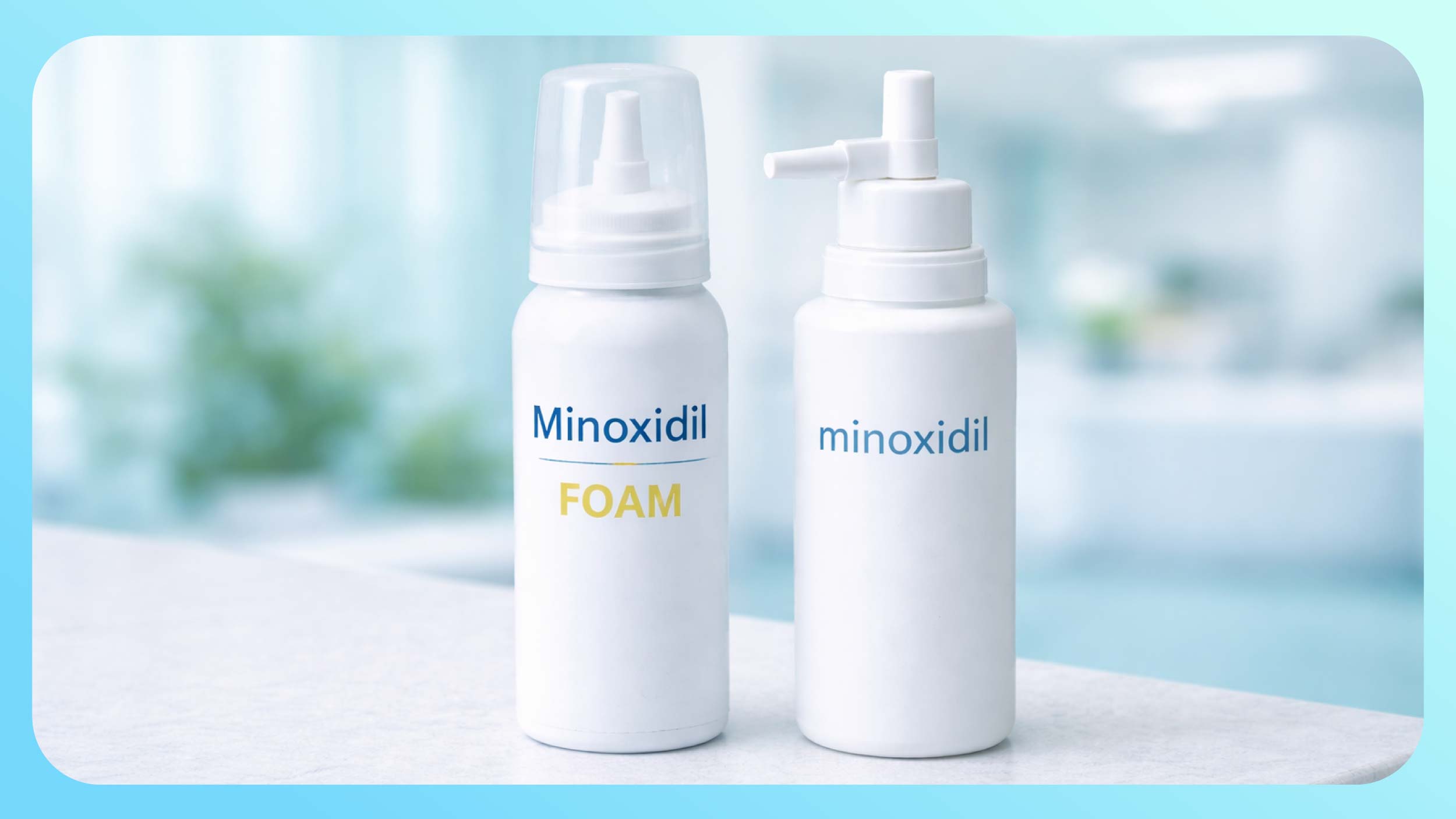
Medical Review by: Prof. Dr. Soner Tatlıdede – September 2026
What are the side effects of Minoxidil, and how does it work?
Minoxidil is a vascular vasodilator that stimulates hair follicles by opening ATP-sensitive potassium channels and enhancing scalp blood circulation.
Common side effects of topical formulations include localized skin irritation, mild flaking, redness, and a temporary hair shedding phase. Minoxidil does not alter systemic hormones or cause sexual dysfunction.
The Evolution of Minoxidil in Alopecia Therapy
Minoxidil holds a unique place in modern pharmacological history. Originally developed in the 1970s as an oral antihypertensive treatment for severe high blood pressure, clinicians soon observed an unexpected secondary effect among patients: generalized hypertrichosis (excessive hair growth).
Recognizing its medical potential for treating hair thinning, dermatological researchers adapted the compound for localized scalp application.
This led to FDA approval for topical minoxidil to manage male pattern baldness (5% concentration) and female pattern hair loss (2% solution). Today, it remains one of the most widely used over-the-counter pharmacological treatments for early-stage hair thinning worldwide.
However, understanding Minoxidil’s exact biochemical mechanism, its natural limitations, and the reality of long-term daily compliance is critical for patients seeking a permanent solution to hair loss.
Biochemical Mechanism of Action: How Minoxidil Stimulates Hair
Minoxidil does not generate brand-new hair follicles, nor does it inhibit Dihydrotestosterone (DHT)—the primary androgenic hormone responsible for pattern baldness. Instead, its therapeutic effects rely on localized vascular and cellular mechanisms:
- Potassium Channel Opening: Minoxidil acts as a potassium channel opener, causing hyperpolarization of smooth muscle cell membranes around arterial blood vessels.
- Vascular Diameter Expansion: This hyperpolarization dilates micro-vessels in the scalp, increasing cutaneous blood flow, oxygenation, and nutrient delivery directly to the dermal papilla.
- Anagen Phase Extension: By revitalizing miniaturized follicles, Minoxidil prematurely pushes resting follicles out of the Telogen (resting) phase and extends their active Anagen (growth) phase, leading to thicker hair shafts over time.
The Minoxidil Shedding Phase: Why Hair Loss Increases Initially
One of the most alarming experiences for new Minoxidil users is a sudden increase in hair shedding during the first 2 to 8 weeks of treatment. Known medically as the Minoxidil Shedding Phase, this reaction is frequently misunderstood.
Why Does Shedding Happen?
Minoxidil rapidly forces dormant, weak, and miniaturized telogen hairs to shed simultaneously so that the follicle can reset and enter a robust anagen growth phase.
Far from being a negative side effect or sign of treatment failure, early shedding is clinically recognized as a positive indicator that the hair follicle matrix is responding to vascular stimulation.
Topical vs. Oral Formulations & Side Effect Profile
While topical solutions (liquid or foam) remain the most common form of application, low-dose oral Minoxidil has gained clinical attention in recent years. Understanding the differences in efficacy and adverse risks is essential:
| Parameter / Adverse Effect | Topical Minoxidil (2% & 5% Solution/Foam) | Oral Minoxidil (Low-Dose Tablets) |
|---|---|---|
| Primary Mechanism | Direct localized cutaneous absorption on the scalp tissue. | Systemic absorption converted by liver sulfotransferase enzymes. |
| Scalp Irritation & Flaking | Common (often caused by Propylene Glycol in liquid forms). | Rare to none (bypasses epidermal contact completely). |
| Hypertrichosis (Unwanted Body Hair) | Low risk (localized mainly to face/forehead if run-off occurs). | Moderate to high (can stimulate body hair growth broadly). |
| Cardiovascular Symptoms | Extremely rare (minimal systemic absorption). | Possible lightheadedness, mild fluid retention, or postural hypotension. |
| Hormonal / Sexual Side Effects | None. Minoxidil does not affect testosterone or DHT. | None. Does not cause erectile dysfunction or libido loss. |
Medical Limitations: Minoxidil vs. FUE Hair Transplantation
While Minoxidil is an effective therapeutic tool for slowing down early-stage hair thinning, it has inherent clinical limitations that patients must understand:
- Lifetime Commitment Requirement: Minoxidil is a continuous management treatment, not a permanent cure. If treatment is stopped, the vasodilatory effect disappears, and all hair preserved or gained through the medication will shed within 3 to 4 months, returning the scalp to its natural genetic progression.
- Inability to Regenerate Dead Follicles: Minoxidil can only enlarge existing, miniaturized follicles. It cannot restore hair in completely bald areas where follicle roots have atrophied and been replaced by fibrous scar tissue.
- FUE as a Permanent Alternative: For individuals with advanced hair loss, receding hairlines, or those seeking a permanent solution without daily lifelong pharmacological dependence, surgical hair restoration via fue hair transplant turkey offers a definitive outcome using permanent, DHT-resistant follicles.
To better understand how Minoxidil compares with hormonal therapies or underlying systemic factors, read our medical overviews on finasteride vs dutasteride hair loss
Frequently Asked Questions (FAQ)
Does Minoxidil cause sexual side effects or erectile dysfunction?
No. Minoxidil is a vascular vasodilator and does not alter systemic male hormones like testosterone or Dihydrotestosterone (DHT). Sexual side effects are associated with hormonal inhibitors like Finasteride, not Minoxidil.
What happens if I stop using Minoxidil after several years?
Stopping Minoxidil causes the hair follicles to return to their original genetic state. Within 3 to 4 months, any hair maintained or gained through the medication will shed, and hair loss will resume its natural progression.
Can Minoxidil regrow hair on a completely bald hairline?
No. Minoxidil requires active, living hair follicles to work. It cannot revive completely dead or fibrous donor zones. For fully bald areas or receding hairlines, an FUE hair transplant is required.
Determining the Right Medical Path
Choosing between daily medical management, surgical restoration, or a combination of both requires an objective clinical assessment. At Clinicana Hair Transplant Center in Istanbul, under the medical supervision of Prof. Dr. Soner Tatlidede, our team analyzes your alopecia progression and donor capacity to design a tailored hair preservation strategy.
Academic References & Medical Sources
- Messenger, A. G., & Rundegren, J. (2004). Minoxidil: Mechanisms of action on hair growth. British Journal of Dermatology, 150(2), 186–194.
- Suchonwanit, P., Thammarucha, S., & Triwongwaranat, D. (2019). Minoxidil and its use in hair disorders: A review. Drug Design, Development and Therapy, 13, 2777–2786.
- Randolph, M., & Tosti, A. (2021). Oral minoxidil treatment for hair loss: A review of efficacy and safety. Journal of the American Academy of Dermatology, 84(3), 737–746.



Medical Review by: Prof. Dr. Soner Tatlıdede – September 2026 17-Alpha Estradiol (commercially known as Alfatradiol or Pantostin) is a topically applied stereoisomer of the female sex hormone 17-Beta Estradiol. Unlike its systemic isomer, 17-Alpha Estradiol exhibits minimal systemic estrogenic activity (approximately 1/100th of the binding affinity to classical estrogen receptors). When applied topically to the scalp […]

Medical Review by: Prof. Dr. Soner Tatlıdede – September 2026 Undergoing cancer treatment brings significant physical and emotional challenges. Among the various side effects, hair loss (alopecia) remains one of the most distressed symptoms for patients. However, a widespread misconception among patients and their families is that all cancer treatments affect hair growth in the exact same […]
Medical Review by: Prof. Dr. Soner Tatlıdede – September 2026 The Evolution of Minoxidil in Alopecia Therapy Minoxidil holds a unique place in modern pharmacological history. Originally developed in the 1970s as an oral antihypertensive treatment for severe high blood pressure, clinicians soon observed an unexpected secondary effect among patients: generalized hypertrichosis (excessive hair growth). Recognizing its medical […]


Thank you!
Your details have been successfully submitted. Thanks!