


Does Stress Cause Hair Loss? Biological Mechanisms, Telogen Effluvium, and Treatments
Medical Review by: Prof. Dr. Soner Tatlıdede – September 2026
Quick Summary (TL;DR)
Yes, physical or severe emotional stress directly triggers noticeable hair loss, primarily through a clinical condition known as Telogen Effluvium.
When body stress spikes, elevated cortisol levels and capillary constriction force a large percentage of active growing hair follicles (Anagen) prematurely into a resting phase (Telogen).
Because hair roots remain in this resting state for approximately 2 to 3 months before releasing the hair shaft, stress-induced shedding typically appears weeks or months after the stressful event occurred.
Telogen Effluvium is a non-scarring, temporary form of hair loss. Once stress levels normalize, nutritional gaps are filled, and targeted scalp therapies like Platelet-Rich Plasma (PRP) are applied, hair density usually recovers naturally.
However, severe stress can also accelerate underlying Androgenetic Alopecia (pattern baldness) in genetically predisposed individuals.
When permanent follicle miniaturization occurs due to Dihydrotestosterone (DHT), surgical restoration via Sapphire FUE or DHI techniques offers the ultimate medical solution.
The Biological Connection: How Stress Affects Hair Follicles
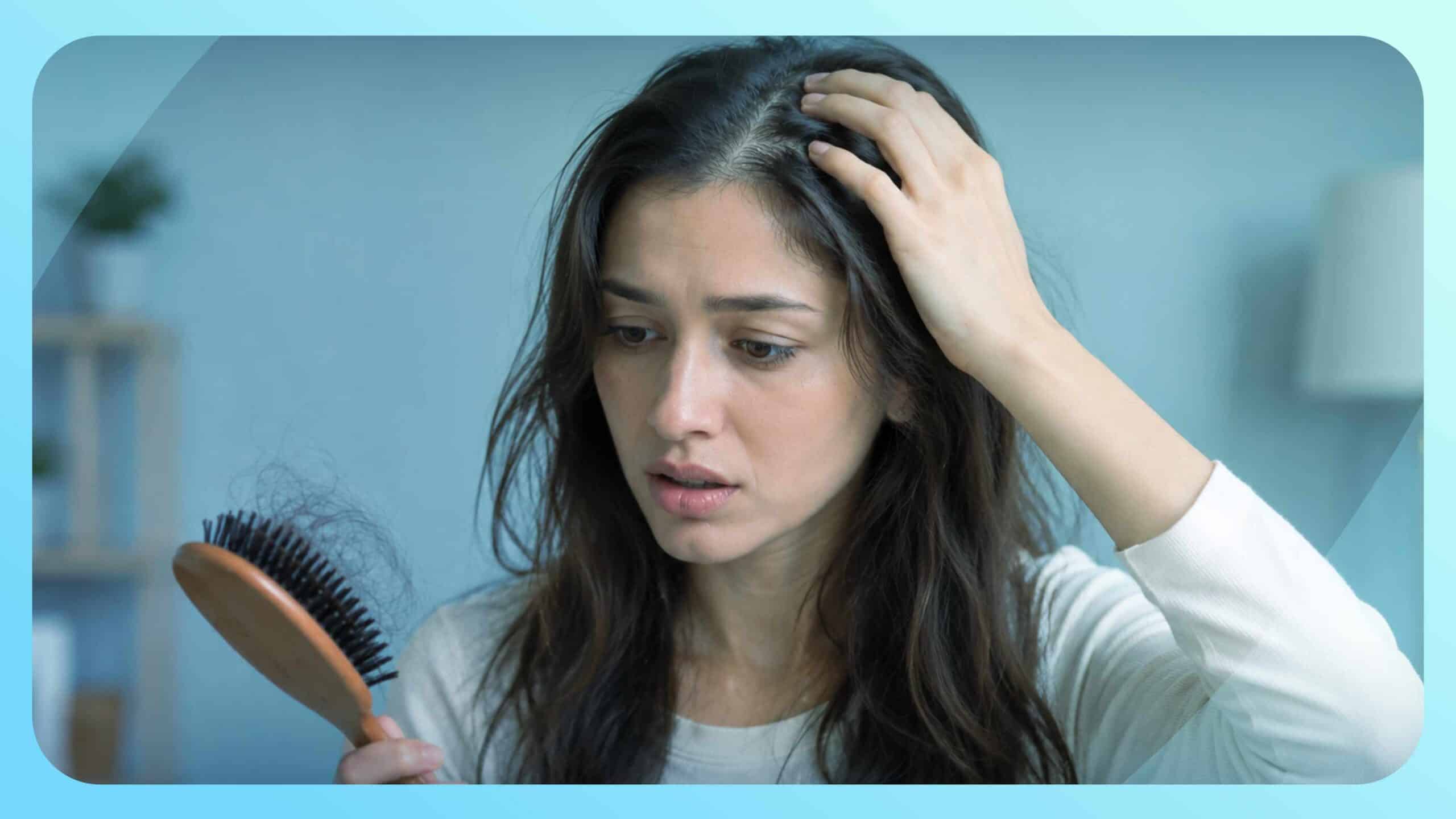
Experiencing a demanding life event, sudden emotional shock, or prolonged burnout often leads to an unexpected realization weeks later: Why am I losing so much hair all of a sudden?
To understand why emotional pressure impacts hair density, we must look at the physiological changes occurring beneath the scalp.
Hair growth is an energy-intensive metabolic process governed by precise hormonal signals and rich microvascular blood flow. Severe stress disrupts this delicate ecosystem through two primary biological pathways:
1. Systemic Cortisol Elevation and Follicle Stress
During periods of high physical or psychological stress, the adrenal glands flood the bloodstream with cortisol (the primary stress hormone) and adrenaline.
Elevated cortisol breaks down vital structural proteins, alters extracellular matrix components around hair roots, and degrades key glycosaminoglycans necessary for follicle anchorage.
2. Micro-Vascular Constriction and Nutrient Starvation
Acute anxiety triggers a fight-or-flight response, causing micro-vascular constriction across peripheral tissues, including the cutaneous layers of the scalp.
Reduced localized blood flow restricts the delivery of oxygen, essential amino acids, zinc, and iron to the dermal papilla—effectively starving the hair bulb and forcing the follicle to halt its growth cycle.
THE STRESS-INDUCED HAIR LOSS PATHWAY
The 3 Types of Stress-Related Hair Loss
Not all stress-induced hair loss manifests in the same way. Dermatologists classify stress-related shedding into three distinct clinical categories:
1. Telogen Effluvium (TE)
This is the most common form of stress hair loss. Under normal conditions, roughly 85% to 90% of your hair is in the active growth phase (Anagen), while 10% to 15% is in the resting phase (Telogen). Severe stress shifts up to 70% of growing follicles simultaneously into the resting phase.
2. Alopecia Areata
In individuals with specific genetic predispositions, acute stress can act as an autoimmune trigger. The body’s immune system mistakenly attacks healthy hair follicles, leading to sudden, rounded bald patches across the scalp or beard area.
3. Trichotillomania
This is an impulse-control condition where an individual consciously or unconsciously pulls out their own hair from the scalp, eyebrows, or eyelashes as a coping mechanism for high anxiety, emotional frustration, or tension.
Why Does Hair Loss Happen 2 to 3 Months After Stress?
A major source of confusion for patients is the temporal delay between the stressful trigger and the actual shedding.
When high cortisol forces a follicle into the Telogen phase, the hair strand does not fall out immediately. Instead, the hair root detaches from its dermal supply and sits dormant in the follicle collar for 8 to 12 weeks while a new hair shaft begins forming underneath.
When the new shaft finally pushes upward, the old detached hair sheds en masse.
Therefore, shedding experienced in November is often the biological consequence of a severe illness, high-fever episode, emotional loss, or intense work stress that occurred in August.
Stress Shedding vs. Genetic Baldness: Key Differences
It is vital to differentiate temporary stress shedding from Androgenetic Alopecia (pattern baldness). Treating temporary Telogen Effluvium with unnecessary surgical interventions is incorrect, just as expecting genetic hair loss to magically regrow through stress management alone will yield disappointing results.
| Clinical Parameter | Telogen Effluvium (Stress-Induced) | Androgenetic Alopecia (Genetic Pattern) |
|---|---|---|
| Primary Underlying Cause | Elevated cortisol, illness, shock, or nutritional stress | Genetic sensitivity to Dihydrotestosterone (DHT) |
| Shedding Pattern | Diffuse, uniform hair loss across the entire scalp | Receding frontal hairline, temples, or crown spot |
| Hair Shaft Caliber | Full-thickness, healthy terminal hairs shed with roots | Progressive thinning, miniaturization, and fine hairs |
| Follicle Permanence | Non-scarring; follicles remain fully alive and intact | Progressive miniaturization leading to follicle death |
| Reversibility & Treatment | Reversible via lifestyle, nutrition & PRP support | Requires DHT blockers or Hair Transplant (FUE/DHI) |
Important Clinical Note: While Telogen Effluvium is temporary, severe chronic stress can unmask or accelerate underlying Androgenetic Alopecia in patients who possess a genetic predisposition to DHT. In such cases, once the initial stress shedding subsides, the frontal hairline or crown may fail to recover its former density.
How to Stop Stress-Related Hair Loss: Medical Protocols
Restoring scalp health after a stress episode requires a multi-layered medical approach aimed at lowering systemic inflammation, restoring microcirculation, and nourishing weakened hair bulbs.
1. Nutritional and Micronutrient Optimization
During high-stress periods, the body consumes higher amounts of key metabolic nutrients. Replenishing these stores is essential for keratin production:
- Zinc & Magnesium: Regulate cellular repair and reduce oxidative stress within follicle cells.
- Iron & Ferritin: Essential for oxygen transport to dermal papilla capillaries.
- B-Complex Vitamins (Biotin, B12): Support metabolic energy synthesis required during the Anagen growth phase.
- Vitamin D3: Acts as a vital pro-hormone in initiating new follicular cycles.
2. Regenerative Scalp Therapies (PRP & Mesotherapy)
When natural recovery feels slow, non-surgical biological therapies offered at Clinicana Hair Transplant Center accelerate the transition of follicles back into active growth:
- Platelet-Rich Plasma (PRP) Therapy: Concentrated growth factors derived from your own blood (PDGF, VEGF, TGF-beta) are injected directly into the scalp. PRP stimulates localized angiogenesis (new micro-blood vessel formation), reverses vascular constriction, and pushes resting follicles directly back into the Anagen phase.
- Scalp Mesotherapy: Micro-injections of essential amino acids, vitamins, and vasodilators nourish weakened hair roots directly.
When Is a Hair Transplant Necessary?
If your hair loss persists long after stress levels have normalized, or if you notice a receding hairline and an exposing crown, your shedding is likely driven by genetic miniaturization rather than simple stress effluvium.
Once hair follicles have completely deadened and turned into smooth, fibrotic tissue, topical products and stress management can no longer regrow hair.
In such cases, modern surgical hair restoration at Clinicana in Istanbul offers a permanent, lifelong solution:
- Sapphire FUE (Follicular Unit Extraction): Ideal for covering extensive bald areas. Using gem-grade sapphire blades, surgeons open microscopic recipient channels with extreme precision, allowing maximum graft density, natural growth angles, and rapid healing.
- DHI (Direct Hair Implantation): Perfect for densifying sparse areas between existing native hair without shaving. Utilizing specialized Choi Implanter Pens, healthy donor grafts extracted from the back of the head are implanted directly into recipient zones, protecting neighboring existing hairs.
CLINICAL DIAGNOSTIC DECISION PATHWAY
Frequently Asked Questions (FAQ)
Will stress-induced hair loss grow back on its own?
Yes. Pure Telogen Effluvium caused by stress is a non-scarring, temporary condition. Once the stressor is resolved and nutritional gaps are addressed, hair follicles naturally re-enter the active growth phase, though visible recovery typically takes 6 to 9 months.
How can I tell if my hair loss is from stress or genetic baldness?
Stress hair loss causes sudden, diffuse shedding evenly across the entire scalp (you will notice more hair in the shower drain or hairbrush). Genetic baldness follows a specific pattern—such as a receding frontal hairline, thinning temples, or a bald spot on the crown.
Can stress cause permanent baldness?
Stress alone does not destroy hair follicles permanently. However, severe chronic stress can act as a trigger that accelerates underlying genetic pattern hair loss in individuals predisposed to DHT-induced miniaturization.
Can I undergo a hair transplant during a period of high emotional stress?
It is generally recommended to stabilize major physical or emotional stressors before undergoing elective hair restoration. High active cortisol levels can impair post-operative micro-vascular healing and increase the risk of temporary shock loss. A medical evaluation at Clinicana ensures your scalp is in optimal condition prior to surgery.
Conclusion & Next Steps
Losing hair during or after a stressful period can be deeply concerning, but understanding the biological delay behind Telogen Effluvium allows you to approach recovery calmly and objectively.
By managing stress levels, optimizing nutrition, and supporting scalp microcirculation, most temporary shedding can be successfully reversed.
Get a Free Medical Evaluation from Clinicana
Are you unsure whether your hair thinning is temporary stress shedding or the early onset of genetic pattern baldness? You don’t have to guess.
At Clinicana Hair Transplant Center in Istanbul, located at the state-of-the-art Academias Hospital, our expert medical team provides free, confidential online consultations. Send us clear photographs of your scalp and hairline via WhatsApp to receive a personalized diagnostic assessment from our hair restoration specialists within minutes.
Medical Disclaimer & Review
- Medical Disclaimer: The information provided in this article is intended strictly for educational and awareness purposes. It does not replace professional medical advice, clinical diagnosis, or treatment plans. Individual scalp conditions and responses to stress vary significantly.
- Medical Review Conducted by: Prof. Dr. Soner Tatlıdede, Lead Plastic Surgeon and Hair Restoration Specialist at Clinicana Center, with over 22 years of clinical experience and 18,947 successful hair restoration procedures.
Academic & Clinical References
- Journal of Cutaneous and Aesthetic Surgery: Stress and Hair Loss: Exploring the Telogen Effluvium Pathway and Cortisol Dynamics.
- National Center for Biotechnology Information (NCBI): Neuroendocrine Control of Hair Follicle Cycling and Stress-Induced Alopecia.
- International Society of Hair Restoration Surgery (ISHRS): Differential Diagnosis Between Telogen Effluvium and Early Androgenetic Alopecia.


By Prof. Dr. Soner Tatlıdede · October 2026 When can you cut your hair after a hair transplant? Hair in the donor area can be trimmed after 1 month using scissors or clippers. As for the recipient area, trimming only the ends of the hair using scissors is permitted after 2 months. However, you must wait at […]
By Prof. Dr. Soner Tatlıdede · October 2026 Congratulations on completing your hair transplant. While the surgical part is finished, the success of your restoration now depends heavily on the recovery phase. In our clinical experience, the first two weeks post-surgery are just as critical as the procedure itself. Understanding what to avoid after a hair transplant […]
Scalp psoriasis and seborrheic dermatitis are chronic inflammatory conditions that frequently cause discomfort, itching, redness, and scaling. For individuals experiencing hair thinning alongside these conditions, severe anxiety often arises regarding permanent follicle loss and the feasibility of hair restoration. A central concern among patients is whether undergoing a hair transplant while managing scalp psoriasis is […]


Thank you!
Your details have been successfully submitted. Thanks!