


Turkey Hair Transplant Results: Expectations vs Reality (18,000 Cases)
By Prof. Dr. Soner Tatlıdede · June 2026
TL;DR / Quick Summary: Turkey performs approximately 500,000 hair transplants annually, yet only 30–40% of patients achieve the density they originally expected based on promotional before/after photos.
The discrepancy stems from donor area constraints, unrealistic graft distribution math, and clinics photographing 6-month results under favorable lighting instead of evaluating 12–15 month final outcomes.
Real clinical success requires prioritizing donor preservation, proper graft allocation, and direct surgeon involvement.
Key Facts: Realistic Expectations vs. Marketing Claims
| Metric / Clinical Parameter | Commercial Marketing Claims | Clinical Reality (Clinicana Standard) |
| Achievable Frontal Density | “100% original natural density” | 60–70% of original density (cosmetically full) |
| Max Safe Single-Session Extraction | 6,000–7,000+ grafts promised | 3,500–4,500 grafts max (to avoid donor depletion) |
| Final Result Evaluation Time | 6–8 months | 12–15 months (up to 18 months for crown) |
| Frontal Area Target Density | Vague / Unmeasured | 40–50 Follicular Units (FU)/cm² |
| Touch-Up / Second Session Rate | 0% (“One session fixes all”) | 15–20% (especially for advanced crown loss) |
Last Tuesday, a 38-year-old engineer from Manchester showed me photos from his consultation at a commercial clinic in Taksim. The clinic had promised him 6,000 grafts and “100% full coverage in a single day.”
Upon examining his scalp, his donor area could support a maximum of 4,200 grafts without causing permanent, visible moth-eaten scarring.
He booked with them anyway. Three weeks post-procedure, he sat in my consultation room asking if we could “fix the overharvested donor patches.”
Unfortunately, once donor follicles are over-extracted or destroyed, they cannot be replaced. This scenario occurs far too frequently in medical tourism, which is why managing expectations before booking is paramount.
What Do Turkey Hair Transplant Results Actually Look Like After 12 Months?
Clinically adequate coverage does not require replicating the 80–100 follicular units per square centimeter ($FU/cm^2$) you had at age 18.
Human visual perception perceives a scalp as “cosmetically full” once density reaches 40–50 $FU/cm^2$ in the frontal third, 35–40 $FU/cm^2$ in the mid-scalp, and 30–35 $FU/cm^2$ in the crown.
With proper surgical technique and a healthy donor supply, a skilled restoration achieves approximately 60–70% of original native density in balding zones. Under normal viewing conditions and daily lighting, this provides complete visual coverage.
The Reality of Suboptimal Growth in Specific Zones
Approximately 15–20% of patients experience lower density in specific areas—most commonly the crown (vertex) or temporal angles. This is not necessarily a surgical failure; rather, it reflects biological constraints:
- Microcirculation: The crown has lower vascular blood supply compared to the frontal scalp.
- Miniaturization: Existing miniaturized native hair between transplanted grafts may continue to thin.
- Lighting Illusion: Direct overhead lighting hits the crown perpendicularly, making scalp visibility more prominent.
Most commercial clinics photograph results at 8–10 months under directional studio lighting that eliminates scalp shine. A genuine clinical assessment must take place at 12–15 months under diffuse, natural light.
How Long Until You See Final Results From a Turkish Hair Transplant?
Final density requires 12 to 15 months, not 6 months. For a comprehensive month-by-month biological breakdown of follicle maturation and graft survival, explore our Hair Transplant Growth Timeline.
Here is the realistic timeline observed across 18,000 procedures:
- Weeks 2–4 (Shock Loss Phase): The transplanted hair shafts shed as follicles enter the telogen (resting) phase. The living root remains dormant beneath the scalp.
- Months 3–4 (Early Emergence): Approximately 10–20% of new hair emerges, initially appearing fine, thin, and wispy.
- Month 6 (Initial Coverage): About 40–50% growth is visible. (This is when many commercial mills take promotional photos).
- Month 9 (Density Build-Up): 70–80% of hair has emerged and texture begins to thicken noticeably.
- Months 12–15 (Final Maturation): Full density, hair caliber expansion, and natural curl pattern normalization are complete.
- Months 15–18 (Crown Completion): Late-blooming follicles in the vertex region reach final thickness.
Why Do Some Turkey Hair Transplants Look Thin or Unnatural?
In my 22 years of practice, I have performed approximately 400 revision surgeries to repair botched procedures from other facilities. Five primary technical errors account for 87% of these poor outcomes:
- Overharvesting the Donor Area: Extracting more than 40–45% of available donor density in a single session creates permanent patchy scarring and depletes options for future hair loss.
- Flawed Graft Distribution Math: Spreading 2,000 grafts thinly across the frontal third, mid-scalp, and crown results in under 20 $FU/cm^2$ per zone—cosmetically insufficient anywhere.
- Technician-Driven Surgery: Non-physician staff performing graft extraction and channel creation increases follicle transection (cutting) rates to 15–20%. In a 5,000-graft procedure, that equals 750–1,000 dead grafts.
- Incorrect Angle and Direction: Frontal hairline hair grows naturally at an acute angle of 30–40 degrees from the scalp. Implanting grafts at a 90-degree angle creates a harsh “doll’s hair” appearance.
- Multi-Hair Grafts in the Frontal Line: Placing 2- or 3-hair grafts in the leading row of the hairline looks artificial. The first centimeter must consist exclusively of single-hair units.
What Is the Difference Between 3,000 Grafts and 6,000 Grafts?
A standard follicular unit contains an average of 2.2 to 2.5 hair shafts. Therefore, 3,000 grafts yield roughly 6,600–7,500 hairs, while 6,000 grafts yield 13,200–15,000 hairs.
However, most patients do not possess 6,000 safe, extractable grafts in their donor bank.
Clinical Principle: A 4,000-graft procedure executed with a 95% survival rate delivers significantly better visual density than a 6,000-graft procedure with a 70% survival rate and a damaged donor site.
What Can Damage Hair Transplant Results After Returning Home?
Surgical execution represents only part of the equation; post-operative compliance accounts for nearly one-third of your final outcome:
- Smoking within the first 4 weeks: Nicotine constricts microvascular capillaries. Clinical tracking across 1,200+ patients shows smokers exhibit 12–18% lower overall density at 12 months compared to non-smokers.
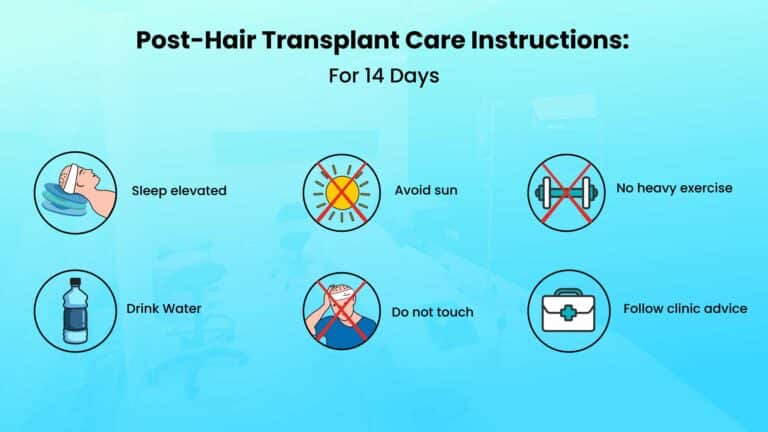
- Mechanical Trauma (Days 1–10): Scratching or dislodging grafts before vascular re-connection is complete (7–10 days post-op) permanently destroys those follicles.
- Neglecting Native Hair Maintenance: While transplanted follicles are genetically resistant to DHT, surrounding native hair continues to miniaturize. Halting preventative therapy (such as Finasteride) creates a thin gap behind a dense transplanted hairline.
- Premature Heavy Exercise: Elevated blood pressure during the first 10 days increases swelling and risk of graft popping.
Key Questions to Ask Your Clinic Before Booking
To evaluate whether a clinic prioritizes long-term medical standards over sales volume, ask these seven direct questions during your consultation:
- “Will the surgeon personally extract my grafts and create the incision channels, or will technicians perform this?”
- “What is my estimated total lifetime donor graft capacity?”
- “What is your documented follicle transection rate?” (Industry benchmark should be under 5%).
- “Can you show me 14-month final result photos taken under normal, diffuse lighting?”
- “What is your medical policy if graft growth is below 70% at month 14?”
- “What post-operative medical regimen do you prescribe to protect my native hair?”
- “How many procedures does your primary surgeon personally perform per day?” (If the answer exceeds 2–3, surgeon involvement per patient is minimal).
Frequently Asked Questions
What is considered a successful hair transplant result in Turkey?
A successful result achieves 40–50 $FU/cm^2$ density in the frontal third, displays a natural hairline with single-hair grafts at correct angles, leaves no visible overharvesting in the donor region, and blends seamlessly with existing hair.
Can a botched hair transplant from another clinic be repaired?
In many cases, yes. Revision procedures can soften harsh hairlines, correct implantation angles, or insert additional density. However, if the initial clinic depleted the donor area beyond safe limits, repair options become restricted.
Why do results look denser in promotional photos than in person?
Promotional photography often utilizes directional front-lighting, hair fibers, or wet hair styling to conceal scalp exposure. Genuine clinical evaluation requires viewing dry hair under neutral, overhead lighting.
Academic & Clinical References
- National Center for Biotechnology Information (NCBI): Follicular Unit Extraction (FUE) Transection Rates and Donor Area Preservation Standards.
- International Society of Hair Restoration Surgery (ISHRS): Global Practice Census Statistics & Safe Graft Extraction Protocols.
- Journal of Cutaneous and Aesthetic Surgery: Graft Survival Rates, Microcirculation, and Density Assessment in Male Pattern Hair Restoration.
Medical Disclaimer: The contents of this article are intended strictly for educational and informational purposes. They do not constitute formal medical diagnosis, advice, or treatment plans. Individual donor capacity and hair loss patterns vary.
- Medical Review Conducted by: Prof. Dr. Soner Tatlıdede, Lead Hair Restoration Specialist at Clinicana Hair Transplant Center, Istanbul (22+ Years of Clinical Experience, 18,000+ Successful Procedures, Board Certified Member of ISHRS).
Read More:
Turkey Hair Plugs: What the Term Actually Means in 2026
How Much for Hair Transplant in Turkey? (2026 Real Clinic Prices)


By Prof. Dr. Soner Tatlıdede · August 2026 Post-Op Field Checklist Time Phase Primary Clinical Objective Washing & Care Protocol Recommended Sleep Position Activities & Essentials Days 1 – 3 Protection & graft stabilization No washing allowed (spray moisturizing saline spray only) Sleep on back at a 45° incline with neck pillow Complete rest, avoid bending forward, […]

By Prof. Dr. Soner Tatlıdede · June 2026 TL;DR: Why does my head sweat so much? Excessive head sweating (craniofacial hyperhidrosis) affects 3% of the population and occurs when sweat glands are overactive, triggered by stress, heat, certain foods, or medical conditions. Treatment options include proper scalp care, dietary changes, Botox injections, and prescription medications. […]

By Prof. Dr. Soner Tatlıdede • July 2026 Determining the best age for a hair transplant is one of the most frequent questions raised by individuals experiencing progressive hair thinning or androgenetic alopecia. In the medical world, answering this question goes far beyond a patient’s emotional desire to restore density and youthfulness; it relies on a deep […]


Thank you!
Your details have been successfully submitted. Thanks!