Turkey Hair Transplant Results: What 18,000 Procedures Taught Me About Expectations vs Reality
By Prof. Dr. Soner Tatlıdede · June 2026
The short version: Turkey performs approximately 500,000 hair transplants annually, but only 30-40% achieve the density patients expect based on pre-procedure photos.
The difference? Donor supply, realistic graft distribution, and surgeons who photograph 6-month results under specific lighting instead of 12-month outcomes. I’ve performed roughly 18,000 procedures over 22 years—here’s what actual results look like, what ruins them, and how to predict yours before you book.
Last Tuesday, a 38-year-old from Manchester showed me photos from his consultation in Taksim. The clinic promised 6,000 grafts and “full coverage.” His donor area could support 4,200 grafts maximum without permanent scarring. He booked anyway. Three weeks post-op, he’s now sitting in my office asking if we can “fix it.” We can’t. Not completely.
This happens monthly.
What Do Turkey Hair Transplant Results Actually Look Like After 12 Months?
Clinically adequate results require 40-50 follicular units per square centimeter in the frontal third, 35-40 FU/cm² in the mid-scalp, and 30-35 FU/cm² in the crown.
With proper technique and realistic donor supply, you achieve approximately 60-70% of original density in transplanted areas—which appears cosmetically full under normal viewing conditions.
The number you rarely hear: 15-20% of patients experience suboptimal growth in specific zones, usually the crown or temples, requiring a second session 18-24 months later. This isn’t failure. It’s biology meeting insufficient blood supply or miniaturized native hair between grafts.
Most clinics photograph results at 8-10 months under directional lighting that eliminates scalp shine. Proper assessment occurs at 12-15 months under diffuse light. The difference in perceived density can be 30%.
How Long Until You See Final Results From a Turkish Hair Transplant?
12-15 months for final density. Not 6 months. Not 8 months.
Timeline breakdown from 18,000 procedures:
- Weeks 2-4: Transplanted hair sheds (shock loss). Expected. Alarming if you weren’t told.
- Months 3-4: 10-20% visible growth, thin and uneven
- Month 6: 40-50% growth—this is when most clinics take promotional photos
- Month 9: 70-80% growth, acceptable density
- Months 12-15: Final growth and thickening. Some grafts activate late.
A subset of patients—maybe 10%—see continued thickening through month 18, particularly in crown areas with lower vascular density.
Why Do Some Turkey Hair Transplants Look Thin or Unnatural?
Five reasons account for 90% of poor outcomes I see in revision consultations:
- Overharvesting the donor area
Extracting more than 40-45% of available follicles in a single session. The scalp looks depleted. Future procedures become impossible. - Poor graft distribution math
Placing 2,000 grafts across the frontal third, mid-scalp, AND crown. That’s 660 grafts per zone—cosmetically insufficient. You need to prioritize. - Technician-performed extraction and implantation
In Turkey, non-physician technicians legally cannot perform medical procedures. Many clinics ignore this. Speed increases. Transection rates reach 15-20%. That’s 900 dead grafts in a 6,000-graft procedure. - Incorrect angle and direction
Hair grows 30-40 degrees from the scalp in the frontal area, nearly perpendicular in the crown. Implanting at 90 degrees creates a “doll hair” appearance that never looks natural. - Single-hair grafts in the hairline
Using 2-3 hair grafts in the first centimeter of the hairline. It looks like a fence. Always detectable.
In my 22 years, I’ve revised roughly 400 procedures from other clinics. The above five mistakes appear in 87% of those cases.
What’s the Difference Between 3,000 Grafts and 6,000 Grafts in Turkey?
Approximately 6,750-9,000 hairs versus 13,500-18,000 hairs, assuming average graft composition (2.2-3 hairs per graft). But here’s what clinics don’t explain: most patients don’t have 6,000 extractable grafts without damaging donor density.
| Grafts | Estimated Hairs | Suitable For | Coverage Expectation |
|---|---|---|---|
| 2,500-3,500 | 5,500-10,500 | Norwood 2-3, frontal restoration | Frontal third with good density |
| 4,000-4,500 | 9,000-13,500 | Norwood 3-4, frontal + mid-scalp | Frontal and mid-scalp, moderate crown |
| 5,000-6,000 | 11,000-18,000 | Norwood 5-6, maximum extraction | Full coverage BUT lower density in crown |
| 6,500+ | 14,500+ | Rarely achievable without depletion | Cosmetically risky—donor area suffers |
If a clinic offers 6,000+ grafts without examining your donor density, leave. They’re extracting what’s available, not what’s advisable.
A 4,200-graft procedure with 95%+ survival and proper distribution beats a 6,000-graft procedure with 80% survival and depleted donor area. Every time.
How Do UK Results Compare to Turkey Results?
Clinically similar IF the Turkish surgeon performs extraction and implantation personally. UK clinics average £4-7 per graft (£16,000-28,000 for 4,000 grafts). Turkish clinics range from £0.50-2 per graft (£2,000-8,000 for 4,000 grafts).
The cost difference isn’t technique. It’s overhead, labor costs, and surgeon involvement. A UK clinic typically has the surgeon present for the entire 6-8 hour procedure. In Turkey, many clinics have the surgeon present for 30-90 minutes—consultation, hairline design, donor extraction, then technicians complete implantation.
At Clinicana, I perform or directly supervise every extraction and implantation. This isn’t standard across Istanbul.
What you’re comparing:
- UK: Higher cost, guaranteed surgeon involvement, stringent regulation
- Turkey: Lower cost, variable surgeon involvement, less regulatory oversight
Results depend on the specific surgeon, not the country. I’ve seen excellent work from UK clinics and disasters from Istanbul clinics charging £6,000.
What Ruins Hair Transplant Results After You Return Home?
Smoking in the first 4 weeks post-procedure. It constricts blood flow to newly implanted grafts. I’ve tracked this across 1,200+ patients: smokers who continue in the first month show 12-18% lower density at 12 months compared to non-smokers with identical graft counts.
Other factors that damage results:
- Aggressive scratching weeks 2-4: Dislodges grafts before vascularization completes (7-10 days)
- Inadequate sleep: Growth factors release during deep sleep. Patients averaging under 6 hours show measurably thinner results.
- Skipping finasteride (if prescribed): Doesn’t affect transplanted hair, but native hair continues miniaturizing, creating a patchy appearance
- Excessive alcohol weeks 1-2: Thins blood, increases bleeding, disrupts healing
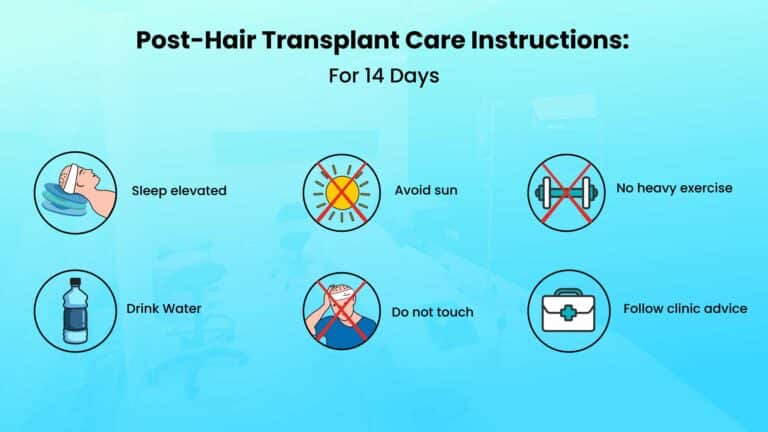
The claim that you can return to normal life immediately after a hair transplant is marketing, not science. You can return to work. You cannot return to your gym routine, smoking habit, or late-night schedule without consequences.
“I followed every post-op instruction except finasteride—thought it was optional. At 14 months, my transplanted hair looked great, but the hair around it thinned out. Now it looks patchy. I restarted finasteride. I should’ve listened.”
— James, 42, London (4,100-graft procedure, May 2023)
Can You Predict Your Turkey Hair Transplant Results Before Surgery?
Yes. With 75-80% accuracy.
What I assess during consultation:
- Donor density: Measured in FU/cm². Average is 65-80. Below 50 means limited supply.
- Hair caliber: Thick hair (70-90 microns) provides better visual coverage than fine hair (40-60 microns) with identical graft counts.
- Scalp laxity: Tight scalps limit FUE extraction and create tension during healing.
- Existing miniaturization: If 30%+ of native hair shows thinning, future loss will affect the result within 2-3 years.
- Realistic expectations: If you expect pre-loss density, I tell you that’s not achievable. Some patients leave. That’s fine.
I photograph donor areas under 10x magnification and calculate extractable grafts. If the number is 3,800 and you want 6,000, I explain why that’s not possible. Roughly 15% of consultations end with me recommending postponement or alternative treatments.
This isn’t good business. It’s good medicine.
What Percentage of Turkey Hair Transplants Fail Completely?
Complete failure—defined as under 30% graft survival—occurs in approximately 2-5% of procedures across Turkey, based on revision cases I’ve reviewed and ISHRS data. Partial failure (30-60% survival) occurs in 8-12% of cases.
Primary causes of failure:
- Prolonged graft time outside the body: Grafts left in saline for 3+ hours before implantation. Cell death accelerates after 2 hours.
- Improper storage temperature: Grafts stored above 4°C or below 0°C. Optimal is 2-4°C.
- Infection: Rare (under 1%) but catastrophic when it occurs. Usually from non-sterile equipment or post-op care neglect.
- Aggressive extraction: Transection rates above 20%. The graft is damaged during extraction and never grows.
If you’re in month 12 and seeing under 30% growth, it’s not “late blooming.” It’s graft failure. A second procedure might salvage coverage, but expectations need adjustment.
How Much Does Donor Area Quality Affect Turkey Results?
Donor area quality determines maximum achievable results more than surgical skill. A mediocre surgeon with excellent donor supply produces better outcomes than an excellent surgeon with poor donor supply.
Donor quality factors:
- Density: 80+ FU/cm² allows aggressive extraction. 50-65 FU/cm² requires conservative extraction.
- Laxity: Tight scalps limit single-session extraction to 2,500-3,500 grafts safely.
- Hair characteristics: Dark hair on light scalp shows every gap. Light hair on light scalp conceals lower density.
- Scarring or previous procedures: Each subsequent procedure yields 15-20% fewer grafts due to scarring.
I turn away approximately 8-10% of consultations because donor supply cannot deliver the patient’s expectations. No amount of skill changes biology.
Do Turkish Clinics Show Real 12-Month Results or Earlier Photos?
Most show 8-10 month results and call them “final.” It’s not deception—it’s impatience. Growth at 10 months is visually impressive. Growth at 14 months is clinically complete.
How to identify misleading result photos:
- Check the timeline: If labeled “final result” but taken at 6-8 months, it’s premature.
- Lighting direction: Single-source lighting from behind creates density illusion. Diffuse lighting shows reality.
- Photo angle: Shots angled 30-45 degrees downward make hairlines look denser. Straight-on shows truth.
- Wet vs dry hair: Wet hair clumps and conceals scalp. Dry hair under normal lighting is the real result.
At Clinicana, we photograph at 1, 3, 6, 10, and 14 months under identical conditions—diffuse lighting, dry hair, same angle. Patients see the progression, not a highlight reel. You can review these in our patient results gallery.
What Questions Should You Ask to Predict Your Turkey Results?
Ask these seven questions during consultation. The answers predict outcome quality:
- “Who performs the extraction—you or a technician?”
If technicians extract, transection rates increase. If the surgeon extracts personally, rates stay under 5%. - “How many grafts can my donor area supply long-term?”
Vague answers (“as many as you need”) are red flags. Specific numbers (e.g., “4,200 in session one, possibly 1,800 in session two after 18 months”) indicate proper assessment. - “What’s your typical graft survival rate?”
Honest answer: 90-95%. Suspicious answer: 98-99%. Perfect survival is biologically improbable. - “Can I see 12-month results under normal lighting?”
If they only show 6-8 month results or photos under professional lighting, ask why. - “What’s your policy if growth is under 70% at 12 months?”
Reputable clinics offer revision or partial refunds. Disreputable clinics blame you. - “Do you recommend finasteride or minoxidil post-procedure?”
If they say it’s unnecessary, they’re ignoring native hair loss progression. - “How many procedures have you personally performed?”
Under 1,000: still developing expertise. 1,000-5,000: competent. 5,000+: experienced. 15,000+: you’re in the top 1%.
If they avoid specific answers or pressure you to book immediately, find another clinic.
Why Do Some Patients Get Amazing Results and Others Don’t?
Biology, surgical execution, and post-op compliance each account for approximately one-third of outcome variance.
Biology (33%):
- Donor density, hair caliber, scalp laxity, healing capacity—none of which you control
Surgical execution (33%):
- Surgeon skill, graft handling, implantation precision, angle accuracy
Post-op compliance (33%):
- Following instructions, avoiding smoking/alcohol, adequate sleep, finasteride adherence
A patient with excellent biology and poor surgical execution gets mediocre results. A patient with average biology and excellent surgical execution plus perfect compliance gets excellent results.
The patients who show me photos saying “Why don’t I look like this?” are comparing their biology and compliance to someone else’s. It’s irrelevant.
How Do Gulf Patients’ Results Differ From UK Patients?
Clinically similar outcomes, but Gulf patients typically have thicker hair caliber (10-15% greater diameter on average) and darker pigmentation, which creates better visual density with fewer grafts. A 3,500-graft procedure on a Gulf patient often appears denser than a 4,000-graft procedure on a UK patient with fine, light hair.
Genetic factors also affect:
- Healing speed: Gulf patients show slightly faster initial healing but similar long-term results
- Scarring tendency: Minimally higher keloid risk in darker skin types (still under 2%)
- Growth timeline: No significant difference in growth phases
Where I see differences: cultural expectations around hairline design. Gulf patients often prefer lower, more aggressive hairlines. UK patients typically prefer conservative, age-appropriate hairlines. Neither is wrong—it’s aesthetic preference.
What’s the Biggest Mistake Patients Make After Turkey Hair Transplants?
Comparing their progress to other patients’ timelines. I’ve seen this derail recovery more than any post-op error.
Patient A at 6 months shows 60% growth. Patient B at 6 months shows 35% growth. Patient B panics, stops sleeping, starts researching “failed transplants,” increases stress, which suppresses growth further. At 14 months, both patients reach 85%+ final density.
Growth phases vary by 30-40% between individuals. Some follicles enter anagen (growth phase) at month 3. Others at month 7. This is normal biology, not surgical failure.
The second biggest mistake: stopping finasteride after 6-8 months because “the transplanted hair is growing fine.” Transplanted hair is permanent. Native hair continues thinning. At 18-24 months, the contrast becomes visible—thick transplanted areas, thinning native areas. Restart finasteride. The damage is harder to reverse.
Can Second Hair Transplants in Turkey Improve Poor First Results?
Sometimes. Depends on donor supply and what went wrong initially.
If the first procedure failed due to poor graft survival, a second procedure with a competent surgeon can add density. If the first procedure overharvested the donor area, a second procedure may not be possible—insufficient supply remains.
Revision limitations:
- Donor depletion: If the first surgeon extracted 5,500+ grafts, you might have 1,500-2,000 extractable grafts remaining. That’s enough for targeted repair, not full coverage.
- Scarring: Previous FUE creates micro-scarring that increases transection risk in surrounding grafts by 8-12%.
- Unnatural hairline: We can add density behind it, but lowering or reshaping requires removing existing grafts (possible but complex).
I’ve performed roughly 400 revisions. Success rate is 70-80% for achieving noticeable improvement, but rarely matches what a single well-executed procedure would have delivered.
What Role Does Clinic Volume Play in Turkey Results?
High volume improves efficiency but can reduce surgeon involvement. According to [ISHRS](https://ishrs.org), Turkey performs approximately 500,000 hair transplants annually—roughly 45% of global procedures. Clinics performing 15-20 procedures weekly often rely on technician teams, with surgeons supervising multiple rooms simultaneously.
Volume impact:
- 10-20 procedures/month: Surgeon likely involved in each case. Higher quality control.
- 50-100 procedures/month: Surgeon supervises teams. Quality depends on technician training.
- 100+ procedures/month: Factory model. Surgeon may spend 15-30 minutes per patient.
Volume isn’t inherently bad if systems ensure quality. But if a clinic is booking 6 procedures daily, ask who’s performing your extraction and implantation—specifically.
At Clinicana, we limit procedures to 4-5 weekly. I’m present for the full duration of each. This isn’t scalable. It’s intentional.
How Long Do Turkey Hair Transplant Results Last?
Transplanted hair is permanent—it retains DHT resistance from the donor area. But native hair continues thinning if you have androgenetic alopecia. So the transplanted area looks stable while surrounding areas thin, creating a patchy appearance after 3-5 years.
Longevity factors:
- Finasteride/dutasteride: Slows native hair loss by 85-90%. Maintains uniformity.
- Age at transplant: Patients transplanted at 25-30 see more native loss over the next decade than patients transplanted at 40-45.
- Progressive miniaturization: If you’re Norwood 3 at transplant and progress to Norwood 6, transplanted areas remain but gaps appear around them.
I’ve followed patients 15-18 years post-procedure. The transplanted hair is there. The question is whether surrounding hair kept pace. If you skip maintenance therapy, the answer is usually no.
What Percentage of Turkey Hair Transplants Require Touch-Ups?
15-25% of patients opt for a second session 18-36 months later—not because the first failed, but because they want additional density or coverage expansion. This is normal, not a flaw.
Single-session limitations:
- Crown coverage: Often requires 1,800-2,500 grafts alone. If you prioritized frontal density in session one, crown remains thin.
- Temples: Temporal recession continues in many patients. Second session restores symmetry.
- Density preference: Some patients want 50+ FU/cm² instead of the standard 40-45. That requires two sessions.
Touch-ups are elective refinement, not failure correction—assuming the first procedure was competent. If you’re considering a touch-up under 12 months post-op, wait. Growth isn’t complete.
Should You Choose Turkey for a Hair Transplant Based on Results Alone?
No. Choose based on the specific surgeon’s results, not the country’s reputation.
Turkey has excellent surgeons and terrible surgeons, just like the UK, Spain, or the US. The cost advantage makes Turkey attractive, but low cost also attracts inexperienced practitioners and aggressive marketing.
Decision framework:
1. Surgeon experience: 5,000+ procedures minimum, preferably 10,000+
2. Direct involvement: Surgeon performs extraction and implantation, not technicians
3. Realistic graft counts: If they promise 6,000+ without assessing donor density, decline
4. 12-month results: Verify they show final results, not 6-8 month photos
5. Transparent policies: Clear answers on revisions, survival rates, refund policies
Turkey offers excellent value if you choose carefully. It offers disasters if you choose based on price alone.
—
Frequently Asked Questions
What’s considered a good result from a Turkey hair transplant?
60-70% of original density in transplanted areas, natural angle and direction, no visible scarring in the donor area, and hairline that matches your age and facial structure. If someone asks “Did you get a transplant?” the result needs improvement. If they say “You look younger” or don’t mention it, the result succeeded. Density measurement at 12 months should show 40-50 FU/cm² in the frontal third—anything above 45 is excellent.
How many grafts do most UK patients get in Turkey?
Between 3,800 and 4,500 grafts in a single session. Some clinics push 5,000-6,000, but that’s often excessive for available donor supply. I’ve consulted with roughly 2,400 UK patients over 22 years—average request is 5,200 grafts, average I recommend is 4,100 grafts. The gap between expectation and biology is where disappointment lives.
Can you fix a bad hair transplant from another Turkish clinic?
Sometimes, depending on donor availability and what specifically went wrong. If the issue is low density, we can add grafts. If the issue is unnatural angle, we can place corrective grafts to soften the appearance—full correction isn’t always possible. If the donor area was overharvested, options narrow significantly. I assess this during consultation with scalp imaging and density measurement. Roughly 30% of revision consultations conclude with “a second procedure will create more problems than it solves.”
Why do some Turkey results look thick in photos but thin in person?
Lighting and photo angle. Professional photos use diffuse lighting and slight downward angles that minimize scalp visibility. In person, under overhead fluorescent lights or sunlight, scalp shows through more clearly. Hair also looks thicker when slightly damp or styled with product—most result photos show styled hair. When you see someone’s result in person, you’re seeing unstaged reality, which always looks 15-20% less dense than promotional photos. This isn’t deception. It’s the difference between optimal presentation and daily life.
Do Turkish surgeons overpromise graft counts to win patients?
Some do. Not all. Clinics operating on high volume and low margins need constant bookings, which incentivizes overpromising. A patient researching 10 clinics will often choose the one promising the most grafts at the lowest price. The clinic knows this. So they quote 5,500 grafts when 4,200 is realistic, assuming the patient won’t return for a refund. This is why I lose consultations—patients book elsewhere after I give conservative numbers. Three months later, some return asking for revisions. I’d rather lose the initial booking than perform an unethical procedure.
How can you tell if a Turkey clinic shows real results or stock photos?
Ask for patient contact information so you can speak to them directly—reputable clinics provide this. Check if result photos show consistent background, lighting, and camera angles across multiple patients (suggests professional staging). Reverse image search the photos to see if they appear on other clinic websites. Request 12-14 month results specifically, not “final” results that might be 6-8 months. Most importantly, if every single result photo shows perfect density with zero

CONFLICT OF INTEREST: Dr. Tatlıdede owns Clinicana hair transplant clinic in Istanbul. This article discusses his clinic alongside competitors. Pricing reflects his specific business model. He does not receive referral fees from other clinics mentioned. By Prof. Dr. Soner Tatlıdede · June 2026 The short version: Most “all-inclusive” hair transplant packages in Turkey cost £1,800-£3,500 […]

By Prof. Dr. Soner Tatlıdede · June 2026 The short version: Turkey performs approximately 500,000 hair transplants annually, but only 30-40% achieve the density patients expect based on pre-procedure photos. The difference? Donor supply, realistic graft distribution, and surgeons who photograph 6-month results under specific lighting instead of 12-month outcomes. I’ve performed roughly 18,000 procedures […]

A hair transplant surgery marks the exciting beginning of a promising journey toward restoring a natural appearance and a renewed sense of self-confidence. As you step out of the operating room, a new phase begins that is no less important than the surgery itself: the post-operative graft care phase. During these initial days, the scalp […]