


Is a Hair Transplant for Women in Turkey the Right Choice?

By Prof. Dr. Soner Tatlıdede · June 2026
The short version: Female hair transplantation in Turkey costs £1,800-3,500 vs. £8,000-15,000 in the UK, but the physiology is completely different from men.
Women retain 82-91% of transplanted grafts when properly assessed, but 40% of female patients I see were never suitable candidates to begin with. This guide explains the clinical criteria that determine whether you’ll get results or waste money.
Last month, a 34-year-old woman from Dubai flew to Istanbul for hair restoration. She’d been quoted £12,000 in London. Her diffuse thinning looked fixable.
The problem? When I examined her scalp under magnification, I found active inflammation and miniaturization in the donor area. Transplanting those follicles would have been like moving dying plants to new soil. I sent her home with a prescription, not surgery.
That conversation happens weekly.
Female hair loss is not male pattern baldness in a different body. The causes, the donor hair quality, the cosmetic goals — everything diverges.
Turkey performs roughly 60,000 hair transplants annually, but [according to ISHRS], only 12-15% of those procedures are performed on women. Not because Turkish clinics refuse female patients. Because most women aren’t candidates.
This article explains what makes someone suitable, why Turkey has become the centre for female hair restoration, and the specific questions you must ask before booking.
Why do women lose hair differently than men?
The pattern is diffuse, not receding.
Men lose hair in predictable zones: temples, crown, vertex. Women thin across the entire scalp, often maintaining the frontal hairline while density drops behind it. The Ludwig Scale measures this as three grades of widening central part, not the Norwood zones used for men.
The clinical difference matters for transplantation. In male pattern baldness, the “permanent zone” at the back and sides resists DHT. Those follicles survive when moved. In female pattern hair loss (FPHL), that donor zone often shows miniaturization too. Not always, but frequently enough that a visual assessment isn’t sufficient.
In my practice, I perform trichoscopy on every female consultation. I’m looking at hair shaft diameter variance in the donor area. If more than 20% of hairs show miniaturization, the graft survival rate drops. You’re transplanting hairs that will thin later anyway.
Hormonal causes complicate this further. Polycystic ovary syndrome (PCOS), thyroid disorders, postpartum shedding, menopause — these don’t create a stable donor zone. If your hair loss started after a specific hormonal event and hasn’t stabilized, surgery is premature. I’ve turned away patients whose ferritin was 18 ng/mL. Fix the deficiency first. Transplant second.
The frontal hairline in women also sits lower and rounder than in men. Female hairlines require single-hair grafts placed at acute angles, often 12-15° from horizontal. Pack them too densely or use multi-hair grafts, and the result looks pluggy. I see repair cases monthly from clinics that used male hairline techniques on female patients.
Who is actually a good candidate for female hair transplant?
Not every woman with thinning hair.
Good candidates share these traits:
| Criterion | What I Look For | Why It Matters |
|---|---|---|
| Stable donor zone | Thick, uniform hair density at the back/sides with <10% miniaturization on trichoscopy | These grafts must survive 20+ years |
| Defined pattern | Ludwig II-III with clear areas of loss vs. areas of retention | Diffuse unpatterned loss suggests ongoing systemic cause |
| Normal hormone panel | TSH, ferritin >50 ng/mL, no active PCOS flare | Transplanting into unstable biology = poor survival |
| Realistic goals | Adding density to thinning areas, not recreating teenage hairline | Female transplants add 30-40% density, not 100% |
| Age over 30 | Preferably 35+ | Earlier hair loss often hasn’t stabilized |
Poor candidates include:
- Women with diffuse unpatterned alopecia (DUPA) — thinning everywhere, including donor zone
- Active telogen effluvium (shedding phase from stress, illness, childbirth)
- Scarring alopecias like lichen planopilaris or frontal fibrosing alopecia
- Unrealistic expectations (wanting 14-year-old density at age 50)
I once consulted a 28-year-old with telogen effluvium from crash dieting. She’d lost 40% density in 4 months. Three clinics had quoted her for 3,000 grafts. I told her to eat protein, wait six months, and retest ferritin. Eighteen months later, her hair recovered 90% without surgery. That’s clinical medicine, not marketing.
Why Turkey for female hair transplant specifically?
Volume creates expertise.
Turkish surgeons see 10-20× more hair transplant cases than UK or US counterparts. At Clinicana, I’ve performed roughly 18,000 procedures over 22 years. Of those, 2,100-2,400 were female patients. That volume forces you to recognize patterns: which donor zones hold up, which thinning presentations respond, which techniques work on fine Asian hair vs. coarse Caucasian hair.
The cost difference is real. Female hair transplants in Turkey range from £1,800 to £3,500 for 2,000-3,500 grafts. The same procedure in London costs £8,000-15,000. In Dubai, £10,000-18,000. That’s not because Turkish surgeons cut corners. It’s economics: lower operating costs, higher volume, and intense clinic competition.
But volume also creates problems. Some clinics run 8-10 procedures daily. They hire technicians with 3 months’ training to extract and implant grafts. The doctor supervises remotely. For male cases with forgiving donor zones, this sometimes works. For female cases — where donor zone quality is marginal and hairline aesthetics demand precision — it fails.
I see the repair cases. Women arrive with linear scarring from outdated strip methods, unnatural hairlines from male techniques, or grafts placed into areas that were never suitable. Turkey’s reputation suffers because of volume-chasing clinics that don’t turn anyone away.
The advantage Turkey offers isn’t just price. It’s access to surgeons who’ve specialized exclusively in hair restoration for decades. In the UK, many hair transplants are performed by general cosmetic surgeons who do 50 cases a year across multiple procedures. A Turkish specialist does 50 hair transplants a month.
What technique works best for women: FUE or DHI?
FUE in almost every case.
FUE (Follicular Unit Extraction) removes individual follicular units with a 0.7-0.9mm punch, leaving tiny dot scars. For women, this matters because you rarely shave the entire head. We can extract grafts from beneath longer hair, keeping the donor area concealable.
DHI (Direct Hair Implantation) uses a Choi pen to implant grafts without pre-made incisions. Marketing calls this “more advanced.” Clinically, it’s a tool, not a superior method. DHI works well for small areas (hairline refinement, temple points) where angle control matters. For larger female cases requiring 2,500+ grafts, FUE with manual slit creation gives better density control.
The Choi pen has a fixed depth and angle. Female hairlines need variable angles — acute at the leading edge, steeper behind. Manual slits let me adjust per graft.
FUT (Strip Method) removes a strip of scalp, stitches the donor area, and leaves a linear scar. For women who wear their hair up, this is cosmetically problematic. I haven’t performed FUT on a female patient in 11 years unless she specifically requested it for maximum graft yield in advanced cases.
Sapphire FUE — using sapphire blades instead of steel for incisions — is popular in Turkish marketing. The clinical difference? Slightly less trauma, theoretically better healing. In practice, surgeon skill matters 10× more than blade material.
“I had 2,200 grafts with Dr. Tatlıdede in March 2024. I kept my hair long — they only shaved a small strip at the back under my longer hair. No one at work noticed. The hairline looks completely natural, and my part is finally filling in.” — S.M., London (verified Google review, June 2024)
How many grafts do women typically need?
Fewer than you think, placed differently than men.
Men get grafts to create density in bald areas. Women get grafts to add density to thinning areas. That’s a fundamental difference. You’re not building from skin. You’re filling gaps between existing hair.
Typical female cases:
- Frontal third density improvement: 1,500-2,200 grafts
- Midscalp part widening (Ludwig II): 2,000-2,800 grafts
- Advanced diffuse thinning (Ludwig III): 2,800-3,800 grafts
- Hairline lowering + density: 2,500-3,500 grafts
I place grafts in a scattered pattern, not packed tightly. If you have 40 hairs per cm² remaining and I add 20-25 grafts per cm², the result looks like 65-70 hairs per cm² — a cosmetically significant improvement. Pack them at 40-50 grafts per cm² like in male cases, and you risk shock loss (existing hairs shedding from trauma).
Shock loss affects women more than men. Existing miniaturized hairs are fragile. Aggressive implantation can trigger telogen phase, causing temporary or permanent loss of native hair. Conservative graft placement reduces this risk.
Some clinics push 4,000-5,000 grafts for women. That’s almost always overselling. The donor zone in female pattern hair loss often can’t yield that many healthy grafts without visible thinning. And the recipient area doesn’t need that density.
What should you ask a Turkish clinic before booking?
Specific questions with checkable answers.
- What’s your female patient percentage?
If it’s below 10%, they’re primarily a male hair transplant mill. Female cases require different assessment. Clinics comfortable with women will say 15-25%. - Will you perform trichoscopy on the donor zone?
This examination checks hair shaft thickness and miniaturization. If they say “visual inspection is enough,” walk away. - Who extracts and implants the grafts?
The only acceptable answer: “The doctor and trained medical technicians under direct supervision.” If they say “our expert team” without naming the surgeon’s role, assume technicians do everything. - Can I keep my hair long during the procedure?
For women, yes. We shave a small donor strip hidden under longer hair, or use the long-hair FUE method. If they insist on full head shaving, they’re using male protocols. - What’s your policy if I’m not a candidate?
Good clinics turn people away. If they’ve never refused a patient, they prioritize revenue over outcomes. - Can I speak with the surgeon before arriving?
If consultations are only with sales coordinators, you’re dealing with a volume business. I do 15-minute video calls with every international patient before they book flights.
What does recovery look like for women?
Faster than men, but camouflage matters more.
Day 1-3: Redness and pinpoint scabbing in the recipient area. The donor area (if partially shaved) may be tender. Most women wear a loose headband or style their longer hair to cover the transplanted zone.
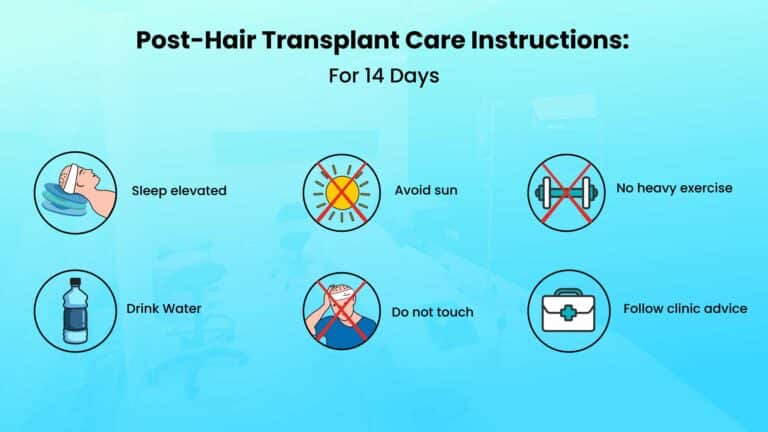
Day 4-10: Scabs begin falling off. Mild itching. You can wash gently with baby shampoo from day 3. Avoid tight ponytails or clips that pull on grafts.
Week 2-4: Transplanted hairs shed. This is expected. The follicles remain under the skin and restart growth at month 3-4.
Month 3-6: New growth begins, very fine. It thickens over months 6-12.
Month 8-12: 70-80% of final result visible. Continued maturation through month 18.
Women tolerate the procedure well. We use local anesthesia, sometimes with light sedation. The procedure itself takes 6-8 hours for 2,500 grafts. You’re awake, watching TV or reading. Discomfort is minimal — rated 2-3 out of 10 by most patients.
Social downtime: Most women take 7-10 days off work. By day 10, with hair styled strategically, the transplant isn’t obvious. Men often need longer because shorter hairstyles show the donor area.
Shock loss — if it occurs — peaks at week 2-6, then recovers by month 4-6 in 85% of cases. Conservative graft placement minimizes this risk.
How do results compare to UK or US clinics?
Outcomes depend on surgeon skill, not geography.
The best Turkish clinics match or exceed UK/US results. The worst Turkish clinics produce disasters. The same is true in London or New York. Geography doesn’t determine quality. Volume, specialization, and individual surgeon experience do.
What Turkey offers:
- Specialization: Surgeons who do nothing but hair restoration, 200-500 cases annually
- Technique refinement: High volume forces efficiency and pattern recognition
- Cost accessibility: £1,800-3,500 vs. £8,000-15,000 makes the procedure accessible to patients who’d never afford it in the UK
What Turkey risks:
- Volume-chasing clinics: 8-10 procedures daily, minimal doctor involvement
- Aggressive sales tactics: Coordinators who promise results the surgeon never agreed to
- Unregulated technicians: Staff performing medical procedures without oversight
I’ve reviewed cases from London clinics charging £14,000 for 2,000 grafts — beautifully executed. I’ve also reviewed botched £9,000 UK cases with necrotic grafts and scarring. Price and location don’t predict quality. Surgeon credentials, patient volume, and verification systems do.
Clinicana has 12,440 verified reviews across Google, Trustpilot, ProvenExpert, Yandex, and Facebook. Those aren’t purchased testimonials. They’re checkable patient names linked to real procedures. If a clinic has 50 reviews or only Instagram posts, that’s a red flag.
What complications are specific to women?
Shock loss and unrealistic density expectations.
Shock loss — temporary or permanent shedding of native hair around transplanted grafts — affects women more because existing hairs are often miniaturized. In my cases, 12-18% of female patients experience noticeable shock loss vs. 6-9% of male patients. Most recover by month 6, but conservative placement reduces risk.
Overharvesting the donor zone happens when clinics extract too many grafts from areas that aren’t truly permanent. Women often have diffuse thinning in the donor region too. Extract 3,500 grafts from a compromised donor zone, and you create visible thinning at the back. I limit extraction to 2,500-3,000 grafts in most female cases, even when patients request more.
Hairline feminization failures occur when clinics use male techniques. A female hairline needs:
- Single-hair grafts in the first 2-3 rows
- Irregular, rounded shape (not straight or angular)
- Placement at 12-15° angle, not 30-40°
- Slightly lower temporal peaks, avoiding male “corners”
Get this wrong, and the result looks like a man’s hairline on a woman’s face. Surgical revision is difficult.
Infection and poor healing are rare (under 1%) but devastating. Women with long hair sometimes skip washing instructions to preserve styling. Scabs that don’t fall off by day 12-14 increase infection risk.
Unmet expectations aren’t medical complications, but they’re the most common complaint. Female hair transplants add density. They don’t restore teenage fullness. If you expect to go from Ludwig III to pre-puberty thickness, you’ll be disappointed even with perfect graft survival.
How much does a female hair transplant cost in Turkey?
£1,800-3,500 for most cases.
Price breakdown at Clinicana:
- 2,000 grafts: £1,800-2,200 (frontal density, small areas)
- 2,500 grafts: £2,200-2,700 (midscalp thinning, Ludwig II)
- 3,000 grafts: £2,700-3,200 (wider coverage, Ludwig III)
- 3,500+ grafts: £3,200-3,500 (extensive thinning, requires excellent donor zone)
Included: airport transfer, hotel (2 nights), medications, PRP (platelet-rich plasma) sessions, 12-month follow-up.
UK pricing for comparison:
- 2,500 grafts in London: £8,000-12,000
- 2,500 grafts in Manchester: £6,500-10,000
Dubai/Gulf pricing:
- 2,500 grafts in Dubai: £10,000-16,000
- 2,500 grafts in Riyadh: £9,000-14,000
The cost difference funds flights and accommodation with money left over. A return flight from London to Istanbul costs £150-300. Two nights in a mid-range hotel near Clinicana costs £80-150. Total trip cost: £2,200-2,800 including procedure. The same outcome in London costs £8,000+.
Payment structure: Most Turkish clinics require 20-30% deposit at booking, balance on arrival. We accept bank transfer, credit card, or cash (USD/EUR/GBP). Financing isn’t available through the clinic, but some patients use UK-based medical loan services.
Beware of suspiciously low prices. Clinics advertising £900 for 2,500 grafts are using unqualified technicians or overpromising graft counts. Quality FUE costs £0.80-1.20 per graft in Turkey. Anything below £1,500 total raises questions.
FAQ
Can I get a hair transplant if I have PCOS or thyroid issues?
Yes, but only after the condition stabilizes. PCOS and thyroid disorders cause diffuse hair loss that often improves with medical treatment (metformin, spironolactone, levothyroxine). If your hair loss began with a hormonal diagnosis and you’re still adjusting medication, wait. I ask for 12-18 months of stable hormone levels and no ongoing shedding before surgery. Transplanting into active hormonal hair loss is like planting seeds in eroding soil. Fix the erosion first.
Will my hair look natural if I’m blonde or have very fine hair?
Fine hair is actually easier to make look natural, not harder. The individual strands are less visible, so minor imperfections in angle or placement don’t show. Blonde hair has less color contrast with the scalp, which camouflages lower density better than dark hair. I adjust graft placement to 20-25 grafts per cm² instead of 30-35 in fine-haired patients. The visual result is the same, and healing is gentler.
How soon can I dye my hair after the transplant?
Wait 4-6 weeks minimum, preferably 8 weeks. Hair dye contains peroxide and ammonia that can irritate healing grafts. The follicles are establishing blood supply during the first month. Chemical exposure during that window increases the risk of poor growth. After week 8, dye is safe — the transplanted follicles are now permanent.
What if I’m already using minoxidil — do I stop before surgery?
Continue minoxidil until 3 days before the procedure, then resume at 2 weeks post-op. Stopping abruptly can trigger telogen effluvium (shedding). We want the native hairs stable during transplantation. Some surgeons say stop 1 week before; I say 3 days because shorter interruption reduces shedding risk. After surgery, minoxidil helps maintain native hair and may improve graft survival slightly.
Can I wear a wig or hair topper after the transplant?
Not immediately. Wigs and toppers create friction and pressure on healing grafts. Wait 10-14 days before wearing any hairpiece, and ensure it’s loose-fitting. Clip-in pieces that attach to existing hair are safer than full wigs with bands. Most women style their natural hair to cover the transplanted area during the first 2 weeks and don’t need wigs.
Do transplanted hairs fall out during menopause?
Transplanted hairs resist DHT because they came from the “permanent zone,” but menopause affects all hair — transplanted and native. Declining estrogen can cause diffuse thinning across the scalp, including previously transplanted areas. The grafts don’t disappear, but individual hairs may miniaturize. This is why I sometimes recommend HRT (hormone replacement therapy) or topical estrogen alongside transplantation for perimenopausal women. It’s a conversation with your gynecologist, not just your hair surgeon.
What’s your refund policy if results are poor?
We don’t offer refunds, but we do offer free revision surgery if graft survival is below 75% at 12 months. Poor results from patient non-compliance (smoking, skipping medications, early exercise) aren’t covered. Poor results from surgical error (bad angle, shallow placement, graft damage) are corrected at no cost. This is detailed in the consent form before surgery. I’ve performed 14 revision procedures in the last 3 years — all at no charge to the patient.
Book a free 15-minute video consultation with Dr. Tatlıdede →
Edited by team
Medically reviewed by Prof. Dr. Soner Tatlıdede, Hair Transplant Surgeon — 22+ years, ~18,000 procedures · June 2026


By Prof. Dr. Soner Tatlıdede · August 2026 Post-Op Field Checklist Time Phase Primary Clinical Objective Washing & Care Protocol Recommended Sleep Position Activities & Essentials Days 1 – 3 Protection & graft stabilization No washing allowed (spray moisturizing saline spray only) Sleep on back at a 45° incline with neck pillow Complete rest, avoid bending forward, […]

By Prof. Dr. Soner Tatlıdede · June 2026 TL;DR: Why does my head sweat so much? Excessive head sweating (craniofacial hyperhidrosis) affects 3% of the population and occurs when sweat glands are overactive, triggered by stress, heat, certain foods, or medical conditions. Treatment options include proper scalp care, dietary changes, Botox injections, and prescription medications. […]

By Prof. Dr. Soner Tatlıdede • July 2026 Determining the best age for a hair transplant is one of the most frequent questions raised by individuals experiencing progressive hair thinning or androgenetic alopecia. In the medical world, answering this question goes far beyond a patient’s emotional desire to restore density and youthfulness; it relies on a deep […]


Thank you!
Your details have been successfully submitted. Thanks!