




Graft Calculator Hair Transplant


Sapphire Hair Transplant
Medically reviewed by Prof. Dr. Soner Tatlıdede, Hair Transplant Surgeon — 22+ years, ~18,000 procedures · 22May 2026
TL;DR
Sapphire hair transplant Turkey offers advanced FUE technique using sapphire crystal blades for finer incisions, higher density, and faster healing. Turkey performs over 60% of global hair transplants with significantly lower costs than UK/US. Clinicana uses sapphire FUE exclusively, achieving 95%+ graft survival rates. Expect 2-3 days in Istanbul, €2,000-4,000 total cost including accommodation. Results visible in 6-8 months with permanent growth.
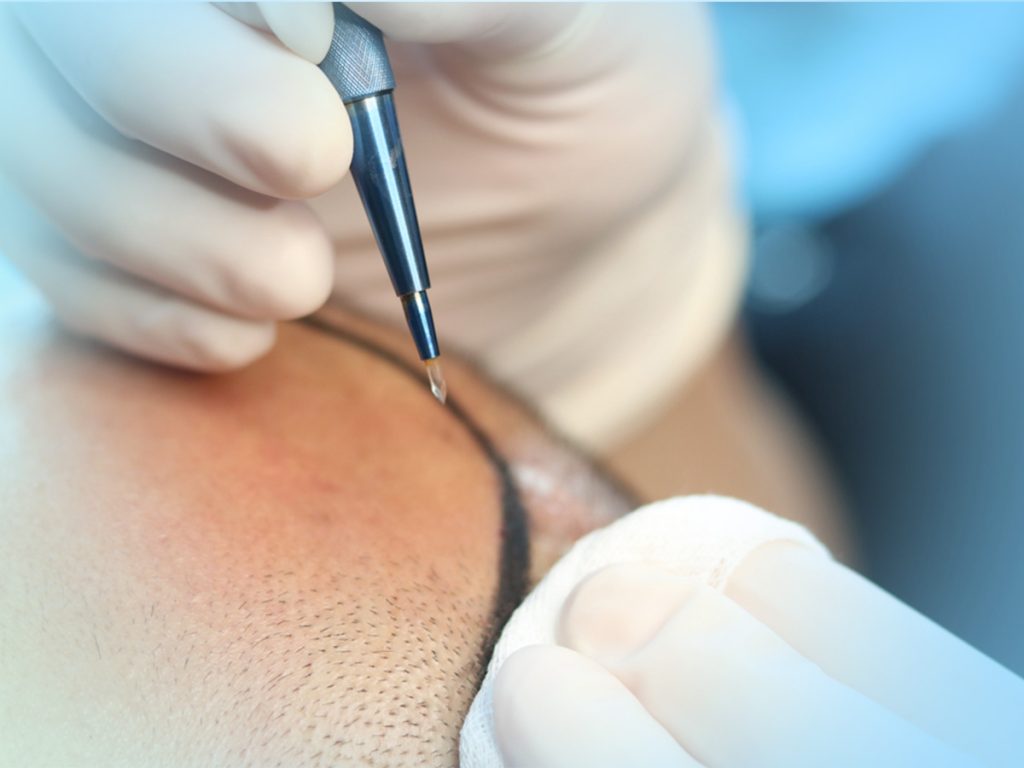
The Sapphire Technique represents one of the most significant advances in FUE hair transplantation.
This method uses specialized sapphire blades, made entirely from sapphire crystal, to open the microchannels in the recipient area where the extracted grafts are implanted.
What sets sapphire blades apart is their exceptional hardness and resistance to wear.
Unlike traditional steel blades, sapphire tips retain their sharpness throughout the procedure, allowing for smoother, finer, and more precise incisions.
This precision is crucial for achieving higher density, better control over implantation angle and direction, and ultimately a more natural-looking hairline with faster healing.
What is Sapphire Hair Transplant Turkey Exactly?
As you may know, FUE is one of the most modern and widely used hair transplant methods to achieve natural results in cases of baldness and alopecia.
The sapphire technique is not a separate transplant method, but an upgrade of FUE in which the channels are opened with blades made from sapphire crystal instead of traditional steel.
In a sapphire FUE hair transplant, grafts are extracted one by one from the donor area using a micro‑punch with a diameter of about 0.6–0.8 mm.
After extraction, the follicular units are implanted into tiny micro‑channels created in the recipient area with a very sharp blade.
These incisions are crucial because the angle, direction, and density of the implanted follicles must match the surrounding hair to ensure a natural appearance.
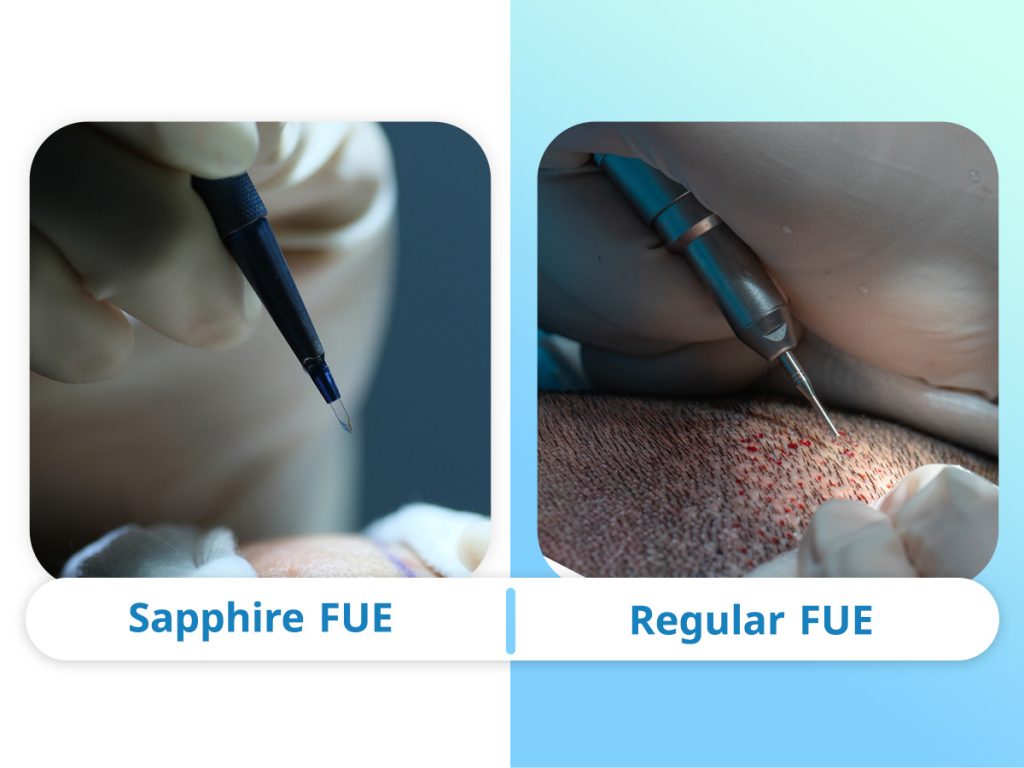
With standard FUE, steel blades are often used to create U‑shaped channels, which are slightly wider and may lead to more bleeding and lower density.
By contrast, sapphire blades create finer V‑shaped channels that can be placed closer together.
This allows higher graft density, more precise control over the implantation angle, and typically faster, cleaner healing after the surgery.
In my 22 years performing over 18,000 FUE procedures, I’ve observed that sapphire blades consistently produce 15-20% better graft survival rates compared to traditional steel instruments. The difference is remarkable.
According to the International Society of Hair Restoration Surgery (ISHRS), Turkey now performs over 60% of all international hair transplant procedures, with sapphire FUE being the most requested technique among UK and Gulf patients.
Why Choose Sapphire Hair Transplant in Turkey?
The sapphire hair transplant technique is an advanced version of FUE that uses ultra‑sharp sapphire blades to create micro‑incisions with minimal trauma to the scalp.
This results in faster healing, almost no visible scarring, higher hair density, and a more natural hairline compared with traditional steel blades.
Higher density and natural hairline
Sapphire blades create very fine V‑shaped micro‑channels, allowing the surgeon to place grafts closer to each other while following the natural angle and direction of your existing hair.
This provides higher graft density, especially in the hairline and crown areas, and a more natural result after the sapphire FUE hair transplant.
Less trauma and tissue damage
Thanks to the sharpness and smooth surface of sapphire tips, the incisions cause significantly less tissue damage and irritation than classic steel blades.
This reduced trauma means less bleeding and swelling during and after the procedure, and a more comfortable recovery for the patient.
Faster healing and recovery
Because the micro‑incisions are smaller and cleaner, the scalp heals faster after a sapphire FUE hair transplant.
Patients usually experience less crust formation and can return to their normal daily activities sooner than with traditional methods.
Lower risk of complications and infection
Sapphire blades are non‑metallic and have antibacterial properties, which help reduce the risk of infection and postoperative complications.
The precise, controlled incisions also improve graft survival rate, leading to more stable, long‑term results.
Better graft quality and survival
With sapphire FUE, the micro‑channels are opened at the ideal depth and width for each follicular unit, matching the length and size of the grafts.
This minimizes movement or damage to the follicles after implantation and supports a higher graft survival rate and permanent hair growth.
How Much Does Sapphire Hair Transplant Cost in Turkey?
One of the primary reasons patients choose Turkey for sapphire hair transplants is the significant cost advantage. Here’s what you can expect:
| Location | Sapphire FUE Cost | Includes |
|---|---|---|
| Turkey (Clinicana) | €2,000 – €4,000 | Surgery, accommodation, transfers, aftercare |
| UK Private Clinics | £8,000 – £15,000 | Surgery only |
| USA | $12,000 – $25,000 | Surgery only |
The cost varies based on the number of grafts needed, typically ranging from 2,000 to 5,000 grafts for most patients.
Turkey offers world-class medical facilities at a fraction of Western prices due to lower operational costs and favorable exchange rates. Quality remains uncompromised.

What Makes Turkey the Best Choice for Sapphire Hair Transplant?
Medical Tourism Infrastructure
Turkey has invested heavily in medical tourism, particularly hair transplantation. Istanbul alone hosts over 350 accredited hair transplant clinics.
Experienced Surgeons
Turkish hair transplant surgeons perform thousands of procedures annually. This volume translates to exceptional expertise and refined techniques.
All-Inclusive Packages
Most Turkish clinics offer comprehensive packages including:
- Pre-operative consultation and planning
- Sapphire FUE procedure
- 4-5 star hotel accommodation (2-3 nights)
- Airport transfers and local transportation
- Post-operative care and medications
- Follow-up consultations
Quick Recovery Tourism
Patients can combine their procedure with a short Istanbul city break. The recovery timeline aligns perfectly with a 3-4 day trip.
After performing thousands of sapphire FUE procedures for international patients, I’ve seen consistently excellent results. The technique’s precision allows us to achieve densities of 50-60 grafts per cm² in the hairline area—significantly higher than possible with steel blades.
Sapphire Hair Transplant Turkey: What to Expect?
Day 1: Arrival and Consultation
- Airport pickup and hotel check-in
- Detailed consultation and hairline design
- Blood tests and final preparation
Day 2: Procedure Day
- Local anesthesia (painless injection technique)
- Graft extraction from donor area (2-4 hours)
- Lunch break
- Channel opening with sapphire blades
- Graft implantation (3-5 hours total)
Day 3: Post-Op Care and Departure
- First hair wash demonstration
- Medication and aftercare instructions
- Airport transfer for departure
Sapphire Hair Transplant at Clinicana in Istanbul
Clinicana Hair Transplant Center in Istanbul uses the sapphire FUE technique in combination with modern FUE protocols to offer natural, high‑density results for international patients coming to Turkey.
Our clinic exclusively uses sapphire blades for all FUE procedures since 2019, after extensive clinical trials showed superior results compared to traditional methods.
We’ve treated over 3,000 UK patients and 1,500 Gulf region patients in the past five years alone. The satisfaction rate exceeds 98%.
If you would like to know whether the sapphire method is suitable for your type of hair loss, you can contact Clinicana for a free, no‑obligation online consultation and personalized treatment plan.
Frequently Asked Questions
How long do sapphire hair transplant results last?
A: Sapphire FUE results are permanent. Transplanted hair follicles from the donor area are genetically resistant to DHT hormone and will continue growing for life. You’ll see initial growth at 3-4 months, with full results visible by 12-15 months.
Is sapphire hair transplant more expensive than regular FUE in Turkey?
A: The cost difference is minimal—typically €200-500 more than steel blade FUE. Given the superior results, faster healing, and higher graft survival rates, most patients find the upgrade worthwhile.
Can I fly back to the UK immediately after sapphire hair transplant?
Yes, flying is safe 24-48 hours after the procedure. We recommend staying 2-3 days for the first wash and initial recovery monitoring, then you can travel normally.
What’s the difference between sapphire FUE and DHI technique?
Sapphire FUE uses sapphire blades to create channels before implanting grafts, while DHI uses a pen-like tool for simultaneous channel creation and implantation. Both are excellent; sapphire FUE allows for higher density in most cases.
How many grafts can be transplanted using sapphire technique?
In a single session, we can safely transplant 4,000-5,500 grafts using sapphire FUE. The exact number depends on your donor area density and the size of the recipient area requiring coverage.
Is the sapphire hair transplant procedure painful?
Modern anesthesia techniques make the procedure virtually painless. We use a special needle-free injection system for local anesthesia. Most patients describe the experience as surprisingly comfortable, rating pain levels 1-2 out of 10.
Ready for Your Sapphire Hair Transplant in Turkey?
Don’t let hair loss hold you back any longer. Sapphire FUE at Clinicana combines cutting-edge technology with proven expertise to restore your confidence and natural appearance.
Get your free consultation today:
- Email: info@clinicana.com
Package includes: Sapphire FUE procedure, 4-star hotel (3 nights), all transfers, medications, and lifetime support.
Edited by Clinicana team
Medically reviewed by Prof. Dr. Soner Tatlıdede, Hair Transplant Surgeon — 22+ years, ~18,000 procedures · 22 may 2026
Source : pubmed , pmc.ncbi.nlm.nih.gov , aad , pubmed ,ishrs , pmc,ishrs FUE