


Temporal Triangular Alopecia: Causes, Clinical Features, and Permanent Surgical Solutions
Medical review by: Prof. Dr. Soner Tatlıdede, hair transplant surgeon (22+ years, 18,947 procedures) – September 2026
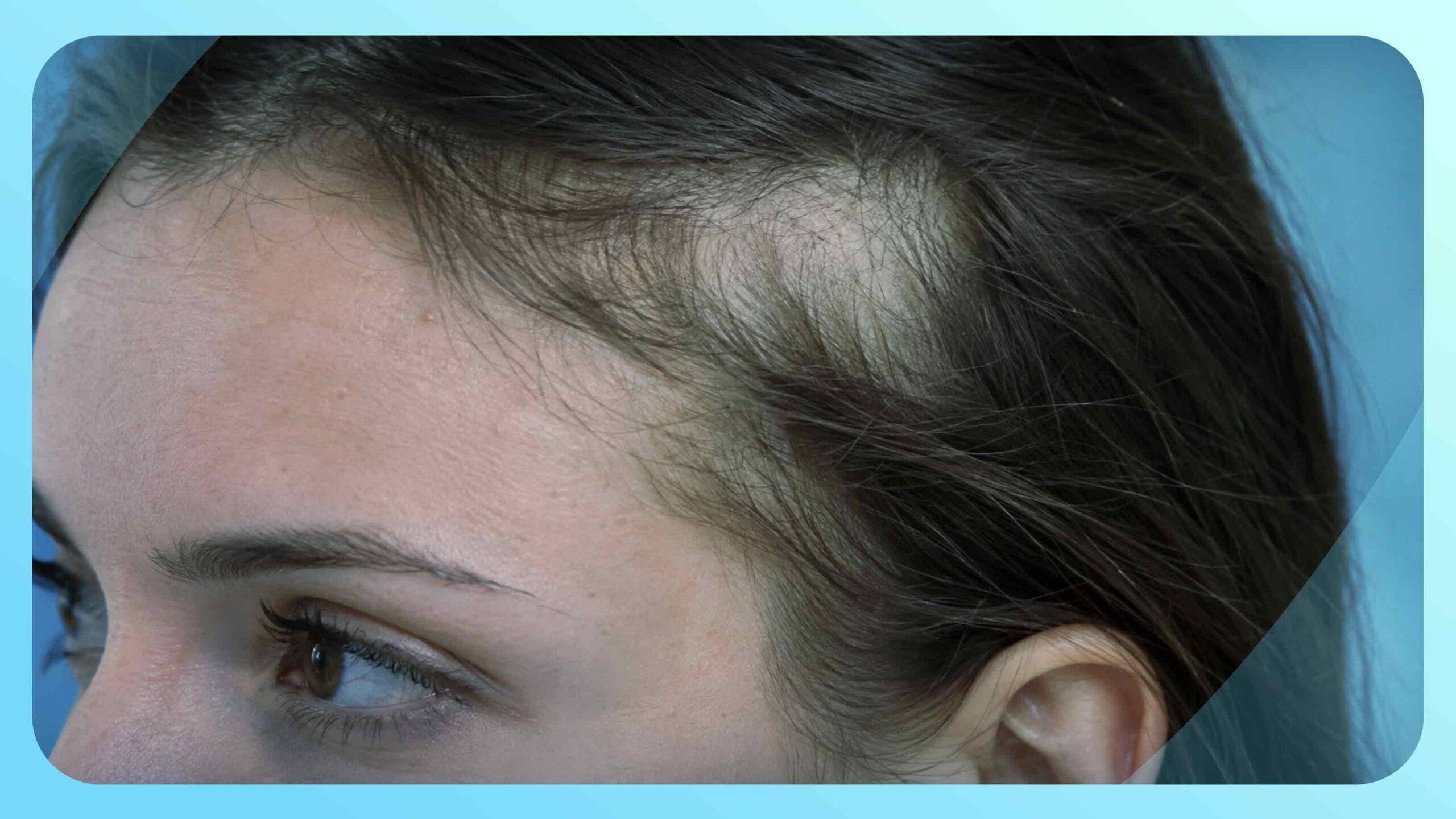
Temporal Triangular Alopecia (TTA), also referred to as Congenital Triangular Alopecia, is a benign, stationary hair loss condition characterized by a smooth, localized triangular or oval patch of hairlessness near the temples.
Arising in early childhood due to follicular hypoplasia, TTA does not respond to topical or oral medications. Surgical hair transplantation using advanced micro-grafting techniques (DHI/Sapphire FUE) provides the only permanent, cosmetically complete solution.
What Is Temporal Triangular Alopecia (TTA)?
Temporal Triangular Alopecia (TTA) is a rare, non-scarring form of localized hairlessness. First described in medical literature in 1905, it typically manifests in early childhood—usually between the ages of 2 and 6—though it may occasionally remain unnoticed until adolescence or adulthood due to styling choices.
The hallmark of TTA is a distinct, hairless or sparsely covered patch situated on the frontotemporal (temple) region of the scalp. The patch is typically triangular, heart-shaped, or oval, measuring between 1 and 4 cm in diameter.
In 80% of clinical cases, TTA is unilateral (affecting one temple), though bilateral presentation can occur in roughly 20% of patients.
Crucially, TTA is a non-progressive, stationary condition; once established in childhood, the patch remains stable in size for the rest of the patient’s life without spreading.
The Histological Mechanism: Why Medical Therapies Fail
To understand why conventional hair loss treatments fail for TTA, one must look at the microscopic structure of the affected scalp tissue.
Follicular Hypoplasia vs. Follicular Destruction
Unlike autoimmune hair loss conditions where hair follicles are attacked and inflamed, or androgenetic alopecia where follicles shrink due to hormones, TTA is caused by follicular hypoplasia:
- The hair follicles within the triangular patch are not missing or destroyed; rather, they are biologically malformed or arrested at an embryonic stage of development.
- These follicles produce only short, fine, unpigmented vellus hairs (peach fuzz) that are practically invisible to the naked eye, lacking the ability to mature into thick, pigmented terminal hairs.
Why Minoxidil, Corticosteroids, and PRP Are Ineffective
Because TTA is a structural congenital anomaly rather than an active disease process or hormonal imbalance:
- Topical Minoxidil: Cannot convert hypoplastic vellus follicles into terminal follicles.
- Corticosteroid Injections: Have zero therapeutic effect because there is no underlying inflammation or autoimmune reaction.
- PRP & Hair Serums: Cannot alter the genetic coding of hypoplastic structures.
Continuing medical treatments for TTA leads to unnecessary expense and skin irritation without yielding cosmetic improvement.
Differential Diagnosis: TTA vs. Alopecia Areata and Other Conditions
TTA is frequently misdiagnosed in children and young adults as Alopecia Areata, leading to inappropriate treatments. Our guide to hair loss in children explains the other causes worth ruling out.
| Diagnostic Criteria | Temporal Triangular Alopecia (TTA) | Alopecia Areata (AA) | Traction Alopecia |
| Age of Onset | Early childhood (2–6 years old) | Any age (sudden onset) | Any age (linked to tight hairstyles) |
| Location | Specifically frontotemporal / temple | Anywhere on scalp or body | Hairline and temporal margins |
| Progression | Completely stationary (does not grow) | Unpredictable (can expand or resolve) | Progressive if tension continues |
| Scalp Appearance | Smooth, presence of fine vellus hairs | Completely bare, exclamation mark hairs | Fringes, broken hairs, inflammation |
| Biopsy / Dermoscopy | Miniaturized, hypoplastic vellus units | Autoimmune lymphocytic infiltrate | Perifollicular fibrosis |
| Response to Treatment | Zero response to medical drugs | Responds to immunosuppressants/PRP | Responds to tension relief & topical care |
Surgical Hair Restoration: The Only Permanent Remedy
For adults seeking to restore symmetry to their hairline and permanently fill the triangular patch, modern surgical hair transplantation offers an ideal, lifelong correction.
Because the surrounding scalp and donor area at the back of the head are healthy, graft survival rates in TTA cases exceed 95–98%.
Modern Transplantation Techniques Offered at Clinicana
1. Direct Hair Implantation (DHI) Technique
DHI is widely considered the gold standard for restoring small, targeted areas like temporal patches:
- No Prior Channel Incisions: Grafts are extracted from the donor area and loaded directly into a Choi Implanter Pen.
- Precise Control: The surgeon has total control over the exact angle, depth, and direction of placement (typically 10 to 15 degrees at the temple), ensuring seamless alignment with natural hair growth patterns.
- High Density: Allows maximum packing density without disturbing surrounding healthy native hair.
2. Sapphire FUE (Follicular Unit Extraction) Technique
For slightly larger patches or combined hairline restorations:
- Micro-Incisions: Channels are opened using ultra-sharp blades made from natural sapphire gemstones rather than steel.
- Minimal Tissue Trauma: Leaves microscopic wounds that heal rapidly with zero visible scarring.
What to Expect During Treatment at Clinicana
- Pre-Surgical Evaluation: A thorough dermoscopic exam confirms the TTA diagnosis, verifies healthy donor density, and designs a natural hairline.
- Outpatient Procedure: Performed under painless local anesthesia, taking approximately 2 to 4 hours due to the modest graft requirement (typically 800 to 1,500 grafts depending on patch size).
- Recovery & Results: Complete healing occurs within 7 to 10 days. Newly transplanted hair undergoes a brief shedding phase (Shock Loss) before permanent growth begins at month 3, reaching full density by month 12.
Eliminate Your Triangular Patch Permanently with Clinicana
Stop wasting time on ineffective topical creams and treatments for temporal triangular alopecia. [Book a free virtual surgical evaluation with Clinicana’s expert hair transplant team in Istanbul].
Learn more about our specialized techniques in our detailed guide on [DHI vs. Sapphire FUE Hair Transplantation] and review transparent pricing in our guide to [Hair Transplant Costs in Turkey].


Medical review by: Prof. Dr. Soner Tatlıdede, hair transplant surgeon (22+ years, 18,947 procedures) – October 2026 When can you cut your hair after a hair transplant? Hair in the donor area can be trimmed after 1 month using scissors or clippers. As for the recipient area, trimming only the ends of the hair using […]

Medical review by: Prof. Dr. Soner Tatlıdede, hair transplant surgeon (22+ years, 18,947 procedures) – October 2026 Congratulations on completing your hair transplant. While the surgical part is finished, the success of your restoration now depends heavily on the recovery phase. In our clinical experience, the first two weeks post-surgery are just as critical as […]
Scalp psoriasis and seborrheic dermatitis are chronic inflammatory conditions that frequently cause discomfort, itching, redness, and scaling. For individuals experiencing hair thinning alongside these conditions, severe anxiety often arises regarding permanent follicle loss and the feasibility of hair restoration. A central concern among patients is whether undergoing a hair transplant while managing scalp psoriasis is […]


Thank you!
Your details have been successfully submitted. Thanks!