


Early Signs of Crown Hair Thinning: Causes, Self-Check, and Myths
By Prof. Dr. Soner Tatlıdede • July 2026
Quick Summary: Crown Hair Thinning vs. Normal Hair Swirl
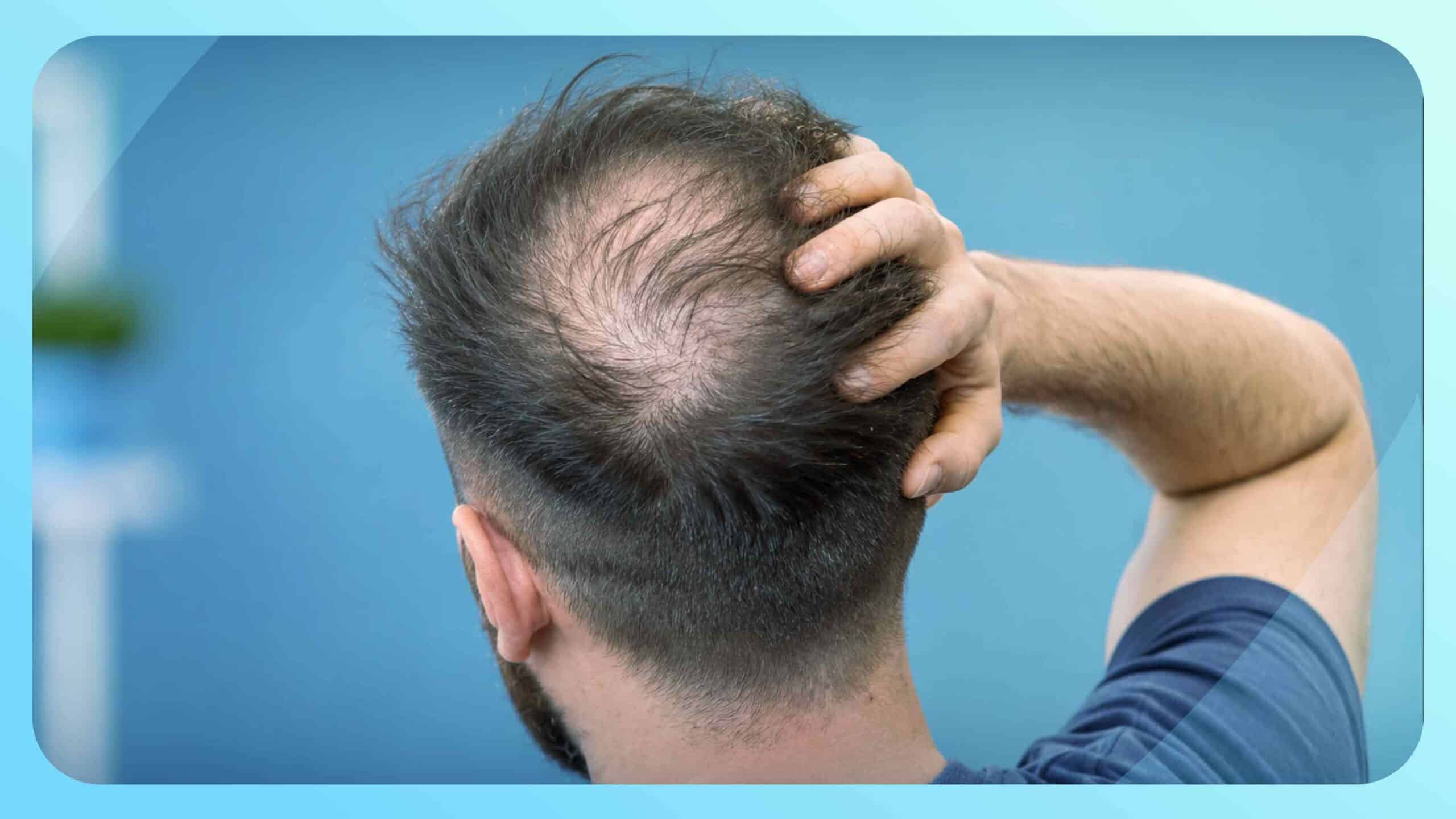
Hair thinning on the crown (also known as the vertex) is one of the most stealthy forms of hair loss. Because the top-back area of your head lies outside your direct field of vision, thinning in this zone often develops silently for months or even years before it becomes noticeable.
Many individuals only discover crown hair loss when a friend points it out, when looking at a photo taken from behind, or under harsh overhead fitting room lights. This sudden discovery can bring understandable worry: Is this just a natural cowlick spiral, or am I experiencing early pattern hair loss?
At Clinicana Hair Transplant Center in Istanbul, we focus on patient education to demystify hair loss mechanisms. Understanding why the crown thins, learning how to check your vertex accurately, and identifying lifestyle factors can give you clarity and confidence about your hair health.
How to Detect Crown Hair Thinning Early (Self-Check Guide)
Because the crown is a natural biological junction where hair grows in a spiral or “whorl” pattern, mistaking a normal hair swirl for balding is very common. Here are three practical methods to evaluate your crown at home:
Not sure which one you are looking at? Our guide on how to tell a hair whorl from a bald spot walks through the checks.
1. The Two-Mirror Inspection Method
- Stand in a brightly lit room with your back facing a large wall mirror.
- Hold a hand-held mirror in front of your face, angling it upward so you can view the reflection of the top-back of your head.
- Observe the center of the hair whorl.
- Assessment: A natural swirl reveals a small, tight center with full-density hair fanning outward. If the exposed skin area extends beyond the immediate center point of the spiral, thinning may be taking place.
2. The High-Angle Flash Photo Test
- Hold your smartphone directly above the top of your head (about 30 cm above the crown).
- Take a clear photograph using your camera flash.
- Repeat this process every 3 to 6 months under identical lighting conditions.
- Assessment: The camera flash exposes contrast between scalp skin and hair roots. Comparing photographs over time helps distinguish static anatomical hair patterns from progressive density loss.
3. Texture and Diameter Comparison (The Pinch Test)
- Gently pinch a bundle of hair from the side or back of your head (the donor area) between your thumb and forefinger to feel its thickness.
- Next, pinch a bundle of hair from the center of your crown.
- Assessment: If the hair at your crown feels noticeably softer, lighter, or thinner in strand diameter compared to the sides, your follicles at the vertex are likely undergoing miniaturization.
Why Does Hair Thin Specifically on the Crown?
Hair loss at the vertex follows distinct biological mechanisms. The two main underlying physiological causes are genetic hormonal sensitivity and scalp microcirculation dynamics.
1. DHT Sensitivity and Androgenetic Alopecia
The primary driver of crown thinning in both men and women is genetic sensitivity to Dihydrotestosterone (DHT), an androgen derived from testosterone via the enzyme 5-alpha reductase.
- Hair follicles on the crown and frontal hairline possess receptors that bind to DHT.
- When DHT binds to sensitive follicles, it shortens the growth (anagen) phase and lengthens the resting (telogen) phase.
- Over repeated hair growth cycles, the follicle shrinks—producing finer, shorter hairs until the follicle eventually stops producing visible hair.
2. The galea tension theory (not proven)
The crown sits over the galea aponeurotica, the fibrous sheet that covers the top of the skull. One theory holds that tension in this layer reduces blood flow to crown follicles, which would help explain why pattern hair loss affects the top of the head but usually spares the sides and back. It is an interesting idea, but it has not been proven: reduced blood flow in balding scalp may be a result of follicle shrinkage rather than its cause. Genetic sensitivity to DHT remains the established driver.
Everyday Factors That Accelerate Crown Thinning
While genetics dictate follicle sensitivity, everyday environmental and lifestyle factors can worsen scalp health and accelerate vertex thinning:
- Chronic Stress and Elevated Cortisol: Prolonged emotional or physical stress elevates systemic cortisol levels, which can trigger Telogen Effluvium—a condition where large numbers of scalp hairs enter the shedding phase simultaneously.
- Poor Scalp Microcirculation: Sedentary habits, lack of physical movement, and tight headwear can reduce cutaneous blood flow to the upper scalp.
- Nutritional Deficits: Inadequate intake of essential nutrients such as Iron, Zinc, Vitamin D3, and Protein compromises the keratin synthesis required for strong hair shafts.
- Untreated scalp conditions: Seborrheic dermatitis (dandruff) and other inflammatory scalp conditions do not cause pattern hair loss, but itching, scratching and inflammation can add to shedding and make thinning look worse, so they are worth treating.
Crown thinning in women
In women, pattern hair loss usually looks different from the male pattern. Instead of a distinct bald spot at the crown, hair thins diffusely over the top of the head and the centre parting gradually widens, often broader towards the front. The frontal hairline is usually preserved. Iron deficiency, thyroid problems, hormonal changes after pregnancy or around menopause, and conditions such as polycystic ovary syndrome can cause or worsen it, so a medical check is worthwhile. See female pattern baldness: causes and treatments.
Normal Crown or Thinning Crown? How to Tell
Every crown has a whorl, the point where hair grows outward in a spiral, and in many people the scalp is slightly visible there, especially under bright light or with wet hair. That alone is not hair loss. These signs point to real thinning:
| Normal crown | Thinning crown |
|---|---|
| Small visible spot at the whorl that looks the same for years | A spot that widens over months when you compare photos |
| Hairs of similar thickness around the whorl | Finer, shorter hairs around the spot (miniaturization) |
| Scalp shows only under harsh overhead light or when wet | Scalp shows in normal indoor light and when hair is dry |
| No family history of crown balding | Father, grandfather or brothers with a bald crown |
Treatment Options for Crown Thinning
| Stage | Usual approach |
|---|---|
| Early thinning, hair still dense around the whorl | Medical treatment: finasteride and/or minoxidil; the crown responds better to medication than the temples |
| Visible thinning that is still progressing | Medication first to stabilize, with photos every 6 months |
| Stable bald area on the crown | A crown hair transplant can be considered, planned around donor capacity and the front of the scalp |
| Advanced loss on the front and crown | Front usually treated first; the crown is added when the donor area allows |
Crown Thinning by Age
In men in their twenties, early crown thinning is a strong sign of androgenetic alopecia and is the best time to start medication, because it is easier to keep hair than to regrow it. In older men, a slowly widening crown is common and often stabilizes with treatment. In women, crown thinning is usually part of a wider pattern along the parting and should be checked by a dermatologist; see female pattern baldness.
Myths vs. Facts About Crown Hair Loss
Misinformation surrounding crown hair loss can lead to unnecessary panic or ineffective treatments. Let’s examine common myths:
- Myth 1: Sleeping on your back causes crown balding due to pillow friction.
- Fact: Physical friction from a soft pillow does not cause permanent hair loss or destroy hair roots beneath the skin. Shedding seen on your pillow consists of hairs that were already in the resting phase.
- Myth 2: Wearing a motorcycle or sports helmet starves the crown of air and causes hair loss.
- Fact: Hair roots receive oxygen and nutrients through blood capillaries inside the scalp, not from ambient air outside. Helmets do not cause genetic crown thinning.
- Myth 3: Daily scalp massage can completely cure genetic crown balding.
- Fact: While scalp massage temporarily improves blood circulation, it cannot neutralize genetic sensitivity to DHT or reverse severe follicular miniaturization on its own.
Frequently Asked Questions
Why is the crown often the first place men notice hair thinning?
The crown features a natural hair whorl where hair grows in multiple directions, making the scalp more visible under direct lighting even with minor density changes. Furthermore, crown follicles are genetically vulnerable to DHT.
Can hair loss on the crown be reversed naturally?
Early-stage thinning caused by nutritional deficits, stress, or mild scalp inflammation can improve once the root cause is addressed. However, genetic pattern hair loss requires structured medical evaluation or hair restoration to regain lost density.
Is hair thinning on the crown different from a receding hairline?
Yes. A receding hairline affects the frontal border and temples, whereas crown thinning affects the top-back vertex of the scalp. While both are driven by androgenetic alopecia, they can progress at different speeds.
What Are Your Next Steps?
If your self-check confirms that your crown hair density is normal and healthy, maintaining good scalp hygiene and a balanced lifestyle is all that is required.
However, if you notice expanding scalp exposure or miniaturized hairs, learning about professional hair restoration options can help you make informed decisions for the future:
- Explore Restoration Solutions: Read our comprehensive guide on vertex hair restoration techniques: Crown Hair Transplants in Turkey: Everything You Need to Know
- Understand Results & Timeline: Learn what to expect during the growth phase after treatment: Crown Hair Transplant: Growth Time and Results
- Plan the Budget: See what a crown procedure costs package by package: Hair Transplant Cost in Turkey
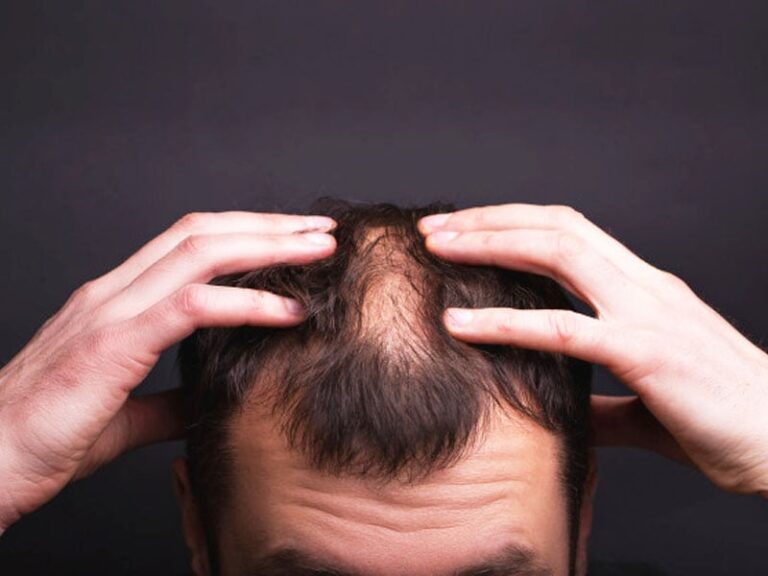
Crown thinning usually starts with hair miniaturization, the gradual shrinking of each follicle.
Conclusion & Next Steps
Discovering early thinning on your crown can feel disquieting, but early awareness puts you in full control. By distinguishing natural hair swirls from pattern thinning and understanding the biological factors at play, you can take practical steps to protect your scalp health.
Request a Free Crown Assessment from Clinicana
Unsure if the scalp visible on your crown is a normal cowlick or early thinning? You don’t have to guess.
At Clinicana Hair Transplant Center in Istanbul, our specialized medical team offers free, non-binding online hair assessments. Send us clear photos of your crown and scalp via WhatsApp to receive a personalized diagnostic assessment from our hair restoration team within minutes.
Medical Disclaimer & Review
- Medical Disclaimer: The contents of this article are intended strictly for educational and informational purposes. They do not constitute formal medical diagnosis, advice, or treatment plans. Scalp conditions vary individually.
- Medical Review Conducted by: Prof. Dr. Soner Tatlıdede, Lead Hair Restoration Specialist at Clinicana Hair Transplant Center, Istanbul (22+ Years of Clinical Experience in Hair Restoration & 18,947 Successful Procedures).
Academic & Clinical References
- National Center for Biotechnology Information (NCBI): Physiology of Male Pattern Baldness and Vertex Miniaturization.
- Journal of Cutaneous and Aesthetic Surgery: Scalp Microcirculation and Tension Patterns in Androgenetic Alopecia.


By Prof. Dr. Soner Tatlıdede · October 2026 When can you cut your hair after a hair transplant? Hair in the donor area can be trimmed after 1 month using scissors or clippers. As for the recipient area, trimming only the ends of the hair using scissors is permitted after 2 months. However, you must wait at […]
By Prof. Dr. Soner Tatlıdede · October 2026 Congratulations on completing your hair transplant. While the surgical part is finished, the success of your restoration now depends heavily on the recovery phase. In our clinical experience, the first two weeks post-surgery are just as critical as the procedure itself. Understanding what to avoid after a hair transplant […]
Scalp psoriasis and seborrheic dermatitis are chronic inflammatory conditions that frequently cause discomfort, itching, redness, and scaling. For individuals experiencing hair thinning alongside these conditions, severe anxiety often arises regarding permanent follicle loss and the feasibility of hair restoration. A central concern among patients is whether undergoing a hair transplant while managing scalp psoriasis is […]


Thank you!
Your details have been successfully submitted. Thanks!