


Early Signs of Crown Hair Thinning: Causes, Self-Check, and Myths
By Prof. Dr. Soner Tatlıdede • July 2026
Quick Summary: Crown Hair Thinning vs. Normal Hair Swirl
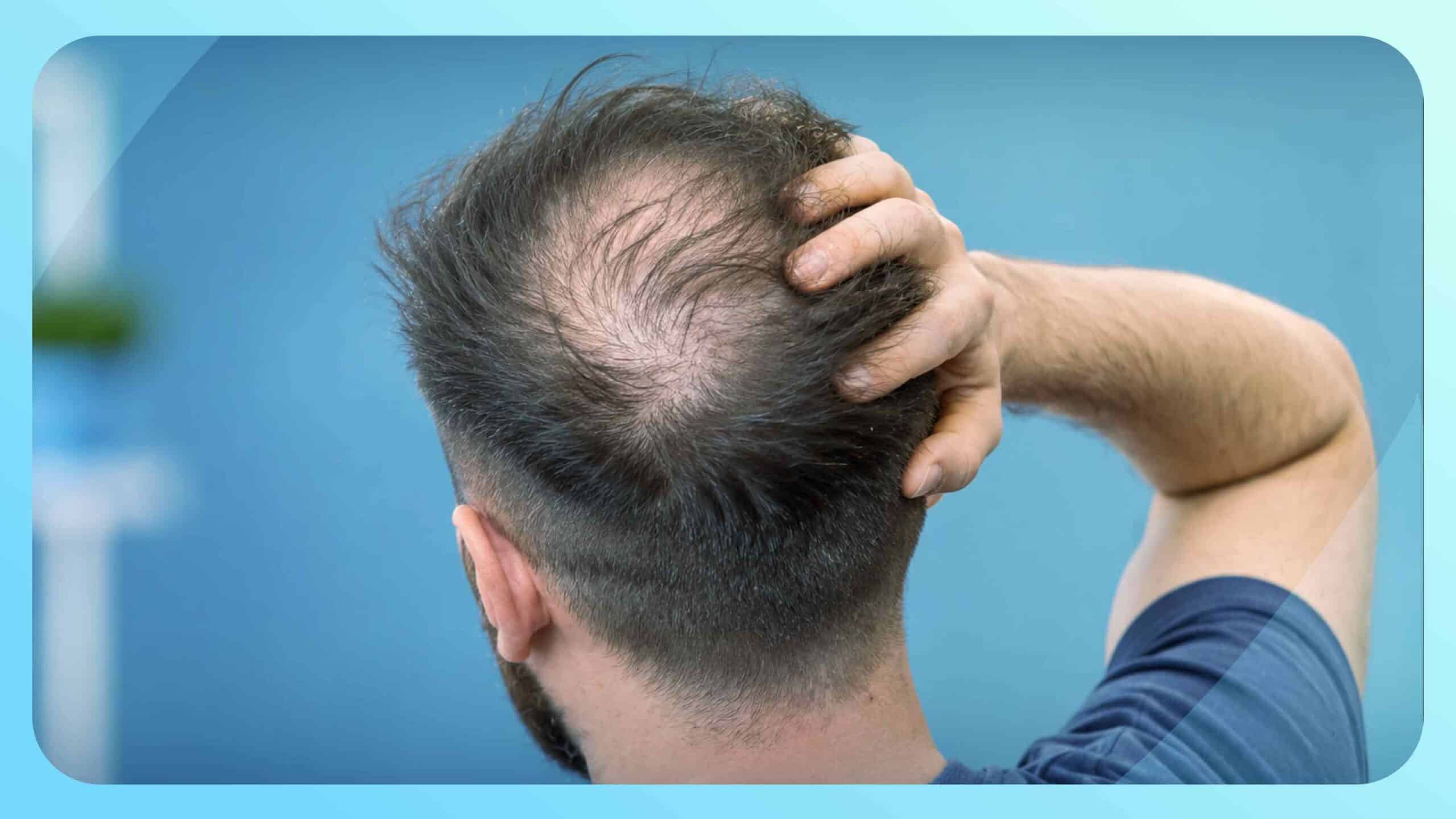
Hair thinning on the crown (also known as the vertex) is one of the most stealthy forms of hair loss. Because the top-back area of your head lies outside your direct field of vision, thinning in this zone often develops silently for months or even years before it becomes noticeable.
Many individuals only discover crown hair loss when a friend points it out, when looking at a photo taken from behind, or under harsh overhead fitting room lights. This sudden discovery can bring understandable worry: Is this just a natural cowlick spiral, or am I experiencing early pattern hair loss?
At Clinicana Hair Transplant Center in Istanbul, we focus on patient education to demystify hair loss mechanisms. Understanding why the crown thins, learning how to check your vertex accurately, and identifying lifestyle factors can give you clarity and confidence about your hair health.
How to Detect Crown Hair Thinning Early (Self-Check Guide)
Because the crown is a natural biological junction where hair grows in a spiral or “whorl” pattern, mistaking a normal hair swirl for balding is very common. Here are three practical methods to evaluate your crown at home:
1. The Two-Mirror Inspection Method
- Stand in a brightly lit room with your back facing a large wall mirror.
- Hold a hand-held mirror in front of your face, angling it upward so you can view the reflection of the top-back of your head.
- Observe the center of the hair whorl.
- Assessment: A natural swirl reveals a small, tight center with full-density hair fanning outward. If the exposed skin area extends beyond the immediate center point of the spiral, thinning may be taking place.
2. The High-Angle Flash Photo Test
- Hold your smartphone directly above the top of your head (about 30 cm above the crown).
- Take a clear photograph using your camera flash.
- Repeat this process every 3 to 6 months under identical lighting conditions.
- Assessment: The camera flash exposes contrast between scalp skin and hair roots. Comparing photographs over time helps distinguish static anatomical hair patterns from progressive density loss.
3. Texture and Diameter Comparison (The Pinch Test)
- Gently pinch a bundle of hair from the side or back of your head (the donor area) between your thumb and forefinger to feel its thickness.
- Next, pinch a bundle of hair from the center of your crown.
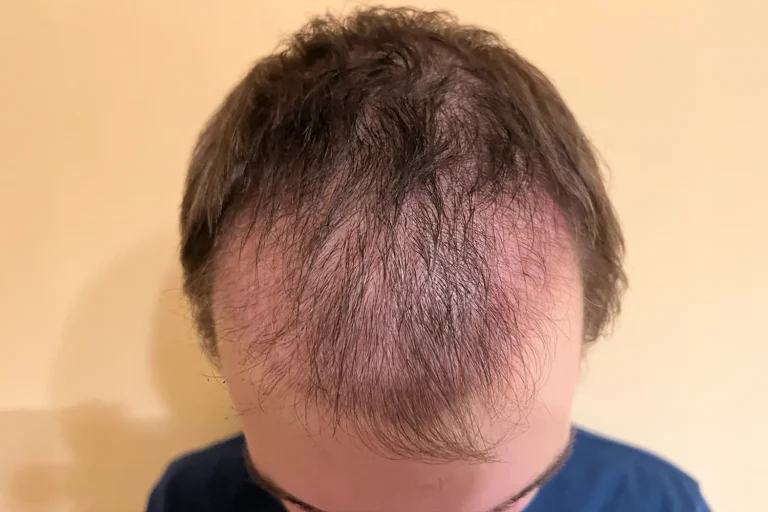
- Assessment: If the hair at your crown feels noticeably softer, lighter, or thinner in strand diameter compared to the sides, your follicles at the vertex are likely undergoing miniaturization.
Why Does Hair Thin Specifically on the Crown?
Hair loss at the vertex follows distinct biological mechanisms. The two main underlying physiological causes are genetic hormonal sensitivity and scalp microcirculation dynamics.
1. DHT Sensitivity and Androgenetic Alopecia
The primary driver of crown thinning in both men and women is genetic sensitivity to Dihydrotestosterone (DHT), an androgen derived from testosterone via the enzyme 5-alpha reductase.
- Hair follicles on the crown and frontal hairline possess receptors that bind to DHT.
- When DHT binds to sensitive follicles, it shortens the growth (anagen) phase and lengthens the resting (telogen) phase.
- Over repeated hair growth cycles, the follicle shrinks—producing finer, shorter hairs until the follicle eventually stops producing visible hair.
2. Galea Aponeurotica Tension and Microcirculation
The top of the human skull is covered by a tough fibrous sheet of tissue called the galea aponeurotica. Vascular studies show that mechanical tension across the scalp peak (the crown) can compress micro-capillaries supplying blood to hair roots. Reduced localized blood flow starves follicles of essential nutrients and oxygen, compounding the damaging effects of DHT.
Everyday Factors That Accelerate Crown Thinning
While genetics dictate follicle sensitivity, everyday environmental and lifestyle factors can worsen scalp health and accelerate vertex thinning:
- Chronic Stress and Elevated Cortisol: Prolonged emotional or physical stress elevates systemic cortisol levels, which can trigger Telogen Effluvium—a condition where large numbers of scalp hairs enter the shedding phase simultaneously.
- Poor Scalp Microcirculation: Sedentary habits, lack of physical movement, and tight headwear can reduce cutaneous blood flow to the upper scalp.
- Nutritional Deficits: Inadequate intake of essential nutrients such as Iron, Zinc, Vitamin D3, and Protein compromises the keratin synthesis required for strong hair shafts.
- Aggressive Product Residue and Sebum Build-Up: Infrequent washing allows excess sebum and DHT-laden skin oils to accumulate in crown pores, promoting mild localized scalp inflammation (seborrheic dermatitis).
Myths vs. Facts About Crown Hair Loss
Misinformation surrounding crown hair loss can lead to unnecessary panic or ineffective treatments. Let’s examine common myths:
- Myth 1: Sleeping on your back causes crown balding due to pillow friction.
- Fact: Physical friction from a soft pillow does not cause permanent hair loss or destroy hair roots beneath the skin. Shedding seen on your pillow consists of hairs that were already in the resting phase.
- Myth 2: Wearing a motorcycle or sports helmet starves the crown of air and causes hair loss.
- Fact: Hair roots receive oxygen and nutrients through blood capillaries inside the scalp, not from ambient air outside. Helmets do not cause genetic crown thinning.
- Myth 3: Daily scalp massage can completely cure genetic crown balding.
- Fact: While scalp massage temporarily improves blood circulation, it cannot neutralize genetic sensitivity to DHT or reverse severe follicular miniaturization on its own.
Frequently Asked Questions
Why is the crown often the first place men notice hair thinning?
The crown features a natural hair whorl where hair grows in multiple directions, making the scalp more visible under direct lighting even with minor density changes. Furthermore, crown follicles are genetically vulnerable to DHT.
Can hair loss on the crown be reversed naturally?
Early-stage thinning caused by nutritional deficits, stress, or mild scalp inflammation can improve once the root cause is addressed. However, genetic pattern hair loss requires structured medical evaluation or hair restoration to regain lost density.
Is hair thinning on the crown different from a receding hairline?
Yes. A receding hairline affects the frontal border and temples, whereas crown thinning affects the top-back vertex of the scalp. While both are driven by androgenetic alopecia, they can progress at different speeds.
What Are Your Next Steps?
If your self-check confirms that your crown hair density is normal and healthy, maintaining good scalp hygiene and a balanced lifestyle is all that is required.
However, if you notice expanding scalp exposure or miniaturized hairs, learning about professional hair restoration options can help you make informed decisions for the future:
- Explore Restoration Solutions: Read our comprehensive guide on vertex hair restoration techniques: Crown Hair Transplants in Turkey: Everything You Need to Know
- Understand Results & Timeline: Learn what to expect during the growth phase after treatment: Crown Hair Transplant: Growth Time and Results
- Plan the Budget: See what a crown procedure costs package by package: Hair Transplant Cost in Turkey
Conclusion & Next Steps
Discovering early thinning on your crown can feel disquieting, but early awareness puts you in full control. By distinguishing natural hair swirls from pattern thinning and understanding the biological factors at play, you can take practical steps to protect your scalp health.
Request a Free Crown Assessment from Clinicana
Unsure if the scalp visible on your crown is a normal cowlick or early thinning? You don’t have to guess.
At Clinicana Hair Transplant Center in Istanbul, our specialized medical team offers free, non-binding online hair assessments. Send us clear photos of your crown and scalp via WhatsApp to receive a personalized diagnostic assessment from our hair restoration team within minutes.
Medical Disclaimer & Review
- Medical Disclaimer: The contents of this article are intended strictly for educational and informational purposes. They do not constitute formal medical diagnosis, advice, or treatment plans. Scalp conditions vary individually.
- Medical Review Conducted by: Prof. Dr. Soner Tatlıdede, Lead Hair Restoration Specialist at Clinicana Hair Transplant Center, Istanbul (22+ Years of Clinical Experience in Hair Restoration & 18,000+ Successful Procedures).
Academic & Clinical References
- National Center for Biotechnology Information (NCBI): Physiology of Male Pattern Baldness and Vertex Miniaturization.
- Journal of Cutaneous and Aesthetic Surgery: Scalp Microcirculation and Tension Patterns in Androgenetic Alopecia.


Diagnostic Parameter Tinea Capitis Alopecia Areata Seborrheic Dermatitis Primary Etiology Dermatophyte fungal infection (Microsporum / Trichophyton) Autoimmune response targeting hair follicles Overgrowth of Malassezia yeast and inflammatory reaction Scalp Scaling Present (fine grayish scales or thick crusting) Absent (scalp is smooth and clinically normal) Present (greasy, yellowish, or diffuse white flakes) Hair Shaft Appearance Broken […]
Medical Review by: Prof. Dr. Soner Tatlıdede – September 2026 Quick Summary (TL;DR) Iron deficiency—specifically depleted serum ferritin stores—is one of the most prevalent nutritional triggers of diffuse hair shedding, particularly among women and vegetarians. Iron is not merely a component of blood cells; it serves as a critical biological catalyst for cellular division and oxygen transport inside […]
Medical Review by: Prof. Dr. Soner Tatlıdede – September 2026 Direct Definition: What Is Female Pattern Baldness? Female pattern baldness (androgenetic alopecia in women) is a genetically influenced condition characterized by progressive hair thinning across the vertex and widening of the central part line, while usually preserving the frontal hairline. Unlike male pattern hair loss, which frequently causes […]


Thank you!
Your details have been successfully submitted. Thanks!