


Afro Hair Transplant in Turkey: What Works and What to Expect
Medical review by: Prof. Dr. Soner Tatlıdede, hair transplant surgeon (22+ years, 18,947 procedures) – October 2026
Quick answer
- Afro-textured hair can be transplanted successfully, and it has one real advantage: tightly curled hair covers far more scalp per graft than straight hair, so the visual density is often excellent.
- The challenge sits under the skin. Afro follicles are curved, so extraction must be adapted to avoid cutting (transecting) the follicle.
- Before any surgery, two things must be ruled out: active traction alopecia or a scarring condition such as CCCA, and a strong tendency to form keloid scars.
- The number of grafts is set only after the donor area has been assessed. It is never a fixed figure quoted in advance.
What makes Afro-textured hair different?
In straight hair the follicle runs almost in a straight line beneath the skin, so a punch can follow it cleanly. In Afro-textured hair the follicle itself curves, sometimes into a C or S shape. The hair shaft is also usually flatter and coils tightly as it grows. These features change three things in surgery:
- Extraction: a standard sharp punch aligned with the visible hair angle can cut through the curved follicle below the surface.
- Graft handling: curved grafts need gentle handling and implantation channels that match their shape.
- Design: the hairline and the direction of growth must follow the natural pattern of coiled hair, which differs from the straight-hair templates many surgeons are used to.
Is an Afro hair transplant right for you? Rule these out first
| Condition | Why it matters | What we do |
|---|---|---|
| Traction alopecia from braids, weaves or tight styles | If the traction continues, transplanted hair can be lost in the same way | Stop the traction first. Transplant only once the hairline is stable |
| Central centrifugal cicatricial alopecia (CCCA) and other scarring alopecias | An active inflammatory scarring process can destroy grafts | Dermatology diagnosis and a long stable period before any surgery, sometimes a small test session |
| Keloid tendency | Raised, thick scars can form at extraction or implantation sites | Medical history, examination of existing scars, and a cautious plan or a test area |
| Androgenetic (pattern) hair loss | The most common reason for transplantation in any hair type | A standard candidate if the donor area is healthy and stable |
How the technique is adapted for curved follicles
- Test extractions first. A few grafts are taken and examined under magnification to see how the follicles curve and how deep they run.
- Adapted punches and angles. Depending on the test, the surgeon may use a slightly larger or blunt-tipped punch and adjust depth and angle to free the whole follicle.
- Constant quality checks. Grafts are inspected throughout extraction. If transection rises, the technique is changed.
- Channels and implantation that fit the curve. Recipient sites are made in the direction of the natural coil so the hair grows in the right pattern. FUE and DHI can both be used; see DHI vs Sapphire FUE.
For other curl types the same principles apply in a milder form; read hair transplant for curly hair.
The donor area and the beard as a second source
Donor density in Afro-textured hair is often a little lower than in some other hair types, but the coverage of each coiled hair compensates for it. The surgeon assesses how many grafts the donor area can give safely without leaving it visibly thin. In extensive hair loss, beard hair can be used as an additional source, as explained in body hair transplant to the head. For how graft needs are estimated, read how many grafts do I need.
Results and timeline
| Time after surgery | What usually happens |
|---|---|
| Days 1–10 | Small crusts that wash away gradually. Redness is less visible on darker skin |
| Weeks 2–12 | Temporary shedding of transplanted hairs, which is normal. Read shock loss after hair transplant |
| Months 3–6 | New hair starts to grow, often a little finer at first |
| Months 6–12 | Thickness and coil pattern develop. The final look is assessed at around 12 months |
See the full month-by-month growth timeline.
Aftercare points specific to Afro hair
- Avoid braids, weaves, extensions and tight styles for at least several months, and long term on the transplanted hairline.
- Watch for ingrown hairs and bumps as new hair breaks through; folliculitis is usually mild but should be reported if it spreads.
- Delay relaxers, chemical straighteners and dyes until your doctor confirms the scalp has fully healed.
- Follow the 14-day aftercare checklist and the general restrictions after hair transplant.
Cost
Afro hair transplants are planned within the same packages as other hair types. The package depends on the area to be covered and on what the donor area allows, not on a pre-sold graft number. See hair transplant cost in Turkey for the current packages.
FAQ
Can Black men and women get a hair transplant?
Yes. The key is correct diagnosis of the cause of hair loss and an extraction technique adapted to curved follicles.
Will my transplanted hair stay curly?
Yes. Transplanted hair keeps the characteristics of the donor hair, so coiled hair grows back coiled.
Is there a higher risk of scarring?
People with a personal or family history of keloids need careful assessment, and sometimes a small test area before the full procedure.
Can traction alopecia be treated with a transplant?
Yes, once the traction has stopped and the hairline has been stable for a period. Otherwise the transplanted hair is exposed to the same damage.
Want to know if this applies to you? Send clear photos of your scalp (front, top, crown and donor area) through our contact page and the medical team will review your case and recommend the right option.


Medical review by: Prof. Dr. Soner Tatlıdede, hair transplant surgeon (22+ years, 18,947 procedures) – October 2026 Quick answer Every hair transplant leaves some marks, because skin heals with tiny scars. With modern FUE and DHI these are small dots spread across the donor area, and they are usually invisible once the hair grows back […]

Medical review by: Prof. Dr. Soner Tatlıdede, hair transplant surgeon (22+ years, 18,947 procedures) – October 2026 Quick answer Istanbul and Antalya are the two Turkish cities most international patients compare for a hair transplant. Izmir and Ankara come up less often. The city matters less than who operates, where and how. The deciding factors […]
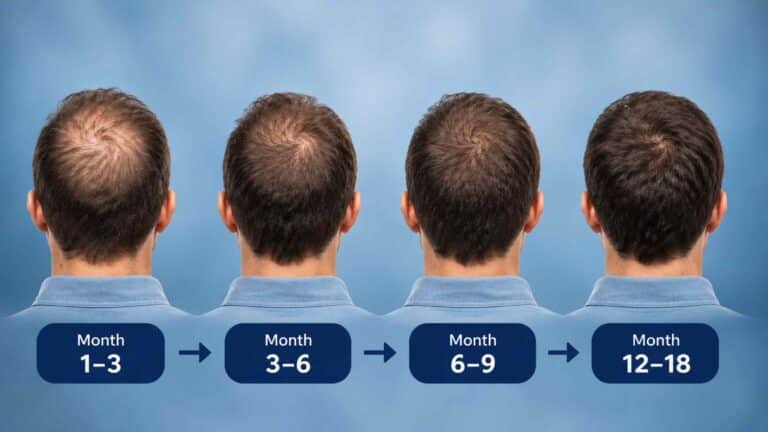
Medical Review by: Prof. Dr. Soner Tatlıdede – September 2026 Quick Summary: Crown Hair Transplant Growth Timeline Month-by-Month Timeline Stage Expected Growth & Hair Recovery Progress 0–2 Weeks Redness, scabbing, and temporary shock loss (shedding of transplanted hair). 2–4 Months Dormant phase ends; initial fine hair begins emerging from the scalp. 5–9 Months Considerable visible growth and […]


Thank you!
Your details have been successfully submitted. Thanks!