


Epicranial aponeurosis (galea aponeurotica) and hair loss
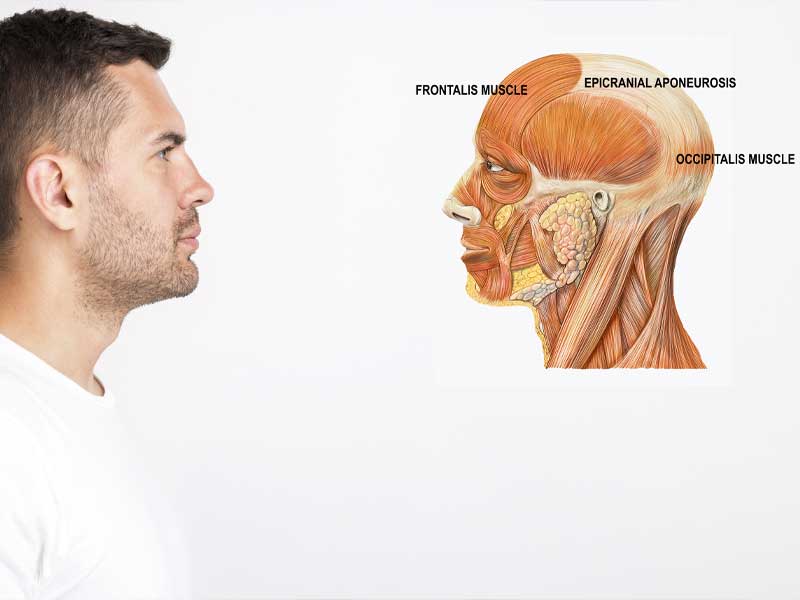
Does galea aponeurotica (or epicranial aponeurosis) cause your hair loss? This tough fibrous layer connects frontal and occipital muscles across the scalp, with blood vessels feeding hair follicles passing through it – but excessive tension restricts blood flow, weakening follicles over time.
While FUE hair transplants are popular due to affordable prices in Turkey, galeatomy surgery targets non-genetic tension by making small incisions to boost scalp elasticity and hair growth.
Discover epicranial aponeurosis function, when galeatomy is needed, and how to save your hair now.
What is Epicranial Aponeurosis (Galea Aponeurotica)?
So, what is the epicranial aponeurosis, also called galea aponeurotica? The scalp divides into five layers using the SCALP acronym: Skin, Connective tissue, Aponeurosis (galea aponeurotica), Loose connective tissue, and Pericranium – the deepest layer attached to the skull bone.
Just beneath the skin lies the epicranium and galea aponeurotica.
This fascia – a tough, dense fibrous tissue – covers the upper head, extending from the frontalis muscle to the occipitalis muscle, joining them under scalp skin.
Sometimes called the occipitofrontalis muscle tendon, the galea aponeurotica tightly connects both ends over the pericranium.
What is the Function of the Galea Aponeurotica?
The epicranial aponeurosis function connects the frontal and occipital bellies of the occipitofrontalis muscle (or frontalis/occipitalis muscles separately).
This enables key facial expressions like forehead wrinkling and eyebrow arching.
The aponeurotic galea forms the scalp’s most firm, resistant tissue, creating constant tension that prevents pinching – unlike more elastic skin on the abdomen or arms.
Notably, galea aponeurotica is thin yet highly vascularized (explaining heavy bleeding from scalp wounds), with blood under galea aponeurotica delivering essential nutrients to scalp and hair follicles.
Some experts link epicranial aponeurosis tightness to poor follicle irrigation, weakening hair and causing loss. Studies suggest galeatomy helps such cases.
What is a Galeatomy Procedure?
Galeatomy surgically targets galea aponeurotica tightness in non-genetic alopecia via small incisions under local anesthesia (about 1 hour).
This reduces tension, increasing scalp elasticity for better blood flow and reduced sebaceous gland activity (preventing oily scalp).
Follicles then receive more oxygen, nutrients, vitamins, and trace elements, stimulating healthier, stronger hair growth.
Galeatomy complements minoxidil, Finasteride, mesotherapy, PRP, vitamin supplements, and even hair transplants – unlike inherited baldness.
Galeatomy Results for Hair Loss Prevention
Alopecia stems from multiple causes, mostly genetic DHT sensitivity.
Galeatomy cannot stop inherited baldness but strengthens healthy follicles without reviving atrophied ones.
Understanding epicranial aponeurotica‘s role in scalp health is crucial.
If noticing hair issues, consult specialists immediately.
Clinicana, Turkey’s best hair transplant clinic, offers free consultations and no-obligation estimates for galeatomy + FUE treatments.



Medical Review by: Prof. Dr. Soner Tatlıdede – September 2026 Eyebrows serve a fundamental role in defining facial expressions, enhancing facial symmetry, and protecting the eyes from perspiration and debris. When eyebrow hairs begin to thin, break, or disappear completely, the loss deeply affects aesthetic confidence and overall facial harmony. Understanding whether your eyebrow shedding is caused by […]

Medical Review by: Prof. Dr. Soner Tatlıdede – September 2026 Discovering that your child is losing hair or developing bald patches can be deeply worrying for any parent. Unlike adult hair loss, which frequently stems from genetic factors such as androgenetic alopecia, hair shedding in children is predominantly linked to treatable medical, psychological, or environmental triggers. Understanding the […]
Medical Review by: Prof. Dr. Soner Tatlıdede – September 2026 Temporal Triangular Alopecia (TTA), also referred to as Congenital Triangular Alopecia, is a benign, stationary hair loss condition characterized by a smooth, localized triangular or oval patch of hairlessness near the temples. Arising in early childhood due to follicular hypoplasia, TTA does not respond to topical or oral […]


Thank you!
Your details have been successfully submitted. Thanks!