


Shock Loss After a Hair Transplant: Timeline, Types and Regrowth
Medical review by: Prof. Dr. Soner Tatlıdede, hair transplant surgeon (22+ years, 18,947 procedures) – November 2026
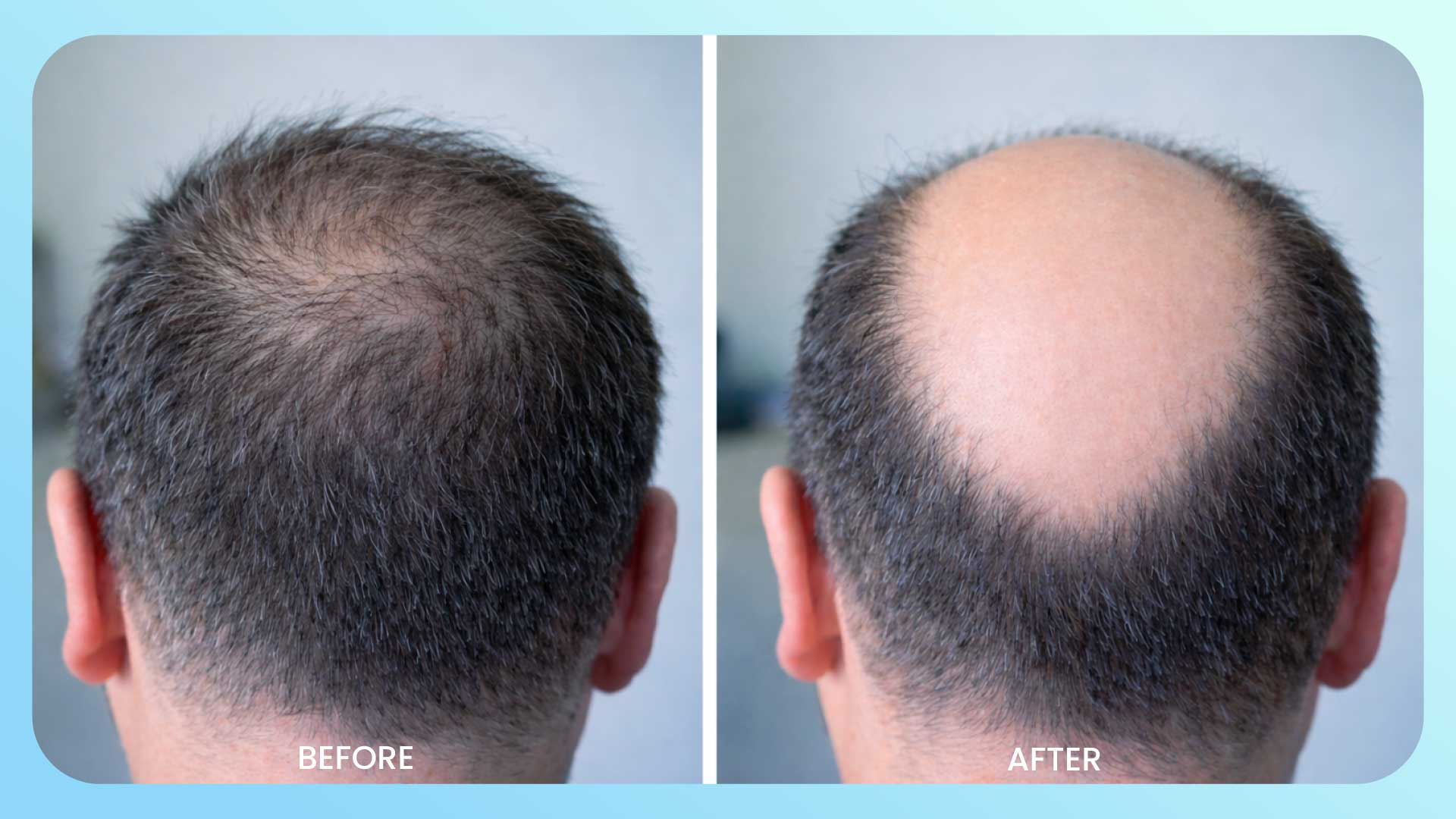
Shock loss after a hair transplant is an expected and, in most cases, temporary stage. Most of the transplanted hair sheds between weeks 3 and 8 after surgery while the follicle stays alive under the skin. New hair starts to grow after 3 to 4 months, the improvement is clearly visible around month 6, and the result is complete between months 12 and 18. Some of the native hair around the transplanted area can shed temporarily as well, and it usually returns within a few months.
This stage worries many patients because it comes weeks after the operation, when the scalp can look close to how it did before surgery. This guide explains when shedding starts and when the hair returns, the different types of hair loss after a transplant, and how to tell what is normal from what needs a doctor’s review.
When Does Shock Loss Start After a Hair Transplant, and When Does the Hair Grow Back?
| Stage | What happens |
|---|---|
| Weeks 1 and 2 | Small scabs fall off between day 7 and day 12; the short transplanted hairs are still visible |
| Weeks 3 to 8 | Most of the transplanted hair sheds, sometimes with some of the neighbouring native hair |
| Months 2 to 3 | The scalp can look close to how it did before surgery; the follicles are in a resting phase |
| Months 3 to 4 | New hair starts to grow, fine and soft at first; native hair affected by shock loss gradually returns |
| Around month 6 | Clear improvement in coverage and density |
| Months 12 to 18 | Final result; the crown may need the longer end of this range |

Each stage is covered in detail in our hair transplant growth timeline.
Types of Hair Loss After a Hair Transplant
1. Shedding of the transplanted hair
This is the most common type and it happens to most patients. The relocated follicle is temporarily cut off from its blood supply, so it enters a resting phase in which the hair shaft falls out. The follicle itself stays in place under the skin and produces a new hair a few months later. This shedding does not mean the grafts have failed.
2. Shock loss of native hair around the transplanted area
Some of the native hair between or around the grafts can shed temporarily because of the surgical stress on the scalp. It is more common when the native hair is already fine and weakened by pattern hair loss, or when grafts are placed between existing hair. Most of this hair returns within 3 to 6 months.
3. Temporary shedding in the donor area
This is less common. It appears as temporary thinning at the back of the head around the extraction sites, and the hair usually returns within a few months. For the first days in this area, see the donor area one week after a hair transplant.
4. Permanent shock loss
This is rare. It mostly affects native hairs that were already very weak and miniaturised by pattern hair loss, and that might have been lost over time even without surgery. This is why the surgeon assesses the native hair in the recipient area before the operation and may suggest medication to protect it.
What the Shed Hair Looks Like
A hair shed at this stage is usually a short shaft with no white bulb at its end, sometimes with a small dry crust at its base. A graft that is actually lost looks different: a small white grain, like a grain of rice, attached to the hair, often with slight bleeding. That only happens in the first days, if the area is scratched or rubbed. See do grafts fall out when touched and scabs after a hair transplant.
Losing Transplanted Hair After 6 Months: Is It Normal?
The usual shedding after a transplant is over before month 3. If you notice clear hair loss after month 6, it is most likely not the transplanted hair. It may be:
- Ongoing loss of native, non-transplanted hair because of pattern hair loss.
- Temporary diffuse shedding after an illness, severe stress, a strict diet or iron deficiency.
- Inflammation of the hair follicles, with spots and redness.
- The normal daily loss of a few hairs, as with any hair.
In all of these cases it is worth sending photos to your doctor to find the cause instead of waiting.
How to Reduce Shock Loss After a Hair Transplant
Shedding of the transplanted hair itself cannot be prevented, because it is part of the follicle’s growth cycle. The risk of shock loss in native hair can be reduced:
- Assessing the native hair before surgery and placing the grafts at a carefully planned density around existing hair.
- Following the aftercare instructions and avoiding scratching or rubbing in the first days.
- Avoiding smoking in the first weeks, as your doctor advises, because it reduces blood supply.
- Medication such as minoxidil or finasteride, if your doctor considers it suitable, to protect the native hair.
For what to do day by day in the first two weeks, see our post hair transplant care checklist.
Normal Shock Loss or a Reason to See Your Doctor?
Transplanted hair usually sheds between weeks 3 and 8, and the follicle stays under the skin to start a new growth cycle in month 3 or 4. Some of the native hair around the transplanted area may shed too, and it mostly returns in the following months. What does not fit this reassuring picture is hair loss in areas far from the transplant, inflamed spots and redness that do not settle, or no new growth at all as the months go by. These signs deserve a medical assessment, not more waiting.
The hardest part of this stage is that it comes after you are back home. If you have your procedure with us at Acıbadem Taksim Hospital in Istanbul, follow-up continues on WhatsApp after you return (included in the Standard and Premium packages), so you can send photos and have them compared with what is expected at each stage. Keep in mind that the speed of growth varies from one person to another.
FAQ About Shock Loss
When does shock loss start after a hair transplant, and when does it end?
It usually starts between weeks 3 and 8 after surgery. New hair begins to grow after 3 to 4 months, and the improvement is clearly visible around month 6.
Is shock loss after a hair transplant permanent?
No, in the great majority of cases. Transplanted hair grows back after a few months because the follicle stays alive under the skin, and most native hair affected by shock loss returns within 3 to 6 months. Permanent loss is rare and mostly affects hairs that were already very weak.
Can shock loss be prevented completely?
Shedding of the transplanted hair cannot be prevented, because it is a normal part of this stage. Shock loss of native hair can be reduced with good surgical planning, following the aftercare instructions, avoiding smoking and, in some cases, medication prescribed by your doctor.
What does the shed hair look like?
Usually a short hair shaft with no white bulb at its end, sometimes with a small dry crust at its base. A lost graft looks different: a small white grain, like a grain of rice, attached to the hair. That only happens in the first days, after scratching or rubbing.
Is it normal to lose transplanted hair after 6 months?
The usual shedding after a transplant is over before month 3. Clear hair loss after month 6 is more likely to come from native hair or from another cause, so send photos to your doctor for an assessment.
Does shock loss happen in the donor area?
Sometimes there is temporary thinning around the extraction sites. It is less common than shedding in the recipient area, and the hair usually returns within a few months.
Summary
Shock loss between weeks 3 and 8 after a hair transplant is a temporary stage that most patients go through, and it does not mean the operation has failed. Be patient until month 3 or 4, when growth starts, and compare your photos at 6 months with the ones taken before surgery. To see what finished results look like, visit our hair transplant before and after gallery, and read is a hair transplant permanent for the long-term picture.
Sources
- Goldin J, Zito PM, Raggio BS. Hair Transplantation. StatPearls, NCBI Bookshelf. Updated 2025. www.ncbi.nlm.nih.gov/books/NBK547740
- Hoover E, Alhajj M, Flores JL. Physiology, Hair. StatPearls, NCBI Bookshelf. Updated 2023. www.ncbi.nlm.nih.gov/books/NBK499948
- Hughes EC, Syed HA, Saleh D. Telogen Effluvium. StatPearls, NCBI Bookshelf. Updated 2024. www.ncbi.nlm.nih.gov/books/NBK430848
- Kerure AS, Patwardhan N. Complications in Hair Transplantation. Journal of Cutaneous and Aesthetic Surgery. 2018. pmc.ncbi.nlm.nih.gov/articles/PMC6371733
- Garg AK, Garg S. Complications of Hair Transplant Procedures: Causes and Management. Indian Journal of Plastic Surgery. 2021. pmc.ncbi.nlm.nih.gov/articles/PMC8719980
- Kerure AS, Agrawal SM, et al. Donor Area Acute Effluvium following Follicular Unit Extraction Hair Transplant. Journal of Cutaneous and Aesthetic Surgery. 2020. pmc.ncbi.nlm.nih.gov/articles/PMC7335467
- Okochi H, et al. An Analysis of Risk Factors of Recipient Site Temporary Effluvium After Follicular Unit Excision: A Single-Center Retrospective Study. Aesthetic Plastic Surgery. 2024. pubmed.ncbi.nlm.nih.gov/37816944
- Vañó-Galván S, Bisanga CN, Bouhanna P, Farjo B, et al. An International Expert Consensus Statement Focusing on Pre and Post Hair Transplantation Care. Journal of Dermatological Treatment. 2023. pubmed.ncbi.nlm.nih.gov/37477225
- Mysore V, et al. Hair Transplant Practice Guidelines. Journal of Cutaneous and Aesthetic Surgery. 2021. pmc.ncbi.nlm.nih.gov/articles/PMC8611706
- Parsley WM, Perez-Meza D. Review of Factors Affecting the Growth and Survival of Follicular Grafts. Journal of Cutaneous and Aesthetic Surgery. 2010. pmc.ncbi.nlm.nih.gov/articles/PMC2956960
- Patel P, Nessel TA, Kumar D D. Minoxidil. StatPearls, NCBI Bookshelf. Updated 2023. www.ncbi.nlm.nih.gov/books/NBK482378
- Leavitt M, Perez-Meza D, Rao NA, Barusco M, Kaufman KD, Ziering C. Effects of Finasteride 1 mg on Hair Transplant. Dermatologic Surgery. 2005. pubmed.ncbi.nlm.nih.gov/16188178


Medical review by: Prof. Dr. Soner Tatlıdede, hair transplant surgeon (22+ years, 18,947 procedures) – October 2026 When can you cut your hair after a hair transplant? Hair in the donor area can be trimmed after 1 month using scissors or clippers. As for the recipient area, trimming only the ends of the hair using […]
Medical review by: Prof. Dr. Soner Tatlıdede, hair transplant surgeon (22+ years, 18,947 procedures) – October 2026 Congratulations on completing your hair transplant. While the surgical part is finished, the success of your restoration now depends heavily on the recovery phase. In our clinical experience, the first two weeks post-surgery are just as critical as […]
Scalp psoriasis and seborrheic dermatitis are chronic inflammatory conditions that frequently cause discomfort, itching, redness, and scaling. For individuals experiencing hair thinning alongside these conditions, severe anxiety often arises regarding permanent follicle loss and the feasibility of hair restoration. A central concern among patients is whether undergoing a hair transplant while managing scalp psoriasis is […]


Thank you!
Your details have been successfully submitted. Thanks!